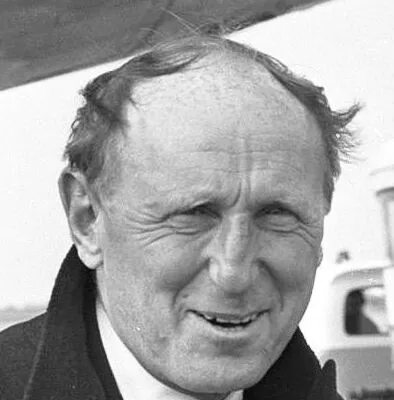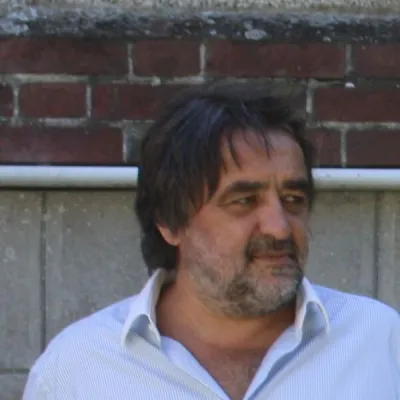
Philippe Boisse
Human Design Chart
Biography
He is currently a vice-president of the French Fencing Federation, and a practising physician (radiology).
He is the father of Érik Boisse, a 2004 Olympics gold medal winner in men's team épée.
Philippe Boisse as a Projector 5/1 in Human Design
Projector 5/1 — Design at a Glance
Philippe Boisse's Human Design profile indicates a tendency towards sharp system perception. His aura acted like a focused flashlight, immediately identifying areas in the environment that were not functioning optimally or "in the dark." This configuration allowed him to directly identify errors in structures. However, addressing these flaws head-on would often provoke resistance or anger, similar to shining a bright light into someone's face.
The more effective expression of his nature was to lead by example through his own harmonious functioning. By demonstrating functional patterns himself, he attracted others who then sought his insights. This underscores his central strategy: waiting for a respectful and honest invitation from others before sharing his knowledge.
As a Projector, Philippe Boisse does not have a defined Sacral Center, meaning he lacks constant intrinsic life energy. Instead, he experiences phases of high activity followed by necessary rest periods for regeneration. This dynamic was crucial to prevent burnout. The tension between his ability to immediately recognize system errors and the need to wait socially elegantly for an invitation characterized his interactions. If he lives according to this design, he will be rewarded with success; if he ignores it, bitterness may arise as an expression of his non-self.
No Inner Authority
Philippe Boisse's design lacks an internal or physical authority. This rarity fundamentally shapes his decision-making ability: it does not arise from an internal compass but through external exchange as a Projector or cyclical conditioning over 28 days as a Reflector.
As a mental Projector, he has no Center activation below the Throat Center. His decisions take shape in dialogue with various people. Through energetic interactions in his open Centers, dormant potentials are activated and provide specific information. This allows him to view issues from many perspectives and express them differently. His high resonance capacity is the great potential for finding the right environment and suitable conversation partners for this exchange.
Evaluating these diverse inputs is a complex process that requires time and solitude. Over time, Philippe Boisse recognizes the red thread, distinguishes meaningful information from foreign input, and develops his specific intelligence: filtering out the essential from a mass of information, organizing it meaningfully, and structuring it. This is his capital for success.
Alternatively, as a Reflector without defined Centers, his decision-making process is tied to the moon cycle. For important steps, he should allow himself about 28 days until the Moon has traveled through his complete body graph. In this way, reliable conditioning patterns repeat themselves, providing orientation through identity and belonging. He must never be pressured into making decisions.
A key element lies in a comfortable environment with trustworthy people. This exchange deepens over time his sense of what is right for him.
The 5/1 Profile — Heretic / Investigator
Philippe Boisses Design set a tendency to magnetically attract others through deep knowledge. As a 5/1 (Hero/Researcher), his personality was marked by a tension field between private research and public problem-solving. Line 1 promoted the desire for restraint and adaptation, yet the dominant Sun in Gate 36 (Line 5) pushed him to offer practical solutions during crises. This configuration created an almost irresistible aura: others instinctively sought his advice, underscoring his role as a guide in difficult situations.
However, this call for help could quickly lead to exhaustion if clear boundaries were not set. The mechanics of the 5/1 Profile warn against the risk of breaking down from excessive giving – similar to an expert who is drained at the end of the day after answering too many questions. Additionally, Gate 36 brought the danger that nervousness could lead to self-deception when Philippe Boisse overvalued his own role or ignored things that were not right.
The key to balance lay in the ability to say "No". Only through setting boundaries could he maintain the beneficial connection between his inner research work (Line 1) and sharing his knowledge with others (Line 5). Without this discipline, overwhelm threatened; with it, his gift became a sustainable resource for himself and those around him.
Single Definition — Defined & Open Centers
Philippe Boisse's Human Design profile indicated a tendency towards constant mental activity and direct articulation. His defined Ajna and Throat Centers created a consistent, independent mental structure: concepts were constantly generated and immediately expressed. This led to a trustworthy yet sometimes stubborn presence that conditioned the environment around him. The mind was always active; decisions often fell from logic, providing firm internal security but causing difficulties with mental calm.
This defined dynamic contrasted with his open centers, which reflected environmental dynamics. His open G Center meant no fixed identity; Philippe Boisse tended to reflect in relationships and environments rather than setting a personal direction. The lack of consistent willpower in the open Heart Center led to conditioning to want to make promises to prove worth – a pattern often ending in cycles of failure.
The openness of his Sacral and Root Centers revealed vulnerability to external energy and stress dynamics. Without constant vital energy or personal pressure, he tended to take on others' overload, leading to exhaustion if boundaries were not set. The open Spleen Center amplified existence fears and the search for safety from others, while the open Solar Plexus Center absorbed environmental emotions. This openness required a conscious distancing from foreign moods to maintain clarity. The tension between the inner logical firmness of his Head Center and the outer flexibility of his open centers shaped his interaction with the world: a strong mind in a sensitive vessel for environmental energies.
Channels for insatiable curiosity and constant seeking.
Philippe Boisse's Human Design profile indicated a tendency to communicate insights not as dry data but as living parables. He was fascinated by the process of searching itself and used his discoveries to emotionally engage others. This approach rooted in Channel 11-56, connecting Ajna Center with Throat Center. Through the combination of Gate of Ideas (11) and Gate of Inspiration (56), a dynamic emerged that made facts secondary to the magical power of stories. Philippe Boisse gathered experiences less for the sake of finding than to show: “Look what I discovered.” His credibility rested on emotionally connecting ideas and filling gaps with imagination, turning information into inspiring narratives.
Alongside this narrative power, other mechanisms were at work. Gate 36 brought in the experience of crises as cyclical movement while Gate 6 regulated emotional waves of further development. Gate 10 steered complex behavior and integration of genetically fixed rules, supported by Gate 15 establishing collective logic and natural rhythms. On a personality level, Gate 43 promoted spontaneous insights that needed clear communication, where the fear of rejection could resonate. Gate 62 complemented this with patient pattern recognition and logical fact-finding. Together these elements shaped a profile navigating between the magic of story and the structure of logic, with the ability to translate complex connections into understandable narratives at its core.
Collective Circuitry — Circuit Signature
Philippe Boisse's Human Design profile indicated a tendency towards visual and emotional processing of the past. His energy did not flow in straight logical lines toward the future but moved wave-like through cycles with clear beginning, middle, and end. This structure shaped his way of drawing meaning from past experiences.
His active Seeker circuit connected Ajna Center to Throat Center via Channel 11-56 (Gates 11 and 56). This created a direct flow from inner imagery and intuition to outer communication. While other circuits often favor cool ratio, this energy was determined by emotions and felt insights. It sometimes appeared inexplicable or illogical to outsiders but followed a deep cyclical rhythm of reflection.
The goal of this configuration was not just to privately keep the insights gained from the past but to share them with the collective. Philippe Boisse showed himself as someone who helped others recognize common patterns in past events through storytelling and presenting his visual and emotional lessons. The connection between thought and expression centers enabled him to bring abstract feelings and images into a form that others could take in, learning together from history.
Left Angle Cross of the Plane 1
Philippe Boisse's Human Design reveals a deep-rooted connection to his essence. His inner compass was aligned with preserving the authenticity of himself and being recognized as a unique individual. It wasn't about external adaptation but rather establishing the foundation of his self-perception.
This stance stems from the energy of the left cross on Level 1. This archetypal expression describes the drive to clearly express and affirm one's soul and identity. Philippe Boisse demonstrated someone whose actions and decisions were guided by a desire for validation of his inner essence. The mechanics of this cross emphasize that true strength arises from acknowledging one’s nature, not from trying to please others.
For him, striving for authenticity was not an optional ideal but an existential necessity. His energy flows where he remains loyal to himself. This design promotes the ability to maintain a stable identity despite external circumstances. It is a powerful foundation that helped him carry his inner truth outward without distorting his essence. The affirmation of his “self” was key to his internal alignment and effectiveness.
Saturn Return · Uranus Opposition · Chiron Return · 2nd Saturn Return — Life Cycles
Philippe Boisse's Human Design shows a tendency towards cyclical validation, where long-term structure condenses into concrete results. This became particularly evident during his first Saturn Return at the age of 28. In Human Design mechanics, this cycle marks a turning point around age 28: The initial phase transitions into one of consolidation, where the internal architecture of the design is affirmed and stabilized through external successes. It's a moment of maturation when previous work often crystallizes into a sustainable outcome.
In 1983, at the age of 28, Philippe Boisse repeated his team title success. This event served as concrete evidence for the described mechanics: The Saturn Return did not manifest as an abstract phase but rather in measurable repetitions of success. It underscores how his design was geared towards strengthening structure through recurring validation. Rather than starting anew, what had already been achieved condensed into a solid foundation for subsequent years. This cycle shaped his development towards greater stability and confidence in his field by demonstrating that his internal orientation aligned with external results.
Projector · No Inner Authority — Synthesis
Philippe Boisse's Human Design reveals a central thread of mediation and pattern recognition. The combination of an open Head Center, which takes in and processes information, with the Channel of Curiosity (Gate 11/56) indicates he is destined to gather knowledge, synthesize it, and transform it into stories—a lighthouse bringing light into darkness for others. This ability is reinforced by definitions in his Throat and Ajna Centers, enabling clear expression and focused thought processes. The cross emphasizes themes of crisis, emotional waves, and genetic behavioral patterns—indicating that he gains deep insights through recognizing challenges and their cyclical nature and shares these with others.
A central paradox in Philippe Boisse's chart lies in the interplay between his capacity for profound analysis (Ajna) and openness to emotional conditioning (open Solar Plexus Center). He is designed to grasp complex connections and communicate them, yet he remains vulnerable to other people’s energies. This tension requires constant self-reflection to distinguish his insights from external influences—a dynamic balance between objective observation and subjective experience.
1 Defined Channel
Incarnation Cross - Left Angle Cross of the Plane 1
Solar Return
The Solar Return shows the moment when the sun returns to its exact birth position - your personal solar year.
Life Cycles
Discover the life cycles with a detailed triple view (birth chart, cycle chart, composite).
Human Design Profile
- Type
- Projector
- Strategy
- Wait for the respectful invitation
- Authority
- No inner authority - learn more
- Profile
- 5/1 - Heretic / Investigator
- Definition
- Single Definition
- Incarnation Cross
- Left Angle Cross of the Plane 1
- Date of Birth
- 18.03.1955 00:20
- Place of Birth
- Neuilly sur Seine, France
Frequently Asked Questions
What is Philippe Boisse's Human Design type?
What Profile does Philippe Boisse have?
What inner authority does Philippe Boisse possess?
Which incarnation cross is active for Philippe Boisse?
When was Philippe Boisse born?
Discover your own Human Design
Are you also a Projector? Find out in a personal reading how to unfold your leadership qualities and recognize the right invitations.
More Personalities
Back to overviewSissy Spacek

Alain-Fournier

Aldair

Anémone

Ann-Margret

Bourvil