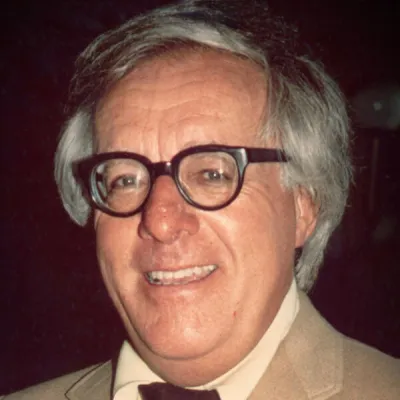
Ray Bradbury
Human Design Chart
Biography
Bradbury is best known for his novel Fahrenheit 451 (1953) and his short-story collections The Martian Chronicles (1950), The Illustrated Man (1951), and The October Country (1955). Other notable works include the coming of age novel Dandelion Wine (1957), the dark fantasy Something Wicked This Way Comes (1962) and the fictionalized memoir Green Shadows, White Whale (1992). He also wrote and consulted on screenplays and television scripts, including Moby Dick and It Came from Outer Space. Many of his works were adapted into television and film productions as well as comic books. Bradbury also wrote poetry which has been published in several collections, such as They Have Not Seen the Stars (2001).
The New York Times called Bradbury "An author whose fanciful imagination, poetic prose, and mature understanding of human character have won him an international reputation" and "the writer most responsible for bringing modern science fiction into the literary mainstream."
Human Design Analysis: Ray Bradbury as Manifesting Generator 6/2
Manifesting Generator 6/2 — Design at a Glance
Ray Bradbury revealed himself as someone who combined hybrid energy: the constant power of a Generator with the lightning-fast alignment of a Manifestor. His design suggested that he could skip steps and quickly draw results into his life. However, this ability to work at speed stood in tension with his fundamental strategy. As a Manifesting Generator, Ray Bradbury had a defined Sacral Center, meaning his true energy source lay in reacting to impulses rather than initiating on his own will.
The mechanics of his type described a clear dynamic: when he responded to life and his inner self – the sacral 'yes' – deep satisfaction ensued. In this state, variety was beneficial; the pressure to finish one thing before starting another did not suit his nature. Instead, his creative power flourished in 'play mode', where multiple projects ran parallel and internal agreement prevailed.
If he ignored this strategy and acted out of pure will or haste without waiting for an inner impulse, frustration quickly followed. Here, the risk of his design was evident: through excessive speed, important steps could be skipped, creating residue and dissatisfaction. Ray Bradbury's path to effectiveness lay in using his natural multi-tasking ability only when it was legitimized by sacral reaction. Thus, potential friction turned into productive, varied energy while ignoring the inner signal forced him to work against his own rhythm.
Sacral Authority
Ray Bradbury did not base his decisions on cognitive analysis but rather on an internal, bodily resonance. His design determined him as a Generator with Sacral Authority, a decision-making instance exclusive to this type and whose strategy also served as his inner guidance. This fundamentally simplified his process: he waited for an external trigger and then listened to his physical response. This manifested as gut feeling or a noticeable surge of energy – often audible through grunts, hums, or affirming mhm sounds. When his sacral motor kicked in, he felt vital and energized, enabling him to pursue tasks with great enthusiasm and without obsessive purposefulness.
This authenticity was reinforced by the structure of his centers. His open Emotional Center prevented emotional delays in immediate decision-making; he did not have to wait for clarity that would only come later. Instead, his active Spleen Center directly supported Sacral Authority. This connection allowed for quick, spontaneous reactions and direct access to instinctive perception as well as physical wellbeing. Ray Bradbury could thus reliably guide himself from these deep, physical signals, allowing him to fully immerse in his actions and shape his life with a natural, inexhaustible energy that arose directly from his body's response to the world.
The 6/2 Profile — Role Model / Hermit
Ray Bradbury's design pointed towards a two-phase development tendency. In the first three decades of his life, he showed himself as someone who learned through intensive experimentation and the principle of trial and error. This phase was marked by a quest for diverse personal experiences where mistakes were not seen as final destinations but necessary steps.
This dynamic resulted from his Profile configuration 6/2, also known as the Role Model or Natural Talent. Before turning thirty, the energy of Line 3 dominated, promoting an experimental attitude. Only after this age did Line 6 fully activate. This transition marked a shift from reckless experimentation to a phase of withdrawal and detachment.
In this later life stage, Ray Bradbury metaphorically retreated into a 'cave on the mountain' to observe his earlier experiments from afar. This period served for intense reflection, healing, and deep self-awareness. Line 6 brought themes such as finding meaning and perseverance even when immediate sense was not apparent.
From this withdrawal, he developed a selective focus on few essential things in the here and now. When he finally emerged from his isolation, it was as a wise person whose insights had ripened through prior detachment. Others sought him out to partake of this life wisdom and learn from his ability for deep introspection. His authority did not stem from external pressure but from this inner, selective clarity.
Single Definition — Defined & Open Centers
Ray Bradbury revealed himself as someone with a constant, inner machine logic: a mind that constantly generated concepts and directly expressed them, coupled with clear identity and massive reactive energy source. His defined Ajna Center ensured a trustworthy, specific mental function; he thought all the time and was hard to influence from outside. These thoughts flowed into his defined Throat Center, where he articulated what he conceptualized – his voice was the reliable channel of his ideas.
At the same time, he possessed a firm sense of self through his defined G Center, giving him a sense of direction without being dependent on others. The driving force behind this was his defined Sacral Center: an enormous source of vital energy that only became available in response to stimuli. His strategy involved not initiating but waiting for life to ask before responding with full sacral power and finding satisfaction.
This strong inner structure contrasted with his open centers, which made him an antenna for external fields. His open Head Center lacked constant inspiration; he tended to absorb mental pressure from the environment or be influenced by others' doubts rather than seeking his own answers. The lack of consistent willpower in his open Heart Center left him vulnerable to conditioning, feeling the need to prove his worth and getting caught in cycles of promise and failure.
Emotionally, he was through his open Solar Plexus Center vulnerable: he absorbed and amplified others' feelings, which could lead to experiencing other people's moods as his own or avoiding confrontation out of fear of rejection. His open Spleen Center carried a fundamental survival anxiety; he unconsciously sought the beneficial frequency of defined spleens in others, potentially leading to unhealthy dependencies if he did not learn to avoid spontaneous decisions. Finally, his open Root Center took on stress and adrenal impact from his environment, often feeling overwhelmed or trying to release pressure that was never really his.
Channels for inspiration, leadership, charisma and structuring.
Ray Bradbury showed himself as someone who inspired others to live their unique nature through the bold expression of his own. This effect did not arise from verbal guidance or explanations but rather from his mere presence and actions; he lived his individual direction.
This configuration stemmed from the Channel of Inspiration 1-8, connecting the G Center with the Throat Center. Gate 1, the Gate of Self-expression, allowed him to creatively express a transformative perspective while Gate 8, the Gate of Contribution, translated this energy into a public context. Ray Bradbury was designed to draw public attention by living as an individual and showcasing his creative identity. His task was to act from inner, authentic authority since this channel did not have built-in social adaptability. Instead, he had to cultivate patience to wait for the right timing and claim recognition of his individuality from others. His leadership was a co-creation between his dedication to self-expression and the audience's willingness to receive this inspiration.
Alongside this inspiring power, the Channel of Alpha 7-31 also worked as juxtaposed energy in his design. This channel connected logical collective leadership with foresight. While the Channel of Inspiration led individually and by example, the Alpha brought the ability to understand patterns and direct from an influential position. Ray Bradbury naturally sought his own influence area, his 'pack', highlighting essential qualities. Yet unlike absolute rule, this leadership was based on community trust; he could show the way but not take it over. This combination of individual inspiration and logical leadership role shaped how he initiated changes in perception of truth and beauty by both serving as a model and conveying structural insights.
Individual Circuitry — Circuit Signature
Ray Bradbury's design combined emotional inspiration with rational structure and charismatic presence. The Knowledge Circuit worked through the Channels of Inspiration (Gates 1-8) and Structuring (43-23). This connected Ajna Center, Throat Center, and Identity Center into a direct flow. New impulses from the mind were emotionally colored and structurally shaped before being verbally expressed. This energy was pulsing and acoustically driven by the need to transform unique identity through emotional waves.
Parallel to this, Ray Bradbury activated the Understanding Circuit via the Channel of Alpha (7-31). This also connected Throat Center with Identity Center but added an emotionless, rational strategy. Visions were logically structured and visually depicted for the future, free from conditioned emotions.
The Integration Circuit worked through the Channel of Charisma (20-34) as a catalyst in the present moment. It linked Throat Center with Sacral Center. Intuitive reactions to life (Gate 34) were expressed through manifesting power (Gate 20) in highest individuality, ensuring survival.
Though all three circuits were active, they did not form one continuous energy path between all centers. The connection of mind and integration occurred via Throat Center as an interface, while the energetic qualities – pulsing, visual, and charismatic – existed side by side. Ray Bradbury utilized this configuration to make transformative knowledge effective through rational filtering and direct, charismatic emanation in the present moment.
Left Angle Cross of Industry 2
Ray Bradbury's design carried the signature of the left Labour Cross 2. This configuration indicated a specific energetic alignment, but its mechanical details were not further specified. Without additional information about involved channels or centers, no detailed character traits could be derived. Therefore, the emphasis was solely on naming this structure without descriptive characteristics to fill it out. It represented a general assignment within the system that did not reveal any concrete behavioral patterns or psychological tendencies. The focus remained on the mere existence of this cross in the chart while any explanation of its effects or implications was missing. This meant that at this point, his design provided no specific instructions for life or personality. The mechanics remained abstract and without reference to everyday experiences or decisions. Ray Bradbury lived with this indeterminate energy configuration, whose meaning did not manifest in clear action impulses. There were no indications of particular talents or challenges directly arising from this cross. Thus, the analysis was limited to identifying the structure itself without placing it into a broader context. This differed from other aspects of his design that might have provided clearer directions.
Saturn Return · Uranus Opposition · Chiron Return · 2nd Saturn Return — Life Cycles
Ray Bradbury's life followed a clear rhythm of commitment and radical realignment. His design set up a framework where responsibility and professional transformation alternated. In 1947, at the age of 27, he entered his first Saturn Return cycle. This period often marks the transition to adult independence and the solidification of commitments. Ray Bradbury married Marguerite McClure and published his first book. These events condensed years of groundwork into a stable foundation of partnership and literary debut, typical for the stabilizing power of this astronomical turning point.
Another significant stage he reached in 1962 with the Uranus Opposition at age 42. This phase often demands profound inner restructuring and can lead to sudden, necessary changes. Ray Bradbury published 'Eat the Animal When It's Evening'. This marks a moment of professional transformation where old patterns were broken to find new expression. Thus, his life cycled between anchoring in Saturn cycles and disruptive renewal through Uranus, both phases shaping his development.
Manifesting Generator · Sacral Authority — Synthesis
Ray Bradbury was a Manifesting Generator whose life was marked by a dynamic interaction between sacral energy and mental definition. The defined Sacral Center (and the associated sacral authority) provided a constant stream of life force that propelled him to react to external stimuli and quickly turn ideas into action – an attribute amplified by his Manifestor component type. This drive combined with a defined Ajna Center, which fostered consistent conceptual thinking and gave him the ability to shape concepts and express visions (Channel 1-8). Thus, there was a continuous flow of creative energy that led him to explore new paths and transform knowledge.
Bradbury's design also contained a central paradox: the tension between the impulse for quick initiation and the necessity not to skip steps. The Line 6 in his profile indicated development where early experimental phases (up to around age 30) were followed by periods of intense reflection and wisdom. This was reflected in documented events as well: an early engagement in relationships and career was replaced by periods of deeper self-discovery and creative productivity. He thus lived a cycle of quick action followed by withdrawal to process what had happened and draw new inspiration from it.
4 Defined Channels
Incarnation Cross - Left Angle Cross of Industry 2
Solar Return
The Solar Return shows the moment when the sun returns to its exact birth position - your personal solar year.
Life Cycles
Discover the life cycles with a detailed triple view (birth chart, cycle chart, composite).
Human Design Profile
- Strategy
- To respond - wait for something to respond to
- Authority
- Sacral Authority
- Profile
- 6/2 - Role Model / Hermit
- Definition
- Single Definition
- Incarnation Cross
- Left Angle Cross of Industry 2
- Date of Birth
- 22.08.1920 16:50
- Place of Birth
- Waukegan, United States
Frequently Asked Questions
What was Ray Bradbury's Human Design type?
What Profile did Ray Bradbury have in Human Design?
What Authority did Ray Bradbury have?
What incarnation cross did Ray Bradbury have?
When was Ray Bradbury born?
Discover your own Human Design
Are you also a Manifesting Generator? Find out in a personal reading how to unfold your multi-talents and direct your energy wisely.
More Personalities
Back to overviewAlain-Fournier

Aldair

Alizée

Angeli

Arletty

Artus