
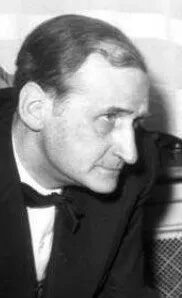
Reinhold Schneider
Human Design Chart
Biography
He died on 6 April 1958.
Human Design Analysis: Reinhold Schneider as Generator 3/6
Generator 3/6 — Design at a Glance
Reinhold Schneider's design showed a tendency towards immense endurance. As a Generator, he had plenty of sacral energy, which made him extremely strong and resilient like a workhorse – provided this power was used for tasks that truly interested him. His life force did not generate itself through sheer will but arose from the reaction to external impulses. Therefore, his system's motto was: Not initiate, but react.
When a signal came from life and his sacral center responded with an inner 'Yes! Let's get started!', he could respond with action and effectively materialize his energy. In these moments of resonance, no one could stop him; he was rewarded with deep satisfaction and a sense of true fulfillment.
However, this functioning was sensitive to two stumbling blocks. If he tried to persistently do things that he actually had no interest in, wasted his energy or ignored the inner 'No', his system quickly tended towards burnout despite its high potential for productivity. Conversely, he suffered greatly when prevented from working on his heart project even though he still wanted to continue with full power. If he initiated independently rather than waiting for impulses, sooner or later he encountered a feeling of persistent frustration and a clear lack of energy. His path to effectiveness therefore always led through reacting from the gut.
Emotional Authority
Reinhold Schneider's inner guidance was determined by Emotional Authority, carried by his defined Solar Plexus Center. In his design, this authority had absolute priority; regardless of which other centers were defined, the emotional wave served as the primary decision-making instance. His perception was always colored by the current mood, leading to a constant up-and-down in his view of situations and people. What appeared inspiring at one moment could seem negative in the next. However, these fluctuations did not mean that the first impression was the truth. Quick, spontaneous reactions based on fleeting emotions often proved problematic for him, as they were based solely on a snapshot. Instead, his mechanism required patience and time to let decisions mature. By hesitating and thinking through important questions multiple times or letting them rest overnight, he gained emotional distance. Intense feelings subsided, clarity and calmness set in. Only then was the process complete and the true direction recognizable. This mechanism served to base long-term life decisions not on fleeting moods but on a deeper, more comprehensive understanding that could only be achieved through waiting for an emotional high tide.
The 3/6 Profile — Martyr / Role Model
Reinhold Schneider's design showed a tendency towards persistent experimenting, paired with inner conflict between the urge to play and the need for reflective distance. Until around age 29, he primarily acted under the influence of Line 3: He tried things out, made mistakes, and learned from them. This phase was marked by courage in individuality but could also evoke envy or suspicion due to his often mysterious demeanor. Only after Saturn's return, roughly at thirty years old, did his inner dynamics fundamentally change. Line 6 became active and demanded a retreat for reflection on past experiences. Schneider's design now carried both the playful energy of a child and the wise perspective of an elder. This duality created frequent uncertainty; though he seemed to show control outwardly, he felt internally torn between wanting to play and needing to think things through. Line 6 brought clarity and questions about principles, especially in the context of changes or revolutions. Decisions were made slowly, based on emotional clarity and testing whether they promoted justice. In his later years, around fifty years old, this configuration should develop into a great role model function. Through integrating both lines – the experimenting of Line 3 and the wise guidance of Line 6 – he became an educator through charm and insight, showing others how to gain solid life wisdom from trial and error.
Triple Split Definition — Defined & Open Centers
Reinhold Schneider's design created a tendency towards constant mental pressure to ask questions and seek answers. The definition between Head Center and Ajna Center established a permanent stream of inspiration that pushed him to understand connections. However, this process was not directly action-oriented; the lack of an energy connection to the motors meant he had to wait for others to pick up on his impulses. His thinking primarily served as a catalyst for the environment, not as a direct trigger for actions.
At the same time, Reinhold Schneider possessed a firm identity and direction through his defined G Center. This gave him a reliable sense of self and the ability to offer guidance to others without having to take over their paths. His communication was also consistently marked: The defined Throat Center allowed him to express his thoughts and concepts clearly and steadily if he followed the source of this definition.
As a Generator with a defined Sacral Center, he had an enormous vital energy source that could only be activated through reaction. The strategy involved not initiating but waiting for questions or situations before reacting from the gut with a yes-or-no answer. This protected him from exhaustion and frustration as sacral energy was not available for mental decisions.
In contrast, Reinhold Schneider showed himself to be vulnerable in his open centers. His open Heart Center lacked consistent willpower; he tended to want to prove himself through promises and suffered under the pressure of appearing competitive. The open Spleen Center made him sensitive to health and survival fears as well as the temptation to make spontaneous decisions or cling to unhealthy environments to simulate a sense of security. These opennesses required conscious distancing from impulsive reactions and the need for external validation.
Channels for clarity, logic, rhythm, principles and intuition.
Reinhold Schneider's design established a basic attitude of healthy skepticism, paired with a deep desire for cohesion and clear expressiveness. His mind was not a passive observer but an active filter for patterns. The Logic Channel 63-4 connected his Head Center to the Ajna Center through the Gate of Doubt (63) and the Gate of Formulation (4). This created a doubting mind that constantly checked whether ideas were consistent. Only what proved itself as verifiable and functional found entry into his convictions; unfounded belief had little room here. This logical rigor served to provide well-founded predictions for the collective.
At the same time, he was driven by an intense desire for new experiences. The Recognition Channel 41-30 connected the Root Center with the Solar Plexus through the Gate of Limitation (41) and the Gate of Feeling Recognition (30). Here restlessness gave rise to a longing to deeply feel the world. Emotions heated up this drive, which led him to face new situations to grow from inexperience into experience. This process required patience as the emotional wave needed time to gain clarity about the true nature of the desire.
In interpersonal relationships, Reinhold Schneider sought a balance between feasibility and fairness within his community. The Synthesis Channel 19-49 connected the Root Center with the Solar Plexus through the Gate of Claims (19) and the Gate of Principles (49). This marked him as someone who was strongly concerned with loyalty and the protection of the tribe. He wanted to be needed and clearly define his position in the whole. His emotional sensitivity served to check who belonged to the group and supported shared ideals.
His expression often occurred through spontaneous insights. The Structuring Channel 43-23 connected the Ajna Center with the Throat Center through the Gate of Insight (43) and the Gate of Assimilation (23). This allowed him to articulate innovative perspectives clearly. His thinking often felt forward-looking; he had to learn to wait for his timing so that his unique concepts were accepted as useful rather than foreign by the environment.
Additionally, personality gates like Gate 35 (Change through Interaction) and Gate 6 (Friction for Further Development) pushed him into dynamic processes, as well as Gate 22, which gave him a calm openness to social mutations. In his design, Gates 64 (Clarity from Past Experiences) and 11 (Visual Memory) supported his ability to assess situations accurately before acting.
Collective Circuitry — Circuit Signature
Reinhold Schneider's design presented itself as a triple definition, consisting of three separate yet parallel functioning energy fields. In the Knowledge Circuit, Channel 43-23 connected the Ajna Center with the Throat Center. This promoted a tendency towards structuring thoughts: internal concepts were clearly formulated and expressed linguistically precisely, emphasizing his unique identity.
The Understanding Circuit showed two isolated segments. The first linked the Head Center to the Ajna Center (Channel 63-4, Logic), generating spontaneous, focused impulses for rational analysis. The second segment connected the Identity Center with the Sacral Center (Channel 15-5, Rhythm). Here a constant life energy worked to sustain will and personal orientation persistently but without direct connection to logical thinking.
In the Meaning Circuit, Channel 30-41 (Recognition) linked the Solar Plexus Center with the Root Center. This configuration generated cyclical emotional waves: feelings and intuitive insights from past experiences were processed to gain deeper understanding of oneself.
The Ego Circuit followed suit, also through Channel 30-41 (Synthesis), connecting Solar Plexus and Root. Although this circuit emphasized cooperation and resource creation in the collective, Reinhold Schneider lacked a direct connection to the Sacral Center within this circle. Instead, emotional cycles from the Meaning Circuit were also at work here, indicating that support and exchange strongly depended on his current emotional state and internal synthesis rather than an automatic, resource-based strategy.
Right Angle Cross of Explanation 2
Reinhold Schneider's design carried the structure of the right cross of the statement. This configuration shaped a fundamental attitude in which inner clarity and outer expressiveness were closely intertwined. It was not mere rhetoric, but rather a deep impulse to articulate what he understood and thereby bring order into his experiential world. The energy of this structure promoted a kind of thinking that always aimed at comprehensibility and precision. Reinhold Schneider showed himself as someone who did not keep his insights for himself, but formulated them linguistically to share with others. This often happened out of an inner compulsion to give clear form to what he had understood. The connection between mind and expression was central here: without the possibility to explain something, understanding felt incomplete. This dynamic worked as a constant drive to put complex connections into words that were comprehensible for others. It was less about persuasive power in a strategic sense than about the authenticity of the expression itself. Reinhold Schneider's path was thus marked by the necessity to make his inner truth visible and tangible through language, thereby creating a bridge between personal experience and common understanding.
Saturn Return · Uranus Opposition · Chiron Return — Life Cycles
Reinhold Schneider's design laid a tendency towards structural consolidation followed by later deep renewal. This dynamic manifested concretely in his life stations. In 1931, at the age of 28, he published 'Portugal. A Travel Diary' as well as 'Philip II or Religion and Power'. This point marked the first Saturn return, a cycle where years of preparatory work often condenses into a solid, public result and strengthens one's professional authority.
The development continued with the Uranus opposition. In 1946, at age 43, 'The Return of the German Spirit' was published. This phase typically brings a necessary break or reorientation where old structures must be given up to make room for new self-understanding. Schneider used this pressure to formulate a spiritual reflection.
The peak of this development occurred with the Chiron return. In 1952, at age 49, he received the Knight's Cross of the Order 'Pour le Mérite', Peace Class. This cycle is not a time for wound healing but rather a blooming phase: one's incarnation cross unfolds increasingly here if the person has followed their strategy. The order was no mere distinction but visible confirmation that Schneider's life path and his contribution to spiritual order were now recognized as fulfilled and meaningful. His design thus worked through clear phases of consolidation, transformation, and final meaning-making.
Generator · Emotional Authority — Synthesis
Reinhold Schneider lived deeply in the tension between inner truthfulness and the drive to generate and convey knowledge. As a Generator with emotional authority, he needed time for decisions to mature (emotional center), yet his defined Head and Ajna Centers created constant pressure to question and recognize patterns (mental pressure). This configuration drove him to filter the world through his unique lens and gain insights – a process accompanied by doubts (Channel 63-4) but ultimately leading to new formulations. He drew from a deep energy source, yet always had to ensure not to waste it on unsatisfying tasks but use it for his heart project.
This interplay of inner maturation process and mental activity shaped his life path. The first nearly thirty years were marked by experimentation (3/6 Profile), followed by a phase of reflection and outlook where he categorized his experiences. Documented events showed that he repeatedly reinforced his unique path through creative work and recognition of his achievements (Saturn return, Uranus opposition, Chiron return) – in harmony with the knowledge circuitry enabling him to create and express new knowledge.
5 Defined Channels
Incarnation Cross - Right Angle Cross of Explanation 2
Solar Return
The Solar Return shows the moment when the sun returns to its exact birth position - your personal solar year.
Life Cycles
Discover the life cycles with a detailed triple view (birth chart, cycle chart, composite).
Human Design Profile
- Type
- Generator
- Strategy
- To respond - wait for something to respond to
- Authority
- Emotional Authority
- Profile
- 3/6 - Martyr / Role Model
- Definition
- Triple Split
- Incarnation Cross
- Right Angle Cross of Explanation 2
- Date of Birth
- 13.05.1903 15:00
- Place of Birth
- Baden-Baden, GER
Frequently Asked Questions
What was Reinhold Schneider's Human Design type?
What profile did Reinhold Schneider have?
What authority did Reinhold Schneider have?
What incarnation cross did Reinhold Schneider have?
When was Reinhold Schneider born?
Discover your own Human Design
Are you also a Generator? Find out in a personal reading how to use your sacral energy correctly and discover deep satisfaction.
More Personalities
Back to overviewAaliyah

Alain-Fournier

Alexia

Angèle

Angeli

Anne-Marie
