Richard Attlesey
Human Design Chart
Biography
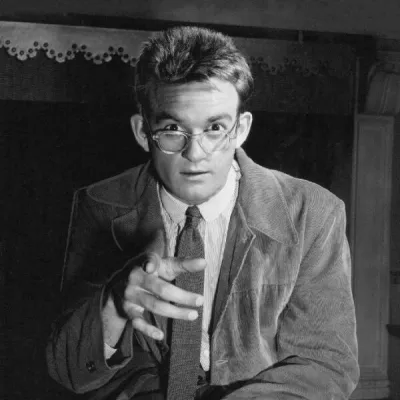
Attlesey won the 110 m hurdles event at the 1950 Amateur Athletic Union Championships and repeated the feat the year after. He won the hurdles gold medal at the first edition of Pan American Games in 1951. He competed collegiately for the University of Southern California and won the NCAA title in 1950. After an almost two-year winning streak, injuries curtailed his career in 1952.
Richard Attlesey — Manifesting Generator with Profile 1/3
Manifesting Generator 1/3 — Design at a Glance
Richard Attlesey revealed himself as someone working with hybrid energy: constant power paired with the ability to skip steps. His design as a Manifesting Generator combined the sacral endurance of a Generator with the direct impact of a Manifestor, allowing him to swiftly draw results into his life and work on multiple tasks simultaneously.
The challenge lay in this speed. Often he would skip necessary intermediate steps, leading to the need to return later to fill gaps—a potential source of frustration. Additionally, he tended to react to many impulses at once and start several projects concurrently. When inner consent was lacking, this creative enthusiasm quickly turned into overwhelm.
The solution involved not initiating but waiting for life to prompt him. Only when his sacral center gave a clear "yes" did he begin acting. This reactive mode protected him from false starts. Once this condition was met, he greatly benefited from variety and a playful approach. Instead of focusing on one thing alone, he drew deep satisfaction from working on different tasks in parallel. His efficient creation did not come through linear planning but through trust in his inner confirmation while simultaneously utilizing his natural speed and versatility.
Sacral Authority
Richard Attlesey's decision-making process was based on a direct physical resonance. As a Generator, his strategy to react aligned perfectly with his Inner Authority: Sacral Authority. This mechanism fundamentally simplified his process because he didn't have to switch between strategic action and intuitive guidance. His responses to external stimuli manifested as physical signals – a grunt, hum, or a noticeable surge of energy in the abdominal area. When this resonance occurred, he felt vital and energized; when it was absent, the energy faded. This allowed him to engage in activities with great enthusiasm and without obsessive purposefulness. Supporting this process was his active Spleen Center. The connection to Sacral Authority gave him a special ability for spontaneous, instinctive reactions. He had immediate access to his physical well-being and could reliably guide himself from this deep perception. This configuration shaped him as someone who moved through life by laughing at the direct impulses of his body and using them as a reliable source for his actions. The distinction between the energy-rich "yes" of the Sacral Center and its absence formed the foundation of his inner orientation.
The 1/3 Profile — Investigator / Martyr
Richard Attlesey revealed himself as someone who based his judgments on a double check: theoretical study and practical testing. His design, the Profile 1/3 (Researcher/Experimenter), set a life task that stood in the tension field between deep knowledge and learning through mistakes. Line 1 drove him to grasp new insights intensely and introspectively, often with an evangelical zeal for authority in this area. But theoretical depth alone was not enough; Line 3 demanded experimentation, courage to break rules, and testing old structures rigorously – even if this led to dissatisfaction or even destruction of the existing order.
Errors in this pattern were no failures but essential teachers. When Richard Attlesey evaluated something as good, his recommendation was trustworthy because it was both intellectually grounded and practically tested. The dynamics of his design meant that he only validated the theoretical concepts of Line 1 through the "trial and error" process of Line 3. This created an authenticity in judgment: His knowledge was not just abstract but proven in reality. The process required him to set aside reservations and, if necessary, free himself from outdated principles to gain new, tested insights. His credibility arose precisely from consistently following the path from researcher to experimenter.
Split Definition — Defined & Open Centers
Richard Attlesey's design inclined towards constant, independent presence driven by five defined centers: Ajna, Throat, Heart, Sacral and Root. These areas were always active and formed a stable foundation of consistent thinking (Ajna), clear communication (Throat), pronounced willpower (Heart), vital energy (Sacral) as well as a firm handling of stress (Root). His mental function was specific and trustworthy; he processed data constantly, making him hard to influence. The connection between Ajna and Throat ensured that he spoke what he thought. His defined Heart Center gave him the strength to keep promises and recognize his worth, while the Sacral Center acted as a motor generating enormous vitality available through reactions to requests. The Root Center provided the necessary pressure to move forward in the world.
At the same time, four open centers – Head, G-Center, Solar Plexus and Spleen – existed without consistent patterns. His open G-Center meant that Richard Attlesey did not have a fixed identity or direction; he found these only through interaction with the right environment and people. He tended to question who he was or which direction was correct rather than knowing it from himself. The open Solar Plexus Center absorbed foreign emotions, making him vulnerable to emotional conditioning; he had to learn to maintain distance to avoid bouncing up and down on others' waves. His open Head Center lacked consistent inspiration, so he could take mental pressure from the environment without having his own answers. The open Spleen Center carried fears of survival and a lack of well-being, which made him cling to secure structures or people that were not necessarily healthy. The challenge was to use his strong inner strength from defined centers without compensating for uncertainties in open areas.
Channel 43-23: Structuring — Channels & Gates
Richard Attlesey exhibited a way of thinking often like a quantum leap: spontaneous insights he translated into clear, efficient language. This was not the result of planning but the mechanics of the channel of Structuring 43-23. Here, the Gate of Insight (43) connected with the Gate of Assimilation (23). His mind received transformative ideas and broke them down until they were understandable for others. The challenge lay in timing: his knowledge had to wait until it was accepted by the environment. Without this patience, his pioneering role led to alienation; he felt like an outsider waiting for an invitation to bring his genius forward. Only when insight was correctly recognized and expressed at the right moment could it change the collective.
This intellectual sharpness contrasted with his curiosity, driven by the channel of Curiosity 11-56. Here, he linked abstract ideas (Gate 11) with a search for inspiration (Gate 56). He was less interested in dry facts than weaving stories and parables that taught or entertained others. His creativity showed in transforming philosophical considerations into captivating narratives that appealed to imagination and feelings.
Parallel to this, the channel of the Money Line 21-45 shaped his relationship with the material world. The connection between the Gate of the Hunter (21) and the Gatherer (45) pushed him to take responsibility for resources. He sought control over his work to protect the heart of his tribe – his own ego center – and secure independence. It was about earning money through willpower, but only under conditions that respected his natural rhythm.
This was underscored by the channel of Maturity 42-53, which forced him to complete experiences (Gate 53) and draw wisdom from them (Gate 42). Each experience had to reach a conclusion before he could dive into new cycles.
Additionally, Gates like the Gate of Revolution (49), demanding principle loyalty, as well as the Gate of Formulation (4), creating logical structures for the future, influenced his personality. His design was further shaped by the Gate of Change (35) and experimental Gate 16 while supported by Gates such as the Contributor (8) and skilled power handling (14).
Collective Circuitry — Circuit Signature
Richard Attlesey's design showed a tendency towards individual creation and structuring of knowledge, paired with cyclical processing of emotional past data and a resource-oriented focus on cooperation. These three fields existed as separate, parallel acting forces within his split definition.
In the Knowledge Circuit, the channel 'Structuring' (43-23) connected Ajna Center with Throat Center. This allowed him to transform inner concepts through individual identity and express them as new knowledge. The Meaning-Finding Circuit consisted of two independent parts: one linked Ajna and Throat Centers (channel 'Curiosity' 11-56), the other Sacral and Root Centers (channel 'Maturity' 42-53). Here it was about wave-like reflection of past experiences to draw collective lessons. Since these groups were not connected, cognitive processing and energetic maturity operated separately from each other.
The Ego Circuit linked via 'The Money Line' (45-21) Throat Center with Heart Center. This promoted cooperation and resource management within a tribe through clear giving and taking. As there was no connection to the Sacral Center, this dynamic interaction required necessary pauses for regeneration of life force. Richard Attlesey thus operated in a field that united individual transformation, emotional meaning-making, and traditional tribal cooperation as separate but coexisting energies.
Right Angle Cross of Explanation 2
Richard Attlesey's Human Design carried the structure of the Right Cross of Explanation. This configuration shaped a fundamental approach aimed at penetrating complex connections and presenting them in a way that others could understand. It was not just about sharing information but rather a deep process of understanding and conveying insights.
The Right Cross of Explanation describes an energetic alignment where the individual is called to decipher hidden truths or principles and communicate this clarity to their environment. Richard Attlesey lived in a dynamic that constantly confronted him with the urge to see things not only superficially but to grasp their essence so precisely that others could absorb it. This mechanism acted as a constant inner compass: it challenged him to reject surface-level explanations and instead seek out the underlying logic.
As no specific Gates or Channels are detailed in the raw content, interpretation is limited to this abstract concept. It reveals that Richard Attlesey played a role where explaining and understanding were inseparably intertwined. His energy was directed towards bringing light into darkness – not through authority but through the clarity of presented connections. This was not an optional feature but a central aspect of his human expression, influencing his actions and interactions sustainably.
Saturn Return · Uranus Opposition · Chiron Return — Life Cycles
Richard Attlesey went through classical astrological cycles in life marking structure and change. His design included the first Saturn return, that point where early ambitions often transform into stable long-term commitments. This cycle acted as a test for his inner alignment and challenged him to take responsibility for what he had previously built. Simultaneously, the Uranus opposition was evident. This phase often brought unexpected breaks or a drive towards radical change. It questioned established patterns and forced detachment from structures no longer fitting true self. It was a time of liberation but also uncertainty, where old bonds were dissolved to make space for new impulses. Later, the Chiron return occurred. This cycle marked not therapeutic healing but completion. Here, the bloom of his life path became clear if he had followed his inner strategy previously. It was a phase of integration where his entire life purpose condensed into a coherent whole. These three phases – stabilization through Saturn, breakage through Uranus and fulfillment through Chiron – shaped his life story as a dynamic process of building, dissolution and ultimately meaningful completion. They describe not random events but deeply rooted rhythmic patterns structuring his development.
Manifesting Generator · Sacral Authority — Synthesis
Richard Attlesey lived a life marked by a profound inner dynamism: the constant interplay between initiation and reaction. As a manifesting generator with a defined Throat and Heart Center, he had the ability to quickly spark things but simultaneously required his sacral center's response from life itself before delving deeply. This combination led to natural curiosity (Channel 19) and a drive to collect experiences and share knowledge (Channel 2-30), while Channel of Maturation (42-53) ensured he drew wisdom from every cycle. His ability to structure (Channel 23-43) enabled him to process complex ideas clearly – a talent amplified by the connection between Ajna and Throat Centers.
A central paradox in Richard Attlesey's design lay in the tension between his need for autonomy and his capacity for quick initiation. While he relied on responding to impulses as a generator, he also possessed the energy to set things in motion himself. This duality could lead him to overextend or skip crucial steps (as described in the Manifesting Generator Design), yet if he respected his strategy and authority, he could harness this seeming contradiction for a fulfilling and impactful life.
4 Defined Channels
Incarnation Cross - Right Angle Cross of Explanation 2
Solar Return
The Solar Return shows the moment when the sun returns to its exact birth position - your personal solar year.
Life Cycles
Discover the life cycles with a detailed triple view (birth chart, cycle chart, composite).
Human Design Profile
- Strategy
- To respond - wait for something to respond to
- Authority
- Sacral Authority
- Profile
- 1/3 - Investigator / Martyr
- Definition
- Split Definition
- Incarnation Cross
- Right Angle Cross of Explanation 2
- Date of Birth
- 10.05.1929 12:30
- Place of Birth
- Compton, California, United States
Frequently Asked Questions
What was Richard Attlesey's Human Design type?
What Profile did Richard Attlesey have in Human Design?
Which Authority guided Richard Attlesey?
Which incarnation cross was active for Richard Attlesey?
When was Richard Attlesey born?
Discover your own Human Design
Are you also a Manifesting Generator? Find out in a personal reading how to unfold your multi-talents and direct your energy wisely.
More Personalities
Back to overviewAldair

Alizée

Angeli

Arletty

Artus

Balthus