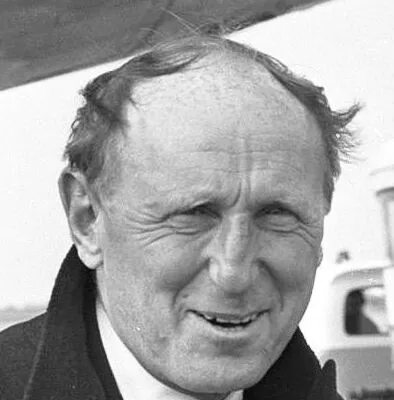
Richard Bach
Human Design Chart
Biography
Richard David Bach was born to Roland, a Red Cross chapter manager and former US Army chaplain, and his wife, Ruth. The tall and rangy youth grew up in Oak Park, Illionis and Long Beach, California. When his high school creative writing teacher promised an "A" only if the student had a check for a published article, Bach sold a story about an astronomy club to the local newspaper. He attended Long Beach State College for a year, highlighted by flying lessons on weekends which he had in exchange for polishing a fellow student’s plane. He was drawn to the idea of flight, and quit college to join the US Air Force, where he became a fighter pilot with a ground assignment as supply officer. Consequently, he left the Air Force in 1959 and joined the Air National Guard, so he could fly jet fighters on weekends while living as a civilian.
During the ‘60s, he tried to support both his growing family and his private airplane. He worked as a technical writer for Lockheed Aircraft, and as an editor of "Flying" magazine for three years. He also took on directing the Antique Airplane Association as well as editing its magazine, "The Antiquer." In between, he did some charter-piloting, barnstorming through the Midwest, and occasional odd jobs. He failed the "personal image" test required to become a commercial airline pilot.
He sold many articles to flying publications, but his poetic style may have worked against him in getting the more lucrative reporting assignments.
Richard Bach as a Projector 5/1 in Human Design
Projector 5/1 — Design at a Glance
Richard Bach's design points towards focused perception: His aura seemed like a bright flashlight that immediately revealed system errors in others. This Projector configuration does not mean constant life energy but rather alternating phases of high speed with necessary rest periods to prevent burnout. Direct criticism would provoke rejection; instead, his effectiveness was shown through harmonious example. When he lived functioning patterns himself, others were drawn to him and then asked for his solutions. The strategy involved waiting for an honest invitation rather than giving unsolicited advice. This protected his limited energy from overload due to conventional expectations. Living according to this design rewarded him with success; ignoring this dynamic and trying to fight against the current or remain constantly available led to bitterness as a result of non-self. His leadership thus did not lie in direct correction but in indirect attraction through authentic radiance.
Splenic Authority
Richard Bach's design points towards intuitive, body-based decision-making. He showed himself to be someone who trusted spontaneous impulses to protect health and rigorously separate from harmful influences. This mechanism is rooted in his authority in the defined Spleen Center. Since the Emotional and Sacral Centers are open – a configuration that only Projectors or Manifestors can show – the Spleen functions as a central health and alarm system. It provides excellent survival intelligence: spontaneous inner knowledge about whether environment, situation, or society is correct.
The first impulse is the right one and serves immediate well-being. Richard Bach therefore needed high vigilance since this fine signal tone could easily be drowned out by other influences; a short retreat often helped to hear it again. Since inner truth is decided in the moment, long-term commitments were counterproductive for his design. Plans could change at short notice, so he needed much free space and flexibility. Spontaneity was crucial; being tied down would have worked against his natural boundary-setting ability. His design demanded acting in the moment rather than planning for the future to not overlook his own intuition.
The 5/1 Profile — Heretic / Investigator
Richard Bach's design points towards a tension-filled dual role: He was both the withdrawn researcher who looked inward and the magnetic hero whom others sought out for solutions. This Profile 5/1 combines Line 1 with its openness to various opinions and theories – the foundation of perceptive thinking – with the outer radiance of Line 5. This line acted like a magnet; people instinctively sought answers from him, similar to an expert who answers all questions in conferences.
However, this design's mechanism carried a latent danger: Without clear boundaries, exhaustion through unlimited demand threatened. Line 5 drew attention while Line 1 nurtured the deep, private reservoir of knowledge. If Richard Bach did not watch this boundary, he fell into the state of burnout – drained after hours of giving, confronted with another wave of inquiries.
The solution did not lie in hiding his gifts but in conscious 'saying no'. Only through this boundary-setting could he maintain balance: enough space for his inner research and experiments (Line 1) without being worn down by the expectations of the outside world (Line 5). Thus, potential overcompensation transformed into sustainable power where he used his knowledge purposefully and protectedly rather than letting it flow uncontrollably.
Split Definition — Defined & Open Centers
Richard Bach's design established a tendency towards consistent internal structure: his defined Ajna Center ensured continuous mental activity and concept formation, while the defined Throat Center reliably translated these thoughts into communication. This connection allowed him to clearly express his inner truth. Additionally, his defined Spleen Center – with its spontaneous, moment-based intuition for health and survival – and the defined Root Center, which provided a steady adrenergic push towards material forward movement, formed his foundation.
This stable core contrasted sharply with his open centers. His open Head Center received situational inspiration without an internal mental monologue; he tended to question whether an idea was truly his or merely absorbed. The open G Center meant that identity and direction were not fixed but had to be found through correct places and relationships – he did not actively seek his path but waited to be initiated. His open Heart Center freed him from the burden of having to keep promises or prove worth; he tended to question whether he was doing enough to be recognized, which was a conditioned trap. The open Sacral Center led to variable energy, sensitive to overloading and the need for rest, while the open Solar Plexus absorbed environmental feelings as an emotional barometer rather than generating them himself. He tended to personalize foreign emotions, which could confuse him if he did not recognize that these feelings were not his own. This architecture showed someone standing on a solid basis of thinking and expression, while identity, willpower, and emotional stability were situationally dependent on the environment.
Channels for mental order and discerning judgment.
Richard Bach's design established a tendency towards constant logical analysis. He was someone who not only absorbed information but rigorously organized and questioned it. This attitude resulted from two defined channels in his design: the Acceptance Channel 17-62 and the Judgment Channel 58-18.
The Acceptance Channel 17-62 connected the Ajna Center with the Throat Center. Gate 17 visualized patterns, while Gate 62 translated these into language. This created a permanent internal pressure to mentally organize details and precisely explain opinions. Richard Bach possessed the ability to capture visual impressions in understandable formulas or theories, which gave him a strong foundation for teaching. Everything he could not logically integrate into his mental system was incomprehensible; therefore, translating complexity into clear words was central to his perception.
Simultaneously, the Judgment Channel 58-18 operated between Root and Spleen Centers. Gate 58 drove an insatiable urge for vitality, which Gate 18 curbed through critical correction. This mechanism constantly evaluated whether patterns in the collective were cheerful or needed correction. It was a kind of internal watchman identifying imbalances and seeking perfection to keep society moving.
These two channels created tension: on one hand, the need to logically accept and name things, on the other, the impulse to perfect this acceptance through critical judgment. Situational influences included Gate 15 (collective behavior), Gate 10 (genetic behavioral rules) as well as the unchanneled design gates 52 (self-imposed pauses for concentration) and 11 (visual memories). These supported the process of pattern correction through targeted standstill phases and harmonious assessment before action.
Collective Circuitry — Circuit Signature
Richard Bach's design established a tendency towards logical, rational understanding. He was someone who structured and shared strategies to improve society or lead it into a better future – ideally free from conditioning. This was not emotional impulsivity but rather 'emotionless ratio'.
This attitude resulted from the Understanding Circuit. In Richard Bach's case, this circuit consisted of two separate, non-directly connected segments due to his Split Definition. The first segment connected the Ajna Center (Mind) with the Throat Center (Expression). The Acceptance Channel allowed him to accept visually future-oriented concepts and further structure them for communication. This created the ability to translate complex ideas into understandable formats.
The second segment connected the Spleen Center (Intuition) with the Root Center (Survival/Energy). Here, the Judgment Channel operated. It gave him a sharp sense of what was essential and the necessary energy to implement these intuitive insights. These two groups – Mind/Expression on one side, Intuition/Survival on the other – existed parallel alongside each other. They were not connected as a continuous flow but formed separate fields: one for cognitive structuring and communication, the other for intuitive evaluation and energetic endurance. Together they shaped his approach to clearly and unburdened convey rational insights.
Left Angle Cross of Prevention 1
Richard Bach's design established a profound foundational stance: life as an ongoing process of protection from danger and error. His inner compass was oriented towards preventing suffering through foresight. This is the core effect of the left cross of Prevention 1, defining not just surface behavior but the deepest, often unconscious motive of a person. The ultimate life task here is to secure stability and proactively ward off risks.
For Richard Bach, this configuration meant that safety was no accident but an active design task. The focus was on creating an environment where painful experiences could be minimized. It wasn't about paranoia or negative fear, but structural intelligence for danger avoidance. His design showed him that prevention is the highest form of care – both for himself and his surroundings.
This architecture demands clarity about what is truly threatening versus what is perceived as such. Richard Bach's path was marked by a drive to identify potential error sources early on and eliminate them. It is a design of responsibility, one that does not take stability for granted but builds it through consistent, foresighted action. The inner logic of this cross makes clear: those who recognize dangers before they occur can guide and protect the flow of life.
Projector · Splenic Authority — Synthesis
Richard Bach's design reveals a central red thread of focused observation and correction. As a Projector with defined Head and Throat Centers paired with a Spleen Authority, he is destined to identify patterns – both in systems and people – and highlight potential improvement areas (Channel 18-58). This ability is reinforced by the Hero/Researcher Profile (Line 5/1): He gathers deep knowledge to make it accessible to others, always focusing on problem-solving. The open Sacral, Solar Plexus, and G Centers indicate that he absorbs and reflects other people's energy, sharpening his perception but also making him vulnerable to conditioning. He is a mirror that amplifies the environment, thereby subtly encouraging change.
A central paradox lies in the tension between his natural ability to recognize errors (Gate 17) and the need for invitation to effectively share his insights. His design challenges him to observe and analyze the world closely, yet he must be careful not to impose his knowledge uninvited, as this could provoke resistance. The combination of defined mental clarity and undefined emotional centers creates a dynamic where logical thinking goes hand in hand with deep sensitivity to other people's energies – a state that embodies both strength and vulnerability.
2 Defined Channels
Incarnation Cross - Left Angle Cross of Prevention 1
Solar Return
The Solar Return shows the moment when the sun returns to its exact birth position - your personal solar year.
Life Cycles
Discover the life cycles with a detailed triple view (birth chart, cycle chart, composite).
Human Design Profile
- Type
- Projector
- Strategy
- Wait for the respectful invitation
- Authority
- Splenic Authority
- Profile
- 5/1 - Heretic / Investigator
- Definition
- Split Definition
- Incarnation Cross
- Left Angle Cross of Prevention 1
- Date of Birth
- 23.06.1936 12:36
- Place of Birth
- Oak Park, IL, United States
Frequently Asked Questions
Which Human Design Type is Richard Bach?
Which profile does Richard Bach have in Human Design?
What authority does Richard Bach have in Human Design?
Which incarnation cross does Richard Bach have in Human Design?
When was Richard Bach born?
Discover your own Human Design
Are you also a Projector? Find out in a personal reading how to unfold your leadership qualities and recognize the right invitations.
More Personalities
Back to overviewSissy Spacek

Alain-Fournier

Anémone

Angeli

Ann-Margret

Bourvil