
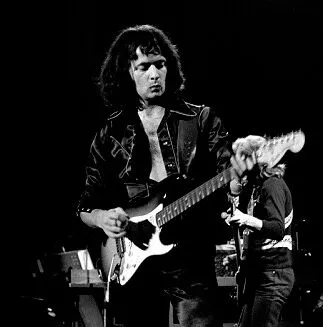
Ritchie Blackmore
Human Design Chart
Biography
Ritchie Blackmore as a Generator 4/6 in Human Design
Generator 4/6 — Design at a Glance
Ritchie Blackmore's design established a fundamental approach to work: Enduring, sacral energy is released in response to impulses rather than through self-initiated actions. His strength lay in functioning as a powerful 'workhorse'—extremely strong and enduring if he had the energy for his task. This did not mean constant activity but precise responses to external signals.
The central mechanism of his Generator type required the strategy of 'reacting instead of initiating.' Ritchie Blackmore was most effective when following internal signals—the gut feeling that shouted, "Yes! Let's get started!" Acting on these generated energy. Initiating from external expectations or ignoring these inner impulses put him at risk.
Two specific pitfalls shaped his potential for frustration. First, the wastage of energy on things lacking intrinsic joy despite high creative potential leading to burnout. Second, holding back from heart projects even though he still wanted to work further—a conflict between internal drive and external limitations like "It's too late now." Living in harmony with this design by responding to life signals and acting accordingly rewarded him with deep satisfaction and a sense of true fulfillment. Deviating from it, especially through excessive initiative thinking, led sooner or later to persistent frustration and a noticeable lack of energy. His success thus depended less on constant effort than on the correct alignment of his reactions to life.
Sacral Authority
Ritchie Blackmore displayed a decision-making structure rooted not in the head but deep within the body. His design established that the defined Sacral Center served as primary authority—the sole instance he could rely on for vital actions. This mechanism meant Ritchie Blackmore did not act through analytical planning but reacted: Each external stimulus prompted his body with a clear signal, often audible as grunting, humming or an immediate "Hmm." This physical resonance was key to his energy. When the sacral response was positive, he immediately entered a state of inexhaustible vitality and enthusiasm. Ritchie Blackmore could then immerse himself in activities driven by natural satisfaction without external compulsion. Acting against this inner feedback lost him this powerful connection.
Especially relevant was support from the Spleen Center. Linked to the Sacral Center, Ritchie Blackmore had a quick, instinctive perception of his physical well-being, enabling spontaneous and accurate reactions to his environment. The strategy involved listening to and trusting this immediate gut feeling rather than suppressing it through rational deliberation. Only so could he efficiently utilize his innate energy and experience lasting joy in action.
The 4/6 Profile — Opportunist / Role Model
Ritchie Blackmore's design is characterized by a fundamental tension between the deep longing for interpersonal connection and intellectual distance from finding meaning. In the first three decades of his life, before Saturn's return, the sixth line still acted like a third: Ritchie Blackmore appeared as someone intensely experimenting, particularly in relationships and friendships. The fourth line, functioning as a 'networker,' fixated him on waiting for favorable opportunities to mediate and promoted collective processes.
With the activation of the sixth line, however, an internal conflict arose between heart and head. While the heart (line 4) sought belonging—always cautiously opening up to the right people—the head (line 6) strove for distance to reflect on life's meaning. This sixth line is mutative; it checks the practicality of solutions and attempts to transfer knowledge into the collective. Often, Ritchie Blackmore encountered resistance as the collective did not always listen. In his later years, he was expected to meet high standards as a wise role model. Maturity and pragmatism were necessary to integrate these tensions and stand out through cooperation with others without losing personal integrity.
Single Definition — Defined & Open Centers
Ritchie Blackmore's design is characterized by constant inner energy and instinctive presence. His defined Sacral Center served as a powerful engine generating steady vitality – often experienced as restlessness or the urge to be active. However, this energy was not available for spontaneous initiatives but responded with a clear yes-or-no tone to external requests. Only through such reactions could he unleash his full power; mental decisions alone quickly led to frustration and exhaustion since the sacral source would then not be engaged.
Additionally, his defined Spleen Center acted as an intuitive authority in the here and now. It provided spontaneous, non-rational warning signals or confirmations for well-being that had to be immediately heeded because they never repeated themselves. This existential awareness was supported by the also defined Root Center, which delivered a constant, adrenalized push towards forward movement and survival. This inner drive helped him cope with stress and thrive materially as long as it wasn't driven by false initiatives.
In contrast, Head, Ajna, G, Heart, and Solar Plexus Centers were open. Ritchie Blackmore tended to absorb mental inspirations or confusion from the environment without a constant internal source for them. He could easily get entangled in questions that weren’t his own or reflect identity and direction from others. His open Heart Center made him vulnerable to the pressure of proving his worth through promises – a path often leading nowhere without inner authority. Similarly, his open Solar Plexus absorbed emotions from his surroundings, potentially personalizing foreign moods and feeling emotionally overwhelmed instead of observing them objectively.
Channels for logic, ambition and mature growth.
Ritchie Blackmore's design tends towards relentless perfectionism paired with the drive to earn social recognition through hard work. This dynamic is shaped by the Judgment Channel 58-18. It connects Gate of Vitality (58), which demands “better and more,” with Gate of Correcting (18). This creates a logical sentry questioning patterns to ensure they are cheerful and functional for the collective. Ritchie Blackmore showed himself as someone correcting inaccuracies not out of lack of love but from the need to secure life's quality.
Parallelly, the Transformation Channel 54-32 worked. It links Ambition (Gate 54) with Continuity (Gate 32). This drive motivated Ritchie Blackmore through constant effort to improve his position in social structures and be recognized by his tribe. The desire for advancement here was not just egoistic but served the survival and strength of the community he was embedded in.
The framework for these activities is set by the Ripe Channel 42-53. It steers the process of experiencing (Gate 42) to its full completion (Gate 53). Ritchie Blackmore's design demands that cycles not be prematurely broken but run through and reflected upon to gain wisdom for future steps.
Additional nuances were provided by individual Gates: Gate 61 seeks inner truth beyond noise, while Gate 62 logically orders details with patience. Gate 39 uses provocation for analysis, and Gate 38 sets boundaries to preserve integrity. Gate 3 aims at order from confusion, and Gate 52 demands focused pauses for pattern correction. Together these elements form a profile based on precise, tested, and recognized excellence.
Collective Circuitry — Circuit Signature
Ritchie Blackmore's design is marked by a clear separation of cool, strategic logic and pragmatic resource cooperation. These two forces coexist parallel without directly merging. The Understanding Circuit connects his Spleen and Root Centers through the Judgment Channel (18-58). This creates an ability for “emotionless ratio,” aiming to develop solutions for future challenges through logic and structure. As Solar Plexus Center is not involved here, this perspective remains free of emotional wave movements and focuses purely on rational insight.
Parallelly, the Ego Circuit also connects Spleen and Root Centers but via the Transformation Channel (32-54). This area concerns tribal dynamics: cooperation and the give-and-take principle in the collective. Crucial here is the absence of a connection to the Sacral Center within this circuit. For Ritchie Blackmore, this meant that energy for resource optimization did not flow constantly; it required mandatory pauses to regenerate and build new strength.
Additionally, his chart shows the Meaning Circuit with the Ripe Channel (42-53), connecting Sacral and Root Centers. This brings a cyclical, experience-based component differing from the future-oriented logic of the Understanding Circuit. Overall, these distinct energy fields shape a profile linking strategic planning with pragmatic cooperation, where emotional clarity and necessary pauses are central aspects of his energetic functioning.
Right Angle Cross of Maya 1
Ritchie Blackmores Design legte eine Tendenz zu tiefgreifenden, oft schicksalhaften Wendepunkten an, die durch das Vorhandensein des rechten Kreuzes der Maya 1 geprägt waren. Diese Konfiguration beschreibt keine bloße Neigung zur Veränderung, sondern einen spezifischen archetypischen Pfad: den Weg des Kriegers oder Suchers, der durch radikale Trennungen und Verluste gereinigt wird, um eine höhere Wahrheit zu finden.
Im Human-Design markiert dieses Kreuz ein Leben, das nicht linear verläuft, sondern von Brüchen bestimmt ist, die notwendig sind, um alte Identitäten abzulegen. Ritchie Blackmore zeigte sich in diesem Kontext als jemand, dessen Entwicklung durch das Loslassen des Bekannten vorangetrieben wurde. Die Mechanik impliziert, dass Stagnation vermieden wird, indem man bereit ist, alles hintersich zu lassen – ob Beziehungen, Projekte oder soziale Rollen –, um einer inneren Wahrheit zu folgen.
Es handelt sich hier um eine Energie der radikalen Neuorientierung. Ritchie Blackmore war durch dieses Design dazu aufgerufen, nicht an Vergangenes festzuhalten, wenn es dem aktuellen Weg im Inneren widersprach. Die Kraft lag dabei in der Fähigkeit, aus diesen Brüchen neue, authentischere Strukturen zu erschaffen, statt sich in Komfortzonen einzurichten. Dies prägte seine Lebensweise als einen fortwährenden Prozess des Loslassens und Neuanfangs, angetrieben von einer inneren Notwendigkeit zur Echtheit über äußere Stabilität hinweg.
Saturn Return · Uranus Opposition · Chiron Return · 2nd Saturn Return — Life Cycles
Ritchie Blackmores Design zeichnete sich durch eine zyklische Struktur der Karriere aus, bei der fundamentale Wandlungen in künstlerischer Identität und Positionierung durch markierte Jupiter- und Saturn-Rückkehrungen ausgelöst wurden. Diese Mechanik prägte seinen Lebensweg als Serie klar definierter Phasen des Aufbruchs und der Festigung.
1975, im Alter von 30 Jahren, gründete er Rainbow. Dies entsprach dem ersten Saturn-Return, einem Zeitpunkt, an dem sich jahrelange Vorarbeit oft zu einem tragfähigen Ergebnis verdichtet und neue Verantwortung übernommen wird. Die Gründung markierte hier einen entscheidenden Schritt in der Karriereentwicklung.
Ein weiterer wesentlicher Wendepunkt trat 1997 ein, als er im Alter von 52 Jahren Blackmore’s Night gründete. Dies fiel in den Zeitraum des Chiron-Returns (ca. 49–51 Jahre), einem Erfüllungszyklus oder einer „Blüte“. In dieser Phase entfaltet sich das eigene Inkarnationskreuz zunehmend im Leben, sofern die Person gemäß ihrer Strategie und Autorität gelebt hat; Sinn und Zweck werden erfahrbar. Die Gründung dieses neuen Projekts zeigt diese Entfaltung des persönlichen Zwecks in der künstlerischen Praxis.
Schließlich belegte er 2003, mit 58 Jahren, Rang 55 in einer Liste. Dies korrespondierte mit dem zweiten Saturn-Return, der oft eine Bestätigung oder Neudefinition des erreichten Status bedeutet. Diese drei Ereignisse illustrieren die im Design verankerte Dynamik: Karrierewechsel und Positionierungen waren keine zufälligen Episoden, sondern Ausdruck tiefgreifender astrologischer Zyklen, die seine künstlerische Identität strukturierten.
Generator · Sacral Authority — Synthesis
Ein zentraler roter Faden zieht sich durch das Design: die dynamische Balance zwischen innerem Antrieb und der Reaktion auf äußere Impulse. Das definierte Sakral-Zentrum signalisiert eine enorme, ausdauernde Energiequelle, doch diese entfaltet ihr Potenzial erst, wenn sie auf einen externen Reiz reagiert (statt zu initiieren). Diese Reaktionsfähigkeit wird durch die offene Gestaltung vieler Zentren verstärkt – ein ständiges Aufnehmen und Verarbeiten von Informationen aus der Umgebung. Die Kombination aus sakraler Energie und offenem Design führt zu einer Person, die zwar kraftvoll ist, aber auch eine hohe Anpassungsfähigkeit besitzt und sich in Beziehungen sowie neuen Situationen immer wieder neu orientiert.
Das zentrale Paradox liegt im Zusammenspiel zwischen dem Bedürfnis nach Autonomie und der Fähigkeit zur tiefen Verbindung mit anderen. Das offene G-Zentrum deutet auf einen Mangel an fester Identität hin, eine ständige Suche nach Richtung und Bestätigung von außen. Gleichzeitig signalisiert das definierte Sakral-Zentrum ein starkes inneres Wissen darüber, was energetisch richtig ist – ein Kontrast zwischen der Anpassungsfähigkeit an die Umgebung und dem Bedürfnis, sich auf die eigene innere Autorität zu verlassen. Dieses Spannungsverhältnis prägt sowohl die Entscheidungsfindung als auch die Art und Weise, wie Beziehungen gestaltet werden.
3 Defined Channels
Incarnation Cross - Right Angle Cross of Maya 1
Solar Return
The Solar Return shows the moment when the sun returns to its exact birth position - your personal solar year.
Life Cycles
Discover the life cycles with a detailed triple view (birth chart, cycle chart, composite).
Human Design Profile
- Type
- Generator
- Strategy
- To respond - wait for something to respond to
- Authority
- Sacral Authority
- Profile
- 4/6 - Opportunist / Role Model
- Definition
- Single Definition
- Incarnation Cross
- Right Angle Cross of Maya 1
- Date of Birth
- 14.04.1945 00:10
- Place of Birth
- Weston-Super-Mare, United Kingdom
Frequently Asked Questions
What is Ritchie Blackmore's Human Design type?
Which Profile does Ritchie Blackmore have in Human Design?
What Authority does Ritchie Blackmore have?
What is Ritchie Blackmore's incarnation cross?
When was Ritchie Blackmore born?
Discover your own Human Design
Are you also a Generator? Find out in a personal reading how to use your sacral energy correctly and discover deep satisfaction.
More Personalities
Back to overviewAaliyah

Alexia

Alizée

Angèle

Anne-Marie

Arcángel
