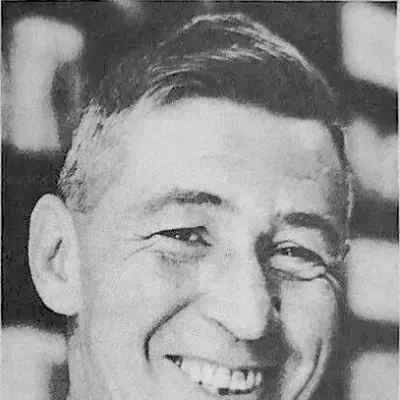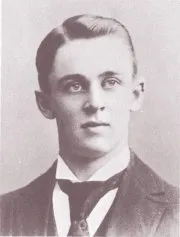
Robert A. Millikan
Human Design Chart
Biography
Died on 19 December 1953, Pasadena, CA.
Human Design Analysis: Robert A. Millikan as Projector 5/2
Projector 5/2 — Design at a Glance
Robert A. Millikan appeared as someone who influenced his environment with a dense, focused aura. As a Projector, he did not have a constant internal energy source but rather phases of high activity that needed to be balanced by necessary rest periods to avoid exhaustion. His design gave him the ability to immediately recognize weaknesses in systems or other people – similar to a bright flashlight shining directly into darkness.
This direct perception of flaws could be perceived as unpleasant in his surroundings when addressed without invitation. The optimal strategy for him was to wait for a respectful and honest invitation before sharing his insights. Instead of being overtly critical, he was most effective through his own harmony; others would then seek out his advice on their own, drawn by his clear presence.
If Robert A. Millikan lived according to this principle, he was rewarded with success. If he ignored the necessity of waiting for an invitation and regeneration, it led sooner or later to his Non-Self theme: Bitterness. His life path was thus characterized by the tension between his sharp diagnostic vision and the art of using it only when explicitly requested.
Emotional Authority
Robert A. Millikan showed himself to be someone who never made decisions in the heat of the moment. His design featured Emotional Authority, meaning his defined Emotional Center dictated his inner guidance—regardless of all other defined centers in his chart. This configuration subjected him to a natural wave of emotional ups and downs. The world always appeared colored by his current mood: A moment of excitement could quickly turn into a negative assessment of the same object. His immediate feeling was, however, just a snapshot, not a guaranteed truth value. Spontaneous actions based on this fleeting emotion often would have had negative consequences. Instead, his mechanics required patience and time. He let decisions mature, slept on them multiple times, and sought emotional distance. Only when the intense feelings subsided did clarity set in. This process was especially crucial for long-term, life-defining steps. By consciously delaying and waiting out the emotional wave, he gained composure and made more grounded judgments. His inner authority thus demanded not speed but the discipline of waiting for a clear view after the trough of the wave.
The 5/2 Profile — Heretic / Hermit
Robert A. Millikan lived as a person caught between the desire for public recognition and a deep need for withdrawal. His 5/2 Profile, known as "Hero/Natural Talent," shaped this ambivalence: On one hand, he carried the energy of Line 5 – the power to be perceived as an authority and to push forward unusual, almost perverse ideas. On the other hand, in later life or in private matters, Line 2, the "Restoration Line," dominated. This line called on him to withdraw into solitude for healing and sharpening his gifts.
While others immediately saw the Hero aspect, Millikan often hid his true strength in his "cave." He used alone time not just for rest but as a necessary process to steel himself for the role of an expert. The risk with this design was that he might wait for the world to discover him, which could lead to frustration since heroism had to be actively lived. His authority arose from going through conditioned patterns and acting from essence rather than merely reacting to projections – being someone who can heal or harm others. Instead, he sought the spiritual meaning behind challenges. Thus, his withdrawal became the foundation for his later unconventional contributions, which he then brought into the world with clear presence once he was ready to show himself.
Single Definition — Defined & Open Centers
Robert A. Millikan was shown through his defined Heart Center as someone who knew their willpower and resources self-determinedly. He had a firm internal structure to keep promises and recognize his own worth, which allowed him to work independently and be successful without being dependent on external expectations. This stable ego-energy formed the foundation of his ability to act.
Parallel to this, his defined Solar Plexus acted as an emotional authority. Millikan was designed not to make decisions impulsively at the moment they arose but rather to wait for the emotional wave to pass. Only when feelings had calmed and clarity had set in did he act correctly. This process gave depth to his judgments and allowed him to evaluate the quality of situations through the filter of time, instead of reacting to fleeting excitement or sadness.
Additionally, his defined Root Center provided a constant physical pressure that propelled him forward in the material world. This existential drive ensured endurance and helped him master challenges with a set way of stress management, thus keeping him grounded even when ventures became strenuous.
In contrast, his open Head Center revealed an openness to mental confusion and the pressure to find answers to questions that were not his own. Without constant inspiration, he tended to get caught in intellectual whirlpools or absorbed by doubts from others. His open Ajna Center amplified this through flexible but unstable conceptual thinking; he took on ideas but could not hold them as firm personal truths and thus relied on gathering concepts from the environment rather than generating them independently.
Furthermore, his open G Center operated without a fixed identity or direction. Millikan was designed to experience love and life path through external initiation rather than actively seeking it out. He adapted to the energies of his surroundings and found orientation only in correct relationships and places that offered him security. His open Sacral Center also meant he did not have constant generative energy; he was vulnerable to exhaustion from borrowed energy from others and had to learn to set boundaries and rest, rather than working under societal conditioning pressure. Finally, his open Spleen Center revealed a vulnerability to survival fears and a false sense of health; he relied on being surrounded by intuitively healthy people to avoid falling into unhealthy dependencies or spontaneous risky decisions out of fear.
Channels for community feeling and releasing emotions.
Robert A. Millikan's design tended towards strategic patience in interpersonal agreements, paired with deep, pulsating emotional sensitivity. He was someone who did not seek community spontaneously but waited for the right invitation to find his place within it.
This attitude stemmed from Channel Community 37-40. This flow connected the Solar Plexus Center with the Heart Center through Gate of Friendship (37) and Gate of Solitude (40). It described the organic nature of groups: The transition from survival struggle to liberation required carefully formulated agreements. A good deal could not be closed spontaneously but had to be formulated over time so that it was useful for both sides. Gate 40 worked willingly for loved ones but needed rewards and breaks; Gate 37 constantly sought recognition. Millikan understood how important it was to seal a deal – “I do this for you if you do that for me” – in order to maintain a community where everyone had an honorable place.
Parallel to this, Channel of Emotion Release 39-55 connected the Root Center with the Solar Plexus Center. Through Gate of Provocation (39) and Gate of Spirit (55), it set the pulsating on/off wave of moods in motion. This mechanism generated an endless continuum between joy and sadness, passion and melancholy. Millikan was not designed to rationalize his moods but rather to live within the alchemy of this mutative wave. His emotional impact depended on where he stood on his wave; authentic living and accepting this moodiness allowed him to explore the depths of his mind.
Additionally, Gates like 25 (Innocence/Mysticism) and 46 (Devotion/Presence) shaped his spiritual stance, while Gate 58 (Experiment/Perfectionism) and Gate 52 (Pattern Correction/Concentration) in the Root Center exerted pressure to improve processes. Gate 36 in personality stood for cyclical crisis movements that prepared new experiences.
Individual Circuitry — Circuit Signature
Robert A. Millikan was shown as someone whose inner dynamics were shaped by emotional wave movements directly translating into physical endurance. His design connected the Solar Plexus Center with the Heart and Root Centers into a single, continuous energetic flow. This simple definition meant his emotional intuitions did not remain isolated but immediately translated into willpower (Heart) and action impulse (Root).
In the Knowledge Circuit, he activated Channel “Emotion Release” between Solar Plexus and Root Centers. Here it was not about intellectual construction but rather converting emotional impulses into concrete, pulsating energy. His creativity showed as an acoustic and time-bound wave that initiated change through direct expression.
Parallel to this, in the Ego Circuit, he activated Channel “Community” between Heart and Solar Plexus Centers. This section concerned the relationship of giving and taking within a group. Since his design lacked a connection to the Sacral Center, constant life force was missing; instead, resource generation required necessary rest breaks. Cooperation was based on exchange: “Today I give you, tomorrow you give me.”
Together these connections formed a profile where emotional intuitions (Solar Plexus) served as the foundation for both individual endurance (Root) and mutual support in the collective (Heart). His energy was conservative and traditionally anchored but always oriented towards change and expression of personal individuality through the emotional pulse.
Left Angle Cross of Healing 1
Robert A. Millikan's design was characterized by the structure of the left healing cross, a configuration that aims at profound transformation and overcoming suffering. This archetypal form indicated that his path did not rest on superficial successes but rather rooted in the resolution of significant challenges. The left healing cross often connects the pursuit of spiritual understanding with the necessity to integrate personal or collective pain and gain new insights from it. For Robert A. Millikan, this meant that his energy was directed towards working through crises to ultimately achieve a healing effect. It was not about passively experiencing setbacks but rather an active process of alchemy where negative potential was transformed into constructive power. This configuration suggested that his greatest contributions emerged after intense inner and outer maturation. The structure challenged him to confront the darker aspects of life in order to distill higher truths from them. Thus, his design showed a clear line: suffering was not seen as an end but as a necessary starting point for deeper healing and a more comprehensive understanding of the world. This mechanism shaped his entire orientation by driving him to look beyond the visible and grasp the underlying forces that both destroy and renew.
Saturn Return · Uranus Opposition · Chiron Return · 2nd Saturn Return — Life Cycles
Robert A. Millikan's design indicated a tendency towards structured milestones marking his development. His first Saturn return around age 27 presented itself as a phase of consolidation: in 1895, he earned his doctorate at Columbia University. This cycle condensed years of academic groundwork into a solid foundation that stabilized his later career path. The mechanics describe this point not just as a date but as an energetic anchoring where early efforts crystallized into concrete qualifications.
Later, his second Saturn return around age 55 showed a similar dynamic of affirmation and recognition. In 1923, he received the Nobel Prize in Physics. This success was no random occurrence but rather the visible fruit of long-term, disciplined focus on his field. The second Saturn cycle often acts as a moment of maturity in Human Design where previously established structures are validated externally. For Robert A. Millikan, this meant that his scientific integrity and persistence were honored at their highest form. Both events illustrate how Saturn returns serve as frameworks to translate inner work into external, measurable results – first through the doctorate, then through the Nobel Prize.
Projector · Emotional Authority — Synthesis
He was a projector whose ability to recognize flaws in the system (Gate 11) and the connection between Heart and Solar Plexus (Channel Community) made him destined to bring light into darkness for others. This gift manifested in his tendency to ask profound questions and make connections that others might overlook. However, emotional authority required time for decision maturation, forcing him to wait until clarity emerged before expressing observations – a process amplified by the Profile as Hero/Natural Talent, preparing him for the role of silent observer.
A central paradox lay in the tension between the need for recognition (Line 5) and the desire for solitude (Line 2). He sought validation of his abilities while simultaneously needing space to process and deepen his insights. This led to an internal dynamic where success – marked by milestones such as a doctorate and Nobel Prize (Saturn returns) – was intertwined with the need for withdrawal and emotional depth.
2 Defined Channels
Incarnation Cross - Left Angle Cross of Healing 1
Solar Return
The Solar Return shows the moment when the sun returns to its exact birth position - your personal solar year.
Life Cycles
Discover the life cycles with a detailed triple view (birth chart, cycle chart, composite).
Human Design Profile
- Type
- Projector
- Strategy
- Wait for the respectful invitation
- Authority
- Emotional Authority
- Profile
- 5/2 - Heretic / Hermit
- Definition
- Single Definition
- Incarnation Cross
- Left Angle Cross of Healing 1
- Date of Birth
- 22.03.1868 23:30
- Place of Birth
- Morrison, IL, United States
Frequently Asked Questions
What Human Design type was Robert A. Millikan?
What Profile did Robert A. Millikan have in Human Design?
What authority did Robert A. Millikan possess?
Which incarnation cross characterized Robert A. Millikan?
When was Robert A. Millikan born?
Discover your own Human Design
Are you also a Projector? Find out in a personal reading how to unfold your leadership qualities and recognize the right invitations.
More Personalities
Back to overviewSissy Spacek

Alain-Fournier

Anémone

Ann-Margret

Bourvil
Hergé