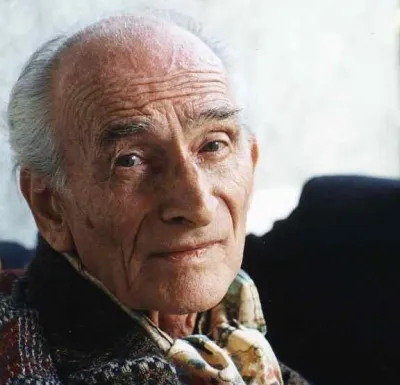
Robert Bateman
Human Design Chart
Biography
Bateman married Suzanne Bowerman in June 1961 and they had three children. In 1975, he married Birgit Freybe, with whom he had two more children. Because of his work with the enviroment, he was decorated at Queen Elizabeth's Silver Jubilee with a medal from the Canadian government in 1977 and has won several awards since then including the Rachel Carson award in 1996, and "Artist of the Year" in 1980. He has taught art in Canada and geography in Nigeria.
Human Design Analysis: Robert Bateman as Manifesting Generator 3/5
Manifesting Generator 3/5 — Design at a Glance
Robert Bateman was revealed as someone who possessed an unusual combination of constant inner strength and lightning-fast action capability. His design tended to draw things rapidly into his life by skipping steps – a characteristic that set him apart from pure generators. This speed was only effective when based on clear internal consent.
As a Manifesting Generator, Robert Bateman had a defined sacral energy source that provided him with steady power. The associated strategy did not lie in initiating but rather in reacting to external impulses. Only if his sacrum responded with a clear “Yes!”, the action was successful. Without this resonance, frustration loomed, especially when he moved too quickly and skipped important steps or overwhelmed himself through multitasking.
The key to his satisfaction lay in regularly checking this internal confirmation. As long as his projects brought him joy and allowed him to dive into a playful mode, he benefited from the ability to process multiple tasks simultaneously. The demand to finish one thing before starting another would have slowed down his natural pace. Instead, Robert Bateman found deep fulfillment in the act of creation itself, provided that he sought variety and always ensured that his actions aligned with his inner authority. Thus, potential friction was transformed into productive dynamics.
Sacral Authority
Robert Bateman exhibited a fundamental stance based on physical resonance rather than intellectual planning. His design dictated that he did not make decisions through thinking but by trusting in his “gut feeling”. This mechanism is steered by the defined sacral authority which acts as the primary decision-making instance and is exclusive to the generator type. Since strategy and inner authority are identical here, his process simplifies: He reacts to external stimuli with physical signals like grunting or a surge of energy.
When this resonance occurs, Robert Bateman feels an inexhaustible energy and vital enthusiasm. His satisfaction does not arise from achieving external goals but through immersing himself in the activity itself, free from purposefulness. The necessity to listen to these physical vitality reactions is central; they replace cognitive analysis. When his sacral motor kicks in, he works with great joy and dives entirely into the moment. This configuration describes a path where inner confirmation is guided by bodily well-being rather than being determined by external expectations or logical deliberations. Robert Bateman was designed to act through this direct, instinctive connection to his energy source and thereby experience deep, natural satisfaction.
The 3/5 Profile — Martyr / Heretic
Robert Bateman was characterized by an attitude based on personal experience: he believed nothing until he had tried it himself. His Profile 3/5, that of the experimenter and hero, set this tendency in motion. Line 3 in character demands direct proof through action and failure; it accumulates a rich treasure trove of practical life experiences which line 5 then presents as solutions for others’ problems. This gave him natural attractiveness since people wanted to learn from his gained insights.
This dynamic was intensified by his dominant solar energy at Gate 20. This gate stands for constant self-analysis and strong self-confidence that drives personal development. Robert Bateman had to constantly question himself and adapt, leading to deep inner reflection. However, this configuration also carried a risk: The focus on the self could lead him to overlook what was happening in the here-and-now or block his development through excessive self-centeredness.
His knowledge was not theoretical but born from the fire of experimentation. He learned from his mistakes and transformed them into practical wisdom that he made accessible to others. Often, the success of his solutions depended on timing since his mental stance only worked effectively when it was recognized in a social context. The openness of his mind allowed him to take advice and implement it but also created the possibility for emotional fluctuations to influence him. His path thus became an ongoing balancing act between the need for self-confirmation through experience and the responsibility to serve as a role model for others.
Single Definition — Defined & Open Centers
Robert Bateman revealed himself as someone with a massive inner substance and physical presence. His design offered a constant energy base through six defined centers, including the Sacral Center (defined), the Heart Center (defined), and the Throat Center (defined). This combination created a powerful triad: When he reacted to life – the strategy of a Generator – he had the vital energy, the will to implement, and the voice to set actions directly into the world. The defined Spleen provided spontaneous intuition in the present moment, while the defined Root Center supplied the necessary pressure for progress.
This mechanical stability, however, was in tension with his open fields. The open Head Center (open), the open Ajna Center (open), and the open G Center (open) acted as sensitive receiving antennas. Here lay the challenge: Not to misinterpret inspiration or identity search from the environment as one's own truth. An open Solar Plexus (open) further amplified foreign emotions, which could lead to losing oneself in emotional waves of others rather than trusting the inner clarity of defined motors. The art was not to overlay this immense inner structure with mental speculation or emotional absorption but to clearly separate definable power from situational openness.
Channels for charisma, success, life purpose and maturation.
Robert Bateman showed a basic attitude characterized by a strong urge to actively intervene in the world. His design indicated a tendency towards high energy and speed, coupled with difficulty sitting still or remaining calm. This charismatic power was not used arbitrarily but guided by sacral reactions: he acted most effectively when responding to external stimuli that truly appealed to him.
This dynamic is explained by the Channel of Charisma 34-20. This channel connects the Sacral Center (Gate of Power) with the Throat Center (Gate of Now). The raw physiological energy of Gate 34 is channeled through the thyroid and must express itself in the moment. Without this internal guidance as a filter, the same driving energy could lead to chaotic outbursts or obsession rather than sustaining vitality. Self-endorsement was therefore essential: Robert Bateman had to give his energy only to things that fulfilled him, instead of being guided by "should" thinking.
Additionally, the Channel of the Money Line 21-45, which connects the Heart Center with the Throat Center, was at work. This channel brings the will for material mastery and responsibility. Gate 21 (the Hunter) seeks control and service, while Gate 45 (the Collector) authoritatively decides on resources ("I have or I do not"). This created a tension between the need for independence and the necessity to provide for the tribe.
The Channel of Life Struggle 38-28 connected the Root Center with the Spleen. Here, it was about going one's own way through stubborn determination and finding meaning in struggles. Gate 38 fights for integrity against external distractions, while Gate 28 intuitively recognizes which struggles are worthwhile.
Finally, the Channel of Maturation 42-53 shaped the process of experiencing. It connects the Root Center (Gate of Beginnings) with the Sacral Center (Gate of Growth). This channel demands that experiences be fully lived through and reflected upon to gain wisdom before new cycles begin.
Individual Circuitry — Circuit Signature
Robert Bateman's Human Design profile points towards the highest individuality and direct self-empowerment. His chart structure connects the Throat Center with the Sacral Center through Channel 20-34 (Charisma), allowing him to draw strength from life’s reactions and express this energy in the immediate present moment. This configuration promotes an acoustic format energy without cyclical waveform, marking his actions as direct manifestations here and now.
Parallel to this, three additional separate circuits were active for Robert Bateman. The Knowledge Circuit connects Spleen Center with Root Center (Channel 28-38, Life Struggle), supporting the search for one’s unique path and new insights. The Meaning Circuit connects Sacral Center with Root Center (Channel 42-53, Maturation) and focuses on sharing emotional experiences from the past with the collective. Additionally, the Ego Circuit connects Throat Center with Heart Center (Channel 45-21, The Money Line), strengthening the ability to cooperate and co-create resources through a balance of giving and taking.
Although Robert Bateman had a simple definition, these energies did not flow as one single stream but existed as parallel forces. The integration of his personality primarily occurred through the direct connection between Sacral Center and Throat Center, while the other circuits supported specific aspects such as knowledge, emotional processing, and social resources independently. This created a structure where individual expression strength and cooperative ability coexisted side by side.
Right Angle Cross of the Sleeping Phoenix 2
Robert Bateman's design carried the structure of the Right Cross of the Sleeping Phoenix 2. This acted as a subtle framework, influencing his life not through active, visible mechanisms like specific Gates or Channels but rather as latent potential. The energy of this cross points to a profound, cyclical transformation – comparable to the myth of the Phoenix rising from its ashes. For Robert Bateman, however, this power remained "asleep." It did not come to the forefront of his daily experience or behavioral patterns. Instead, it formed a quiet structural foundation. It was an inner reservoir for rebirth and change that was not constantly activated but waited in the background. This configuration describes less an active process of constant renewal than the possibility thereof, embedded within a stable yet unobtrusive life structure. The transformation here is no loud event but rather an underlying principle. Robert Bateman was thus defined not by obvious breaks or dramatic turns but through this quiet foundational capacity for deep change that did not necessarily unfold outwardly. This cross served as a silent companion to his development, ready for moments of rebirth without dominating the entire process or needing constant presence.
Saturn Return · Uranus Opposition · Chiron Return · 2nd Saturn Return — Life Cycles
Robert Bateman's design laid a tendency towards structural anchoring and later public validation. In 1961 at age 31, he married Suzanne Bowerman. This step marked his first Saturn Return, a cycle in which inner maturity often manifests through stable life structures like partnership and lays the groundwork for further development.
Decades later, Robert Bateman reached a peak of professional recognition with the title "Artist of the Year" in 1980 at age 50. This fell within his Chiron Return, an achievement cycle between ages 49 and 51. During this phase, one's incarnation cross increasingly unfolds in life; if lived according to their strategy, inner meaning becomes experiential and long-term work finds its validation. The award was no coincidence but the expression of a blooming period when the essence of his design shows full effect and is visible from outside. Both events – private anchoring through Saturn Return and public recognition during Chiron cycle – underscore a path of gradual establishment and validation.
Manifesting Generator · Sacral Authority — Synthesis
Robert Bateman's life seems marked by a deep inner dynamism resulting from the interplay of his manifesting Generator energy and sacral authority. He is destined to respond to life rather than initiate it, yet once he takes an impulse, he can move forward with remarkable speed. This ability to quickly bring things into the world (Channel 34-20) is complemented by the need to constantly rely on his inner authority and ensure that his actions are authentic and satisfying. The constant oscillation between response and manifestation, paired with the capacity to learn from experiences (Channel 53-42), points to a life path characterized by cyclical growth and continuous adaptation.
A central paradox in Robert Bateman's design lies in the tension between his need for autonomy and his inherent ability to connect with others. The open G Center indicates that his identity is not fixed but forms through interactions. Simultaneously, the defined Heart Center urges him to control his own life and defend his values. This tension between adaptability and self-assertion requires constant navigation between absorbing influences and holding onto his inner truth.
4 Defined Channels
Incarnation Cross - Right Angle Cross of the Sleeping Phoenix 2
Solar Return
The Solar Return shows the moment when the sun returns to its exact birth position - your personal solar year.
Life Cycles
Discover the life cycles with a detailed triple view (birth chart, cycle chart, composite).
Human Design Profile
- Strategy
- To respond - wait for something to respond to
- Authority
- Sacral Authority
- Profile
- 3/5 - Martyr / Heretic
- Definition
- Single Definition
- Incarnation Cross
- Right Angle Cross of the Sleeping Phoenix 2
- Date of Birth
- 24.05.1930 01:00
- Place of Birth
- Toronto, Canada
Frequently Asked Questions
What is Robert Bateman's Human Design type?
What Profile does Robert Bateman have in Human Design?
What Authority does Robert Bateman have?
What incarnation cross does Robert Bateman have?
When was Robert Bateman born?
Discover your own Human Design
Are you also a Manifesting Generator? Find out in a personal reading how to unfold your multi-talents and direct your energy wisely.
More Personalities
Back to overviewAldair

Alizée

Angeli

Arletty
Artus
Balthus