
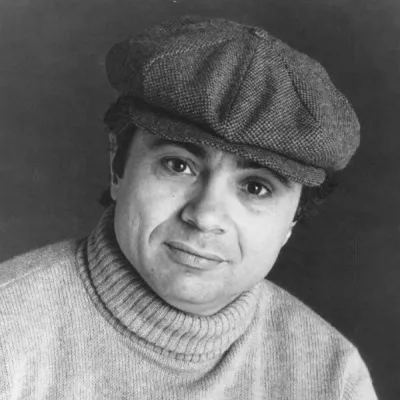
Robert Blake
Human Design Chart
Biography
With a difficult, hard working childhood, Blake’s first exposure in show business was at age two. He related that he was abused physically, emotionally and sexually as a child by his folks, a once-time song and dance team, and spent much of his life in a rage. He and his brother, sister and mother were all victims of a drunken, violent step-father who would beat them mercilessly.
After being expelled from five schools, he was drafted in 1950, a "has-been" by the time he was 17. Rebellious, with periods of deep depression, he was compulsively resistant to authority and incapable of delegating authority. He spent time in the army stockade, and managed to get involved with heroin. Through his years he tried many of the various forms of self-destruct; drugs, alcohol and fights.
When he returned to Hollywood in 1952, Blake worked as a stuntman, and in 1953 began to get TV roles. Baretta debuted mid-season in January 1975 and was an immediate hit with a subsequent Emmy win that year that put Robert Blake on top of the world. From 1975-1978, Baretta held a top spot on TV, a set that often resembled a war zone in which Blake was accused of being "unprofessional" and tyrannical. He had his wife Sondra cast as a frequent guest-star and began ignoring directors he didn't like, effectively directing the show himself. Baretta was canceled in 1978 and Blake's marriage ended soon after that.
What does Generator 3/5 mean for Robert Blake?
Generator 3/5 — Design at a Glance
Robert Blake was a Generator, which made him a person with immense endurance and an inner reservoir of strength. His design resembled that of a workhorse: strong and durable as long as he had energy for his tasks. However, this power did not always come to him consistently; it became effective only when he responded to impulses from his environment. The motto of his Human Design was therefore clear: react rather than initiate.
His successful strategy involved waiting for signals from life and then acting when his sacral center – the place of his inner confirmation – gave a clear “yes”. When he acted in accordance with this gut feeling, Robert Blake found deep satisfaction and a sense of fulfillment.
However, his design contained two specific pitfalls. The first occurred if he focused persistently on tasks that did not bring him joy. In such cases, he wasted his valuable energy, leading to burnout over time. The second danger was being prevented from working on his heart project despite his inner drive remaining high. If he fought against the nature of his design – for example, by constantly initiating without external impulses – he would eventually encounter a feeling of persistent frustration and a noticeable lack of energy. His path to strength thus lay not in actively pushing forward but in patiently reacting to life.
Emotional Authority
Robert Blake's design tended towards emotional detachment when making decisions; spontaneous impulses proved unreliable. He was someone who had to distinguish between temporary mood swings and deeper clarity – a process that required time.
This pattern resulted from his emotional authority. With his Emotions Center defined, he was subject to constant waves of up-and-down emotions. The world appeared colored by the current mood: total enthusiasm for something in one moment, deep skepticism or rejection of the same matter in another. However, this immediate feeling was only a snapshot and not a reliable compass for long-term direction. Quick, spontaneous decisions made from this emotional heat could have negative consequences as they confused temporary wave movements with true reality.
The mechanics of his inner authority dictated patience. The more time he took, the deeper he could see. 'Sleeping on' decisions was not a sign of hesitation but a necessary strategy to gain emotional distance. Over time, intense feelings subsided; clarity and calmness only set in after the emotional process had run its course. This approach applied regardless of which other centers were defined: Emotional authority always took precedence for significant life decisions that significantly influenced his path.
The 3/5 Profile — Martyr / Heretic
Robert Blake's design was characterized by a clear cycle of private experimentation and public impact. As a person with Profile 3/5, the Experimenter and Hero, he learned primarily through direct experience and adaptation. The Line 3 in his Sun drove him to test things himself; he believed little on faith alone and instead sought truth in action. This process was often chaotic and included painful rejections as well as an impulse to connect through apparent irresponsibility. Loyalty for him did not arise from doctrines but through binding and letting go in practice.
This self-acquired knowledge was then carried outward via Line 5. Here, Robert Blake acted as a mirror for others, distilling practical solutions from his private experiments. Others were drawn to this authenticity because they wanted to learn from his mistakes. Yet, this heroic role made him vulnerable: If he failed publicly, it hit him deeply, as Line 5 strongly reacts to social projections and expectations. His value lay in pragmatically handling crises through personal experience; his risk was exposing himself to the judgment of others if experiments did not yield hoped-for success.
Split Definition — Defined & Open Centers
Robert Blake's Human Design profile indicates a tendency towards constant inner activity, characterized by defined Head, Ajna, G, Sacral, Solar Plexus, and Root Centers. This creates a permanent mental pressure for inspiration as well as a reliable identity and direction. His vital energy was available through the Sacral Center but required reaction rather than initiation to avoid frustration. The emotional waves of his Solar Plexus Center served as inner authority; clarity emerged only after waiting for the wave, not in an impulsive moment. Additionally, his defined Root Center provided a set way of dealing with stress and life force.
In contrast, his Throat, Heart, and Spleen Centers were open. The open Throat meant that communication occurred only by invitation; attempting to demand attention led to energy depletion. His open Heart Center lacked consistent willpower, making the promise of giving or proving one's worth a conditioned trap. Furthermore, due to his open Spleen Center, he tended to make spontaneous decisions out of survival fears or cling to unhealthy situations for false security. The mechanics showed: while defined centers offered constant presence, open areas required trust in strategy and authority rather than reacting to conditioning such as the pressure to manifest or the need for control.
Channels for resolve, intimacy, emotional waves and abstraction.
Robert Blake's Human Design profile indicates a tendency towards intense, merging connections. Channel of Union 59-6 connects his sacral sexuality with the emotional wave of the Solar Plexus. This created a strong drive for intimacy and required waiting for emotional clarity before relationships could deepen. His intensity often acted as an electromagnetic attraction that needed patience to avoid misinterpretation.
This relationship dynamic aligned with his lifestyle: Channel of Discovery 29-46 connects his sacral persistence with the G Center. Here, it was about letting go of expectations and fully immersing oneself in the process of experience. Only through this commitment could he be at the right place at the right time to make personal discoveries without being diverted from his course.
Simultaneously, his design featured situational moodiness. Channel of Emotion Release 39-55 connects Root with Solar Plexus and sets a pulsating wave of joy and melancholy in motion. This mechanism allowed him to provoke the minds of others through provocation and live out his emotional depth rather than rationalize it.
Mentally, Robert Blake was marked by Channel of Abstraction 64-47 connecting Head and Ajna Centers. This led him to filter experiences through a kaleidoscope of mental images. The associated pressure to understand connections could cause confusion but also offered potential for inspiring new perspectives as clarity emerged over time.
Collective Circuitry — Circuit Signature
Robert Blake exhibited a fundamental disposition marked by ancient protective instincts and the drive towards emotional transformation. His design included three active circuits functioning as separate, parallel forces due to his Split Definition.
The Archer Circuit connects his Sacral with Solar Plexus Centers through Channel of Union (Gates 59 and 6). This connection generates timeless energy expressed through touch and smell senses, bringing themes like protection, nourishment, and genetic care into focus.
Parallel to this, the Knowledge Circuit links Solar Plexus Center with Root Center via Channel 55-39. This gave him a pulsating creativity and impulse to explore new paths as well as initiate changes through emotional waves.
The Meaning Circuit consists of two unconnected parts: one channel connects Head with Ajna (Channel 64-47), the other Identity with Sacral Center (Channel 46-29). This promoted a cyclical reflection on the past and visual learning, separate from logical future orientation.
While Solar Plexus, Sacral, G, and Root Centers were defined as a group, without direct channels between all these centers their energies did not flow as one continuous stream but rather as coexisting potentials.
Right Angle Cross of Eden 3
Robert Blake's design carried the signature of the right cross of Eden 3. This configuration established a specific energetic alignment that shaped his inner experience and reactions to external circumstances. Since the raw content does not provide additional mechanical details such as Gates, Channels, or defined Centers, the concrete impact of this structure remains abstract. It describes an archetypal framework within which Robert Blake operated without specific behavioral patterns or emotional nuances being reinforced by further chart elements. The right cross of Eden 3 represents a particular life task and energetic quality that was embedded in his Human Design. Without more detailed explanation of the involved mechanics, this signature cannot be translated into everyday actions or decisions. It remains a theoretical anchor point within Robert Blake's overall design. The absence of additional data prevents a deeper analysis of how this cross manifested in daily life or what challenges it brought along. It defines only the overarching context of his energetic landscape.
Saturn Return · Uranus Opposition · Chiron Return · 2nd Saturn Return — Life Cycles
Robert Blake's design indicated a tendency towards radical breaks that were necessary to dissolve old structures and make room for new identities. This Uranus opposition marked a turning point of disruption in his cycle: established patterns had to be broken so that his true potential could be unleashed. It was not arbitrary change but rather a profound transformation requiring liberation from outdated roles.
In 1975, at the age of 42, Robert Blake won an Emmy for the lead role in the TV series *Baretta*. This success occurred precisely during this phase of Uranus opposition and served as concrete evidence of the mechanism: through breaking with the familiar, space was opened up for an unexpected new role. The disruption was not an end in itself but rather a catalytic moment that allowed him to find and make visible his true form of expression. His design showed here how external recognition often only becomes possible when internal constraints are resolved and an authentic identity is given free rein.
Generator · Emotional Authority — Synthesis
Robert Blake lived a life deeply marked by an inner tension between the drive for creative discovery and the need for emotional authenticity. His design as a Generator with emotional authority points to someone who generates energy from the gut but must channel it only after waiting for their own wave of feelings. This combination fuels a thread of experimenting and exploring – he sought out new forms of expression (Channel 24-61, Gate 1) to gather experiences and let them flow into creative work (Channel 3-60). The connection between the Sacral Center and G Center through the discovery channel indicates a deep longing for meaning that continually drove him to explore new paths.
At the same time, a paradox was revealed between his need for emotional depth (Gate 30) and the pressure to meet expectations (Channel 12-55). The emotional wave demanded patience and waiting for clarity while the external world often called for quick results and expression. This tension field between inner emotional landscape and outer action shaped his path, pushing him repeatedly to his limits, culminating in a documented success (Emmy award in 1975) that could not resolve his internal conflict.
4 Defined Channels
Incarnation Cross - Right Angle Cross of Eden 3
Solar Return
The Solar Return shows the moment when the sun returns to its exact birth position - your personal solar year.
Life Cycles
Discover the life cycles with a detailed triple view (birth chart, cycle chart, composite).
Human Design Profile
- Type
- Generator
- Strategy
- To respond - wait for something to respond to
- Authority
- Emotional Authority
- Profile
- 3/5 - Martyr / Heretic
- Definition
- Split Definition
- Incarnation Cross
- Right Angle Cross of Eden 3
- Date of Birth
- 18.09.1933 08:30
- Place of Birth
- Nutley, NJ, United States
Frequently Asked Questions
What was Robert Blake's Human Design type?
What profile did Robert Blake have?
What authority did Robert Blake possess?
What incarnation cross did Robert Blake have?
When was Robert Blake born?
Discover your own Human Design
Are you also a Generator? Find out in a personal reading how to use your sacral energy correctly and discover deep satisfaction.
More Personalities
Back to overviewSissy Spacek

Aaliyah

Alexia

Anémone

Angèle

Ann-Margret
