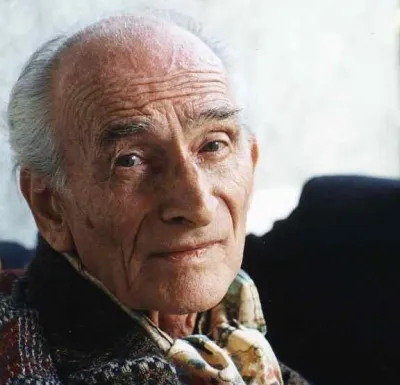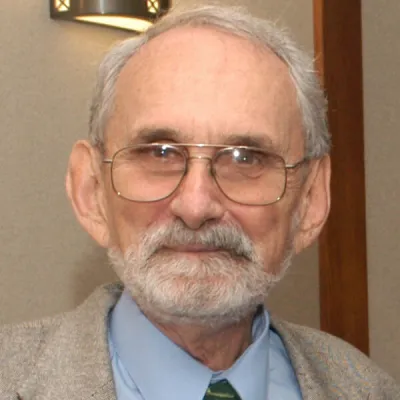
Robert Curl
Human Design Chart
Biography
Curl's later research interests involved physical chemistry, developing DNA genotyping and sequencing instrumentation, and creating photoacoustic sensors for trace gasses using quantum cascade lasers.
Curl retired in 2008 at the age of 74, becoming a University Professor Emeritus, Pitzer-Schlumberger Professor of Natural Sciences Emeritus, and Professor of Chemistry Emeritus at Rice University.
Curl married Jonel Whipple in 1955, with whom he had two children. He died in Houston on 3 July 2022 at the age of 88.
What does Manifesting Generator 6/2 mean for Robert Curl?
Manifesting Generator 6/2 — Design at a Glance
Robert Curl showed himself to be someone who worked with hybrid energy: He had the constant power of a Generator but also possessed the ability to skip steps and quickly draw results into his life. This design tended towards high speed, but it also harbored specific pitfalls. Since he received impulses from his defined Sacral Center, his strategy was not initiating but reacting to external life impulses. Only when this reaction was answered with an internal clear 'yes' could he act effectively.
His design tended to pursue multiple projects simultaneously, driven by a desire for variety and playful mode. This wasn't an inability to focus but a structural necessity for his satisfaction. However, if he moved too quickly or skipped important steps, he often had to return to fill in the gaps – a process that quickly led to frustration when his inner authority was ignored. This emotional burden was the classic 'not-self' theme for his type. Robert Curl found his deepest fulfillment not through linear task completion but by responding authentically to impulses and embracing dynamic, versatile creativity without fighting against his nature.
Emotional Authority
Robert Curl showed an internal decision-making structure that was shaped by emotional waves. His authority lay in the defined Emotional Center, meaning he was ruled by feelings that came and went in waves. The world appeared colored by his current mood; enthusiasm could quickly turn into negative evaluation. Since these feelings were often just momentary snapshots, he risked making hasty judgments with spontaneous reactions. His inner truth only emerged after intense emotions subsided and emotional distance was gained. This required patience: decisions should not be made immediately but allowed to mature overnight. Only then did clarity and calmness arise. This mechanism held true regardless of other defined centers in his design; the Emotional Center always took precedence in decision-making. Robert Curl therefore had to take time, ask multiple times, and wait for the emotional tide to recede before taking long-term steps with inner certainty.
The 6/2 Profile — Role Model / Hermit
Robert Curl showed himself as someone whose early life was marked by experimentation. Before the age of 30, his Profile Line 6/2 acted like a 3-line: trial and error defined his actions, followed by necessary retreats after failures. This phase served to gather diverse personal experiences without a fixed plan.
Around 30 years old, this dynamic fundamentally changed with the activation of the 6-line. Curl metaphorically retreated into a 'cave on the mountain' to look back at his past experiments from great distance. This retreat was not isolation but a phase of intense reflection, healing, and deep self-awareness. Here he processed the confusion in choosing commitments as described by Gate 29: It was about examining whether experiences led to development or could not be sustained.
Simultaneously, Gate 20 with its selective focus on 'here and now' worked. The polarity between retreat and the called state could be explosive since internal preparation was extremely focused. Only after this introspective period ended did Curl emerge as a wise person again. Others recognized his life wisdom and sought his advice to learn from his deep introspection ability. He became an example and natural talent that dealt with the synthesis of earlier mistakes and later clarity.
Single Definition — Defined & Open Centers
Robert Curl revealed himself through his defined Sacral Center as someone who relied on a reliable source of generative energy. His design suggested that he found satisfaction by reacting rather than initiating; his strength was available to him when responding to questions or circumstances, not when taking the first step himself. This sacral foundation was connected with a defined G Center, which gave him a firm inner direction and stable self-esteem. He knew who he was and where he belonged without imposing this on others or needing external validation.
Additionally, his personality was shaped by the defined Centers of Communication (Throat) and Emotions (Solar Plexus). His voice was a direct expression of his inner truth, guided by the ebb and flow of his emotional wave. He tended to avoid making decisions impulsively, instead waiting patiently until his feelings had clarified. This emotional authority served as a compass; he sought clarity in the depths of feeling before acting or speaking.
In contrast, the undefined Centers of Head, Ajna (Mind), Heart (Willpower), and Spleen (Health/Intuition) revealed his vulnerabilities. He was not designed to solve mental problems through mere thinking or to push through resistance with sheer willpower. Instead, he tended to absorb mental pressure from the environment and engage with questions that were not his own business. The open Heart Center made him susceptible to conditioning that taught him he had to prove his worth through performance or promises – a trap he needed to navigate by trusting his inner authority. Similarly, the open Spleen Center warned against making spontaneous decisions, as these were often driven by fear and not healthy intuition. His path lay in using the stability of his Sacral and G Centers to penetrate the noise of his open mental and emotional fields.
Channels for discovery, intimacy, reflection and charisma.
Robert Curl displayed a fundamental disposition of deep immersion: he lost himself completely in his experiences, trusting that meaning would only reveal itself at the end of the process. This aligned with Channel Discovery 29-46, which connected his Sacral Center to his G Center, fostering persistence and connection to one's life direction. Simultaneously, he possessed a powerful, momentary expression strength. The Charisma Channel 34-20 channeled his physiological energy directly into articulation, enabling him to manifest ideas quickly and charismatically as long as he responded to inner resonance.
In interpersonal relationships, Robert Curl sought genuine intimacy and merging. The Pairing Channel 59-6 linked his sexual energy with emotional waves of pleasure and pain. This required patience; only when emotional clarity entered through the Solar Plexus cycle could he enter deep, fruitful connections without overwhelming others with premature intensity. Parallel to this, he acted as a reflective witness to his own story. The Lost Son Channel 13-33 connected listening in the G Center with withdrawal in the Throat Center. He gathered information and secrets to later withdraw, process them, and pass on wise lessons.
Additionally, individual Gates played into his design: Gate 30 brought awareness of feelings and acceptance of limitations. Gate 3 in his Sacral Center promoted mutations to create new orders from confusion. In the emotional realm, Gate 55 caused mood swings and genetic awakening, while Gate 23 offered the ability for amoral communication and assimilation. Gate 8 propelled individual contribution to the group forward, Gate 16 fostered experimental mastery through identification with skills. Gate 42 emphasized closing processes for new commitments, and Gate 62 provided logical patience for pattern recognition and fact-finding. This constellation marked him as someone who worked through persistent experience, charismatic expression, and reflective wisdom.
Collective Circuitry — Circuit Signature
Robert Curl showed a clear, coherent energetic structure. As a simply defined type, he had a continuous flow between Solar Plexus, Sacral, Throat, and Identity Centers. This gave him inner coherence: emotions, life force, expression, and self-worth did not operate in isolation but as an integrated whole.
This basic layout shaped his three active circuits. The Meaning-Maker Circuit connected for him Throat, Identity, and Sacral Centers. Here emotional waves from the past flowed directly into expression and personal identity. He reflected on experiences to understand their meaning and shared these insights with others.
The Protector Circuit was activated through the Pairing Channel and linked Sacral and Solar Plexus Centers. This connected his life force with emotional instincts for protection and care. The energy served to preserve what is near, carried by a primal concern for one's surroundings.
Furthermore, the Integration Circuit worked across the Charisma Channel between Throat and Sacral Centers. Here he responded to life, drew strength from this response, and immediately passed it on through his expression in the present moment. This configuration underscored his ability to carry inner resonance outward without long delay. All three circuits operated within his defined framework together so that emotional impulses, instinctive protection, and spontaneous reaction always found their way into his voice and self-image.
Left Angle Cross of Industry 2
Robert Curl lived with a profound, almost instinctive endurance. His design carried the signature of the left cross of Diligence, a configuration that did not rely on spontaneous inspiration or intellectual ease but rather on persistent, often laborious effort. For him, success was not a sudden insight but the result of years of disciplined work on a subject.
This Cross-configuration grants an individual a specific life task: the ability to focus over long periods on a goal and see obstacles not as stop signs but as necessary steps in the learning process. Unlike types who advance through quick intuition or social dynamics, Robert Curl exhibited qualities of patience and constancy. He was programmed to solve problems step by step, with each mistake serving as valuable information.
This mechanical foundation created an inner stability that allowed him to continue even during phases without external affirmation. Diligence here was not a moral duty but his natural way of energy alignment. He learned best through doing and repeating until the solution emerged from practice. This trait shaped his entire path: fewer moments of genius brilliance, instead an unshakable, almost silent persistence that ultimately mastered complex tasks by simply not letting go.
Saturn Return · Uranus Opposition · Chiron Return · 2nd Saturn Return — Life Cycles
Robert Curl showed himself to be someone whose professional identity was solidified in his late twenties through structural affirmation. In 1958, at the age of 25, he became Assistant Professor of Chemistry at Rice University. For his design, this marked the first Saturn Return. This cycle does not represent inner regret or psychological processing but rather the consolidation of external structures and societal roles. What had begun in previous years as experimentation, search, or provisional solutions now condensed into a viable, long-term position.
The Saturn Return acts like a cementing process: it takes the impulses of youth and presses them into a form that provides support. For Robert Curl, this meant his academic ambitions no longer remained fleeting ideas but were anchored in a firm institution. His appointment as Assistant Professor was thus not an accident but the mechanical consequence of a cycle demanding stability and responsibility. Here, his inner workings interacted with external demands: by taking up clearly defined positions, he was allowed to systematically contribute his expertise. This moment laid the groundwork for a career phase where continuity and professional authority were paramount, driven by the need to operate within an established framework.
Manifesting Generator · Emotional Authority — Synthesis
Robert Curl lived a life marked by a deep connection to his own sacral authority and a continuous process of learning through experience. As a Manifesting Generator (MG), he possessed the ability to quickly initiate things, yet his emotional center demanded a maturation of decisions over time – an inner rhythm that compelled him to not immediately follow impulses but rather test them within the wave of his feelings. This combination of quick energy and emotional weighing formed the core of his actions, especially evident in early life where experimenting and retreating after mistakes were defining. Later, he found a way to pass on his accumulated insights by serving as an example and sharing wisdom (Profile 6/2).
Central to Robert Curl's design was a paradox between the drive for quick initiation – typical of the manifestor aspect in MG types – and the necessity of emotional clarity. The defined throat center, connected with the heart, pointed to a strong expression of his own will, yet this was always modulated by the cyclical nature of the perception-switching circuitry. He could set things in motion (sacral energy), but he also had to reflect on the past and draw meaning from experiences to communicate authentically and achieve sustainable results. A documented event showed itself during a career phase transition (Saturn Return), underscoring the process of self-discovery.
4 Defined Channels
Incarnation Cross - Left Angle Cross of Industry 2
Solar Return
The Solar Return shows the moment when the sun returns to its exact birth position - your personal solar year.
Life Cycles
Discover the life cycles with a detailed triple view (birth chart, cycle chart, composite).
Human Design Profile
- Strategy
- To respond - wait for something to respond to
- Authority
- Emotional Authority
- Profile
- 6/2 - Role Model / Hermit
- Definition
- Single Definition
- Incarnation Cross
- Left Angle Cross of Industry 2
- Date of Birth
- 23.08.1933 00:15
- Place of Birth
- Alice, TX, United States
Frequently Asked Questions
What was Robert Curl's Human Design type?
Which Profile did Robert Curl have in Human Design?
What Authority did Robert Curl have?
Which incarnation cross was active for Robert Curl?
When was Robert Curl born?
Discover your own Human Design
Are you also a Manifesting Generator? Find out in a personal reading how to unfold your multi-talents and direct your energy wisely.
More Personalities
Back to overviewAldair

Alizée

Angeli

Arletty

Artus
Balthus