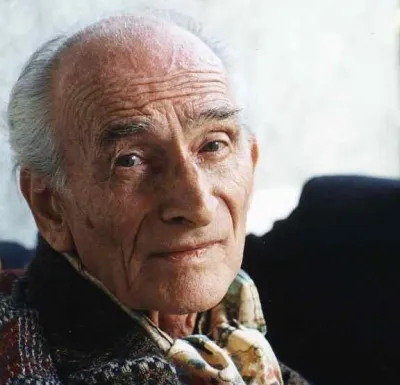
Roger Bissière
Human Design Chart
Biography
What does Projector 2/4 mean for Roger Bissière?
Projector 2/4 — Design at a Glance
Roger Bissière had a dense, focusing aura that shone like a bright flashlight. This quality allowed him to immediately recognize system errors in his environment and shed light on the dark spots. However, this direct confrontation with flaws was often perceived as unpleasant and caused friction. Therefore, restraint was crucial. Instead of openly addressing problems that quickly triggered resistance from others, Roger Bissière demonstrated harmonious behavior by setting an example himself. This pleasant glow attracted people; they came to him naturally for advice.
The core strategy involved waiting for a respectful invitation before taking on a leadership role. As a Projector, Roger Bissière did not have a constant intrinsic energy source. Instead, he experienced cyclical phases: periods of high activity and rapid productivity alternated with necessary rest phases to prevent burnout. Living according to this design rewarded him with success. However, if he deviated from it by working against his natural rhythm or acting without an invitation, the non-self theme of bitterness would arise. Thus, his path lay in patiently waiting for the right invitation and protecting his limited energy through regular recovery.
Emotional Authority
Roger Bissière demonstrated a decision-making stance that required patient waiting. His inner authority resided in the defined Solar Plexus Center, meaning he was subject to an emotional wave. This wave caused constant ups and downs of his feelings; the world appeared colored by his current mood. At one moment, he could be totally enthusiastic about something, only to see it negatively in the next.
However, this immediate emotional impulse was merely a snapshot, not yet his truth. Quick, spontaneous decisions made from this emotional heat often had negative consequences. Roger Bissière needed time to gain clarity. The longer he waited and reconsidered decisions, the deeper he could understand. Intense feelings subsided over time, allowing him to gain emotional distance. Only then did calmness set in and the right decision became clear. This process of maturation was crucial for long-term life choices. Emotional authority always took precedence over other defined centers in his design, regardless of further configurations. He learned to take his time and ask questions repeatedly rather than act immediately. Through this patience, he filtered out temporary moods and accessed his true inner voice.
The 2/4 Profile — Hermit / Opportunist
Throughout his life, Roger Bissière moved between the urgent need for withdrawal and a desire for connected community. His design as Profile 2/4, known as
Split Definition — Defined & Open Centers
Roger Bissière revealed himself as someone with a stable internal architecture characterized by defined Ajna, Throat, G, Heart and Solar Plexus centers. This configuration created a consistent system of conceptual clarity, reliable communication, firm identity, and emotional depth. His defined Ajna served as a steady mental motor; he thought continuously and was not easily influenced from the outside, giving him a specific, trustworthy mental function. These thoughts flowed directly into his defined Throat Center, allowing him to express what he conceptualized or felt – his voice was a reliable expression of his inner processes.
His defined G Center gave him a firm self-identity and clear sense of direction, while the defined Heart Center offered willpower and the ability to keep promises and control resources. As an internal authority, his defined Solar Plexus required him to wait out emotional waves to gain clarity rather than react impulsively to feelings. These defined centers determined his consistent essence.
At the same time, Head, Sacral, Spleen, and Root Centers were open. This made him situationally dependent on external inspiration, energy, security, and stress levels. His open Head Center tended to absorb mental pressure from the environment or seek answers that weren’t his own problem. His open Sacral Center lacked a steady energy flow; he could easily overextend himself with borrowed energy and had to learn to set boundaries rather than being permanently available. The open Spleen Center was prone to fears and seeking security from others, while the open Root Center absorbed external stress, protecting him from overload through environmental impulses when he didn’t interpret them as his own.
Channels for presence, insight and communal connection.
Roger Bissière showed a fundamental stance based on genuine awakening: He lived in the here and now, carried by self-love and trust in his own existence. The Awakening Channel 10-20 connected his G Center with his Throat Center, allowing him to act not through intellectual analysis but through deep inner clarity. His survival and confirmation resulted from accepting himself in every moment and living authentically. This presence often unconsciously inspired others to be themselves as well, prompting genuine invitations and shielding him from reluctant criticism.
At the same time, Roger Bissière had the ability to structure and communicate innovative insights. The Structuring Channel 23-43 connected his mind with his Throat Center, translating spontaneous breakthroughs (Gate 43) into understandable language (Gate 23). His challenge was to articulate innovative thinking clearly enough for collective acceptance. Since his mind often anticipated future events, he had to be patient and wait for the right timing; only then could his unique knowledge be recognized as valuable rather than dismissed as irrelevant.
In interpersonal relationships, Roger Bissière sought harmonious communities through fair agreements. The Community Channel 37-40 connected his Solar Plexus with his Heart Center, emphasizing the need for time to gain emotional clarity in relationships. He waited for genuine personal invitations before committing loyally. His contributions were based on carefully considered agreements that ensured mutual benefit and respect, building bridges between individuals where each found an honorable place and made progress together.
Individual Circuitry — Circuit Signature
Roger Bissière showed a tendency to realize his unique identity through structured expression. His design connected the Ajna and Throat Centers via the Knowledge Circuit. This generated a pulsating flow of creativity and individual knowledge that wanted to become audible or visible in the present moment. The Channel 23-43 (Structuring) served as a tool to bring inner visions into tangible form.
Parallel to this, there was separate, unconnected energy between Heart and Solar Plexus Centers. This connection in the Ego Circuit (Channel 37-40, Community) emphasized a relationship of giving and taking as well as mutual support within a group. Since these centers were not connected with the Knowledge Circuit, the power of cooperation and individual creative structuring acted as separate, parallel forces in his system.
A third aspect was shown through Channel 20-10 (Awakening) in the Integration Circuit. It linked the Throat Center with the Identity Center. This promoted intuitive decisions and trust in one’s own strength that became effective here and now. Through his split definition, however, Roger Bissière always had to look outward to integrate and complete these inner fragmented energies since no continuous connection existed between all defined areas.
Right Angle Cross of the Vessel of Love 3
Roger Bissière's design carried the signature of the right cross of the Love Vessel. This configuration established a specific inner dynamic that shaped his experience and actions. In Human Design, this cross describes a profound connection between emotional intelligence and the will to lead or protect others. It is not superficial affection but rather a structural ability to understand and contribute love as a sustaining element in relationships and communities.
For Roger Bissière, this meant following emotional currents that went beyond the personal. His design promoted an awareness of how feelings can work between people and what responsibility comes with it. He demonstrated a stance aimed at fostering emotional security or resolving conflicts on a deeper level. The mechanics of this cross underscore that true love in Human Design often involves the ability to set boundaries while simultaneously allowing connection. Roger Bissière lived this tension: the desire for closeness paired with the necessity to maintain his own emotional integrity. This shaped how he moved through social structures and formed relationships without losing his center.
Saturn Return · Uranus Opposition · Chiron Return · 2nd Saturn Return — Life Cycles
Roger Bissière went through a development marked by clear structural phases. His design set a rhythm ranging from consolidation, radical change, to deep integration. The first Saturn Return signaled the beginning of a phase of responsibility and densification of earlier efforts into sustainable results. This was not just a time marker but a mechanical point where inner structures crystallized and gained hold.
Following this came the Uranus Opposition, a cycle of rupture. Here Roger Bissière confronted the necessity to release old bonds or patterns to gain freedom for new expressions. This mechanism required letting go, not as loss, but as liberation from constraints hindering further expression.
The Chiron Return marked a phase of fulfillment. During this period, his incarnation cross unfolded increasingly in life; meaning and purpose became experiential if he followed his strategy. It was a bloom time for his mission, no healing of wounds in the traditional sense. The second Saturn Return rounded off this process by pouring the gained insights into a new, more stable form. Each cycle represented a specific maturation task that propelled Roger Bissière personally and artistically forward. The cyclical nature of this transformation was the driving force of his evolution, with each stage a necessary step in development.
Projector · Emotional Authority — Synthesis
Roger Bissière lived a life marked by deep inner clarity and the need to express it authentically (Channel 10-20). His ability to recognize patterns and find innovative solutions (Channel 43-23) combined with a strong sense of community and the necessity to maintain relationships based on mutual give-and-take (Channel 37-40). This combination of individual awakening and social engagement points to someone who valued both inner truth and sharing it harmoniously with others. The constant interplay between the need for alone time for reflection (Line 2) and the desire for connection and exchange (Line 4) shaped his life path.
A central paradox in Roger Bissière's design lies in the tension between his ability to generate deep insights (defined Ajna Center) and the necessity of letting these insights mature through the emotional wave pattern of his Solar Plexus Center. He possessed the gift of immediately recognizing errors in a system, yet his inner authority required patience and time to gain clarity before communicating these insights. This dynamic between quick thinking and slow decision-making created a tension field that compelled him to use both his intuitive intelligence and emotional depth.
3 Defined Channels
Incarnation Cross - Right Angle Cross of the Vessel of Love 3
Solar Return
The Solar Return shows the moment when the sun returns to its exact birth position - your personal solar year.
Life Cycles
Discover the life cycles with a detailed triple view (birth chart, cycle chart, composite).
Human Design Profile
- Type
- Projector
- Strategy
- Wait for the respectful invitation
- Authority
- Emotional Authority
- Profile
- 2/4 - Hermit / Opportunist
- Definition
- Split Definition
- Incarnation Cross
- Right Angle Cross of the Vessel of Love 3
- Date of Birth
- 22.09.1886 17:30
- Place of Birth
- Villeréal, France
Frequently Asked Questions
What was Roger Bissière's Human Design type?
What profile did Roger Bissière have?
What authority did Roger Bissière have?
What incarnation cross did Roger Bissiere have?
When was Roger Bissiere born?
Discover your own Human Design
Are you also a Projector? Find out in a personal reading how to unfold your leadership qualities and recognize the right invitations.
More Personalities
Back to overviewSissy Spacek

Alain-Fournier
Anémone

Ann-Margret

Baekhyun

Balthus