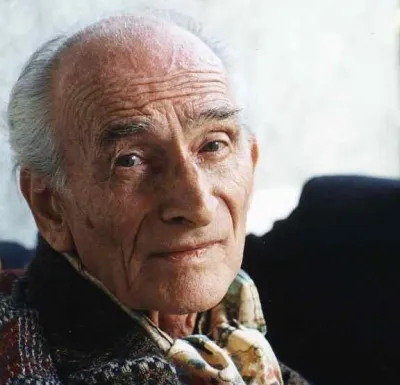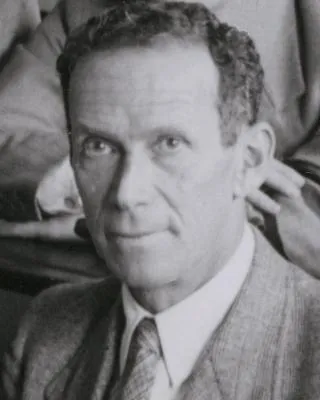
Rudolf Ladenburg
Human Design Chart
Biography
He died on 6 April 1952, Princeton, aged 69.
What does Manifesting Generator 5/1 mean for Rudolf Ladenburg?
Manifesting Generator 5/1 — Design at a Glance
Rudolf Ladenburg's design featured a tendency towards hybrid energy: He had the constant power of a Generator but also possessed through specific connections the ability to move forward swiftly. This configuration described someone capable of skipping steps and quickly pulling things into his life. At the same time, this speed carried risks: If he acted too quickly, he sometimes had to backtrack to make up for missed stages—a process that easily led to frustration, a typical non-self theme of this type. Additionally, his design tended to handle multiple things simultaneously, driven by various impulses. To use this energy effectively, it was crucial for him not to initiate himself but to respond to external signals. Only when the sacral center—his inner power source—gave a clear "yes" and his inner authority agreed could he draw deepest satisfaction from his work. In this state, it even benefited him to work on several projects at once; the compulsion to finish one thing before starting another would have hindered rather than supported his natural dynamism. His design showed its most effective form in "play mode," where variety and fun provided the drive instead of rigid planning or lone-wolf behavior.
Sacral Authority
Rudolf Ladenburg's design inclines him to make decisions not through intellectual analysis but by direct physical resonance. As a Generator, his strategy aligns with his inner authority: the Sacral Authority. This mechanism fundamentally simplifies his decision-making process, as he can wait for internal signals rather than actively seeking answers. A prerequisite for this is his open Emotional Center; it protects the integrity of this gut feeling from emotional flooding or distortion.
His reactions manifest as spontaneous bursts of energy or loud sounds like grunts, hums, or an affirming "Mhm" in response to external stimuli. When his Sacral Motor engages, he feels vital and energetically inexhaustible. This enables him to perform tasks with great enthusiasm – not out of duty but from pure life force. He is born to immerse himself in his duties and feel joy without the need for an external sense of purpose.
Additionally, Rudolf Ladenburg has an activated Spleen Center, which may be directly connected to his Sacral Center. This configuration serves as a supporting authority. It grants him the ability to react particularly quickly and spontaneously. Through this immediate access to his physical well-being and instinctive perception, he can reliably guide himself from these deep impulses, significantly accelerating and stabilizing his daily actions.
The 5/1 Profile — Heretic / Investigator
Rudolf Ladenburg revealed himself as someone who used profound knowledge to offer concrete solutions to others during crises. His design featured the Profile 5/1 – Hero/Researcher –, which described a nearly magnetic presence: Others instinctively sought him out for answers to their problems. This dynamic aligned with Line 5, emphasizing experience and practical problem-solving, combined with Line 1, representing intense self-discovery and research. Ladenburg lived with the tension between the desire to share his acquired knowledge (Selflessness) and the necessity of maintaining personal boundaries to avoid being drained by constant requests from others.
His mechanics also included Gate 22, which promoted attention and politeness but required the ability to accept oneself in subordinate positions. Attempts to take on a role that did not match this inner structure often led to disappointment or social humiliation. Instead, his design worked best when he transmitted mutations and new insights into society – even without direct reward for doing so. The balance between the "Researcher," who learns for himself, and the "Hero," who offers solutions, was crucial. Only through clearly setting boundaries could he optimally utilize these gifts without sacrificing himself or falling into the trap of being overwhelmed by unbridled expectations from others.
Split Definition — Defined & Open Centers
Rudolf Ladenburg's Human Design configuration created a tendency towards constant mental pressure to question and seek answers. This setup between the Head Center and Ajna Center generated an ongoing impulse for understanding thought, but lacked direct energy for implementation. Instead, it served as an inspiration source for others who could take up these ideas.
As a Generator, Rudolf Ladenburg had a defined Sacral Center providing him with a constant supply of vital energy. However, this power was only available when he responded to external stimuli and did not initiate actions himself. His strategy involved waiting until life prompted him before responding fully supported by his sacral energy. This protected him from exhaustion and frustration that would arise if he tried to push mental plans against the resistance of reality.
His defined G Center gave him a stable sense of self-identity and clear direction. Intuitively, he knew where he belonged but could not control or enforce this direction. Additionally, his defined Spleen Center provided him with sharp intuition for health and well-being. This spontaneous body intelligence helped him judge in the moment and protect himself from what was harmful.
In contrast, his Heart Center was open. Rudolf Ladenburg tended to feel compelled by necessity to prove his worth through promises or performance. He could absorb and amplify others' willpower, making him vulnerable to pressure to do more than his own energy allowed. His open Solar Plexus absorbed the emotions of his surroundings. He often experienced other people's moods as his own, leading to inner confusion when he couldn't clearly distinguish which feelings were truly his and which were merely reflected.
Finally, his open Root Center took on external stress. The adrenalized pressure from the environment could drive him into a seeming hyperactivity that was not a sustainable energy source but rather a reaction to external demands.
Channels for intuitive rhythm, powerful presence and mental clarity.
Rudolf Ladenburg's design inclined towards intuitive, physical reactions paired with an urge to articulate these insights immediately in the here and now. This configuration created someone who acted less through abstract planning than through immediate perception.
Central was the Channel of the Aha! 57-20. It connected his intuitive insight from the Spleen (Gate 57) directly to the expression center in the Throat Center (Gate 20). This allowed him to verbalize deeply rooted survival intelligence without mental filters, giving weight to existential truths that often got straight to the point faster than thoughtful analysis could. Complementing this spontaneity was the Channel of Power 34-57. Here, his generative life force from the Sacral Center (Gate 34) flowed back into the intuitive awareness of the Spleen. This cycle kept him physically vital and acoustically attentive; he responded to vibrations in his environment to secure his well-being before the mind could even engage.
Simultaneously, Rudolf Ladenburg possessed resources for deep directional shifts. The Channel of the Beat 14-2 connected material availability competence (Gate 14) with higher knowledge about identity and love in the G Center (Gate 2). This gave him the ability to transform innovative impulses into concrete reality. He could bring new perspectives not through coercion but by trusting his own reactions, thus guiding others towards a reinforcing direction.
This mutative impulse was stabilized by the Channel of Rhythm 5-15. The connection between firm habits (Gate 5) and love for human extremes (Gate 15) created a natural, universal pulse. He moved with the flow of life and drew others into this energy stream without fighting against it. His timing was inner logic that carried him and his environment safely through changes.
In the mental realm, the Channel of Abstraction 64-47 showed active processing of experiences. The confusion in the Head Center (Gate 64) constantly sought patterns in the Ajna Center (Gate 47). This led to viewing life and the world through a kaleidoscope of possible stories. Although this mind never offered final certainty, it generated inspiring narratives as clarity crystallized from mental unrest.
Additionally, Gates like Gate 35 (Change Through Interaction) and Gate 22 (Social Mutation Through Listening) worked on his Cross Level. They promoted openness to new experiences and the ability to calmly observe how social dynamics shift. On a personality level, Gates 7 (Leadership Hierarchies) and 16 (Collective Experimentation) projected patterns for the future while Gate 24 in his design represented the individual process of renewal through inner stillness. Gates 8 and 23 rounded out the picture: His contribution to the group and amoral assimilation of otherness allowed him to act as a creative role model by providing explanations for diverse mutations.
Thus, Rudolf Ladenburg lived in tension between immediate physical truth and constant mental searching for meaning. His strength lay in not only sensing this intuitive power but also carrying it into the world through his rhythm and words.
Individual Circuitry — Circuit Signature
Rudolf Ladenburg's design inclined towards pulsating creativity and strategic structure separate from emotional reflection. With his Split Definition, two independent energetic blocks existed: one connected Throat, Spleen, Identity, and Sacral Centers; the other Head and Ajna Centers. These areas worked in parallel without direct exchange.
The Knowledge Circuit showed in two parts: Creativity through Aha! (Channel 20–57) linked Throat to Spleen while rhythmic expression strength (Channel 2–14) connected Identity and Sacral Centers, promoting innovative impulses and powerful expression as separate streams. The Understanding Circuit activated the Rhythm Channel (15–5), linking identity with sacral energy for focused logical action without emotional influence.
Parallel to this, the Meaning-Finding Circuit worked isolated: The Abstraction Channel (64–47) connected Head and Ajna Centers supporting intuitive idea generation from past experiences – yet separate from other centers. Finally, the Integration Circuit integrated Charisma (20–34) and Power (34–57), linking Throat, Sacral, and Spleen Centers. This created a direct line of intuitive reaction through sacral power to acoustic expression in the now. Rudolf Ladenburg thus lived with clear but separate fields for creative innovation, rational strategy, and intuitive idea generation.
Left Angle Cross of Separation 1
Rudolf Ladenburg's design inclined towards a clear and often cutting perception. He was someone who not only recognized but actively explored boundaries and differences. This attitude stemmed from what is known as the left separation cross 1 in Human Design terminology, which describes a specific way of interacting with the world: by cutting through illusions or vague connections to create clarity. It wasn't about arbitrary destruction but rather the necessity of separating the essential from the non-essential. Ladenburg lived this mechanism by focusing on analysis and definition. His energy was directed towards recognizing structures and distinguishing where there was no real connection, often placing him in situations where he was perceived as someone who spoke harsh truths or broke existing harmonies to reveal a deeper reality. For his system, this separation was not an act of hate but a tool of precision. By cutting false bonds, he created space for more authentic relationships and clearer thought structures. This ability to sharply distinguish shaped his entire way of understanding and moving through the world.
Saturn Return · Uranus Opposition · Chiron Return · 2nd Saturn Return — Life Cycles
Rudolf Ladenburg's design inclined towards structural breaks and necessary realignments that condensed into concrete career steps. In 1924, at age 42, he took over the department for atomic physics at the Kaiser-Wilhelm-Institute. This step coincided with his Uranus opposition transit, a specific moment often marking unexpected changes or breaking old patterns. For his chart design, this was not a random shift but an effect of planetary mechanics requiring new responsibilities and detachment from earlier structures during this phase of life.
Later, in 1931 at age 49, Rudolf Ladenburg became a Fellow of the American Physical Society (APS). This marked his Chiron return, a cycle of fulfillment and blooming. During this period, one's incarnation cross increasingly unfolds in life; if lived according to strategy and authority, purpose becomes experiential. The recognition by APS was thus not an isolated event but an indicator that his life mission was fully unfolding in this phase, confirming his contribution to science as a central part of his life's purpose. These two events illustrate how transit-specific mechanisms – the disruptive Uranus and fulfilling Chiron – shaped concrete career milestones.
Manifesting Generator · Sacral Authority — Synthesis
Rudolf Ladenburg lived a process of continuous expansion of knowledge and its dissemination. As an Expressing Generator with sacral authority, he responded to impulses but could quickly advance due to his hybrid nature (Design). This rapid energy was amplified by the defined Mental Center, which inspired him continuously and prompted questions (Centers), reinforcing his role as Hero/Researcher – always seeking new insights and ready to provide them to others (Profile Role). The Beat Channel connected sacral energy with the G-Center, driving innovations and finding direction in his pursuit (Channels/Gates), manifesting in professional success (Cycles).
A central paradox lay in the combination of quick initiation and the need for return to fundamental steps. While capable as an MG to quickly initiate things, his design required a sacral response to external stimuli to act authentically (Authority). This led to tension between the drive for innovation – fostered by the knowledge circuit – and the necessity to realign repeatedly and review fundamentals before taking further steps.
6 Defined Channels
Incarnation Cross - Left Angle Cross of Separation 1
Solar Return
The Solar Return shows the moment when the sun returns to its exact birth position - your personal solar year.
Life Cycles
Discover the life cycles with a detailed triple view (birth chart, cycle chart, composite).
Human Design Profile
- Strategy
- To respond - wait for something to respond to
- Authority
- Sacral Authority
- Profile
- 5/1 - Heretic / Investigator
- Definition
- Split Definition
- Incarnation Cross
- Left Angle Cross of Separation 1
- Date of Birth
- 06.06.1882 03:00
- Place of Birth
- Kiel, Germany
Frequently Asked Questions
What was Rudolf Ladenburg's Human Design type?
Which Profile did Rudolf Ladenburg have?
What Authority did Rudolf Ladenburg have?
What incarnation cross was assigned to Rudolf Ladenburg?
When was Rudolf Ladenburg born?
Discover your own Human Design
Are you also a Manifesting Generator? Find out in a personal reading how to unfold your multi-talents and direct your energy wisely.
More Personalities
Back to overviewAldair

Alizée

Angeli

Arletty

Artus
Balthus