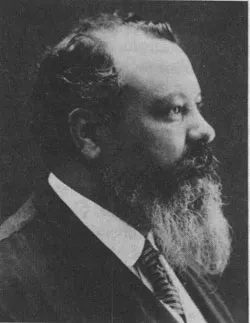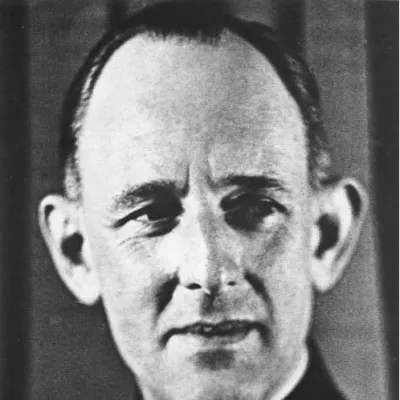
Rudolf Schmundt
Human Design Chart
Biography
Died on 1 October 1944.
Rudolf Schmundt — Manifestor with Profile 3/5
Manifestor 3/5 — Design at a Glance
Rudolf Schmundts design pointed towards noble leadership and visionary thinking. As a Manifestor, he was called to lead the world into a new future, similar to an emperor in ancient Rome pursuing his vision of a great empire without fighting battles himself. Instead, he delegated tasks to conquer foreign lands for him. This role, however, came with a specific pain point: He was often misunderstood and polarized his environment. His far-reaching dreams were loved and emulated by some but rejected or even hated by others due to their grandeur. To find the right followers, it was crucial for him to inform others about his plans in good time and precisely. This strategy of informing stood in contrast to the impulse to simply start acting. If he followed this strategy and trusted his inner authority, his system rewarded him with a feeling of inner peace. However, if he lived against this design, he felt instead a persistent, deep-seated anger within himself. His essence was thus characterized by the tension between the necessity to communicate his vision and the risk of encountering resistance or rejection due to lack of information.
Emotional Authority
Rudolf Schmundts inner authority was Emotional Authority carried by his defined Emotional Center. This configuration fundamentally determined his decision-making: He succumbed to an emotional wave, a permanent up-and-down of feelings. His perception of the world was always colored by his current mood; a moment of enthusiasm could quickly turn into a negative outlook. However, this immediate feeling was only considered a snapshot and not as ultimate truth. Spontaneous decisions made in this emotional heat often proved problematic for his design.
The mechanics of his authority required patience and time. Rudolf Schmundt needed the distance of several days to let a decision mature. Only when intense feelings subsided and he gained emotional distance did clarity and calmness set in for him. This process of 'sleeping on it' was essential, especially regarding long-term questions with significant influence on his life course. Emotional Authority always took precedence over all other defined centers in his chart. Thus, he showed himself as someone who did not act on the first impulse but recognized the depth and scope of a situation only through the subsiding initial emotional reaction. This need for delay protected him from misjudgments arising from the fleeting nature of his current feelings.
The 3/5 Profile — Martyr / Heretic
Rudolf Schmundts design was characterized by the dynamics of Profile 3/5, the Experimenter and Hero. He learned primarily through personal experimentation and failure; theoretical assumptions were not enough for him; he had to gather experiences himself. This process of 'irresponsibility' in the sense of Gate 4 did not mean a moral gap but rather the refusal to bind prematurely or follow conventional paths. Instead, he established and ended connections flexibly to set new priorities.
His self-gained insights formed the core of his attractiveness for his environment. As Line 5, the collective projected expectations on him; they saw in him an authority offering solutions. Rudolf Schmundt had to clearly communicate and explain his individual insights to fulfill this projection and be accepted. The tension lay in that he had to assert himself against collective conditioning while also taking on the role of the 'Hero' who solved others' problems with practical knowledge. His value did not lie in abstract theory but in the bold presentation of his life experiences – including mistakes – which encouraged others to learn from his experiments.
Single Definition — Defined & Open Centers
Rudolf Schmundt's Human Design profile showed a tendency towards consequent clarity of thought. His defined Ajna Center ensured constant mental function; he always thought deeply and was hard to influence from the outside. This internal structure directly flowed into his defined Throat Center, allowing him to express his concepts reliably. His voice served as a pivot point for translating thoughts into the world.
At the same time, Rudolf Schmundt had a firm sense of self through his defined G Center. He knew who he was and what direction suited him without being dependent on others. This security contrasted with his emotional nature: His defined Solar Plexus required patience. Truth did not reveal itself to him in the moment but only after going through an emotional wave. He tended to delay decisions until emotional clarity set in, rather than acting impulsively.
This stable internal architecture met a high vulnerability to external conditioning through his open centers. His open Head Center made him susceptible to mental pressure situations; he tended to identify with others' questions or seek inspiration instead of having his own answers. The open Heart Center lacked consistent willpower, making him prone to trying to prove his worth through promises – often ending in self-doubt.
Furthermore, his open Sacral Center was not designed for continuous energy generation. He absorbed the vitality of his environment, ran on 'borrowed' energy and risked exhaustion if he ignored boundaries. His open Spleen Center carried fundamental survival fears; he unconsciously sought safety from others to compensate for feelings of vulnerability. Finally, his open Root Center took in external stress. Rudolf Schmundt amplified the pressure of his surroundings but could not resolve it himself, leading to cycles of tension and a need to escape this pressure.
Channels for inspiration, insight and emotional transformation.
Rudolf Schmundt's Human Design profile showed a tendency towards exemplary leadership where individual authenticity was paramount. This attitude was shaped by Channel Inspiration 1-8, connecting the G Center with the Throat Center. Here, Gate 1 (Self-expression) and Gate 8 (Contributing) worked together: Schmundt was designed to attract attention through his mere presence and bold life as an individual. His impact did not primarily come from words but by showcasing his unique identity, inspiring others to live out their creativity.
Parallel to this, he showed a capacity for efficient structuring of knowledge. Channel Structuring 23-43 connected the Ajna Center with the Throat Center via Gate 43 (Insight) and Gate 23 (Assimilation). This enabled spontaneous mental breakthroughs that were then clearly and metaphorically expressed. Such innovative perspectives could change thought patterns, provided they were communicated at the right time; otherwise, they often remained misunderstood or rejected.
Additionally, an emotional impulse drove him to seek experiences. Channel Transience 35-36 linked the Solar Plexus Center with the Throat Center through Gate 36 (Crisis) and Gate 35 (Change). This channel fostered a restless desire for newness, often by provoking crises to force action. Schmundt learned emotionally mature ways of dealing with the transience of feelings and used this depth to attract others through his 'hero stories'.
Furthermore, isolated gates worked: Gate 4 (Formulating) sought logical patterns for future security while Gate 49 (Turning Over) responded to tribal principles and sacrifice. Gate 45 (Possession) expressed hierarchical willpower, Gate 20 (Here and Now) focused on authentic action in the moment, Gate 24 (Return) processed mental renewal rhythms, Gate 31 (Channeling) channeled leadership power, and Gate 30 (Feeling Emotions) steered the longing for emotional validation.
Individual Circuitry — Circuit Signature
Rudolf Schmundt's Human Design profile showed a tendency towards emotional processing and expressing transience. As an Ego Defined individual, he had a continuous energetic flow through the Ajna, Identity, Throat, and Solar Plexus Centers, giving him an integrated capacity to act.
The Knowledge Circuit connected his Ajna, Throat, and Identity Centers. Here, Channels of Inspiration (Gates 1-8) and Structuring (Gates 23-43) were active. This promoted the drive to gain new insights and convey them through clear formulations into the world. Energies pulsing in the present supported the expression of a unique individuality as well as creative work.
Simultaneously, the Meaning Circuit flowed between Throat and Solar Plexus Centers via Channel Transience (Gates 35-36). This connection focused on past experiences and their emotional significance. Rather than cold logic, reflecting on events to draw meaning stood in the foreground. The wave-like energy of the Solar Plexus allowed sharing these felt insights with others and learning collectively from the past.
Both circuits converged at the Throat Center, ensuring that internal transformations – whether sparked by new ideas or emotional reflection – were always translated into expression. Rudolf Schmundt thus showed himself as someone who structured innovative impulses and articulated deep emotional connections from the past to initiate change.
Right Angle Cross of Explanation 3
Rudolf Schmundts design carried the signature of the right cross of explanation. This configuration established an inner structure geared towards penetrating complex relationships and articulating them in a way that was understandable and applicable to others. It wasn't merely about talking or theoretical pondering, but rather a specific impulse to filter out the essential from the chaos of information and precisely name it.
In Human-Design, this pattern combines the ability for deep analysis with the necessity to communicate these insights clearly. Rudolf Schmundt was shown through this mechanism as someone called to bring order into seemingly contradictory situations. His strength lay in recognizing the underlying principles of a topic or situation and formulating this insight so that it created action security. This did not happen through authority or coercion, but through the clarity of explanation itself. When he spoke or acted, his purpose was to resolve confusion and find common ground. This energy shaped his interactions with his environment: He was an intermediary between abstract concepts and concrete application. The right cross of explanation challenged him to always seek the truth behind appearances and then authentically convey this truth. Thus, a trust in the correctness of the statement was created, not based on charisma or claims of power. Rudolf Schmundt lived this dynamic as a constant task to make the invisible visible and the hidden explainable.
Saturn Return · Uranus Opposition — Life Cycles
Rudolf Schmundts design showed a tendency towards structural anchoring followed by later, often unexpected reorientation. This dynamism was evident in two central life phases. In 1926, at age 30, he married Anneliese von Kummer. This point marks the first Saturn return, a cycle that favors the condensation of long-term commitments and the establishment of stable life structures in Human-Design mechanics. The marriage was thus no coincidence but followed his natural rhythm towards stability.
Ten years later, in 1936 at age 40, he was transferred to the General Staff of the 18th Infantry Division. This coincided exactly with the Uranus opposition, a period marked by sudden changes, breaks from the familiar and new career directions. While Saturn stands for order, Uranus often brings disruptive impulses that break old patterns. Schmundts career change at this point underscores how his design responded both to deep bonds as well as necessary, abrupt adjustments. Both events illustrate how astronomical cycles shaped his biographical milestones in time and content: first the consolidation through partnership, then realignment within a professional context.
Manifestor · Emotional Authority — Synthesis
Rudolf Schmundt lived a life path marked by a profound drive for innovation and the desire to create and share new things. As a Manifestor with emotional authority and the Profile of the Experimenter/Hero (3/5), he constantly sought his own answers – not through conformity, but through experimentation (Line 3). This self-generated knowledge he then shared willingly to help others (Line 5), which put him in the role of an inspiring pioneer and opinion leader (Channel Inspiration 1-8). His defined Ajna Center points to a consistent ability to develop concepts and implement them.
A central paradox lay in the combination of his manifesting impulse towards initiation and emotional center, requiring time for decision maturation. He was destined to initiate things but simultaneously needed space to process his emotions and fully grasp the implications of his visions. This may have led to an internal tension between the desire for immediate implementation and the necessity of gaining emotional clarity – a dynamic that manifested in key moments of his life, such as decisions with far-reaching consequences (Saturn Return 1926) or career changes (Uranus Opposition 1936).
3 Defined Channels
Incarnation Cross - Right Angle Cross of Explanation 3
Solar Return
The Solar Return shows the moment when the sun returns to its exact birth position - your personal solar year.
Life Cycles
Discover the life cycles with a detailed triple view (birth chart, cycle chart, composite).
Human Design Profile
- Type
- Manifestor
- Strategy
- To inform others before acting
- Authority
- Emotional Authority
- Profile
- 3/5 - Martyr / Heretic
- Definition
- Single Definition
- Incarnation Cross
- Right Angle Cross of Explanation 3
- Date of Birth
- 13.08.1896 15:30
- Place of Birth
- Metz, France
Frequently Asked Questions
What was Rudolf Schmundt's Human Design type?
Which Profile did Rudolf Schmundt have?
What was Rudolf Schmundt's Authority?
What incarnation cross did Rudolf Schmundt have?
When was Rudolf Schmundt born?
Discover your own Human Design
Are you also a Manifestor? Find out in a personal reading how to use your initiation power peacefully and dissolve resistance.
More Personalities
Back to overviewChristian-Jaque
Kesha

Laurent-Eynac
Lucebert
Masaccio
Papus