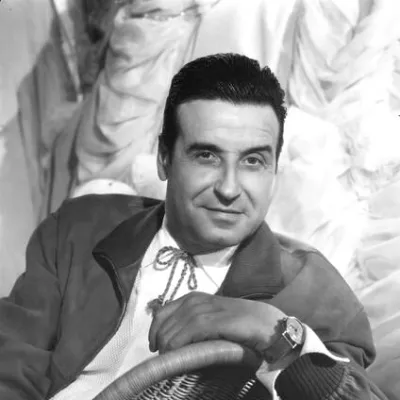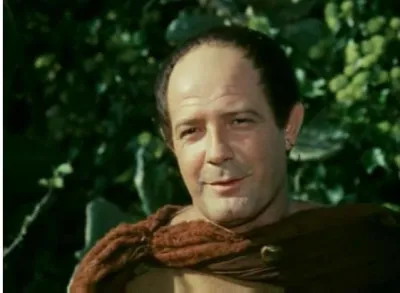
Ruggero Mastroianni
Human Design Chart
Biography
He was the brother of the actor Marcello Mastroianni. He had a notable collaboration with director Federico Fellini, whose films he edited for over twenty years; their works include Giulietta degli spiriti (1965), Amarcord (1973), and Ginger and Fred (1986). He had a similarly notable collaboration with director Luchino Visconti in films like Le Notti Bianche (1957), Morte a Venezia (1971) and Ludwig (1972). He also edited the 1974 absurdist western comedy Don't Touch The White Woman!.
He won 5 David di Donatello Awards and 1 Nastro d'Argento as Best Editor.
With his brother, who acted the part of Scipione l'Africano, he acted the part of Scipione l'Asiatico in the film Scipione detto anche l'Africano by Luigi Magni.
Ruggero Mastroianni died in Torvaianica, near Rome, on 9 September 1996.
What does Projector 2/4 mean for Ruggero Mastroianni?
Projector 2/4 — Design at a Glance
Ruggero Mastroiannis' design tends towards a focused and penetrating perception. As a projector, he did not have a constant, intrinsic source of life energy through an undefined sacral center. Instead, his aura acted like a bright flashlight: It shone light directly on weaknesses in the system around him and immediately identified errors or inconsistencies in others.
This ability to 'shed light into darkness' could be perceived as unpleasant when he addressed these flaws directly – similar to shining a light directly into someone's face. The optimal strategy for his design was to wait for an appreciative, sincerely meant invitation from others. Rather than actively seeking recognition or imposing his observations, he should simply live authentically. Through this inner harmony, he naturally became attractive; others came to him on their own to seek advice.
Since projectors do not have a continuous energy source, Ruggero Mastroianni needed regular rest periods to avoid burning out. The conventional work model of constant availability often stood in opposition to this need. If he lived according to the strategy of waiting for invitations and respecting his energy rhythms, he was rewarded with success. Ignoring these mechanisms and trying to push through resistance led sooner or later to his non-self theme: Bitterness. His path therefore was not one of continuous action but rather targeted, invited leadership.
Splenic Authority
Ruggero Mastroiannis' design tends towards intuitive, momentary orientation. He had an inner authority in the spleen center, which presupposed that his emotional and sacral centers were open – a configuration only projectors or manifestors exhibit. This spleen authority functioned as a finely tuned alarm system for health and survival. Its knowledge did not show itself through reflective analysis but rather as spontaneous internal signals: A first impulse indicated whether a situation, environment, or society was beneficial. This instinct served his immediate well-being and enabled him to rigorously distance himself from harmful influences. Since this spleen impulse was very subtle and only occurred once in the moment, perception required high vigilance; it could easily be drowned out by external advice or internal noise. A brief retreat often helped to hear this fine signal tone again. Because what is right became apparent only in the concrete moment, his preferences changed short-term. Long-term commitments were therefore difficult and often counterproductive. His design preferred flexibility and freedom over rigid plans. He acted best when he spontaneously embraced what felt appropriate at the time rather than committing himself beforehand. This structure shaped a lifestyle that relied on immediate resonance and avoided rigid structures to protect his own integrity and health.
The 2/4 Profile — Hermit / Opportunist
Ruggero Mastroianni was someone who oscillated between a deep need for withdrawal and the desire to connect with his closest confidants. His design tended towards phases of intense isolation, disappearing into them to gain inner clarity before returning to the circle of his 'favorite people.' This dynamic stemmed from his 2/4 profile: Line 2, the natural talent, required protected space behind the scenes for creativity and individual processes to mature undisturbed. It was important to wait for the right call rather than being disturbed by external pressure. At the same time, line 4, the community line, drew him into existing networks. For Ruggero Mastroianni, it was crucial to clearly communicate these shifts – when he sought company and when he wanted solitude. Only then could he reflect on the knowledge of his surroundings in isolation and develop new ideas from it. Line 4 also connected with the theme of authority: His influence depended on whether he was recognized by his community. If this resonance was missing, he withdrew since leadership without consent from its base remained ineffective. This balance between the hermit's cave and the networker's salon shaped his way of interacting with others and forming personal insights.
Single Definition — Defined & Open Centers
Ruggero Mastroiannis' Human Design profile revealed a tendency towards intuitive presence and existential alertness. His defined Spleen Center endowed him with a reliable instinct for the present moment, allowing spontaneous judgments about health and well-being without rational verification. Simultaneously, his defined Root Center served as a source of constant pressure to maintain life force; this stress was not driven by panic but rather material stabilization and correction of what did not work. This combination shaped an approach to navigating the world through the filter of survival and immediate physical intelligence.
At the same time, his chart revealed several sensitive areas where he was vulnerable to conditioning. His open Head Center meant that mental inspiration was not constant; Ruggero Mastroiannis tended to engage with doubts and questions from others rather than generating his own answers. Similarly, his open Ajna Center indicated flexible but unstable conceptual thinking, leading him to adopt ideas from others without identifying them as personal truth.
Especially influential were the open centers of communication and identity. His undefined Throat Center did not attract attention through active speaking but rather by waiting; attempts to be heard often led to stress instead of impact. His open G Center lacked a firm sense of identity or direction; Ruggero Mastroiannis relied on his environment to initiate him, finding the right place and appropriate love from reflection of environmental energy. Instead of seeking himself, he reflected the energy around him. His open Heart Center showed an abstention from willpower and promises; he did not need proof of his worth through competition or assertion. Finally, his Sacral and Solar Plexus Centers were open: He lacked constant generative energy as well as stable emotional waves, instead absorbing the vitality and moods of others, making him a sensitive barometer for social climate but also prone to exhaustion if he held onto these energies.
Channels for ambitious transformation.
Ruggero Mastroiannis' Human Design profile indicated a tendency towards sustained ambition and social ascent driven by a desire for recognition. This attitude was shaped by the Transformation Channel 54-32: A flow between Root and Spleen Centers, linking persistent effort with instinctive risk assessment. Gate 54 promoted the drive to improve life position while Gate 32 secured continuity of the 'tribe'—supporting networks. Success depended on recognizing talents and loyal service; in return, the environment expected reciprocity.
Additionally, several Gates operated at the Cross Level: Gate 7 projected leadership patterns and hierarchies as future perspectives tested through experiments. Gate 13 collected experiences for collective memory, promoted reflection within a temporal context, and fostered cooperation for common good. Gate 1 emphasized unique creativity without limitations in proper timing, while Gate 2 offered receptivity as the foundation for evolutionary direction changes—mutations were here transformed into new paths.
On the personality level, Gate 44 contributed to awareness and responsiveness; transformation occurred through unconditional interaction and resource management stored in cellular memory. Gate 28 demanded decisions in the here and now: Taking risks or not based on personal sense and authority—the fear of worthlessness drove this persistence.
In the design itself, Gate 48 worked with deep pattern recognition and logical perfectionism; it understood connections but often led to frustration due to lack of implementation ('black magic'). Gate 52 required focused pauses for pattern correction without distraction—stress arose from unclear goals. Gate 53 initiated developmental cycles and pioneering work; without closure, this could lead to depression, yet it allowed leaving old paths in favor of new experiences.
Tribal Circuitry — Circuit Signature
Ruggero Mastroiannis' Human Design profile indicated a tendency towards cyclical phases of intense transformation and necessary recovery. As a simply defined person, he did not have separate, isolated energetic poles; instead, his energy flowed as a continuous stream between Spleen and Root Centers. This connection formed the core of his ego circuit. While this circuit generally stands for cooperation and resource management, Ruggero Mastroiannis lacked direct connection to the Sacral Center. Without this constant life-energy source, he could not maintain consistent productivity. Instead, his channels—especially Transformation Channel 32-54—formed a pattern of acute impulses followed by regeneration. The Spleen steered intuitive selection of what was truly useful while the Root Center provided necessary pressure for quick adaptations. This meant Ruggero Mastroiannis needed periods of rest to gather new strength. His energy did not flow as a steady stream but in waves: Moments of clear insight and action alternated with phases of necessary stillness. This structure required him to respect his own rhythm and not fight the natural fluctuations of his endurance, for only then could resources for communal creation within his tribe be maintained.
Right Angle Cross of the Sphinx 4
Ruggero Mastroiannis' Human Design shows a tendency towards inner stability and calm observation. He was someone who did not act immediately during moments of uncertainty but paused to observe the situation from a distance. This attitude stems from the right cross of the Sphinx 4, a configuration often associated with the ability to neutralize chaos through composure.
In Human Design, this Cross describes a specific energetic structure that connects the Self Center with the emotional center and the motoric center via certain channels. For Ruggero Mastroianni, it meant his strength did not lie in aggressive assertion but rather in the ability to see through emotions without being overwhelmed by them. He possessed an inner authority based on patience. Instead of reacting impulsively, he waited until the emotional weather had cleared before making decisions. This strategy allowed him to make clear choices when others were already panicking. His design promoted a kind of wisdom that only became accessible through stillness and deep contemplation. He was not programmed to constantly be in the limelight or offer quick solutions. Instead, he acted as a stabilizing element in his environment by simply being present and creating space for clarity. This trait defined how he approached challenges: with restraint and trusting patience until the right moment for action arrived.
Saturn Return · Uranus Opposition · Chiron Return · 2nd Saturn Return — Life Cycles
Ruggero Mastroianni's professional development was marked by clear milestones where inner maturity translated into outer responsibility. In 1959, at age 30, he received his first independent film cut, marking his first Saturn Return: a phase in which years of groundwork and learned discipline solidified into a self-reliant position. The Saturn cycle demands the integration of experience into sustainable structure; Mastroiannis' assumption of this role perfectly aligned with this mechanism of consolidation and mature action.
Later, in 1971 at age 42, he worked on *Death in Venice*. This period coincided with his Uranus Opposition, a cycle that often challenges old structures and forces new perspectives. Rather than resisting change, Mastroianni used this energy for an intense artistic confrontation. The opposition of Uranus brings unpredictability and the urge for freedom; in his work on this film, it was evident how he channeled this dynamic force. Both events underscore a design that did not passively experience life phases but actively used them as frameworks for professional milestones: first establishment through Saturn, then transformation through Uranus.
Projector · Splenic Authority — Synthesis
Ruggero Mastroianni primarily lived by observing and understanding the dynamics in his environment. As a projector with defined Spleen Center authority (and the Transformation Channel) he had an acute ability to recognize unseen patterns (Gate 54) and perceive resulting potentials for change – an instinct that immediately referred back to his own well-being. This perception always went hand-in-hand with a need for withdrawal (Profile 2/4), to process impulses from within and realign before engaging in interaction.
A central tension field shaped his design: the drive for recognition and social ascent (Channel 54-32) clashed with the deeply rooted need for autonomy and the ability to shield himself from harmful influences. He sought connection with others (Line 4) to contribute his talents and make a societal impact, yet simultaneously required phases of isolation to gain clarity and secure his own well-being – an interplay evident in the documented events of his career.
1 Defined Channel
Incarnation Cross - Right Angle Cross of the Sphinx 4
Solar Return
The Solar Return shows the moment when the sun returns to its exact birth position - your personal solar year.
Life Cycles
Discover the life cycles with a detailed triple view (birth chart, cycle chart, composite).
Human Design Profile
- Type
- Projector
- Strategy
- Wait for the respectful invitation
- Authority
- Splenic Authority
- Profile
- 2/4 - Hermit / Opportunist
- Definition
- Single Definition
- Incarnation Cross
- Right Angle Cross of the Sphinx 4
- Date of Birth
- 07.11.1929 07:00
- Place of Birth
- Torino, Italy
Frequently Asked Questions
What Human Design type did Ruggero Mastroianni have?
Which Profile did Ruggero Mastroianni possess?
What Authority guided Ruggero Mastroianni?
What incarnation cross did Ruggero Mastroianni have?
When was Ruggero Mastroianni born?
Discover your own Human Design
Are you also a Projector? Find out in a personal reading how to unfold your leadership qualities and recognize the right invitations.
More Personalities
Back to overviewSissy Spacek

Alain-Fournier

Anémone

Ann-Margret

Bourvil
Christian-Jaque