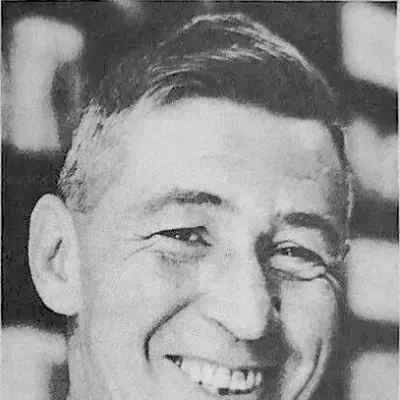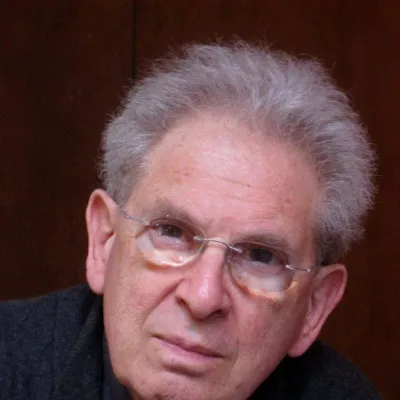
Russell Targ
Human Design Chart
Biography
Targ originally became known for early work in lasers and laser applications. He joined Stanford Research Institute (SRI) in 1972 where he and Harold Puthoff coined the term "remote viewing" for the practice of seeking impressions about a distant or unseen target using parapsychological means. Targ's work on remote viewing has been characterized as pseudoscience and has also been criticized for lack of rigor.
Targ, who is legally blind, is an avid motorcyclist and has published a memoir on his experiences as a "blind biker".
Russell Targ as a Projector 1/3 in Human Design
Projector 1/3 — Design at a Glance
Russell Targ's design tends to act as a focused light source, immediately recognizing systematic errors in others. As a projector, he does not have an intrinsic energy source but works in phases of high intensity followed by necessary rest periods for regeneration. His aura acts like a bright flashlight directed towards weaknesses in his surroundings. However, this ability to identify system flaws can be perceived as unpleasant when used uninvited – similar to light being shone directly into someone's face.
The mechanics of his design show that Russell Targ is most effective not through direct pressure but by attracting others with his harmonious presence. By embodying harmony himself, he draws people who then actively seek his guidance. His strategy involves waiting for an honest and respectful invitation before sharing his insights. This protects him from the typical projector trap: working against environmental resistance or intervening without being asked often leads to bitter experiences. When interaction occurs on invitation, his specific knowledge and diagnostic sharpness are rewarded successfully. Thus, his design requires patience and restraint to sustainably use his unique system optimization ability without burning out.
Emotional Authority
Russell Targ's design tends towards emotional wave movement, significantly influencing his perception and decision-making. His inner authority was Emotional Authority, carried by the defined Solar Plexus Center. In Human Design mechanics: When the Solar Plexus Center is defined, it always takes on the role of inner authority regardless of other defined centers in the chart.
This configuration means that Russell Targ was under constant emotional waves. His feelings fluctuated continuously, causing him to see the world through the filter of his current mood. What appeared inspiring at one moment could be negative the next. His immediate feeling was merely a snapshot and not an ultimate truth value. Quick, spontaneous decisions made in this emotional heat carried the risk of having adverse effects.
The mechanics of his authority required patience and time. To gain clarity, Russell Targ had to let decisions mature ideally through multiple nights' sleep. Only when intense feelings subsided and emotional distance was established did calmness set in. This process was particularly crucial for long-term life decisions as they could significantly impact his life course. By delaying and waiting, he could recognize his true emotional truth rather than being guided by transient moods.
The 1/3 Profile — Investigator / Martyr
Russell Targ's design tends towards intense research and experimental learning. As a 1/3 profile, he was programmed to acquire knowledge not only theoretically but also through practical application and conscious risk-taking. The first line of his profile drove him to understand fundamentals and transform uncertainties into security, while the third line compelled him to test these insights in the field – often with errors as indispensable teachers.
This configuration means that Russell Targ considered judgments valid only after intellectual penetration and practical validation. Line 3 mechanics teach through trial and error; they require experimentation to recognize what works and what doesn't. Simultaneously, the connection to mutual dependency highlighted his need for support to rationally explain and stabilize individual truths. His path was marked by the tension between the desire for deep understanding (Line 1) and the necessity of implementation even when outcomes remained uncertain. Only through this constant testing could he deliver trustworthy results.
Single Definition — Defined & Open Centers
Russell Targ's Human Design profile indicated a tendency towards deep, time-intensive emotional processing. His defined Solar Plexus Center served as an internal authority: decisions required waiting for the emotional wave to become clear rather than acting on spontaneous impulses. This emotional depth was complemented by his defined Spleen Center, which provided intuitive, momentary perception of health and well-being. Additionally, his defined Root Center created a constant physical pressure to master existential challenges and move forward.
At the same time, Russell Targ showed himself to be receptive to external influences through several open centers. His open Head and Ajna Centers meant he did not maintain a constant mental focus; instead, he tended to absorb mental inspiration from his environment or be influenced by others' doubts rather than holding onto firm concepts of his own. The absence of a static identity in his open G Center meant that he gathered orientation through the right places and people around him. His open Heart Center made him vulnerable to feeling pressure to prove his worth, even though he was not designed to compete with willpower. Finally, his open Sacral Center meant he did not have constant generative energy but instead amplified the vitality of others and had to learn to set boundaries to avoid burnout. This configuration marked him as someone who found emotional truth through patience, used intuition in the moment, but was strongly influenced mentally and energetically by his environment.
Channels for synthesis and transformative ambition.
Russell Targ exhibited a fundamental orientation based on seeking hidden truths and inner clarity. His design emphasized sorting out mental noise to arrive at spontaneous insights—a process described as thought mutation. This ability for pattern recognition and logical categorization of facts stood in tension with deep emotional sensitivity towards belonging and tribal connection.
This dynamic was shaped by two central channels. The Synthesis Channel 19-49 connected the Root Center to the Solar Plexus Center, creating an emotional frequency that determined who belonged to the community and who did not. This channel acted as glue for social bonds based on loyalty and exchange of protection for support. Russell Targ relied on being needed and clearly recognizing his position in the whole to be satisfied; the emotional wave of this channel governed acceptance or rejection within his social circles.
Parallel to this, the Transformation Channel 54-32 connected the Root Center with the Spleen Center, driving an ambition motivated by constant effort and a desire for recognition. This channel helped him recognize talents and move up through competence, always driven by fear of failure or loss of tribal capability. The transformation never occurred in isolation but required support from the tribe to be sustainable.
Additional gates like Gate 61 promoted the struggle for silence and self-awareness, while Gate 22 allowed openness to social mutations without being intrusive. Gate 57 supported intuitive clarity here and now, even if it was associated with a certain fear of tomorrow. Overall, Russell Targ sought balance between individual insight and the necessity of operating within a protected, loyal framework.
Tribal Circuitry — Circuit Signature
Russell Targ's design indicated a tendency towards cooperative action where resources are exchanged and nurtured. His chart shows the
Right Angle Cross of Maya 1
Russell Targs Human Design profile carried the signature of the right cross of the Maya, a configuration that points to a deep connection with collective consciousness and spiritual dimensions. This structure indicated that his path was not primarily driven by individual ambition but rather by the need to reveal hidden truths and make them accessible for the community.
In Human Design terms, this cross describes a specific energy aimed at making the invisible visible. It involves translating intuition into concrete insights without losing touch with broader human experience. Russell Targ thus acted as a bridge between personal experiences and universal knowledge. His appeal lay less in pure intellect than in the authenticity of his perception, which encouraged others to expand their own understanding limits.
This configuration calls for an openness towards the unexpected. It supports processes where inner visions are carried outward to contribute to consciousness development. For Russell Targ, this meant that his actions and insights were always in service of a greater whole beyond the individual.
Saturn Return · Uranus Opposition · Chiron Return · 2nd Saturn Return — Life Cycles
Russell Targs design indicated a tendency to break established boundaries and open up new perspectives, especially when these were based on seemingly impossible or hidden phenomena. This configuration often manifests during life phases marked by sudden shifts or the introduction of radically new ideas. The Uranus opposite in his chart marks a period of intense internal and external tensions between the desire for individual freedom and environmental demands. It is a time when old structures are often felt as too confining, leading to a strong urge to create something new or challenge existing paradigms.
This mechanism became concrete in 1972 when Targ, at age 38, joined the Stanford Research Institute. During this Uranus opposition phase, typically associated with a need to break free from the known, he began collaborating with Harold E. Puthoff. Together they coined the term 'remote viewing'. This step was not just a career change but aligned with the archetypal energy of this transit: leaving the old behind to operate in a new and often undefined space. The opposition forces differentiation; Targ used this tension to enter a field challenging conventional science, thus embodying exactly that disruptive force driving his design during this life phase.
Projector · Emotional Authority — Synthesis
A central thread runs through the design: the ability to recognize and mediate connections – both on an emotional level (defined Emotional Center) as well as in seeking underlying principles (Channel of Synthesis). This gift for recognizing patterns and needs is amplified by the Investigator/Experimentor profile, emphasizing deep examination and verification before sharing insights. The energy seems geared towards uncovering hidden connections and making them understandable to others, always striving to sharpen one's perception through experience.
A central paradox lies in the combination of emotional authority and a need for experimentation (Line 3). The defined Emotional Center requires time for decision maturation while Line 3 urges action. This creates tension between waiting for emotional clarity and the impulse to act and learn from experience – an interplay between inner reflection and outer action, manifesting in a continuous process of learning and refinement (recorded event in 1972).
2 Defined Channels
Incarnation Cross - Right Angle Cross of Maya 1
Solar Return
The Solar Return shows the moment when the sun returns to its exact birth position - your personal solar year.
Life Cycles
Discover the life cycles with a detailed triple view (birth chart, cycle chart, composite).
Human Design Profile
- Type
- Projector
- Strategy
- Wait for the respectful invitation
- Authority
- Emotional Authority
- Profile
- 1/3 - Investigator / Martyr
- Definition
- Single Definition
- Incarnation Cross
- Right Angle Cross of Maya 1
- Date of Birth
- 11.04.1934 06:03
- Place of Birth
- Chicago, IL, United States
Frequently Asked Questions
What is Russell Targ's Human Design type?
What Profile does Russell Targ have?
What authority does Russell Targ have?
What is Russell Targ's incarnation cross?
When was Russell Targ born?
Discover your own Human Design
Are you also a Projector? Find out in a personal reading how to unfold your leadership qualities and recognize the right invitations.
More Personalities
Back to overviewSissy Spacek

Alain-Fournier

Anémone

Ann-Margret

Bourvil
Hergé