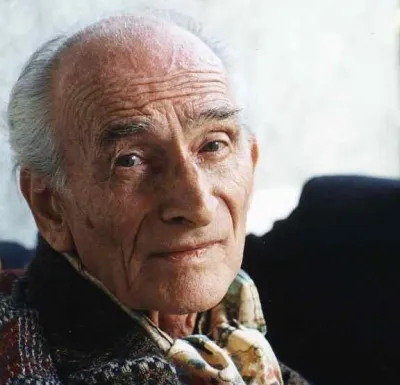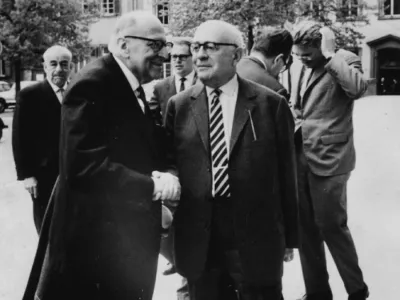
Siegfried Landshut
Human Design Chart
Biography
Siegfried Landshut died on 8 December 1968 in Hamburg, Germany.
Human Design Analysis: Siegfried Landshut as Manifesting Generator 2/5
Manifesting Generator 2/5 — Design at a Glance
Siegfried Landshut revealed himself as someone who, through his configuration as a manifesting generator, possessed hybrid energy: the constant power of a generator paired with the lightning-fast alignment of a manifestor. His design inclined him to rapidly draw things into his life, often skipping steps in the process. This speed, however, was a double-edged sword. If he moved too quickly, he found himself having to backtrack and make up for missed steps, often leading to frustration – the specific non-self theme of this type. Additionally, he tended to pursue multiple projects simultaneously, driven by various impulses. Without the internal approval of his authority and sacral center, this creative drive quickly turned into overextension.
The mechanics of his design required him not to initiate but to react to impulses. Only when his sacral center gave a clear “yes” should he act. By correctly applying this strategy – reacting rather than initiating – he found deep satisfaction. His creativity then thrived not through linear progression but through variety and a playful mode. Parallel processing of different tasks was not a hindrance for him but the source of his energy, as long as he stayed in flow and did not work against his inner resistance.
Sacral Authority
Siegfried Landshut's decision-making was oriented towards an immediate, bodily resonance. As a generator, his strategy was identical to his inner authority, simplifying the process of choice. He did not react through abstract thinking but responded directly to external stimuli from his gut. This sacral authority manifested in subtle sounds like grunts or an affirming “Mhm,” serving as a green light.
A prerequisite for this clear guidance was an open emotions center. This meant that he showed filtered rather than impulsive reactions. When his sacral motor responded to something, he felt vital and alive. He had an inexhaustible energy and completed his tasks with great enthusiasm. His life was characterized by the desire to act with joy and satisfaction, fully immersed in activities without rigid purposefulness.
Additionally, a supportive authority was present through his activated spleen center. This gave him the ability to react particularly quickly and spontaneously. He had an immediate access to his physical well-being and instinctive perception. These instincts could be reliably used as a compass. The combination of sacral energy and spleen-supported speed shaped his way of moving in the world: lively, enthusiastic, and intuitively precise.
The 2/5 Profile — Hermit / Heretic
Siegfried Landshut's design inclined him towards a restrained but powerful leadership. As a person with the Profile 2/5, the
Split Definition — Defined & Open Centers
Siegfried Landshut's Human Design shows a tendency towards constant mental pressure, paired with a clear, reliable identity and an enormous source of vital energy. He was someone who constantly asked questions and formed concepts, but could not enforce these ideas by his own will. His defined Head and Ajna Centers created a permanent inner drive to understand and comprehend things. However, this mental process was not connected to energy for direct implementation; fighting against this separation of idea and execution would have led to frustration. Instead, he acted as an inspirational source that encouraged others to think.
His defined Throat Center allowed him to express these thoughts and concepts clearly and reliably, while his defined G Center gave him a firm self-image and a sense of direction. He knew who he was and could show others new perspectives without being dependent on their expectations. The driving force of his actions came from his defined Sacral Center. As a Generator, he possessed a constant, humming vitality that he could only use correctly in response to external impulses. Initiating actions from the mind would have drained his energy; waiting for the right question or invitation was the key to his satisfaction and endurance.
At the same time, Siegfried Landshut was vulnerable to external conditioning through his open centers. His open Heart Center tended to feel the pressure to prove his worth through promises and performance, even though he did not have a constant willpower for this. The open Solar Plexus Center absorbed the emotions of his environment, which could lead to inner unrest if he interpreted these foreign feelings as his own. Furthermore, he was sensitive to fears and well-being through the open Spleen Center, which led him to cling to people or situations that gave a false sense of security. Finally, the open Root Center took on external stress, which could lead to a feeling of pressure and unrest if he tried to escape or succumb to this foreign adrenaline rush.
Channels for leadership, abstraction, rhythm and reflection.
Siegfried Landshut was someone who initiated deep directional shifts, driven by a powerful, generative life energy. This tendency was rooted in the Beat Channel 14-2, connecting the Sacral Center with the G Center. Through Gate 14, skillfully handling power, he had the resources to drive material mutations, while Gate 2, the Gate of Higher Knowledge, directed these impulses into a new, innovative direction. As one of the tantric channels, this configuration promoted uniqueness and the courage to trust one's own destiny, thereby giving others orientation through his presence.
Parallel to this, he acted as a logical leader who gained trust through competence. The Alpha Channel 7-31 connected the G Center with the Throat Center. Here, Gate 7, the Gate of the Self's Role, provided strategic logic, while Gate 31, the Gate of Leadership, represented the collective voice. Siegfried Landshut sought his own sphere of influence and led not through authority, but by showing the way once the community invited him to do so. His leadership was based on tested patterns and an understanding of current trends.
Additionally, he possessed the ability to reflect experiences and act as a witness. The Lost Son Channel 13-33 also connected the G and Throat Centers. Gate 13, the Gate of the Listener, gathered information and secrets, which Gate 33, the Gate of Withdrawal, condensed in peace. This allowed him to extract lessons from the past and share them only when the truth became clear.
Mentally, he went through a process of abstraction. The Abstraction Channel 47-64 connected the Head and Ajna Centers. Gate 64, the Gate of Confusion, generated constant mental images, which Gate 47, the Gate of Understanding, filtered into a coherent story. This mind sought the meaning behind experiences, often accompanied by inner unrest, until clarity suddenly emerged.
Furthermore, other Gates shaped his design: Gate 1 emphasized uniqueness in the here and now; Gate 9 ensured meticulous perfection; Gate 15 adapted to collective rhythms; Gate 43 brought forth spontaneous insights; Gate 20 promoted authentic action; Gate 27 acted with care; Gate 62 analyzed patterns logically; Gate 59 sought genetic connection; Gate 45 expressed tribal energy; and Gate 35 required interaction for progress.
Collective Circuitry — Circuit Signature
Siegfried Landshut's design set a tendency towards rhythmic expressive strength and strategic clarity. His energy consisted of separate, parallel operating blocks that did not flow directly into each other.
In the Knowledge Circuit, the channel 'The Beat' connected the Identity with the Sacral Center. This created a pulsating, acoustic power for his individuality. Siegfried Landshut used this connection to go his own way through creative expression.
The Understanding Circuit activated the channel 'The Alpha' between Throat and Identity Centers in him. Here, it was about focused, emotionless ratio and sharing logical insights to improve the future. This energy stood for strategic structure and visual clarity.
The Meaning Circuit showed two separate segments. The channel 'Abstraction' connected Head and Ajna Centers, while 'The Lost Son' linked Throat with the Identity Center. This configuration served the reflection of past experiences. Siegfried Landshut sought the meaning behind events to understand emotional waves from the past and share these insights with the collective.
In summary, the power of individual rhythm, the clarity of strategic reason, and the depth of emotional meaning seeking worked as coexisting but not directly connected energetic systems in Siegfried Landshut.
Right Angle Cross of the Sphinx 3
Siegfried Landshuts Design carried the signature of the right Sphinx Cross 3. This configuration established a fundamental attitude characterized by a deep connection with the flow of life. It was not about passive waiting but rather an active yet unforced participation in events. The energy of this cross promoted a way of being based on resonance and authenticity. Siegfried Landshut was someone who found his strength in following his inner rhythm rather than fighting against it.
The right Sphinx Cross 3 connects specific energetic centers that together support a strategy of appropriate responsiveness. It involves receiving impulses from the outside, processing them internally, and then acting from a position of inner truth. This created a natural presence in Siegfried Landshut that attracted others without him having to actively seek them out. His presence was marked by a quiet determination, resulting from his focus on what was truly important to him.
This mechanism meant that success for Siegfried Landshut was not achieved through constant planning or controlling but rather through trust in his own intuition and the ability to embrace the right moments. He lived in a dynamic that required patience and careful observation of the signs in his environment. He only acted when these signs aligned with his inner compass. This protected him from exhaustion and secured him a sustainable energy source. His path was one of continuous affirmation by life itself, as long as he followed this inner guidance.
Saturn Return · Uranus Opposition · Chiron Return · 2nd Saturn Return — Life Cycles
Siegfried Landshut's Human Design showed a tendency to validate inner authority through external structures and recognition. His path was marked by the search for a stable position where his intellectual abilities could find their proper place.
1928, at the age of 31, he withdrew his habilitation thesis. This marked his first Saturn return, a cycle that often leads to questioning early ambitions and establishing them on a more sustainable foundation. Instead of staying on an established academic path, he sought new ways.
The Uranus opposition around 1936 brought a radical break: the move to Palestine. This cycle often demands a break with the familiar to make room for necessary changes. Landshut responded to this pressure with a spatial and professional reorientation that removed him from the European context.
The Chiron return around 1945, when he moved his family to Cairo, signaled a phase of unfolding. At this age, one's life purpose, if following inner authority, begins to solidify. The move was not a retreat but a move closer to his true calling.
In 1951, at the age of 54, he received a call to the first chair in the "science of politics" at Hamburg University. This fell during his second Saturn return, often marking the culmination of long-term work. Here, Landshut found the structural validation his design sought: a stable institution that recognized and anchored his specific expertise.
Manifesting Generator · Sacral Authority — Synthesis
Siegfried Landshut lived a life marked by an inner dynamic between sacral energy and mental pressure. As a Manifesting Generator (MG), he possessed constant life force (sacral center), reacted to impulses, and could act swiftly. At the same time, his defined Head Center was a source of continuous inspiration and the need to understand things, driving him towards mental activity and questions. This interplay led him to quickly engage with new topics, yet he was always in search of deeper knowledge and meaning – a pattern that showed in career shifts and periods of withdrawal to reorient himself. The Line 2/5 of his Profile amplified this tendency towards inner reflection, combined with the expectation to be available as an advisor for others.
A central paradox in Siegfried Landshut's design lay in the tension between the need for withdrawal and the ability to quickly initiate things. The Line 2 demanded time for himself to find his direction, while the Manifestor component of the MG type allowed him to take initiatives and push for changes. This apparent contradiction manifested in cycles of his life: phases of withdrawal, reflection, and realignment followed periods of active engagement and career changes, fueled by the energy of the sacral center.
4 Defined Channels
Incarnation Cross - Right Angle Cross of the Sphinx 3
Solar Return
The Solar Return shows the moment when the sun returns to its exact birth position - your personal solar year.
Life Cycles
Discover the life cycles with a detailed triple view (birth chart, cycle chart, composite).
Human Design Profile
- Strategy
- To respond - wait for something to respond to
- Authority
- Sacral Authority
- Profile
- 2/5 - Hermit / Heretic
- Definition
- Split Definition
- Incarnation Cross
- Right Angle Cross of the Sphinx 3
- Date of Birth
- 07.08.1897 08:00
- Place of Birth
- Strasbourg, France
Frequently Asked Questions
What was Siegfried Landshut's Human Design type?
What profile did Siegfried Landshut have?
What authority did Siegfried Landshut have?
What incarnation cross did Siegfried Landshut have?
When was Siegfried Landshut born?
Discover your own Human Design
Are you also a Manifesting Generator? Find out in a personal reading how to unfold your multi-talents and direct your energy wisely.
More Personalities
Back to overviewAldair

Alizée

Angeli
Arletty
Artus

Balthus