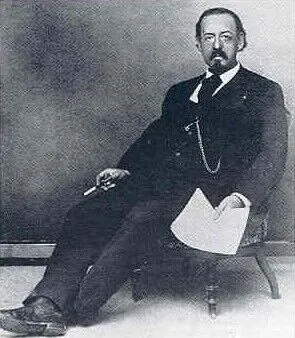
Siegfried Marcus
Human Design Chart
Biography
Human Design Analysis: Siegfried Marcus as Projector 3/5
Projector 3/5 — Design at a Glance
Siegfried Marcus revealed himself as someone with a focusing aura that immediately identified system errors in his environment. His Human-Design type was Projektor, meaning his energy acted like a bright flashlight: it directed its beam directly to areas where the counterpart was still in darkness or not functioning optimally. This ability to recognize flaws in other people's systems instantly shaped his perception of the world.
However, this direct identification of weaknesses was risky. When Siegfried Marcus pointed out these flaws immediately, others often perceived him as aggressive or unpleasant – similar to someone shining a bright light directly into another person's face and exposing their problems. This led quickly to resistance and conflicts.
The more effective strategy for Siegfried Marcus was to shine passively rather than actively correct. By living in harmony and functioning himself, he became automatically attractive. Other people then came to him of their own accord to seek advice or solutions. This honest invitation was crucial: it allowed him to bring his insights without resistance. If he lived by this principle of waiting for the invitation, he was rewarded with success. Ignoring this strategy and intervening prematurely led sooner or later to bitterness from not being himself. His undefined Sacral Center also required rest phases to avoid burning out, as he did not have a constant intrinsic energy source.
Emotional Authority
Siegfried Marcus showed a basic attitude of emotional detachment: He never made decisions in the heat of the moment or based on first impressions. His inner authority lay in his defined Solar Plexus Center, meaning that he was subject to a permanent wave of highs and lows. The world appeared colored by his current mood; today something might excite him totally while it had negative effects the next moment. However, this feeling was only a snapshot, not an ultimate truth. Quick, spontaneous actions from emotional excitement would often have negative consequences for Siegfried Marcus.
Instead, he consciously sought time. By hesitating and reconsidering questions multiple times, he gained necessary distance to intense feelings. This process of temporal distancing was essential to validate the inner truth against momentary moods. The longer he waited, the deeper he could see. Over time, emotions subsided, clarity and calmness emerged. Only then, after this maturation process was complete, did he act. This strategy of demanding and claiming time particularly shaped long-term decisions that significantly influenced his life course. Emotional authority always took precedence over other defined centers; it determined the rhythm of his perception and action.
The 3/5 Profile — Martyr / Heretic
Siegfried Marcus revealed himself as someone who gained knowledge not from books but through personal experimentation. His design indicated a tendency to be skeptical towards established truths initially and test everything himself. This aligned with Line 3 of his Profile, which demanded experiments and adaptation through trial and error. Failure was not an end but a necessary learning step.
From these private experiences, he later developed a public role. As a 3/5er, the 'Experimentator and Hero', he presented his accumulated treasure of practical life experiences to other people. Line 5 functioned here as a hero's role: it used knowledge gained through Line 3 to solve others' problems or inspire them. This attitude made him socially attractive; others sought his proximity to benefit from his insights.
This dynamic also brought vulnerability with it. While success as a hero was flattering, public failure in experiments could be very painful. His Line 5 was pragmatic and cautious, influenced by Gate 12. It knew emotional highs and lows as well as the necessity of withdrawal after crises. Marcus learned that people projected onto him and had certain expectations. Deep pain from interpersonal experiences led to strategic withdrawals or avoiding specific personality types. His path thus consisted in making authoritative knowledge out of personal failures, which he then – with necessary caution – used to act as a rescuer or hero for others.
Split Definition — Defined & Open Centers
Siegfried Marcus revealed himself as someone with a persistent, independent way of thinking and a clear inner direction. His defined Ajna Center ensured a trustworthy mental function; he processed data and concepts in his own specific way, unaffected by external influences. These thoughts flowed directly into his defined Throat Center, allowing him to communicate what he thought reliably and set it out into the world. His identity was marked by a firm G Center: He knew who he was and where it led him without having to rely on others.
At the same time, he moved through an emotional wave. His defined Solar Plexus required patience; truth revealed itself to him only over time, not in impulsive moments. He learned to wait out the highs and lows of his feelings to come to clarity rather than acting emotionally driven. Intuitively, he reacted through his defined Spleen Center to immediate survival; his spontaneity and body awareness protected him in the moment. A constant pressure from his defined Root Center pushed him forward to maintain the life impulse.
In contrast, he was open in certain areas and reflected the environment. His open Head Center lacked consistent inspiration; he tended to engage with questions that were not his own problem or sought answers to calm mental restlessness. His open Heart Center had no constant will; he risked getting caught up in a cycle of promises and self-proof rather than simply accepting his worth. Additionally, his Sacral Center was open: He lacked consistent generative energy. Instead, he strongly felt the energy of the environment and tended to overexert himself on borrowed power until exhaustion set in because he wasn't designed to produce this constant input or set limits.
Channels for curiosity, reflection, synthesis and intuitive clarity.
Siegfried Marcus revealed himself as someone whose inner drive was shaped by emotional friction and a desire for further development. This fundamental attitude stemmed from the dominant energy of Gate 6, which regulates biological boundaries and fertility; without this emotional motor, growth remained impossible. The way he expressed these impulses followed specific patterns in his design.
The Channel of Curiosity 11-56 connected his Ajna Center with the Throat Center. This made him a storyteller who wove ideas not as dry facts but as parabolic stories. He constantly sought inspiration to explore new perspectives and then share them: „Look what I discovered.“ His creativity lay in filling gaps in information through imagination, teaching and stimulating others without primarily seeking an ultimate truth.
At the same time, the Channel of Aha! 20-57, connecting his Spleen Center with the Throat Center, gave his intuitive insight a clear voice in the present moment. He communicated spontaneous truths directly from the moment, supported by deeply rooted survival intuitions. This ability allowed him to get to the core of things faster than others by acting and speaking here and now without much thought.
Situationally, the Channel of the Lost Son 13-33 and the Channel of Synthesis 19-49 also came into play. The former promoted a patient reflection on collected experiences before sharing them, while the latter stirred a need for tribal belonging and emotional attachment to principles. However, these channels were not constant drivers like the design channels but complemented his profile with situational depth and a desire for cohesion.
Collective Circuitry — Circuit Signature
Siegfried Marcus revealed himself through a divided energetic structure that allowed two independent power fields within him to operate. This created an internal tension between the need for individual creative self-expression and the pragmatic necessity of cooperative resource building in the collective.
One field connected the Throat with the Spleen Center via the Knowledge Circuit. Here, the Channel of Aha! (20-57) promoted innovative, intuitive impulses that were guided by creativity. Another, separate part of this field linked Ajna-, Throat-, and Identity Centers in the Meaning-Making Circuit. The Channels of Curiosity (11-56) and the Lost Son (33-13) allowed for emotional processing of past experiences and reflecting on their meaning to then express these insights. These centers worked together to translate emotional wave movements into understandable communication.
Completely isolated from this was the second field: the Ego Circuit, connecting Solar Plexus with Root Center. The Channel of Synthesis (49-19) here steered energy from stress and emotions directly into readiness for action. Since there was no connection to the Sacral Center, constant life force was lacking; instead, this energy worked in waves and required pauses for regeneration. Siegfried Marcus thus had to navigate between pulsating intuitive creativity on one hand and cyclical, stress-driven necessity for support in the collective on the other without these two areas merging energetically.
Right Angle Cross of Eden 3
Siegfried Marcus carried the right cross of Eden 3. This archetypal imprint formed a fundamental level of his identity, significantly shaping his energetic pattern and inner orientation. In Human Design mechanics, such crosses represent deeply rooted life tasks and characteristic attitudes that permeate the individual, often independent of conscious choice or external environment. For Siegfried Marcus, this meant that his essence was marked by a specific internal logic and a particular way of perceiving the world, showing as a constant foundation of his being. This configuration did not act as a transient state but as a structural component of his personality, shaping his reactions, decisions, and overall existence. The right cross of Eden 3 bestows a certain archetypal quality that embeds the individual in their life process and gives them a unique energetic fingerprint. Siegfried Marcus thus lived within this framework, which structured both his opportunities and challenges, without being able to simply discard this underlying dynamic. It was an essential layer of his existence that profoundly influenced how he was and acted.
Saturn Return · Uranus Opposition · Chiron Return · 2nd Saturn Return — Life Cycles
Siegfried Marcus's career development followed a clear cyclical structure marked by planetary transits indicating technical breakthroughs. In 1857, at the age of 26, he received a patent for improving safety valves on steam boilers – his first Saturn return, often marking the first viable professional results.
The Uranus opposition presented itself as a phase of breaking with the old and introducing new ideas. In 1870, at 39 years old, Marcus built his first gasoline-powered street vehicle. This corresponded to the typical pattern during this transit phase: established structures were replaced by innovative, often disruptive ideas.
The Chiron return, a fulfillment cycle between the ages of 49 and 51, promoted the unfolding of one's purpose. In 1882, at age 51, Marcus conducted a preliminary test of an Otto gas engine on kerosene with vaporizer and ignition device. Here it was evident how the incarnation cross increasingly became effective in his life and made sense.
The second Saturn return around the age of 57 stabilized and solidified these achievements. In 1888, Marcus's second vehicle was completed and put into operation. This transit underscored the maturity and stability of his technical visions now presented in a refined form. The sequence of these transits structured his life work not as a random series of inventions but as a coherent development line where each step built on the previous one and was facilitated by specific astrological influences.
Projector · Emotional Authority — Synthesis
He was a projector whose life seemed to be marked by a deep need to recognize patterns and present solutions (defined Ajna Center). This recognition went beyond mere observation; he shared his insights willingly, driven by curiosity (Channel 11-56) and the desire to advance others through his experiences (Profile 3/5). The recurring professional successes, evidenced by patents and vehicle designs in specific cycles, suggest that he not only gathered knowledge but also implemented it into concrete, practical innovations – an expression of the Knowledge Circuit.
A central paradox lay in his emotional authority: although he possessed the ability to analyze systems and identify errors, his decision-making process required time and experiencing an emotional wave. This stood in tension with his profile as a experimenter who learned through trial and acted quickly. He seemed torn between the need for deep reflection and the urge for direct implementation, always searching for the right moment to express his insights.
4 Defined Channels
Incarnation Cross - Right Angle Cross of Eden 3
Solar Return
The Solar Return shows the moment when the sun returns to its exact birth position - your personal solar year.
Life Cycles
Discover the life cycles with a detailed triple view (birth chart, cycle chart, composite).
Human Design Profile
- Type
- Projector
- Strategy
- Wait for the respectful invitation
- Authority
- Emotional Authority
- Profile
- 3/5 - Martyr / Heretic
- Definition
- Split Definition
- Incarnation Cross
- Right Angle Cross of Eden 3
- Date of Birth
- 18.09.1831 15:27
- Place of Birth
- Malchin, Germany
Frequently Asked Questions
What was the Human Design type of Siegfried Marcus?
Which Profile did Siegfried Marcus have in Human Design?
What Authority guided Siegfried Marcus?
What incarnation cross characterized Siegfried Marcus?
When was Siegfried Marcus born?
Discover your own Human Design
Are you also a Projector? Find out in a personal reading how to unfold your leadership qualities and recognize the right invitations.
More Personalities
Back to overviewSissy Spacek

Alain-Fournier

Anémone

Ann-Margret

Bourvil
Hergé