
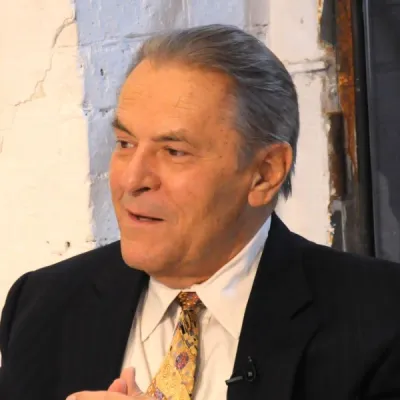
Stanislav Grof
Human Design Chart
Biography
The Human Design of Stanislav Grof: Manifesting Generator 6/2
Manifesting Generator 6/2 — Design at a Glance
Stanislav Grof's design points towards a hybrid dynamism: the speed to bring things into life paired with the constant energy source of a Generator. He showed himself as someone who could skip steps and act swiftly – a characteristic of the Manifesting Generator. This type combines the initiative-driven power of Manifestors with the sustainable sacral energy of Generators.
However, this configuration brought specific challenges. The risk was to miss important stages through too quick action or to process too many projects in parallel without waiting for inner consent. If strategy and authority were not aligned, this creative enthusiasm could quickly turn into frustration – the non-self theme of this type.
The solution did not lie in slowing down itself but in proper application: Stanislav Grof had to react to impulses and check if his sacral center responded with a clear 'yes'. Only then could speed serve beneficially. With correct alignment, this mechanism allowed for deep satisfaction. Instead of fixating on one thing, he found his strength in the 'play mode', where variety and parallel work became sources of fulfillment rather than exhaustion.
Emotional Authority
Stanislav Grof's design points towards profound, time-intensive decision-making. He showed himself as someone who did not react to the first emotional impulse but consciously delved deep to gain clarity. This attitude stems from his emotional authority: The defined Solar Plexus Center carries this inner leadership competence. Regardless of further definitions in the chart, this authority always took precedence for Stanislav Grof; it is the primary compass for his life decisions.
The mechanics of this configuration mean that feelings flow in waves – a permanent up and down. What Stanislav Grof perceived as absolutely right or fascinating at one moment could appear completely different under another emotional coloring the next moment. His immediate feeling was thus only a snapshot, not yet the deeper truth. Quick, spontaneous decisions from this emotional heat would have been risky and often had negative consequences.
Instead, his design required patience and conscious deliberation. By taking time and letting decisions 'sleep' multiple times, the initial emotional frenzy could subside. Only when intense feelings subsided and emotional distance was gained did Stanislav Grof experience true calmness as clarity. This process of enduring the waves was essential, especially for long-term course settings that significantly influenced his life path.
The 6/2 Profile — Role Model / Hermit
Stanislav Grof's design is clearly divided into two phases of life. In the younger years, a process of experimental trial and error dominated. This phase was characterized by the need to collect many personal experiences, with retreats after failures as driving principles.
After the age of 30, this dynamics fundamentally changed. The design now showed a turn towards deep introspection and self-awareness. There arose a need for distancing from the outer world to view past experiments from a higher perspective. This period served healing and achieving inner peace beyond purely logical considerations.
The underlying mechanics describe this as a transition to the activity of the sixth line. This spiritual dimension aims at peacefulness and often requires withdrawal into a metaphorical 'cave' to find true inner calm, rather than being misled by self-deception or neptunian veiling. Only when this circuit is fulfilled does the state of still sitting in peace emerge.
From this reflective retreat, eventually developed the role as a wise exemplar. Other people were drawn to this acquired wisdom to partake in insights and learn the ability for deep introspection. The earlier harshness in intervention gave way to thoughtful distancing, enabling peaceful and spiritually grounded influence.
Split Definition — Defined & Open Centers
Stanislav Grof revealed himself as someone with a stable and active energy foundation and clear expressive abilities. His design indicated a tendency towards constant willpower (defined Heart Center), which allowed him to shape his life self-determinedly and reliably fulfill commitments. This inner strength was fueled by immense vital life energy (defined Sacral Center), driving him to engage in tasks that he intuitively responded to with a "yes". His emotional depth (defined Solar Plexus Center) served as an internal authority; he learned to trust the emotional wave and make decisions only after the initial excitement had subsided, gaining clarity.
These defined centers culminated in a consistent expression channel (defined Throat Center), serving as a pivot point to translate will, vitality, and emotions into clear communication and action. Additionally, a fixed approach to stress (defined Root Center) shaped his life rhythm by providing constant pressure for forward movement.
In contrast, his identity formation (open G Center), mental conceptualization (open Ajna and Head Centers), and intuitive security (open Spleen Center) were open. This meant that Stanislav Grof did not bring a fixed "I" structure or constant mental inspiration but rather drew these situatively from the environment. He tended to reflect his identity and direction off others and was vulnerable to the pressure of finding answers he could not generate himself. Instead of seeking firm inner security, he used his openness to embrace various perspectives while relying on his defined emotional and vital authority to act clearly in the present moment.
Channel 3-60: Mutation — Channels & Gates
Stanislav Grof's Human Design profile indicated a tendency towards self-imposed pauses. His Personality Sun in Gate 52, the Buddha Gate, configured the Understanding Circuit through intense pattern correction and silence. This energy required strong concentration; without clear goals, stress or depression could arise, while productive use lay in stillness. Channel of Mutation 60-3 connected the Root Center to the Sacral Center via Gates of Limitation (60) and Order (3). This generated evolutionary change through acceptance of limitation and overcoming confusion at new beginnings. The pulsating on/off energy of this individual format channel brought melancholy when the pulse stopped, demanding patience until the next mutation. Channel of Partnership 59-6 connected Sacral Center (Gate 59 Sexuality) to Solar Plexus (Gate 6 Irritation). It rooted intimacy in sacral and emotional energy, making relationships personal and fruitful. Here, waiting for clarity of the emotional wave was crucial to avoid confusion. Channel Release Emotions 39-55 connected Root (Gate 39 Provocation) with Solar Plexus (Gate 55 Mind). It set the mood wave in motion, defined by melancholy and uncertainty. Authentic living this wave rather than rationalization allowed for exploring deeper truth. Channel of the Money Line 21-45 connected Heart (Gate 21 Hunter) to Throat (Gate 45 Gatherer). It propelled the material plane through willpower and control, where independence and balance between work and rest secured success.
Individual Circuitry — Circuit Signature
Stanislav Grof's Human Design configuration established a tendency towards polarized work patterns: between pulsating, individual creativity and clan-oriented resource acquisition. This split definition separated two energetic systems that did not directly merge but rather existed parallel to each other.
His Knowledge Circuit connected the Sacral, Root, and Solar Plexus Centers. Here, Channel 3-60 (Mutation) and Channel 55-39 (Release Emotions) were active. This created a pulsating acoustic energy for expressing unique identity and delivering new knowledge. The connection between the Root and Solar Plexus allowed emotional waves to be directly transformed into transformative impulses – a force for individual change and innovation.
In contrast was his Ego Circuit, which linked Heart and Throat Centers (Channel 45-21, the Money Line). This area belonged to clan dynamics: cooperation, mutual support, and material well-being. Since there was no connection to the Sacral Center, constant life force was lacking. Social interaction and resource management therefore required mandatory rest periods; they could not be sustained through continuous operation but instead needed strategic recovery.
A third aspect was his Archer Circuit (Sacral-Solar Plexus, Channel 6-59 Pairing). This small circuit imbued the chart with ancient energies of protection and preservation of genetics, coupled with instinctive care.
Thus, Grof's structure showed a tension: The drive for individual mutation and emotional transformation (Knowledge) existed alongside the necessity for cooperative, pause-requiring resource maintenance in the clan context (Ego). Both systems were energetically separate; the creative pulse energy did not directly flow into social cooperation dynamics. Instead, he had to navigate between these distinct modes – sometimes deeply immersed in personal transformation, other times engaged in clan-related support.
Left Angle Cross of Demands 1
Stanislav Grofs design indicated a tendency towards internal and often unconscious urges. His life was characterized by the 'left cross of demands', meaning that his deeper motivation came not from external constraints but from subjectively experienced desires and expectations. This configuration describes a dynamic where inner needs dictate direction – an ongoing internal pressure to achieve certain states or outcomes.
For Stanislav Grof, this force was a driving energy that shaped his personality. It referred to the 'left' spectrum, meaning forces primarily operating internally and often not immediately visible externally. His actions were guided by the need to meet these inner demands. This created a life pattern in which desire itself became the central motivating force.
The mechanics of this design show how internal expectations structure reality. Stanislav Grof responded to these internal signals, giving him a specific form of self-determination. It was less about rational planning and more about following a deep-seated urge. This inner orientation shaped his experiential world and significantly determined how he dealt with challenges. His design illustrates how unconscious demands can steer conscious action without always being explicitly addressed.
Saturn Return · Uranus Opposition · Chiron Return · 2nd Saturn Return — Life Cycles
Stanislav Grof emerged in the early 1980s as someone who elevated his long-term work to a new level. In 1983, at age 52, he published the book 'LSD Psychotherapy'. This marks the beginning of the Chiron Return cycle between the ages of 49 and 51 (here slightly delayed or extended), which in Human Design is considered a phase of blooming. During this time, the incarnation cross – the deepest life task – increasingly unfolds in everyday life if one has previously followed strategy and authority. It's not about healing old wounds mythologically but about the concrete experience of meaning and purpose. Grofs publication serves as evidence: The theoretical and practical insights he had gathered were now condensed into a robust work. The Chiron Return authorizes an individual to express their essence holistically. For Grof, this meant that his specific approach to states of consciousness was no longer just experimental but entered the world as established knowledge. This cycle confirms that one's design has reached its peak and the life task becomes visible. The publication was thus not a solitary career event but an expression of inner completion, where the potential of the design manifested in external life – or more precisely: became effective.
Manifesting Generator · Emotional Authority — Synthesis
A central red thread runs through the design: the dynamic connection between initiation and reaction. The Manifesting Generator configuration (with defined sacral center and throat center) points to a person who possesses both the ability to quickly initiate things – a 'blazing fast pull' into their life – as well as being anchored in the sacral center, waiting for impulses. This combination is reinforced by the channel of Mutation (3-60), emphasizing evolutionary change and acceptance of limitations while the Knowledge Circuit suggests deep engagement with transformation and the expression of unique identity. Emotional authority, however, demands a process of maturation and reflection to make decisions from a filtered perception – a balance between quick action and inner clarity.
A central paradox lies in the tension between the urge for rapid initiation and the necessity of emotional maturity. The design suggests a person who tends to seize opportunities immediately (sacral center, Manifestor aspects), but simultaneously needs an internal rhythm through their emotional authority to weigh decisions. This dynamic is underscored by the cross of demands 1 and finds expression in a lifestyle marked by experimental enthusiasm (line 6) followed by phases of intense reflection and wisdom-seeking – a dance between activity and withdrawal. A documented event, the publication of a work at age 52 (Chiron Return), could be understood as an expression of this inner transformation.
4 Defined Channels
Incarnation Cross - Left Angle Cross of Demands 1
Solar Return
The Solar Return shows the moment when the sun returns to its exact birth position - your personal solar year.
Life Cycles
Discover the life cycles with a detailed triple view (birth chart, cycle chart, composite).
Human Design Profile
- Strategy
- To respond - wait for something to respond to
- Authority
- Emotional Authority
- Profile
- 6/2 - Role Model / Hermit
- Definition
- Split Definition
- Incarnation Cross
- Left Angle Cross of Demands 1
- Date of Birth
- 01.07.1931 18:55
- Place of Birth
- Prag, Portugal
Frequently Asked Questions
What is Stanislav Grof's Human Design type?
Which Profile does Stanislav Grof have in Human Design?
What Authority guides Stanislav Grof?
What incarnation cross does Stanislav Grof have?
When was Stanislav Grof born?
Discover your own Human Design
Are you also a Manifesting Generator? Find out in a personal reading how to unfold your multi-talents and direct your energy wisely.
More Personalities
Back to overviewAlain-Fournier

Aldair

Alizée

Angeli

Arletty

Artus
