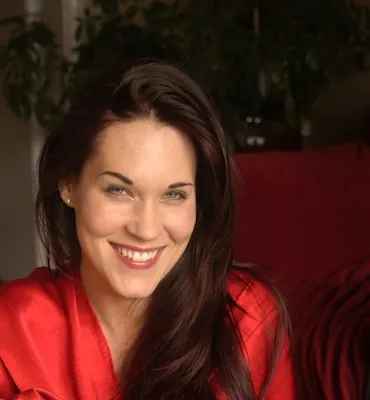
Teal Swan
Human Design Chart
Biography
Her teaching methods sometimes guide participants to envision their own deaths, occasionally by suicide.
From an early age, she has claimed to have extrasensory abilities, including telepathy and the ability to communicate with the dead. Swan reports that these claims contributed to her being socially ostracized and bullied in her youth. This social ostracism, in turn, led to her interactions with the mental health profession.
In 2011, Swan released the book The Sculptor in the Sky. That year, she held her first event, at a Salt Lake City recital hall, speaking to approximately twenty people. In October 2020, Swan's first young adult novel, Hunger of the Pine, was published.
Academics Sandro R. Barros and Jennifer A. Sandlin identify Swan as part of a cohort of "conspiritual life coaches" who fuse conspiracy rhetoric with commercial wellness culture, using five overlapping strategies: body purity, reinforced gender binaries, trauma exploitation, appropriation of Indigenous practices, and commodified spirituality.
Swan married musician Mark Scott in 2006; their son was born the same year. After divorcing Scott, she married French technology entrepreneur Ale Gicqueau in 2016; they divorced in 2018. Media reports later linked her to former follower Jared Dobson. She resides in Utah with her son.
What does Reflector 4/6 mean for Teal Swan?
Reflector 4/6 — Design at a Glance
Teal Swan revealed herself as someone whose inner compass was not dictated by firm, constant beliefs. Her Human-Design as a Reflector means that she does not possess defined centers and therefore lacks her own stable energy. Instead, her system acted like a mirror, intensively absorbing and reflecting the energy of her surroundings – whether from other people or nature. This openness required a specific lifestyle: living in harmony with natural cycles was essential for her. When making important decisions, her strategy involved waiting out at least one lunar cycle to gain clarity. By following this rhythm, Teal Swan naturally found environments and people that were beneficial to her. She could then observe freely without attachment and was rewarded with a feeling of joyful surprise. Conversely, when she lived against this design, deep, persistent disappointment arose – both in relation to herself and the state of the world. This contrast between surprising confirmation and heavy disappointment marked the clear boundary between living in harmony with her nature and struggling against her reflective essence.
No Inner Authority
Teal Swan exhibited a rare configuration: the absence of an internal physical authority. Instead of relying on a firm internal signal, she found her orientation through exchanges with many different people. As a mental projector, energetic interactions in her open centers activated latent potentials and provided specific information. This allowed her to view issues from numerous perspectives and express them differently. Her high resonance capability helped identify the appropriate environment and conversation partners for this dialogue.
Evaluating these diverse impulses was a complex process requiring time and withdrawal. Only in silence could she discern the thread, distinguish what made sense and truly belonged to her. Thus, she developed her specific intelligence: filtering out the essence from a mass of data, organizing it meaningfully and structuring it. This formed her capital for success as a projector. A central prerequisite was always an environment where she felt comfortable and could speak confidently with the right people about decision-making processes. Over time, this respectful exchange deepened her sense of what was right without having to be pushed.
The 4/6 Profile — Opportunist / Role Model
Teal Swan's design set a tendency towards intense experimental phases in the first three decades of life, driven by Profile 4/6. During this period, she acted more like Line 3: She actively tested relationships and friendships. This reflects the nature of the fourth line, which as a 'Prophet' must convey messages – often with communication barriers or language difficulties if the internal rhythm is off. The focus was on recognizing the right moment for transmission and removing obstacles.
With Saturn's return, her dynamics shifted fundamentally. Line 6 became active, triggering an inner conflict between Heart (Line 4) and Head (Line 6). On one hand, she longed for community belonging; on the other, it drew her into isolation to ponder the meaning of life. This tension is characteristic of the profile: the desire for connection collides with the need for wise distance.
The sixth line demands justice without expectations and sees crises as corrective mechanisms from pure feelings. Teal Swan became a role model through cooperation. Her big heart remained cautious, so she did not open up to the wrong people and get hurt. The task was to look beyond the meaning-finding circuitry and restore innocence by valuing experience for its own sake, not as a means to an end.
No Definition — Defined & Open Centers
Teal Swan appeared as someone who operated without a firm internal compass and whose identity and life direction were always shaped by the environment. Her design had no defined centers; all nine centers were open. This created extreme permeability to external influences. The open G Center meant that she did not have a constant personal identity, but rather merged with others and received directions through initiation from outside. She tended to question who she really was or where love could be found instead of having a fixed idea about it.
The open Head and Ajna Centers did not allow for a consistent mental focus. Instead, she was vulnerable to the pressure to find answers to other people's questions or get lost in endless mental monologues seeking inspiration. She could take on ideas but had no stable source of conceptual thinking within herself. The open Throat Center led to communication that did not come from inner constancy but often tried to attract attention or release the pressure to speak, which could lead to unpredictable statements.
Emotionally and energetically, Teal Swan was constantly exchanging with others. The open Solar Plexus Center absorbed the feelings of others, causing her to fluctuate between joy and sorrow without recognizing these emotions as her own. The open Heart Center lacked consistent willpower; she tended to want to prove herself through promises, often ending in a cycle of self-doubt when the energy did not hold up. The open Sacral Center meant no constant flow of energy; she could become exhausted by taking on and amplifying the generative power of others without clear boundaries for her own availability.
The open Spleen Center made her vulnerable to fundamental survival fears and a desire to cling to things that gave a false sense of security instead of trusting healthy well-being. Finally, the open Root Center absorbed environmental stress, leading to a constant pressure to achieve or complete tasks in order to escape this adrenalized state. Teal Swan's design was thus a mirror of all human experiences, free from inner fixation but highly dependent on correct interaction and strategy to avoid conditioning.
Channels & Gates
Teal Swan’s design indicated a tendency towards deep internal reflection and the need for emotional condensation before external expression. She appeared as someone who initially holds back impulses in order to process them creatively or poetically before carrying them out externally. This is due to Gate 12 in the Kegel Center, which stands for restraint and the significance of thoughtfulness. It is one of three “stop codons” that can be bypassed under certain circumstances, allowing a mutative quality and creativity. In the Throat Center, this gate also emphasizes the influence of emotional moods on communication and action, often linked with poetry and the expression of love.
This internal processing is supported by Gate 11, which describes a harmonious state for assessing the situation before acting. Ideas here primarily serve investigation and analysis rather than immediate action. Visual memories, especially those formed through the left eye, play a role in this evaluation. It’s important that these collective ideas must be shared to enable improvements; otherwise, they remain stuck internally.
Simultaneously, Gate 36 shapes crisis management as a cyclical movement. It stands for “the darkening of the light” and allows the release of strong emotional energy. The decline here is equivalent to the impersonal crisis that prepares the ground for new experiences. This development has a clear beginning, middle, and end.
Additionally, Gate 6 acts as an elemental building block for further development through friction. It regulates the BH value as a biological limit for opening or closing protective reflexes. Without this emotional motor, which encompasses six different emotional waves in the context of fertility or infertility, no growth is possible. The combination of these gates shows a person who grows through internal tensions and crises but only after careful, often visual and analytical evaluation brings them into the world.
Circuit Signature
Teal Swan's design indicated a tendency towards extreme openness and adaptability. She appeared as someone who operated without a firm internal structure defined by channels, allowing her to seamlessly integrate into various environments and roles. This configuration corresponds to the “No Definition” type in Human Design. Here, the connecting channels between centers are missing, so there are no continuous, automated energy flows. Instead, the system remains flexible and reacts sensitively to external influences. Teal Swan could act like a mirror that absorbs and reflects the energies of her environment without having to maintain a rigid personal form herself. This characterizes her way of interacting with the world: not through a fixed, unchanging identity but through dynamic adaptation to the specific context. The absence of defined connections does not mean emptiness but potential versatility. She was able to adopt different perspectives and adapt to others because her design did not present internal barriers or fixed patterns that would block this acceptance. This structure promoted high empathy and understanding for diverse human experiences, as she herself was not guided by a single dominant energetic path. Her lifestyle was thus characterized by the ability to continuously reshape herself and respond to the needs of the moment rather than following a predetermined path.
Right Angle Cross of Eden 2
Teal Swans Human Design profile is characterized by the right cross structure of Eden 2, which implies a specific orientation of inner energy. This configuration does not describe a random personality trait but rather a deeply rooted archetypal dynamic that shapes experience and action. The right cross of Eden 2 represents the process of letting go and transformation through experience. It involves recognizing old patterns, no longer accepting them as fixed truths, and instead finding new ways to express oneself.
This mechanism means that Teal Swan tends to find herself in phases of change where the old is dismantled to make room for something new. This is not a passive process but requires an active engagement with the inner self. The energy of this cross supports the ability to draw insights from personal crises or profound changes, which can then serve as guidance for others.
Since there are no specific events or further details such as Gates or Channels mentioned in the raw content, the description is limited to this fundamental archetypal level. It does not speculate whether Teal Swan has experienced certain life events but rather describes the potential impact of this design structure. The emphasis is on how this cross brings a tendency towards inner work and sharing transformation experiences without delving into biographical details that are not present in the current material.
Saturn Return · Uranus Opposition — Life Cycles
Teal Swan was marked by an intense, often solitary struggle with her own identity. Her design suggested that she did not just consume knowledge but had to deeply anchor it through personal experience and internal reflection before bringing it outward. This structure promoted a process of self-discovery where external validation was secondary to the inner clarity about one's path.
This mechanism became visible in 2011, at age 27: Teal Swan published her book 'The Sculptor in Heaven' and held her first public event before around twenty people. For her design, this marked the first Saturn Return. This cycle symbolically represents the condensation of years of internal work into a stable external foundation. It was not an abrupt breakthrough from nothing but the result of a long process of self-definition and learning. The publication and the first event were moments when her previous inner development took tangible form. The Saturn Return functioned here as a catalyst, translating her private insights into public structures. This underscores the typical dynamics of this cycle: what was previously hidden or small now gains a solid base for further steps. The small group size at the event reflects that this step was initially intimate and personal before it may have opened up further. It was about finding one's voice and presenting it in a form authentic to their inner truth.
Reflector · No Inner Authority — Synthesis
A central thread runs through this design: profound openness. As an undefined Reflector, the individual is a pure mirror of the environment (Design View), receptive to energies from nature and fellow humans. This resonance ability is amplified by the undefined Head Center, which experiences constant fluctuations in mental information (Centers). The Profile as Networker/Role Model points towards a life task of forming connections and collecting experiences – not to fix oneself but to reflect the diversity of the world. The Saturn Return at age 27 marks a turning point where creative expression (Gate 12) goes hand in hand with an increasing need for self-discovery, which is publicly shared (Cycles).
The design harbors a central paradox between the ability for deep connection and the lack of inner, defined direction. The openness allows one to grasp the world in all its facets (Switches), yet simultaneously lacks a constant internal voice or authority (Authority). The Profile points towards a desire for belonging (Line 4) while Line 6 signals a need for distance and reflection. This tension between absorbing energy from others and searching for individual meaning shapes life and demands continuous adaptation to the moment.
Incarnation Cross - Right Angle Cross of Eden 2
Solar Return
The Solar Return shows the moment when the sun returns to its exact birth position - your personal solar year.
Life Cycles
Discover the life cycles with a detailed triple view (birth chart, cycle chart, composite).
Human Design Profile
- Type
- Reflector
- Strategy
- Wait a lunar cycle (approx. 28 days)
- Authority
- No inner authority - learn more
- Profile
- 4/6 - Opportunist / Role Model
- Definition
- No Definition
- Incarnation Cross
- Right Angle Cross of Eden 2
- Date of Birth
- 16.06.1984 07:42
- Place of Birth
- Santa Fe, NM, United States
Frequently Asked Questions
What is Teal Swan's Human Design type?
What Profile does Teal Swan have in Human Design?
What inner authority does Teal Swan have?
What incarnation cross does Teal Swan have?
When was Teal Swan born?
Discover your own Human Design
Are you also a Reflector? Find out in a personal reading how to find the right environment and understand your unique mirror effect.
More Personalities
Back to overviewBaekhyun

Jihyo

Lucebert
Papus
Petrarch

Ravachol