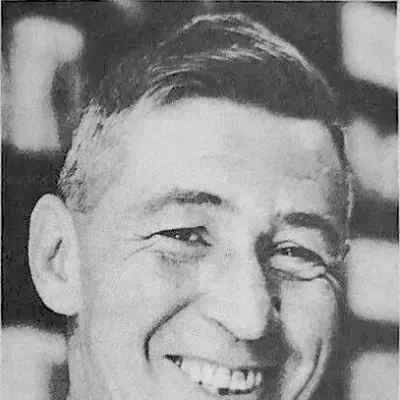
Thomas Hylland Eriksen
Human Design Chart
Biography
He was the Editor of Samtiden (1993–2001), Norsk antropologisk tidsskrift (1993–1997), the Journal of Peace Research, and Ethnos.
Hylland Eriksen died on 27 November 2024 at the age of 62.
Thomas Hylland Eriksen — Projector with Profile 5/1
Projector 5/1 — Design at a Glance
Thomas Hylland Eriksen revealed himself as someone who could see through the structure of systems with almost unerring clarity. His Projector design gave him a dense, focused aura that worked like a bright flashlight: it zeroed in on the dark spots or malfunctioning areas in others. He was called to bring 'light into the dark' for others by immediately identifying the flaws in the system.
However, this ability carried a risk. When he addressed these flaws directly, his perception could be seen as unpleasant or intrusive, like a light beam shining directly into someone's face. His most effective strategy, therefore, was not to actively correct but to embody a harmonious, luminous presence. Through this authentic radiance, he attracted others who would then seek his insights on their own. His success depended crucially on waiting for a respectful and honest invitation before sharing his knowledge.
Because his Sacral Center was undefined, he lacked a constant, intrinsic source of life energy. Instead, he experienced phases of high productivity followed by necessary rest periods to prevent burnout. Living by this rhythm and his invitation strategy, he was rewarded with success. Ignoring these needs led him sooner or later to his Non-Self theme: bitterness.
Emotional Authority
Thomas Hylland Eriksen revealed himself as someone who did not make decisions based on the first emotional impulse but gave time for maturation. His design carried emotional authority, meaning his defined Solar Plexus Center had inner guidance – regardless of which other centers were also defined. This configuration was subject to constant emotional waves that colored his perception of the world according to the current mood. Since an immediate emotional impression was only a snapshot and not necessarily the deeper truth, spontaneous judgments were often misleading. Instead, his system required patience and the conscious overnighting of questions to gain clarity. Only when the initial emotional intensity subsided and distance was established did calmness set in. This process was especially crucial for long-term, life-defining decisions, as it ensured that the choice was based on a stable, well-considered insight and not on a passing mood. Thomas Hylland Eriksen used this necessary delay to detach from the fleeting surface of his emotions and penetrate to the true inner truth.
The 5/1 Profile — Heretic / Investigator
Thomas Hylland Eriksen revealed himself as someone who, through his 5/1 profile, carried a specific dynamic between deep knowledge and external expectations. As a Hero and Researcher, he used the depth of his knowledge base to help others solve problems. Others often sought him out, driven by the assumption that he held the answers. This led to him being frequently perceived as a savior who should listen and offer spiritual guidance. Society projected the hope for solutions onto him, which was a great responsibility.
His Line 1 required patience and introspection. He needed time to absorb and deepen new insights before sharing them. Without this depth, there was a risk of being perceived superficially. At the same time, he was under the pressure of expansion and happiness, which could be interpreted as capable management of his resources. The challenge lay in setting clear boundaries. By learning to say no, he could maintain the balance between his own research work and supporting others. This way, he avoided the exhaustion that comes from constantly being there for others without taking his own rest periods. His design thus promoted a stance that required both deep understanding and targeted dissemination of knowledge.
Split Definition — Defined & Open Centers
Thomas Hylland Eriksen was characterized by a defined Mental Center, which endowed him with a consistent, specific way of conceptual thinking. He continuously processed data and creativity, with his mind acting as an external authority and conditioning the mental field of his environment. This trait was accompanied by a defined Throat Center, serving as a pivot to reliably translate these mental concepts into communication and action. His voice articulated what his mind conceptualized, allowing him to express ideas with clarity and honesty, provided he followed his strategy.
Additionally, he possessed a defined Heart Center, giving him access to willpower and ego. He preferred to determine his life and resources himself, keep promises, and seek recognition for his contribution. This combination of mental concept, verbal manifestation, and willful assertiveness formed the foundation of his energetic presence.
At the same time, Thomas Hylland Eriksen was marked by several open centers, making him susceptible to external influences. His open Head Center meant he lacked a consistent access to inspiration and tended to get entangled in questions and doubts that belonged to others. He had to learn not to exhaust mental pressure but remain a detached observer. His open G Center lacked a fixed identity; he adapted to the people around him and sought the right direction and love through external initiation rather than defining it himself.
His open Sacral Center made him receptive to the intense energy field of the environment. He could absorb and amplify borrowed energy but risked overexerting and exhausting himself, as he was not designed to continuously generate generative energy. His open Spleen Center made him vulnerable to fears and a lack of well-being in the world, while his open Root Center caused him to absorb stress and adrenalized pressure from the environment. These open centers required him not to identify with conditioned reactions but to trust his inner authority to maintain health and clarity.
Channels for spontaneous insight and organic community.
Thomas Hylland Eriksen was someone who articulated innovative perspectives with a clear, almost surgical precision. His design inclined him to unravel complex connections in such a way that they not only became understandable but also practically applicable for others. This happened through the Channel of Structuring 43-23. Here, the Gate of Insight (43) connected with the Gate of Assimilation (23). This configuration allowed him to receive spontaneous mental breakthroughs and digest them before expressing them. He needed time to formulate his unique viewpoint; when he did, he could change collective thinking. His challenge was to let go of control over the process and trust his mind to find the right words at the right time.
Alongside this intellectual sharpness, a deep emotional dynamic aimed at belonging and fair agreements was at work. The Channel of Community 37-40 connected his Solar Plexus Center with his Heart Center. Through the Gate of Friendship (37), he sought recognition and his place in the whole, while the Gate of Solitude (40) harbored readiness for work and service to others, yet demanded pauses and rewards. For Thomas Hylland Eriksen, community was not a spontaneous event but a carefully calibrated process. He waited to see who invited him to be part of an organization or social structure and checked if the underlying values and emotional clarity aligned. Only then did he join to make progress together.
These two channels were complemented by individual gates that shaped his attitude. Gate 13 promoted meaning-making and awareness of continuity; he reflected experiences in the context of time and contributed to collective memory. Gate 7 projected leadership patterns and future perspectives, prompting him to understand and test hierarchical structures. Gate 4, the Gate of Formulation, helped him develop logical processes to clarify suspicious patterns and secure the future. Finally, Gate 49 brought a sensitive reaction to principles and a readiness to sacrifice for the good of the tribe. Together, these elements formed a design aimed at enhancing both individual and collective efficiency through clear communication and emotional integrity.
Individual Circuitry — Circuit Signature
Thomas Hylland Eriksen was characterized by two separate, parallel functioning energetic poles. One pole concerned the structuring of thought, the other the dynamics between commitment and emotion. This separation characterized his design as Split Definition, with no direct connection between these two areas.
The Knowledge Circuit connected his Ajna Center with his Throat Center. This created a direct flow from mental processing to external articulation. Thomas Hylland Eriksen had the ability to formulate internal thought structures precisely and clearly. The energy of this channel served the organization and expression of ideas, not spontaneous inspiration or creative mutation, as these other circuit channels were missing in him. His focus was on the clear, structured communication of what he understood.
At the same time, the Ego Circuit, which connected his Heart Center with his Solar Plexus, was at work. This channel regulated the relationship between what he promised or set for himself and his emotional reactions to it. It was about the balance of giving and taking and the emotional processing of commitments. Since his Sacral Center was not included in this connection, there was no constant life force; instead, he needed rest periods to regenerate the resources for these interpersonal and emotional dynamics.
These two systems – the clear mental expression and the emotional regulation of commitments – existed side by side without directly merging. Thomas Hylland Eriksen navigated between the necessity of structuring thoughts and the need to maintain emotional balance in relationships and promises.
Left Angle Cross of Masks 1
Thomas Hylland Eriksen was marked by the left cross of the Masks 1, a configuration that drove him to penetrate the masks of society and explore the authenticity behind social roles. This design inclined him to confront the question of how people construct their identity in various cultural contexts and which facade they present to the outside world. The mechanics of this cross emphasized the necessity to penetrate the illusions of everyday life to understand the true nature of human existence. Thomas Hylland Eriksen used this energy to analyze cultural phenomena and illuminate the mechanisms of identity formation. He sought the reasons why people adopt certain roles and how these roles influence their perception of the world. His approach was to grasp the complexity of human interaction and decode the various levels of self-presentation. Through this perspective, he gained deep insights into the dynamics of culture and society and demonstrated how strongly the mask-like aspects of life shape individual experiences.
Saturn Return · Uranus Opposition · Chiron Return · 2nd Saturn Return — Life Cycles
Thomas Hylland Eriksen lived a life marked by clear structural turning points where inner maturity and external recognition coincided. His Human-Design shows a dynamic where cyclical phases of consolidation and fulfillment are central.
In 1991, at the age of 29, he earned his Ph.D. This marked his first Saturn Return. During this phase, years of intellectual groundwork condensed into a solid, socially recognized result. It was a moment of stabilization, in which his professional identity solidified and he laid the foundation for his further career.
Decades later, in 2011 at the age of 49, he received an honorary doctorate from Stockholm University. This fell during his Chiron Return, a cycle of fulfillment and bloom. Here it was shown that his life path, lived according to his inner strategy, led to a peak of recognition. It was not about healing, but about the visible unfolding of his incarnation purpose; his contribution was perceived as complete and of high significance.
In 2016, at the age of 54, his second Saturn Return followed, accompanied by a diagnosis of pancreatic cancer. The second Saturn Return often brings a confrontation with the limits of one's structure and the impermanence. While the first return solidified his career, this second cycle demanded a deep confrontation with his own finiteness. This sequence illustrates how his design oscillated between building up, reaching a peak, and the final testing of the structures worked out.
Projector · Emotional Authority — Synthesis
He was a projector, distinguished by a deep ability to recognize patterns and grasp the potential of others (defined Ajna Center). This insight into the essential, channeled through the Channel of Structuring, allowed him to penetrate complex issues and formulate innovative perspectives. He sought solutions (5/1 Profile) and shared his knowledge willingly, always striving for deeper truth and efficiency. Emotional authority, however, required time for decisions to mature, and the associated emotional wave shaped his perception and expression.
A central paradox in his design lay in the tension between the need to bring light into the dark as a projector and point out errors, and the necessity to do so with sensitivity to avoid resistance. This corresponded with the inner dynamics of the Knowledge Circuit, driving him to recognize and transform new things while simultaneously being prompted by the emotional wave to carefully weigh the impact of his words and insights. The cycles showed that both successes (honorary doctorate) and crises (cancer diagnosis) were part of his life path, marked by the search for validation and the sharing of knowledge.
2 Defined Channels
Incarnation Cross - Left Angle Cross of Masks 1
Solar Return
The Solar Return shows the moment when the sun returns to its exact birth position - your personal solar year.
Life Cycles
Discover the life cycles with a detailed triple view (birth chart, cycle chart, composite).
Human Design Profile
- Type
- Projector
- Strategy
- Wait for the respectful invitation
- Authority
- Emotional Authority
- Profile
- 5/1 - Heretic / Investigator
- Definition
- Split Definition
- Incarnation Cross
- Left Angle Cross of Masks 1
- Date of Birth
- 06.02.1962 14:50
- Place of Birth
- Oslo, Norway
Frequently Asked Questions
What was Thomas Hylland Eriksen's Human Design type?
What profile did Thomas Hylland Eriksen have?
What authority did Thomas Hylland Eriksen have?
What incarnation cross did Thomas Hylland Eriksen have?
When was Thomas Hylland Eriksen born?
Discover your own Human Design
Are you also a Projector? Find out in a personal reading how to unfold your leadership qualities and recognize the right invitations.
More Personalities
Back to overviewSissy Spacek

Alain-Fournier

Anémone

Ann-Margret

Bourvil
Hergé