
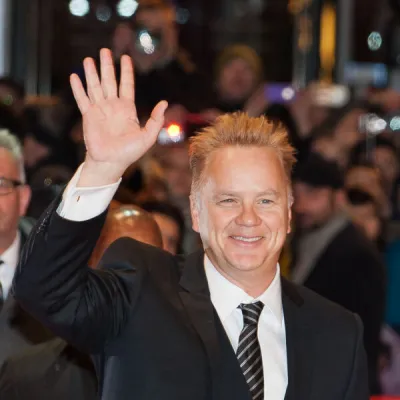
Tim Robbins
Human Design Chart
Biography
Robbins made his acting debut in St. Elsewhere (1982) before taking supporting roles in The Sure Thing (1985), Top Gun (1986), Bull Durham (1988), and Jungle Fever (1991). He took leading roles in Jacob's Ladder (1990), The Player (1992), The Shawshank Redemption (1994), The Hudsucker Proxy (1994), I.Q. (1994) and Nothing to Lose (1997). For his role as a man suffering from the trauma of sexual abuse in the Clint Eastwood directed drama Mystic River (2003) he won the Academy Award, the Golden Globe Award, and the Screen Actors Guild Award for Outstanding Actor in a Supporting Role. He later acted in Zathura (2005), The Lucky Ones (2007), Green Lantern (2011), and Dark Waters (2019).
As a director, he gained acclaim for the crime drama Dead Man Walking (1995), earning him a nomination for the Academy Award for Best Director. He also directed the satirical mockumentary film Bob Roberts (1992) and the historical drama Cradle Will Rock (1999).
Tim Robbins as a Manifestor 2/5 in Human Design
Manifestor 2/5 — Design at a Glance
Tim Robbins revealed himself as someone who actively steered the world into a new direction. His Human Design identifies him as a Manifestor – a type whose task is to be a pioneer and visionary. Similar to an emperor in ancient Rome, he had great plans for the future but did not lead these wars himself; instead, he set others in motion to achieve his goals.
This role brought with it a specific dynamic: Since manifestors often think further ahead than their environment, they were easily misunderstood and polarized. While some people loved his visions and followed him, he encountered rejection or even hatred from others. The key to a peaceful path lay in the strategy of informing. By notifying his surroundings timely and precisely about his intentions, he could find the right supporters and minimize resistance.
If he lived by this strategy, it rewarded him with a deep sense of inner peace. If he acted against this design without informing or ignoring his authority, it often resulted in persistent, deep anger. His design thus determined that his success and well-being directly depended on how clearly and early he communicated his intentions rather than just enforcing them.
Splenic Authority
Tim Robbins showed a decision-making approach based on immediate physical resonance: His design suggested that only the first spontaneous impulse was reliable. This mechanism is governed by his authority in the Spleen Center – a system that can take over inner guidance for projectors or manifestors, provided the Emotional and Sacral Centers are open.
The Spleen functions here as a health and alarm system with pronounced survival intelligence. It does not provide long-term strategy papers but delivers a fine, singular impulse in the present moment. This signal tone is a reliable indicator of whether an environment, situation, or society is beneficial for physical well-being. Once this instinct speaks, a decision must be made; hesitation leads to it being drowned out by other influences.
For Tim Robbins, this meant that flexibility and freedom were not luxuries but essential prerequisites. Since knowledge about what's 'right' always arises in the moment, long-term commitments are counterproductive and lead to friction. Instead, a strategy of spontaneity was effective: Plans could be adjusted short-term without being seen as instability but rather as necessary adaptation to the current energetic reality. Through this vigilance towards the inner signal, he was able to rigorously distance himself from harmful influences and thus optimally care for his own health.
The 2/5 Profile — Hermit / Heretic
Tim Robbins revealed through Profile 2/5 as someone navigating between a deep need for withdrawal and the external expectation of rescuing others – the so-called Hero or Illusion Line. Others instinctively sought him out for solutions to their problems, while he needed much time alone to look inward. This tension field shaped his dynamics: He had to carefully weigh what he would engage in and where he would draw boundaries to avoid becoming an always-available helper.
The mechanics of this profile describe a person who meditates like a monk in their cave but is constantly asked for advice. Line 2 requires solitude for maturation; line 5 projects authority that attracts others. Without clear self-determination, frustration threatened as he could lose himself. Additionally, themes such as control and transformation were at play: The second line tended to control power structures or finances, which was strenuous without maturity. Simultaneously, the fifth line demanded practical solutions and absolute clarity in details during crises – a perfection that only emerged after thorough inner work. Tim Robbins thus used his alone time essentially to define when and for whom he could solve problems without losing himself.
Single Definition — Defined & Open Centers
Tim Robbins' design is characterized by inner stability and clear direction. His defined G Center provided him with a reliable sense of self-identity, a firm personal direction, and the ability to love others without being dependent on them. This internal security was complemented by his defined Heart Center, which gave him access to consistent willpower; he could keep promises and assert his own worth but preferred to follow his inner rhythm in work and rest. His defined Spleen Center ensured spontaneous intuition in the present moment, while his defined Throat Center served as a pivot point to translate these internal truths – whether from the heart or intuition – into the world.
At the same time, Tim Robbins was influenced by several open centers for external influences. His open Head and Ajna Centers made him susceptible to mental pressure waves and confusion; he tended to identify with questions that were not his own rather than remaining a neutral observer of his thoughts. The open Sacral Center led him to absorb and amplify the generative energy of his environment, which could lead to exhaustion from borrowed power if handled incorrectly. Additionally, his open Solar Plexus absorbed foreign emotions, putting him at risk of being tossed between others' moods instead of maintaining his own emotional clarity. Finally, his open Root Center took on external stress, driving him into a cycle of adrenalized pressure if he did not learn to recognize this as foreign and withdraw in time.
Channels for intuitive clarity, logical leadership and devoted strength.
Tim Robbins exhibited a foundational stance based on logical, collective leadership. His design suggested that he did not act as an autocrat but needed to earn trust to be recognized. This resulted from the Alpha Animal Channel 7-31 connecting his G Center with his Throat Center. Through Gate 7, he received the logical role of understanding societal patterns and recognizing trends; through Gate 31, his voice gained the influence of a collective leader. Success occurred when a majority invited him to take on this leadership – a dynamic of shared authority rather than absolute power.
Parallel to this, Tim Robbins possessed intuitive self-awareness in the present moment. The Flash of Insight Channel 57-20 connected his Spleen Center with his Throat Center. Here, intuitive insight flowed directly from Gate 57 into clear articulation at Gate 20. This allowed him to communicate existential truths spontaneously and precisely without prolonged thought. His verbal outbursts often hit the core of an issue faster than considered knowledge because they stemmed from deep, instinctive survival wisdom.
Furthermore, entrepreneurial vigilance was present in his system. The Devotion Channel 44-26 connected his Spleen Center with his Heart Center. Gate 44 provided the instinctual ability to detect threats or improvement potentials, while Gate 26 supplied willpower and ego strength to convincingly sell these insights. Tim Robbins was thus designed to offer products or ideologies that served the tribe in exchange for fair compensation. He acted as a frontline promoter generating resources and supplying his team, waiting for the market to recognize his gifts.
Individual Gates complemented this picture: Gate 42 emphasized closing processes for new commitments; Gate 62 provided logical detail work and pattern recognition. In his design, Gate 12 worked with creative restraint, Gate 33 through reflective withdrawal, and Gate 50 as a conservative protective reflex for tribal values.
Individual Circuitry — Circuit Signature
Tim Robbins' design indicated a tendency towards impulsive, creative ideas that directly translated into expression. This energy flowed between the Throat Center and Spleen – a Flash of Insight Channel. Here, spontaneous visual ideas connect with the ability to make them immediately verbal or physically visible. It is a pulsating acoustic power that allows new paths without extensive planning.
Parallel to this, his chart showed a connection between Throat and Identity Centers through the Alpha Animal Channel. This linked his voice with his deepest essence. He could share rational strategic insights from the Mind Circuit free of emotional coloring. This line promoted sharing logical structures for future improvement, strengthening identity through expression.
A third aspect was the connection between Heart and Spleen in the Ego Circuit via the Devotion Channel. This involved cooperation and the joint creation of resources. Tim Robbins' design supported a pragmatic form of giving and taking here, grounded in touch sense and tradition. Since these energies – creativity, rational strategy, and cooperative resource generation – all lay within a single defined group (along with his G Center), they worked as an interconnected direct flow. There were no separate blocks; his innovative power, strategic mind, and cooperative abilities were energetically directly linked and supported each other.
Right Angle Cross of Maya 3
Tim Robbins’ Design points towards inner clarity and spiritual alignment, as indicated by the presence of the right-hand Maya 3 Cross in his chart. This configuration is not mere symbolism but a structural feature that suggests a deep connection to universal truths. People with this expression tend to intuitively grasp complex interconnections and integrate them into their own life practice. They do not seek external validations but orient themselves by an inner compass guiding them through challenging times.
The right-hand Maya 3 Cross describes a specific energetic arrangement in the Human-Design system, associated with themes like transformation and expanded consciousness. It is a rare configuration often found in individuals playing a special role in spiritual or cultural processes. Tim Robbins’ chart clearly displays this structure, meaning he was naturally endowed to initiate profound changes—both within himself and his environment.
Without delving into further biographical details, it can be said: His way of being and acting was significantly shaped by this energetic foundation.
Saturn Return · Uranus Opposition · Chiron Return · 2nd Saturn Return — Life Cycles
Tim Robbins showed a development line that led from structural anchoring through radical innovation to personal unfoldment. His design indicated a tendency to stabilize in his youth through clear roles and public recognition. This was reflected in 1986 when, at the age of 28, he starred in "Top Gun." This first Saturn return often marks the point where years of groundwork condenses into a solid, visible result – a phase of consolidation and professional foundation.
The dynamics shifted with the Uranus opposition around his 37th year, a configuration that demands profound changes and breaking away from established patterns. Tim Robbins used this impulse for creative self-determination: in 1995 he directed "Dead Man Walking" and received an Oscar nomination for it. This not only showed career advancement but also the courage to push through his own visions against resistance – typical of the pressured transformation during this astrological phase.
Later, with the Chiron return around his 51st year, a fulfillment cycle began. This period is not one of healing old wounds but a blooming time when inner purpose and life mission unfold – provided that one has followed their strategy up to this point. For Tim Robbins, this phase of personal clarification coincided with a deep relationship decision: in 2009 he separated from Susan Sarandon after 21 years. This underscores how the Chiron return often demands radical honesty to bring out one's authenticity and individual path.
Manifestor · Splenic Authority — Synthesis
Tim Robbins’ design reveals a profound inner drive to shape the world through his visions. As a Manifestor with defined Throat and Spleen Centers, he acts as an initiator whose spontaneous intuition guides him toward innovative paths. The Profile of Natural Talent/Hero/Helper reinforces this inclination towards independence while Line 2 adds a necessity for withdrawal and inner clarity—a balance between the desire to serve and nurturing his own individuality. The Knowledge Circuit underscores his ability to develop new perspectives and carry them into the world through the Alpha Channel.
A central paradox lies in the tension between his internal urge to lead and the need for isolation. The defined Spleen Center signals strong self-care and boundary setting, while the 2/5 Profile simultaneously draws him into the role of problem-solver for others (Catalyst). This dynamic is supported by the cycles: career peaks coincide with phases of creative unfolding (Saturn Return, Uranus Opposition), followed by turning points in his personal life (Chiron Return), pointing to a constant dance between public role and private regeneration.
3 Defined Channels
Incarnation Cross - Right Angle Cross of Maya 3
Solar Return
The Solar Return shows the moment when the sun returns to its exact birth position - your personal solar year.
Life Cycles
Discover the life cycles with a detailed triple view (birth chart, cycle chart, composite).
Human Design Profile
- Type
- Manifestor
- Strategy
- To inform others before acting
- Authority
- Splenic Authority
- Profile
- 2/5 - Hermit / Heretic
- Definition
- Single Definition
- Incarnation Cross
- Right Angle Cross of Maya 3
- Date of Birth
- 16.10.1958 02:12
- Place of Birth
- West Covina, California, United States
Frequently Asked Questions
What is Tim Robbins' Human Design type?
What Profile does Tim Robbins have in Human Design?
Which Authority determines Tim Robbins' decisions?
What incarnation cross does Tim Robbins have?
When was Tim Robbins born?
Discover your own Human Design
Are you also a Manifestor? Find out in a personal reading how to use your initiation power peacefully and dissolve resistance.
More Personalities
Back to overviewSissy Spacek

Anémone

Ann-Margret

Arletty

Arno
Artus
