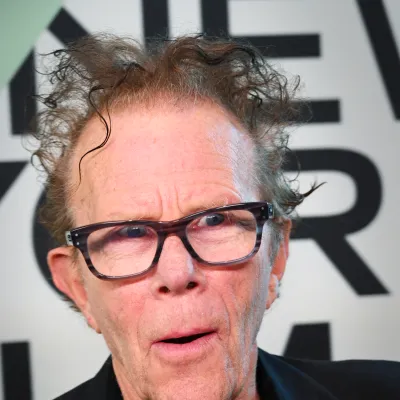
Photo: Wikimedia Commons
Tom Waits
Human Design Chart
Biography
A high school dropout at 16, he worked the Los Angeles blues and rock club circuit, in pizza houses, sang and played accordion and piano in bars and dives. Tattooed, with a throaty whiskey voice, he lived in motels for years. His 1973 debut album Closing Time won critical acclaim and made modest sales.
In the late '70s he did a music tour to London. In June 1978 he got a big part in the movie Paradise Alley, was a feature player in The Outsiders (1983) and Rumblefish (1983), and starred in Jim Jarmusch's Down by Law (1986).
With theatre director Robert Wilson, he produced the musicals The Black Rider (1990) and Alice (1992), first performed in Hamburg. Having returned to California in the 1990s, his albums Bone Machine (1992), The Black Rider (1993), and Mule Variations (1999) earned him increasing critical acclaim and multiple Grammy Awards. In the late 1990s, he released Blood Money (2002), Alice (2002), Real Gone (2004), and Bad as Me (2011).
Waits married musician Kathleen Brennan on 31 December 1981 in Los Angeles. Their daughter Kellesimone Wylder Waits was born on 24 August 1983, their son Casey Xavier Waits in September 1985, and another son Sullivan Blake Waits on 25 June 1993.
What does Generator 5/1 mean for Tom Waits?
Generator 5/1 — Design at a Glance
Tom Waits revealed himself as someone with immense endurance and an almost inexhaustible source of energy that was activated not by sheer will but through inner resonance. His Generator design indicated that his energy – comparable to a strong workhorse – flowed efficiently only when he responded to external impulses rather than taking the first step himself. This mechanism means: Do not initiate, but wait until life poses a question or offers an opportunity and then respond from the gut.
If Tom Waits followed this pattern by reacting to signals in his environment that triggered his inner „yes“, he was rewarded with deep satisfaction. His energy was not an endless reservoir for any task but a specific force that only freed itself for things that found his internal approval. If, however, he tried to fight against this current – whether through ignoring impulses or forcing himself into tasks without inner desire – frustration and a noticeable lack of energy loomed. The danger lay in either getting lost in tasks with no resonance or being held back from his true creation despite the power still being there. His path to fulfillment therefore did not lie in constant pushing but in skillfully responding to what truly spoke to him.
Sacral Authority
Tom Waits demonstrated decision-making that was rooted deep within his body rather than occurring in his mind. His design suggested he responded to external stimuli with an immediate, physical reaction – a so-called „gut feeling“. This sacral authority is specific to the Generator type and greatly simplifies the process of action as strategy and inner guidance are identical.
Important here was the condition of an open emotional center. This prevented emotional fluctuations from overriding this clear bodily response. Instead, Tom Waits felt at appropriate times a surge of energy or an internal „Hmm“, signaling engagement. Once this motor kicked in, followed a phase of great vitality and inexhaustible energy. He could then fully immerse himself in activities driven by pure enthusiasm without external compulsion or purposefulness.
Additionally, the Spleen Center likely acted as a supportive instance here. Through this connection, he had quick, instinctive access to his physical well-being. This enabled spontaneous reactions and decisions based on reliable inner perception. Tom Waits was thus designed to go through life with joy by learning to take seriously these subtle bodily signals like grunts or hums and letting them guide him rather than thinking.
The 5/1 Profile — Heretic / Investigator
Tom Waits’ design inclined him to be perceived as a trustworthy authority who provides practical solutions from deep knowledge. As a 5/1 (Hero/Researcher), he had a magnetic effect on others seeking answers – similar to an expert answering all questions in conferences, only to end up exhausted at the end. This dynamic arises through the interplay of Line 5 and Line 1: While the fifth line offers practical solutions during crises and is often perceived as enlightened, the first line calls for withdrawal, calmness, and recognizing hidden meanings.
The risk for Tom Waits lay in others overburdening his gifts if clear boundaries were not set. The mechanism shows: Without learning to say „No“, the balance between his own research process (Line 1) and problem-solving for others (Line 5) falls out of equilibrium. Instead, his design sought meaning in past experiences to eliminate negative factors – a process that without clear demarcation can lead to exhaustion. Only by holding onto his own rhythm and waiting for the right moment could he maintain this beneficial balance and optimally utilize his abilities without overextending himself.
Split Definition — Defined & Open Centers
Tom Waits had a design characterized by a constant mental structure and clear inner direction. His defined Ajna Center ensured reliable conceptual thinking; he processed data and creativity in the same way, regardless of external influence. This directly affected his communication: The also defined Throat Center allowed him to express these mental concepts verbally. His voice was not an impulse but the result of a thought-out process – he spoke what his mind conceptualized.
This mental clarity was reinforced by a defined G Center, which gave him a firm sense of self-identity and direction in life. He had a reliable inner compass that allowed him to show others new perspectives without being unsure himself. Additionally, he possessed a defined Sacral Center, indicating a constant source of vital energy. However, this power was only available when he reacted – responded to external initiatives – rather than taking the first step himself. His satisfaction came from using this energy for tasks that found his sacral approval.
In contrast, his design showed significant vulnerabilities in open centers. The open Head Center made him susceptible to external mental pressure and the temptation to solve other people's questions as if they were his own problems. Often he tended to engage with doubts or confusion that did not belong to him, which could distract him from his clear thinking. His open Heart Center lacked consistent willpower; he was conditioned to prove his worth through promises and performance, although the energy for this was not structurally available to him. This often led into a cycle of self-doubt when expectations were not met.
Additionally, his open Solar Plexus absorbed emotions from his environment, which could lead to experiencing foreign moods as unstable feelings of his own and avoiding confrontation out of fear of emotional overload. The open Spleen Center amplified fears about health and well-being, making him prone to clinging to unhealthy situations just to gain a false sense of security. Finally, the open Root Center took on external stress, making him vulnerable to overextension by others' pressure rather than using it as his own drive.
Channels for rhythm, extremes and curious search.
Tom Waits showed himself to be someone whose inner clock significantly determined the flow of energy in his environment. His design tended towards a fixed, almost magical rhythm that drew others into its spell. This happened through the Rhythm Channel 5-15: Gate 5 held onto habits while Gate 15 created a magnetic field with his love for human diversity. This channel connected the Sacral Center to the G Center and gave Tom Waits a sense of timing that was neither guided by intellect nor emotional waves but sprang from a universal flow of life.
Parallel to this, the juxtaposed constellation of the Curiosity Channel 11-56 worked. It linked the Ajna Center with the Throat Center and endowed him with the gift of storytelling. Here it was not about dry facts but transforming ideas (Gate 11) into inspirations (Gate 56) and passing them on as parables. These stories served to entertain others and stimulate their imagination by filling gaps and translating abstract information into vivid narratives.
Additionally, individual gates shaped this profile: Gate 35 sought change through interaction and experience, with true satisfaction only coming afterward. Gate 22 allowed a calm openness for mutations in the social environment without being intrusive. Gate 47 responded to past experiences and searched for meaning in seemingly random processes to create collective clarity. Finally, Gate 7 projected leadership patterns and hierarchies that were tested through experiments. Together these elements created a design that worked through rhythmic presence and curious storytelling.
Collective Circuitry — Circuit Signature
Tom Waits’ design tended towards rhythmic endurance paired with an inquisitive exploration of the past. These separate forces worked parallel as his chart shows a Split Definition: two independent energetic islands without direct flow between them.
The Understanding Circuit connected his Identity and Sacral Centers here, where energy flows for structural improvement through focus and logic. The Rhythm Channel (Gates 15–5) shaped this connection as a constant, emotionless ratio that wants to optimize things in the future-oriented way. It is a powerful basis for strategic action, free from impulsive fluctuations.
Completely separately worked the Meaning Circuit, which linked the Ajna with the Throat Center. This area revolves around emotions and experiences from the past. The Curiosity Channel (Gates 11–56) drove a cyclical energy: feelings rise and fall before insights are shared. This allowed reflecting on past events and making the meaning within them visible for the collective.
While the first pole (Identity/Sacral) stood for stable, future-oriented structure, the second (Ajna/Throat) ensured that emotional wave movements from the past were articulated. Both systems existed side by side without directly influencing each other or forming a common stream. Tom Waits thus showed himself as someone who on one hand worked through rhythmic constancy and on the other hand through cyclical processing and passing on of emotional past experiences.
Left Angle Cross of Separation 2
Tom Waits displayed a fundamental stance characterized by the desire for clear boundaries and individual definition. His design suggests a tendency to break free from collective expectations or prescribed roles in order to find an independent path. This configuration describes the impulse to consciously sever old ties or structures, not out of rejection but to create space for one's own authenticity. It is about the ability to clearly separate oneself from what no longer serves and thereby form a new personal identity. This process often involves a certain harshness as it requires letting go of the familiar, yet in the long term leads to greater inner freedom and self-determination. Tom Waits’ chart thus shows someone who has learned to find their own voice and place in the world through clear boundaries without having to orient themselves towards external requirements.
Saturn Return · Uranus Opposition · Chiron Return · 2nd Saturn Return — Life Cycles
Tom Waits demonstrated that his creative energy unfolded in distinct, cyclical phases. His design established a structure where internal maturation processes synchronized with external milestones. In 1977, at age 28, he began his first successful tour of Japan. This marked the start of his Saturn Return: a time when years of groundwork often culminates in a solid, public achievement and strengthens one's position in life.
The dynamics shifted around 1989 when, at age 40, he performed at the world premiere of “Demon Wine” in Los Angeles and began collaborating with Robert Wilson. This Uranus Opposition signaled a necessary break from established patterns to open new, unexpected creative paths. It was a moment of expansion that broke old boundaries.
In 1999, at age 50, he reached his Chiron Return accompanied by the album “Mule Variations,” which peaked at number 30 on the Billboard charts. This cycle is not a healing phase but a bloom: if one follows their own strategy, here unfolds the deeper meaning and purpose of the design in life. The success was thus an expression of achieved wholeness.
Finally, in 2004 with “Real Gone,” his second Saturn Return confirmed this development. At age 55, he reaffirmed his artistic identity by transforming previous insights into a new stable form. His journey illustrates how planetary cycles structure and deepen creative milestones.
Generator · Sacral Authority — Synthesis
A central red thread runs through the design: a deep, sacral connection to work and the creative flow (sacral authority, Channel Rhythm). This energy is not directed towards any specific purpose but an inherent part of being – constant immersion in activities with joy and endurance (Generator Type). The line 5/1 in Profile reinforces this by enhancing a natural tendency to deepen knowledge and make it available to others, driving the cycle of learning and sharing. Documented events show that this creative drive manifests over decades in recurring successes (Saturn Return, Uranus Opposition, Chiron Return).
Simultaneously, the chart reveals a paradox between the need for deep immersion and the ability to develop concepts (defined Ajna Center), as well as a tendency towards isolation through left cross definition. The energy of the mind seeks structure and future perspectives (Understanding Circuit) while the Sacral Center is grounded in the here and now – an interplay between the desire to understand and communicate, and the power simply *to be* and follow the rhythm of life.
2 Defined Channels
Incarnation Cross - Left Angle Cross of Separation 2
Solar Return
The Solar Return shows the moment when the sun returns to its exact birth position - your personal solar year.
Life Cycles
Discover the life cycles with a detailed triple view (birth chart, cycle chart, composite).
Human Design Profile
- Type
- Generator
- Strategy
- To respond - wait for something to respond to
- Authority
- Sacral Authority
- Profile
- 5/1 - Heretic / Investigator
- Definition
- Split Definition
- Incarnation Cross
- Left Angle Cross of Separation 2
- Date of Birth
- 07.12.1949 07:25
- Place of Birth
- Pomona, CA, United States
Frequently Asked Questions
What is Tom Waits' Human Design type?
What Profile does Tom Waits have in Human Design?
What Authority does Tom Waits possess?
What is Tom Waits' incarnation cross?
When was Tom Waits born?
Discover your own Human Design
Are you also a Generator? Find out in a personal reading how to use your sacral energy correctly and discover deep satisfaction.
More Personalities
Back to overviewSissy Spacek
Aaliyah

Alexia

Anémone
Angèle

Ann-Margret