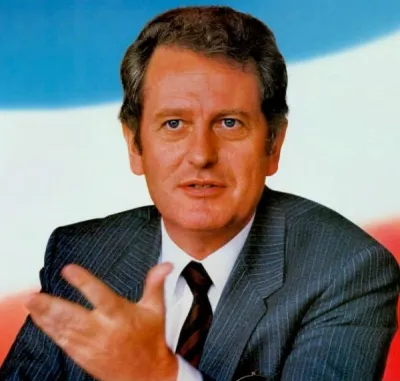
Uwe Barschel
Human Design Chart
Biography
Uwe Barschel as a Projector 4/6 in Human Design
Projector 4/6 — Design at a Glance
Uwe Barschel was characterized by a dense, focusing aura that seemed like a bright flashlight. His design allowed him to immediately recognize errors in systems or in other people – he saw the 'Darkness' where others only perceived superficially. This ability to precisely identify problems came with a specific challenge: When he directly addressed these weaknesses, it often felt like glaring light to his surroundings, causing rejection.
The mechanics of the Projector type explain this through the undefined Sacral Center: Barschel did not have constant intrinsic life energy but worked in phases of high intensity followed by necessary rest periods to avoid burnout. The optimal strategy was not direct confrontation but rather setting an example – for instance, by maintaining harmonious relationships himself. Through this pleasant 'glowing', he automatically attracted others who then asked about his insights.
The central rule for his design was waiting for a respectful and sincerely meant invitation. Only in this way could he exercise leadership without being perceived as unpleasant or critical. If he did not live according to the principle of invitation but forced himself upon others, it led sooner or later to his non-self theme: Bitterness. However, if he followed his strategy and acted through example character, his path was rewarded with success. His design thus required patience and the art of only acting when the environment was ready to accept his leadership.
Splenic Authority
Uwe Barschel's decision-making was based on immediate, impulse-driven inner knowledge that prioritized health and well-being. His design showed a strict tendency towards separation from harmful influences, guided by fine intuition in the present moment. This configuration came from authority in the Spleen Center, a defined center for survival intelligence and alarm systems. Since his Emotional and Sacral Centers were open – prerequisites for this specific authority – he did not react to long-term strategies or emotional waves but rather on the first spontaneous impulse as a reliable indicator of the right environment.
This Spleen impulse was however extremely subtle and only occurred once in the moment. It therefore required high vigilance to avoid being drowned out by external influences. Long-term planning was difficult for him, as his immediate perception could change what was right for him short term. His design favored flexibility and free space over rigid commitments. Uwe Barschel showed himself as someone who protected himself through spontaneous reactions and rigorously separated when the inner alarm bells rang. The difficulty lay in recognizing this fine signal; a retreat could help to clearly hear the impulse before it faded away. His lifestyle was marked by this need for momentary authenticity and protection of his organism from everything perceived as harmful.
The 4/6 Profile — Opportunist / Role Model
Uwe Barschel lived the internal conflict between the deep desire for belonging and the pressing will towards distant, principled overview. His design as Profile 4/6 shaped a life dynamic characterized in the first half by experimental behavior in relationships and networks. Line 4 worked here like a Line 3: Uwe Barschel actively sought connections to gain influence but often risked isolation or exclusion when the network did not understand his individual expression. This phase could be marked by mistrust, as dependence on external feedback made him vulnerable.
With the activation of Line 6, his attitude shifted towards a desire for wisdom and transformation through personal example. Here emerged the characteristic contradiction: The Heart (Line 4) yearned for community while the Head (Line 6) stood on a mountain to examine the meaning of principles and justice. Uwe Barschel showed himself as someone who had to endure this tension – between the need to be part of something whole and the necessity to maintain critical distance to answer fundamental questions about revolution and prosperity. His later role demanded him to act as an example through cooperation, while always being cautious not to open up to the 'wrong' people. This configuration described a life task based on emotional clarity that tested whether principles were positively influenced, even if this decision took a long time.
Single Definition — Defined & Open Centers
Uwe Barschel was characterized by a design that combined mental clarity and intuitive security with a reactive emotional and energetic landscape. His defined Head and Ajna centers created an ongoing internal pressure to question and structure conceptual thinking; this gave him a firm intellectual presence he could use to inspire others to think, even though he did not have the energy to directly implement all ideas himself. The connection of these mental centers with his defined Throat Center allowed him to reliably translate his thoughts and concepts into language and communication.
At the same time, he had a defined G Center, which gave him a stable self-identity and a clear sense of direction. This was complemented by his defined Spleen Center, which enabled spontaneous, intuitive judgments in the moment – a body intelligence that functioned independently of the mind and helped him distinguish between healthy and unhealthy situations.
In contrast, his Heart, Sacral, Solar Plexus, and Root Centers were open. This meant he did not have a constant personal willpower or generative energy but rather absorbed it from the environment. He tended to mirror others' wills and engage in competitions or promises to prove his worth, often leading to frustration as he could not generate the necessary consistent power himself. His open Sacral Center made him vulnerable to overload by foreign energy; he had to learn to set boundaries and rest instead of driving himself with borrowed vitality.
Emotionally, through his open Solar Plexus Center, he was a barometer for others' moods. He absorbed and amplified the feelings of his surroundings, which could lead him to interpret other people's emotions as his own or avoid conflicts out of fear of rejection. Similarly, his open Root Center took on external stress. Instead of escaping this pressure through constant activity – often leading to burnout – it was crucial for him to recognize that this adrenaline rush did not belong to him and learn to deal with the amplified environmental dynamics rather than being driven by them.
Channels for clear structure, leadership, intuition and awareness.
Uwe Barschel showed a tension between claiming collective, logical leadership and individual mental genius often felt as an 'outsider'. His design suggested success depended on waiting for the collective invitation and respecting the timing for expressing innovative ideas.
The Alpha Channel 7-31 connected his G Center with his Throat Center through Gate of Self (7) and Gate of Leading (31). This described logical, collective leadership looking to the future based on tested patterns. Uwe Barschel needed first the trust of the majority; his voice had influence as long as he was chosen by those sharing the same context. It was less about absolute authority than leading from a influential position where he could show the way but not take it over.
Parallel to this, the Brainwave Channel 57-20 connected his Spleen Center with his Throat Center through Gate of Intuitive Insight (57) and Gate of Now (20). This gave him the ability to articulate spontaneous intuitive truths in the moment. It provided a penetrating self-awareness of the truth of his existence, expressed as 'I know that I am living now'. His verbal outbursts of pure intuition reached the core of things faster than the surrounding environment, assuming he trusted his instinctive impulses.
Additionally, the Channel of Structuring 23-43 shaped his mental profile. It connected his Ajna Center with his Throat Center through Gate of Insight (43) and Gate of Assimilation (23). Here he received inspired knowledge as spontaneous breakthroughs which he then structured and expressed. His thinking often felt light-years ahead; to accept this innovative knowledge, he had to wait until it was properly recognized. Otherwise, he risked rejection or alienation since his unique mind felt like an outsider waiting for an invitation to bring in its perspective.
Individual Circuitry — Circuit Signature
Uwe Barschel showed himself as someone who walked a personal path, gained new knowledge and initiated transformation through its expression. This happened through emotional waves and acoustic pulse. Parallel, there was a focused, emotionless ratio for strategic future improvement. This synthesis of individual creative transformation and structured logic shaped his design.
The Knowledge Circuit connected Uwe Barschel's Head, Ajna, Throat, and Spleen Centers into a common flow. This enabled innovative flashes of insight (Channel 20-57) as well as awareness (Channel 24-61) and structuring (Channel 43-23). New insights emerged in his Head and Ajna Centers, were filtered through his Spleen Center, and expressed acoustically via his Throat Center. The energy was pulsing and now-focused, driven by the need to manifest individuality – here understood as the effectiveness of expression.
Additionally, the Understanding Circuit worked. It connected his Throat with his Identity Center (Channel 31-7). This provided a logical, strategic approach free from emotional conditioning. Uwe Barschel shared rational insights to lead society towards a better future. As both circuits used his Throat Center, the emotional, creative impulse of the Knowledge Circuit met the clear visual strategy of the Understanding Circuit. This created a profile that was both inspiring and strategically effective, with the emotional wave always accompanying expression while identity steered strategically.
Right Angle Cross of Explanation 2
Uwe Barschel's design included the structure of the Right Cross of Declaration 2. This configuration determined the energetic foundation of his life task, even though no specific mechanical traits or behavioral patterns are detailed in the given material. The right cross of declaration 2 served as a structural element within his Human Design chart. It represented a deeper archetypal layer that operated beyond simple gate-channel assignments. Without further descriptive details or energetic attributions to gates, channels, or centers provided, no concrete character translation can be derived from this information. The focus was solely on the naming of this cross as an integral part of his individual mechanics. This was a fixed element in his design, influencing his inner architecture without deriving specific expressions or behaviors from it. This structure was part of his unchanging nature, a static element that worked in the background and formed the basis for his entire energetic landscape, even though its concrete effects are not further specified in this context.
Saturn Return · Uranus Opposition — Life Cycles
Uwe Barschel's design laid out a clear structuring of life phases through astronomical cycles, marking maturity and turning points precisely. The first Saturn return, an intense period of confrontation with responsibility and long-term anchoring, occurred for him in 1971 at the age of 27 when he earned his Dr. phil., showing the condensation of years of academic groundwork into a solid result – a typical expression of this phase of consolidation.
Later, the Uranus opposition acted as a catalytic turning point. This cycle often demands breaking free from established structures towards new autonomy and change. For Uwe Barschel, this dynamic energy manifested in 1982 at the age of 38 when he was elected Minister President of Schleswig-Holstein. This event marked the transition from a preparatory phase to public exercise of high responsibility, driven by the need for structural renewal and individual affirmation within the political system. The mechanics of these cycles thus shaped decisive career milestones: first, solid establishment through Saturn's influence, followed by expansive assertiveness during the Uranus phase, guiding his actions towards political leadership.
Projector · Splenic Authority — Synthesis
Uwe Barschel was a projector whose life was marked by a profound drive to recognize and illuminate others' potential (Design). This ability to reveal system flaws (Projector) manifested in an acute awareness of his environment's needs coupled with intuitive understanding of hidden dynamics (Spleen Center as authority). He lived a process of observation and waiting on invitation to effectively contribute his insights.
This pursuit of clarity and improvement, however, clashed with an internal tension between the Head and Heart Centers (Profile 4/6). Logic and the need for knowledge (Knowledge Circuit) met a deeper emotional search for meaning and direction. This contradiction led to a constant oscillation between the desire for recognition and the longing for isolation to organize his thoughts – a life in the field of tension between public role and inner reflection.
4 Defined Channels
Incarnation Cross - Right Angle Cross of Explanation 2
Solar Return
The Solar Return shows the moment when the sun returns to its exact birth position - your personal solar year.
Life Cycles
Discover the life cycles with a detailed triple view (birth chart, cycle chart, composite).
Human Design Profile
- Type
- Projector
- Strategy
- Wait for the respectful invitation
- Authority
- Splenic Authority
- Profile
- 4/6 - Opportunist / Role Model
- Definition
- Single Definition
- Incarnation Cross
- Right Angle Cross of Explanation 2
- Date of Birth
- 13.05.1944 11:55
- Place of Birth
- Glienicke, Germany
Frequently Asked Questions
What is Uwe Barschel's Human Design type?
What Profile did Uwe Barschel have in Human Design?
What Authority did Uwe Barschel have?
What incarnation cross did Uwe Barschel have?
When was Uwe Barschel born?
Discover your own Human Design
Are you also a Projector? Find out in a personal reading how to unfold your leadership qualities and recognize the right invitations.
More Personalities
Back to overviewSissy Spacek

Alain-Fournier

Anémone

Ann-Margret

Bourvil
Hergé