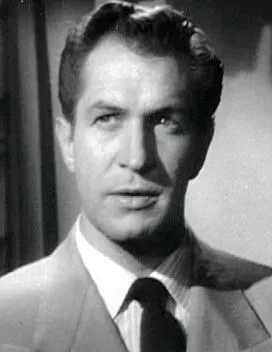
Vincent Price
Human Design Chart
Biography
Price was the son of a candy manufacturer. He tried the New York stage without much success, and then moved to England, where he continued his education, receiving a Masters in fine arts from the University of London. He toured Europe, enjoying the arts and cuisine, before returning to the U.S. to finish his bachelor's degree in art history from Yale.
An on-stage debut in 1935 led to films by 1938. He built a career of over 100 movies, most of which were sophisticated horror roles, his preference. He remarked that, "I'd never turn down a villain role, they're the most fun."
For some years he was an art consultant for Sears Roebuck Co. The Vincent Price Art Museum at East Los Angeles College is named in his honor.
Price was married three times and had two children. His last marriage was to Australian actress Coral Browne and lasted until her death in May 1991. He died at age 82 of lung cancer on 25 October 1993 in Los Angeles, California.
Vincent Price as a Manifesting Generator 6/2 in Human Design
Manifesting Generator 6/2 — Design at a Glance
Vincent Price lived as an Manifesting Generator, a configuration that made him a hybrid being: he had the constant, sacral energy of a Generator, yet also possessed the ability to skip steps and achieve results quickly. His design inclined him not only to react to impulses but to follow these reactions with a speed that allowed him to draw things rapidly into his life. This speed, however, was a double-edged sword. When he moved too quickly, he skipped necessary steps, which later required him to go back and fill in the gaps—a process that often caused frustration as it did not align with his sense of self. Additionally, he tended to pursue multiple projects simultaneously, driven by various impulses. Without the constant confirmation from his Sacral and inner authority, this parallel activity could quickly lead to exhaustion. His satisfaction depended on whether he responded to life and acted only when his inner center gave a clear "yes." In this state, what is known as a Play Mode, he found deep fulfillment. The demand to focus on one thing at a time went against his nature; variety and the parallel handling of tasks were not distractions for him but the source of his creative power, as long as he remained in alignment with his strategy.
Emotional Authority
Vincent Price was subject to an emotional wave that showed his experience in a constant up and down of feelings. His inner authority lay in the defined Emotional Center. This mechanism holds true regardless of other defined centers in his design: When the Emotional Center is activated, it always takes the lead in decision-making. The world appeared to him colored by his current mood. At one moment, he could be totally enthused about something, and in the next, he saw the same thing totally negatively. His immediate feeling, however, was only a snapshot, a first impression that did not necessarily represent his truth. Quick, spontaneous decisions made from emotion often had negative consequences. The more time he took to let a decision mature, the deeper and more comprehensive he could understand something. This required patience and reconsidering his choices multiple times. He should take his time and ask himself multiple times. Over time, the intense feelings subsided, he gained emotional distance, and clarity and calmness set in. Only then had he gone through the process. This mechanism was especially important for long-term decisions that could have a significant impact on his life course.
The 6/2 Profile — Role Model / Hermit
Vincent Price's Design indicated a tendency towards a two-phase life development. In the early years, before the first Saturn return, his Profile 6/2 showed intense experimentation. As a 3-line, he sought answers through trial and error, with retreats after failures being part of the learning process. This phase served to accumulate personal experiences.
After the age of 30, the 6-line activated. Vincent Price metaphorically retreated into a "cave" to look back at his past experiments from a distance. This period of intense reflection was for him a phase of healing and deep self-awareness. From this isolation emerged a wisdom that he made accessible to others as a role model. His Line 6 enabled him to practically apply understanding and make individual awareness beneficial to society.
At the same time, his 2-line, specifically at Gate 37, projected outward. This created an image of ignorance regarding his actual abilities, while internally he sought individual responsibility within an organic community. Vincent Price often understood little of conventional family values; he needed to feel a sense of belonging to a community to gain access to resources. His development led him from experimental search to authentic wisdom, which he ultimately passed on as a mentor.
Split Definition — Defined & Open Centers
Vincent Price's Design inclined towards powerful, willful communication that sprang from a deep emotional clarity and vital energy. His defined Heart Center endowed him with a constant willpower and the need to determine his life himself. This energy flowed into his defined Throat Center, imprinting his voice and actions with the impulse of "I will." He did not just speak what he thought but manifested his will in the world.
At the same time, he was a Generator with a defined Sacral Center, giving him an enormous, constant energy source. However, this vital energy had to be released through reactions to external stimuli to avoid frustration or exhaustion. His inner authority lay in the defined Solar Plexus Center. This meant that he did not make decisions immediately but waited for the emotional wave to subside. Only when emotions calmed and clarity emerged did he act correctly. This combination of willpower, vital energy, and emotional patience shaped his way of moving through the world.
In contrast, his vulnerability was revealed in the undefined centers. His open Head and Ajna Centers made him susceptible to mental pressure and the risk of adopting foreign questions or concepts as his own truth. He tended to get caught in intellectual whirlpools if he did not trust his emotional authority. His open G Center meant that he did not have a fixed, unchanging identity but formed through relationships and environments. He relied on others to initiate him in the right direction rather than setting his own path. Furthermore, his open Root Center absorbed external stress, making him vulnerable to overextension if he did not learn to separate this pressure from his own life. His open Spleen Center challenged him to avoid spontaneous decisions, as these often stemmed from fear or false security.
Channels for powerful manifestation and connecting community.
Vincent Price revealed himself as someone whose inner urges could unleash immense, often restless energy that demanded immediate discharge into the world. This dynamism came from the Channel of Charisma 34-20, which connected the Sacral Center with the Throat. Here, raw, physiological life force met the Now Gate, leading to generative power being swiftly transformed into action. This channel made it difficult for him to sit still; the speed with which his inner drive became outward expression often bypassed conscious reaction. His vitality and self-assertiveness were strongest when he immersed himself in activities he truly enjoyed, inspiring others naturally without needing to make himself available for their needs.
Parallel to this, the Channel of Community 37-40, which connected the Solar Plexus Center with the Heart, was at work. This link between the Friendship Gate and the Solitude Gate created an emotional pressure wave aimed at forging stable alliances. Vincent Price sought his place in the whole and needed direct, personal contacts to understand where he belonged. This channel emphasized the need to carefully examine contracts and relationships before sealing them, as here willpower and emotional clarity worked together to secure long-term connections.
Additionally, Gates like Communication (23) and Darkening of the Light (36) shaped his personality by fostering the ability to acknowledge difference and to gather new experiences through crises. In his design, the Gates of Sacrifice (49) and Caring (27) were active, supporting a genetic role of concern for the tribe and a sensitive response to upheavals on the collective level.
Individual Circuitry — Circuit Signature
Vincent Price's Design established a tendency towards separate, parallel forces. Due to the split definition, there were two independent energetic streams that were not connected to each other but functioned as separate aspects of his essence.
His Ego Circuit connected the Heart Center with the Solar Plexus Center through the Community Channel (Gates 37-40). This created a dynamic of giving and receiving as well as mutual support within the tribe. Since there was no connection to the Sacral Center, there was no constant life force; instead, rest periods were necessary to generate resources for the community.
Parallel to this, the Integration Circuit was at work. It connected the Throat Center with the Sacral Center through the Charisma Channel (Gates 20-34). This stream served to secure individual survival. Energy was gained through the reaction to life (Gate 34) and was effective in the present (Gate 20). This configuration allowed intuitive impulses to be directly translated into tangible results, independent of the social dynamics in the other area.
Both circuits operated independently of each other. The energetic connections remained strictly within their respective groups: either between heart and emotion or between voice and life force. There was no continuous flow between these poles, which led Vincent Price to handle these different requirements—social cooperation on one hand, individual survival on the other—as separate tasks without them energetically mixing.
Left Angle Cross of Duality 1
Vincent Price's Design revealed a tendency towards a deep, often painful confrontation with the dualism of human existence. He was someone who experienced the seemingly incompatible poles of life and death, light and darkness, not as opposites but as a necessary unity. This configuration, the left cross of Duality 1, described a life task of bridging the separation between these worlds. For him, death was not an end but an integral part of the life process, a transformation that deepened the understanding of existence. His energy served to make this paradoxical truth visible by resolving the fear of the unknown through the acceptance of duality. It was not a philosophical abstraction but a direct, often intense experience that shaped his entire presence. Vincent Price lived this mechanism by not condemning the dark sides of nature but by accepting them as a necessary reflection of the light side. This created a unique quality that allowed him to address the deepest fears and desires of his surroundings without judgment. His path was marked by the realization that true wholeness could only be achieved through the integration of the seemingly incompatible.
Saturn Return · Uranus Opposition · Chiron Return · 2nd Saturn Return — Life Cycles
Vincent Price's Human Design shows a tendency towards structural anchoring, which became particularly evident in phases of maturity. His first Saturn Return, a cycle often marking the consolidation of earlier efforts, occurred in 1938. At the age of 27, Vincent Price married Edith Barrett. This event underscored the mechanical necessity of solidifying personal connections and life foundations during this phase rather than continuing to experiment.
Later, at age 50, his Chiron Return took place. This cycle represents the blossoming of the incarnation purpose, provided that strategy and authority are observed. In 1961, this was evident in a crisis: In "Premature Burial," Ray Milland took over the lead role due to contractual reasons, not Vincent Price. This deviation from the expected central position served to redefine his role and shift the focus from mere performance to a deeper, perhaps more subtle impact, which fostered the unfolding of his specific purpose.
His second Saturn Return in 1966, at the age of 55, confirmed this development. Vincent Price played the villain Egghead in the Batman television series. This career decision demonstrated how his design continued to stabilize its structure through established roles and public recognition in later years. The mechanics here clearly show how cyclic turning points serve not only as crises but as moments of confirmation and reorientation, shaping Vincent Price's life path and solidifying his specific expression in the public sphere.
Manifesting Generator · Emotional Authority — Synthesis
Vincent Price lived a life path marked by a profound inner dynamism. His design as a Manifesting Generator (MG) with emotional authority and the Profile of a Role Model/Natural Talent points to a person who possessed both the ability to quickly initiate and manifest things—fuelled by sacral energy and an active connection to the Throat Center—as well as the need to let decisions mature and fully experience the emotional wave. This combination allowed him to work with charisma and energy while simultaneously maintaining an inner distance and wisdom that he later passed on in life. The Channel of Charisma (34/20) amplified this inclination towards actively shaping reality by reacting to impulses.
A central paradox in his design lay in the tension between the drive for quick manifestation and emotional authority. Although he could act swiftly (sacral connection to the Throat Center), his emotional wave required time to mature. This led to an inner dynamic in which he moved between immediate action and the need for reflection, which was evident in the various phases of his life—from early experiments to his later role as a wise mentor. The events that accompanied the cycles pointed to a development in which he went through both relationship and career crises to find his inner wisdom.
2 Defined Channels
Incarnation Cross - Left Angle Cross of Duality 1
Solar Return
The Solar Return shows the moment when the sun returns to its exact birth position - your personal solar year.
Life Cycles
Discover the life cycles with a detailed triple view (birth chart, cycle chart, composite).
Human Design Profile
- Strategy
- To respond - wait for something to respond to
- Authority
- Emotional Authority
- Profile
- 6/2 - Role Model / Hermit
- Definition
- Split Definition
- Incarnation Cross
- Left Angle Cross of Duality 1
- Date of Birth
- 27.05.1911 00:40
- Place of Birth
- Saint Louis, MO, United States
Frequently Asked Questions
What was Vincent Price's Human Design type?
What Profile did Vincent Price have in Human Design?
What Authority did Vincent Price have?
What incarnation cross did Vincent Price have?
When was Vincent Price born?
Discover your own Human Design
Are you also a Manifesting Generator? Find out in a personal reading how to unfold your multi-talents and direct your energy wisely.
More Personalities
Back to overviewAldair

Alizée

Angeli

Arletty
Artus
Balthus