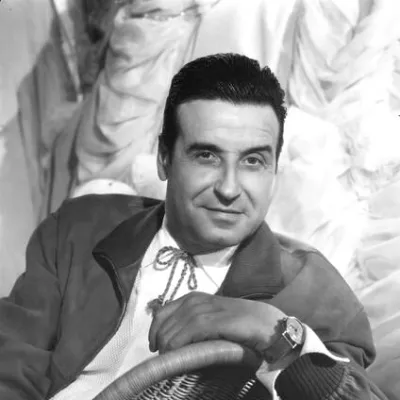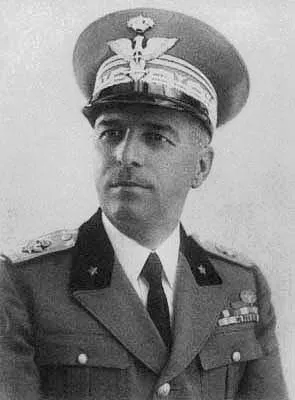
Vittorio Ambrosio
Human Design Chart
Biography
What does Projector 4/6 mean for Vittorio Ambrosio?
Projector 4/6 — Design at a Glance
Vittorio Ambrosio's design inclines towards focused perception. His aura seemed like a bright flashlight that instantly recognized system errors in his surroundings and shed light into the darkness. This ability to quickly identify weaknesses in others or structures was central to his nature.
As a Projector, however, Vittorio Ambrosio did not have a defined Sacral Center, which denied him constant intrinsic life energy. Instead, he lived in a rhythm of active phases and necessary rest periods to avoid exhaustion. The conventional expectation of always being available and energized did not suit his physiology; ignoring this need would quickly push him to the limits.
His strategy was to wait for a respectful invitation. Rather than addressing his observations unasked and directly – which others often perceived as aggressive or preachy – he showed himself through authentic role modeling. When he lived harmoniously, it attracted others who then actively sought his advice. This distancing from pushing was crucial.
If Vittorio Ambrosio followed this pattern, he was rewarded with success. If he deviated and tried to impose his insights without being asked, it eventually led to bitterness. His path therefore lay not in constant correction but in shining as a radiant example that naturally drew others to seek guidance.
Emotional Authority
Vittorio Ambrosio exhibited an inner structure where decisions did not follow an immediate impulse but were subject to a necessary maturation process. His design featured emotional authority carried by the defined Solar Plexus Center. This mechanism meant for him that his feelings flowed in waves – a constant up and down, coloring perception of the world through the current mood. What appeared inspiring at one moment could seem negative in the next. However, this emotional wave did not represent an ultimate truth but merely a snapshot or first impression.
For Vittorio Ambrosio it was therefore crucial to avoid spontaneous decisions based on his current emotional state, as these often led to negative consequences. Instead, his inner guidance required time and distance. He had to let decisions "sleep" overnight or take time to deliberate in order to gain clarity. Only when intense feelings subsided and emotional distance emerged did calmness set in. This process of emotional maturation was particularly crucial for long-term, life-changing steps. Only through this patience could he ensure that his choice was based on deeper insight rather than transient excitement or depression.
The 4/6 Profile — Opportunist / Role Model
Vittorio Ambrosio showed a development line that led from intensive experimentation in his youth to the later role of a wise mentor. His design as Profile 4/6, the Networker and Role Model, fundamentally shaped this dynamic. In the first three decades of his life, his energy worked similarly to Line 3: Vittorio Ambrosio enjoyed experimenting extensively, particularly in relationships and friendships. He was driven by the desire for recognition along with the fear of rejection – central themes of his motivation that depended heavily on how others perceived him. Criticism was part of the process of improvement and should not be taken personally to navigate this early search process.
With Saturn returning, Line 6 activated in his design. Here internal contradictions emerged: The wish to belong to a community (Line 4) conflicted with the need for distance and reflective self-discovery on the "mountain top" (Line 6). This tension between emotional belonging needs and intellectual distance shaped his later life. In his later years, Vittorio Ambrosio was expected to meet the demands of a trustworthy role model. His care was protected by realism; Line 6 promoted fairness and shielded him from the misuse of his generosity. He learned to trust himself and others to provide productive help and set a standard of awareness rather than opening his big heart recklessly.
Split Definition — Defined & Open Centers
Vittorio Ambrosio's Human Design shows a tendency towards constant internal pressure that affects both the mental and existential aspects. His defined Head and Ajna Centers created a continuous stream of questions, inspirations, and concepts; however, this mental process was not connected to direct implementation energy. The challenge lay in accepting this thought flow without rushing into actions, as haste often led to frustration. Instead, he served as an inspiration source for others who had the necessary energy to bring his ideas into reality.
His defined Solar Plexus acted as inner authority. Vittorio Ambrosio made decisions not through immediate clarity but by waiting out emotional waves. Only when emotions calmed and deep emotional peace set in could he discern what was right for him. Impulsive reactions to the highs or lows of this wave often led to regret later; patience was therefore essential for his integrity.
Simultaneously, his defined Root Center carried a steady, adrenalized pressure that secured survival and material existence. This stress was a constant companion driving him forward as long as he did not slip into obsessive patterns.
In contrast, his G-, Heart-, Sacral-, and Spleen Centers were open. Vittorio Ambrosio lacked a fixed identity or willpower; he tended to be conditioned by the environment if he did not trust his emotional authority. He often unconsciously sought security from others (open Spleen Center) and risked being drained by borrowed vital energy (open Sacral Center). His communication was spontaneous, dependent on external invitations (open Throat Center), rather than driven by an inner compulsion. The wisdom of his design lay in using these open spaces as mirrors for the environment without identifying with the energies or identities absorbed.
Channels for inner truth and emotional impulses.
Vittorio Ambrosio acquired knowledge not through logical deduction but by waiting for spontaneous inspiration. His design fostered a basic stance of individual thinking: he sought silence to allow mutations in thought. The Awareness Channel 61-24 connects the Head Center to the Ajna Center. Here, the pressure to know the unknown transformed into rational answers via Gate 24. It was not about discovery but how his acoustic mind processed inspiration from Gate 61. Vittorio Ambrosio did nothing; knowledge entered when it arrived, often as sudden enlightenment (Satori). He clearly distinguished between what was worth knowing and what was not. His mind was connected to mysticism, where music or silence alleviated mental burdens.
Simultaneously, a genetic restlessness drove him forward. The Recognition Channel 41-30 connects the Root Center to the Solar Plexus. Gate 41 generated a desire for new experiences and fantasies, which Gate 30 heated up emotionally. Vittorio Ambrosio felt an intense need to deeply experience life. The challenge was giving time to the emotional wave before acting. Instead of impulsively jumping into every longing, he waited for clarity. This synthesis of silent awareness and emotional experiential search defined his path: receiving inspiration and validating it through emotionally charged experiences.
Additionally, Gates like 31 (Transmission), 28 (Risks in Now), and 27 (Care) influenced him. Gate 47 promoted collective understanding of meaning, while Gate 63 used doubt as a motor for improvement. Gate 60 taught acceptance of limitations to transcend them, Gate 39 activated provocation and analysis for mutations, and Gate 37 connected him with organic community structures and mysticism. These configurations shaped his actions: leadership through transmission, decisions in the here and now, and deep connection to the tribe and collective development.
Individual Circuitry — Circuit Signature
Vittorio Ambrosio's design set a tendency towards an inner split that he had to endure or integrate. He did not appear as a unified flow but rather as two parallel existing, separate fields of force. This corresponded with his Split Definition: Two independent groups of centers worked alongside each other without direct energy exchange.
The first source of power formed the Knowledge Circuit. Here, Vittorio Ambrosio's Head and Ajna Centers were directly connected via the Awareness Channel (Gates 24-61). This connection generated a pulsating energy aimed at innovation and new identity. It was about the drive for individual transformation and gaining new knowledge – focusing on the present and the acoustic.
Completely separate from this, the Meaning Finding Circuit operated. Here, Vittorio Ambrosio's Solar Plexus and Root Centers were connected via the Recognition Channel (Gates 30-41). This connection generated a cyclical, collapsing energy dealing with emotions and experiences from the past. The focus was on reflecting past events to find their meaning and sharing these emotional insights with others.
The tension in Vittorio Ambrosio's design arose from carrying both information sources simultaneously: the rational drive for new knowledge on one hand and the necessity of digesting past emotional experiences on the other. Since there was no direct connection between these two groups, he could not automatically unite them; they remained as two distinct, parallel life tasks.
Right Angle Cross of the Unexpected 2
Vittorio Ambrosio's design carried the signature of the right cross of the Unexpected. This configuration shaped a lifestyle characterized by spontaneous turns and unpredictable developments. In Human-Design, this cross describes a specific energetic alignment where the individual often finds themselves in situations that were unplanned or unexpected from an external perspective. For Vittorio Ambrosio, this meant his path was less determined by linear predictability than by adaptive responses to the unexpected.
The mechanics of this cross imply a dynamic where traditional structures or expectations are frequently disrupted. It is not about chaos but rather the ability to find new paths in moments of surprise. Thus, Vittorio Ambrosio showed himself as someone whose development was driven by sudden insights or external events that altered his previous course. This energy fostered an openness to the new and unplanned, since it was anchored in his design.
Without specific biographical events for placement, the characterization remains limited to this structural tendency: Vittorio Ambrosio lived in a reality where the unexpected played a central role and significantly influenced his actions as well as his understanding of himself. His design suggested that stability for him did not lie in clinging to the past but in the sovereign handling of what arises anew.
Saturn Return · Uranus Opposition · Chiron Return · 2nd Saturn Return — Life Cycles
Vittorio Ambrosio's Human Design profile indicated a tendency towards sudden and often surprising shifts. His Uranus Opposition cycle described moments of liberation from old structures and the "aha" effect that paved the way for new life phases. In 1922, at age 43, he became Commander of the traditional Cavalry Regiment "Savoia Cavalleria". This career milestone marked a concrete point where this mechanism was evident: an established order met with a new leadership figure, which is typical of the energy of this cycle. The takeover of such a historically significant regiment by him illustrated how these astrological configurations often come with rapid changes or new responsibilities that break old patterns. Ambrosio lived in a time when this dynamic force was active and shaped his position within the military hierarchy. The structure of this cycle promoted decisions that did not gradually grow but appeared as clear turning points. His rise to the Commander's post was not a gradual process in the conventional sense, but an event that redefined his role and placed him in a position embodying both tradition and change. This illustrates how the Uranus influence took concrete form in his life by challenging or recalibrating existing frameworks without leaving the context of the institution, but rather leading it from a new perspective.
Projector · Emotional Authority — Synthesis
Vittorio Ambrosio moved through life as a Projector, whose strength lay in recognizing the potentials of others and bringing 'light into the darkness' for them. This ability to see patterns (Channel 61-24) and perceive subtle changes (Channel 30-41) shaped his path. He was an observer who instinctively grasped the dynamics in relationships and systems – a gift that came with the challenge of not giving unsolicited advice or interfering in others' processes without being asked. Instead, he lived out his inspiration by setting an example through his own behavior, thereby indirectly attracting others. His emotional authority required time to gain clarity, while his undefined Root Center made him sensitive to the stress of others but also emphasized the need to attend to his own inner balance.
A central tension in Vittorio Ambrosio's design lay between his desire for recognition and his ability to make independent assessments (Gate 28). He was destined to inspire and guide others, yet he was vulnerable to conditioning by his environment and tended to adapt to its energy. This dynamic led to an internal conflict between the desire for autonomy and the longing for validation, a paradox that accompanied him throughout his life and defined him.
2 Defined Channels
Incarnation Cross - Right Angle Cross of the Unexpected 2
Solar Return
The Solar Return shows the moment when the sun returns to its exact birth position - your personal solar year.
Life Cycles
Discover the life cycles with a detailed triple view (birth chart, cycle chart, composite).
Human Design Profile
- Type
- Projector
- Strategy
- Wait for the respectful invitation
- Authority
- Emotional Authority
- Profile
- 4/6 - Opportunist / Role Model
- Definition
- Split Definition
- Incarnation Cross
- Right Angle Cross of the Unexpected 2
- Date of Birth
- 28.07.1879 09:00
- Place of Birth
- Torino, Italy
Frequently Asked Questions
What was Vittorio Ambrosio's Human Design type?
What profile did Vittorio Ambrosio have?
What authority did Vittorio Ambrosio have?
What incarnation cross did Vittorio Ambrosio have?
When was Vittorio Ambrosio born?
Discover your own Human Design
Are you also a Projector? Find out in a personal reading how to unfold your leadership qualities and recognize the right invitations.
More Personalities
Back to overviewSissy Spacek

Alain-Fournier

Anémone
Ann-Margret

Bourvil
Christian-Jaque