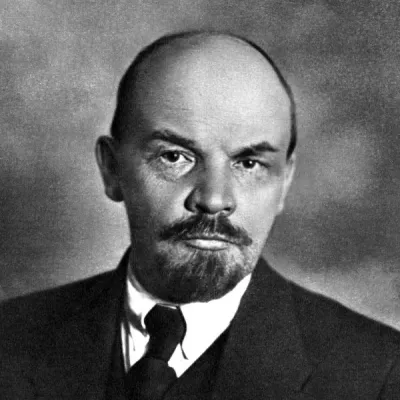
Vladimir Lenin
Human Design Chart
Biography
Human Design Analysis: Vladimir Lenin as Generator 1/3
Generator 1/3 — Design at a Glance
Vladimir Lenin possessed immense sacral endurance that made him a powerful force of work. His design dictated that this energy would only become active in response to external impulses and not through his own initiative. The motto was clear: do not initiate, but react. When a signal from life came and his inner self responded with a clear 'yes', he could act with full power.
However, this mechanism carried two significant risks. First, there was the danger of energy loss or burnout if Lenin engaged in activities that did not resonate internally - doing things he actually had no interest in. Second, it led to deep frustration when he was prevented from working on his heart project, even though his strength was still present and ready to work.
The correct use of this architecture rewarded him with a sense of profound fulfillment. If he lived against his design, especially by constantly initiating instead of reacting, he faced persistent frustration and a lack of energy. His strength lay in responding from the gut to what life offered him rather than taking the first step himself.
Sacral Authority
Vladimir Lenin showed himself as someone who did not make decisions from the head but waited for direct physical resonance. As a Generator, his inner authority was sacral authority, meaning he reacted to external stimuli with a gut feeling or a noticeable surge of energy. This reaction often manifested in sounds like grunting, humming, or simply saying 'Mhm'. So long as his emotional center was open, this sacral response served as a clear basis for his actions. When this inner motor kicked in, he felt vital and alive; an apparently inexhaustible energy was at his disposal to complete tasks with great enthusiasm. He proceeded without rigid purposefulness but let himself be guided by the joy of the activity itself. Additionally, his defined spleen center supported this decision-making process. It allowed him quick, spontaneous reactions and immediate access to his instinctive perception. This combination of sacral confirmation and spleen-induced speed shaped his way of moving through life: he acted enthusiastically and reacted agilely to what physically appealed to him rather than thinking long or seeking external validation.
The 1/3 Profile — Investigator / Martyr
Vladimir Lenin showed himself as someone who only considered judgments valid when they were both theoretically grounded and practically tested. His design tended towards accumulating knowledge but validating it through concrete action and mistakes. This stemmed from Profile 1/3, the Researcher-Experimenter. The first line, influenced by Gate 27, demanded creating a stable foundation and careful self-care before each step. Without this basis, actions felt risky; envy or insecurity often signaled gaps in preparation.
At the same time, the third line, influenced by Gate 41, drove the urge to experiment. Here it was about learning processes through trial and error, supported by discipline and material ambition. Lenin had to learn that theoretical perfection alone was insufficient; only contact with reality and adaptation to collective dynamics created true competence. His judgment was considered trustworthy because it had undergone this rigorous testing process: first securing the foundation, then the hard test in everyday life. Thus, out of the tension field between fear of ignorance and the imperative to try came a tested truth based on individual experience.
Split Definition — Defined & Open Centers
Vladimir Lenin's Human Design profile indicated a tendency towards constant, high mental and physical pressure. Five defined centers – Head, Ajna, Throat, Sacral, and Root – produced an uninterrupted frequency of inspiration, concept formation, communication, and reactive energy. The persistent mental drive to question and understand connections (Head-Ajna) directly translated into speech and action through the defined Throat. However, this mental activity was not coupled with willpower; it had to wait for a sacral response to avoid resistance. The open G Center meant no fixed identity or direction; these were reflected situatively by environment and relationships. Similarly, the absence of consistent willpower in the open Heart Center led Lenin to trust his inner authority rather than prove himself through promises or ego pressure. The open Solar Plexus Center absorbed emotional fields from the surroundings, while the open Spleen Center was vulnerable to conditioned fears and spontaneous misjudgments. The mechanics described a permanent process: inspiration was conceptualized and communicated, driven by immense sacral energy that only responded to external stimuli. The lack of fixed identity (open G) and willpower (open Heart) forced him to rely on this inner strategy to healthily channel the constant pressure from his defined Root and Head Centers. Lenin demonstrated someone who accepted mental pressure without exhausting it, with his strength lying in reactive availability rather than initiative.
Channels & Gates
Vladimir Lenin's thinking was not based on linear logic but characterized by sudden, inspiring flashes of insight. His mind sought inner truth that revealed itself during moments of 'Satori' – a knowledge he simply knew without needing to logically deduce it. This transformative inspiration directly flowed into his way of communicating: He did not translate abstract ideas through dry facts but in narrative stories and parables that engaged the imagination of his listeners. For him, storytelling was a means to inspire others and invite new perspectives, where he was less interested in pure information transmission than in the magical connection between ideas.
This structure was determined by three central channels. The Channel of Awareness 61-24 connected the pressure of the unknown in the Head Center with the rationalizing Ajna Center, leading to individual thinkers who could acoustically process inspiration and transform it into sudden insights. These abstract truths then flowed into the Channel of Curiosity 11-56, which linked the Ajna Center with the Throat Center. Here, an inner idea became an outer story; Lenin acted as a storyteller providing social commentary through his narratives and encouraging others to question new belief systems.
Simultaneously, the Channel of Maturation 42-53 between Root and Sacral Centers ensured that experiences did not remain superficial but were cyclically completed. This process required going from beginning to end to derive collective wisdom for future generations. His personality was further complemented by Gates like 27 (Care and Survival), 31 (Leadership and Transmission), as well as 28 (Risk Management in the Here and Now). This combined his genetic role of care with a transformative willingness to take risks. Lenin lived this mechanics by reflecting on experiences to pass them forward as valuable information, driven by the need to recognize and realize his meaning in the present.
Circuit Signature
Vladimir Lenin's design was marked by a tension between individual knowledge transformation and collective, cyclical sense-making. He developed his own, transformative identity and new knowledge to share this emotionally filtered and historically contextualized with the collective.
This configuration arose from his Shared Definition: two energetically separate systems existed parallel. In the Knowledge Circuit, Channel 24-61 (Awareness) connected Head Center with Ajna. This promoted innovative flashes of insight and the ability to generate entirely new knowledge driven by inspiration to go on one's own path.
Parallel to this, another pattern operated in the Sense-making Circuit. Here a group linked Ajna with Throat Center (Channels 11-56 Curiosity and 42-53 Maturation), while a second independent group connected Sacral and Root Centers. This structure directed energies towards emotions and experiences from the past. The realization was wave-like and cyclical: it served to find meaning behind events and share these emotional perceptions with others to learn collectively from history.
Lenin thus showed duality: on one hand, a sharp individual intuition for new (Head-Ajna), on the other, deeply rooted emotional processing of past for collective participation (Sacral-Root as well as Ajna-Throat). These separate streams shaped his way not only to transform knowledge individually but embed it in the historical and emotional context of the collective.
Right Angle Cross of the Unexpected 1
Vladimir Lenin's design established an existential foundation that did not follow linear planning or predictable patterns. Instead, his life path was characterized by sudden turns and surprises. This structure defined the 'Cross of the Unexpected 1'.
The mechanics of this cross translated into a personality whose identity and development were strongly influenced by unforeseen events. There was no guarantee for stability or predictability in the traditional sense. Rather, the strength lay in dealing with the unexpected and accepting it as the driving force. Vladimir Lenin lived in a field that did not allow for a calm, predictable development; his path consisted of breaks and new directions that often announced themselves abruptly.
This configuration meant that conventional strategies for long-term security were less effective than the ability to quickly adapt to changing circumstances. The design demanded an openness towards chaos, not out of passivity, but because the unexpected was the actual motor of his development. Identity thus formed itself in dealing with these shocks and turning points. It was a life in constant motion between expectation and reality, where reality often struck abruptly. This dynamic shaped his entire orientation: not clinging to the known, but navigating through the unknown as soon as it appeared.
Saturn Return · Uranus Opposition · Chiron Return · 2nd Saturn Return — Life Cycles
Vladimir Lenin's design was marked by three decisive turning points that shaped his life. In 1898, at age 28, he married Nadezhda Krupskaya in exile. This marked the first Saturn Return, a cycle often characterized by the consolidation or strengthening of long-term commitments and bonds. The marriage under difficult conditions demonstrated the power of this phase to create sustainable structures.
Twelve years later, in 1912 at age 42, differences between Bolsheviks and Mensheviks sharpened, leading to the exclusion of the latter. This corresponded with the Uranus Opposition, a period of division and crisis where old identities often must break apart to make way for new realities. The split was not only political but an expression of this profound inner and outer separation.
In 1918, at age 48, Lenin was wounded in an assassination attempt on his shoulder and neck. This fell during the Chiron Return, a fulfillment cycle around ages 49 to 51. In Human Design mechanics, this is not a phase of healing old wounds in a mythological sense but rather a moment when one's incarnation cross unfolds and its meaning becomes experiential – if one follows their strategy. The injury marked here the point where his personal mission and its cost directly intersected, a physical manifestation of his deep confrontation with purpose. These three cycles structured Lenin's path from binding through division to confrontational fulfillment.
Generator · Sacral Authority — Synthesis
He was a Generator whose life was shaped by deeply rooted sacral energy – an unrelenting force that propelled him forward as long as it found inner consent (sacral authority). This foundation of endurance was strengthened by the Profile of the Researcher and Experimenter: a constant need to learn, test, and gain insights from experience. The connection between defined inspiration (Head Center) and the Channel of Curiosity (Gate 11) points to an unstoppable urge to seek knowledge, develop ideas, and share them with others – a process that continually led him into new explorations.
A central paradox lay in the tension between his sacral drive and mental pressure (defined Head Center). While his energy urged action when he truly said 'yes', his mind constantly questioned and weighed possibilities. This led to an inner dynamic where the necessity of trying things out (Line 3) clashed with the need to fully understand first (Line 1). The repeated crises – both in personal life as well as during times of political upheaval – showed this internal conflict and the necessity of learning through experience.
3 Defined Channels
Incarnation Cross - Right Angle Cross of the Unexpected 1
Solar Return
The Solar Return shows the moment when the sun returns to its exact birth position - your personal solar year.
Life Cycles
Discover the life cycles with a detailed triple view (birth chart, cycle chart, composite).
Human Design Profile
- Type
- Generator
- Strategy
- To respond - wait for something to respond to
- Authority
- Sacral Authority
- Profile
- 1/3 - Investigator / Martyr
- Definition
- Split Definition
- Incarnation Cross
- Right Angle Cross of the Unexpected 1
- Date of Birth
- 22.04.1870 21:42
- Place of Birth
- Simbirsk, Россия
Frequently Asked Questions
What is Vladimir Lenin's Human Design type?
What Profile did Vladimir Lenin have in Human Design?
What authority did Vladimir Lenin possess?
What incarnation cross did Vladimir Lenin have?
When was Vladimir Lenin born?
Discover your own Human Design
Are you also a Generator? Find out in a personal reading how to use your sacral energy correctly and discover deep satisfaction.
More Personalities
Back to overviewAaliyah

Alexia

Angèle

Anne-Marie

Arcángel

Arno