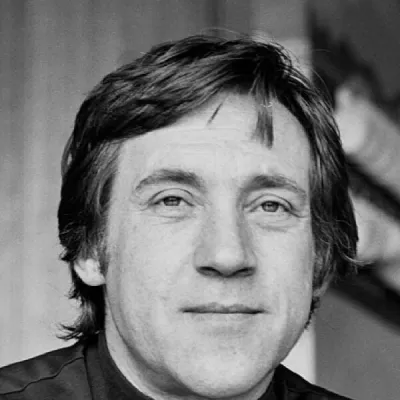
Vladimir Vysotsky
Human Design Chart
Biography
The Human Design of Vladimir Vysotsky: Manifesting Generator 3/5
Manifesting Generator 3/5 — Design at a Glance
Vladimir Vysotsky's design indicated a tendency towards hybrid energy: constant sacral power paired with manifestor speed. He was someone who could skip steps and achieve results quickly. This configuration described a Manifesting Generator – a hybrid of manifestors and generators. With his defined Sacral Center, he had constant energy; the strategy involved not initiating but responding to impulses. Unlike pure generators, however, he could skip steps when acting and draw things into his life rapidly.
This speed carried risks. Often, he was too quick and skipped important stages, leading him to backtrack to complete missing steps, which could cause frustration, a common theme for this type. Additionally, he tended to do multiple things at once by reacting to many impulses and starting parallel projects. When strategy and authority did not align, his creative drive quickly turned into frustration.
Success came when he operated in "play mode" and remained constantly validated by the Sacral Center. The same strategy applied as for generators: react to life and only start moving forward when the Sacral Center gave a clear “yes.” Ongoing projects should be regularly reviewed to ensure they still had internal approval. If this was the case, he drew deep satisfaction from his work. Then it did not bother him to work on different tasks simultaneously; in fact, the pressure to finish one thing before starting another became an issue. His creative power flourished when variety and fun prevailed.
Sacral Authority
Vladimir Vysotsky's decision-making was guided by a clear inner resonance. As a Generator, he possessed sacral authority, meaning his strategy and his inner guiding force were identical: He responded to external stimuli rather than initiating on his own. This mechanism greatly simplified his process, as he did not have to choose between different internal voices.
His responses manifested physically as a "gut feeling." Through loud or soft sounds like grunts, hums, or simply an "mm-hm," his body signaled approval or disapproval. If the impulse was positive, he felt an immediate surge of energy. This state gave him vitality and inexhaustible energy, allowing him to engage in activities with great enthusiasm, free from purely utilitarian pressure.
Moreover, his activated Spleen Center served as a supporting instance for his sacral authority. This configuration allowed for quick, spontaneous reactions and direct access to instinctive perception and physical well-being. He could reliably guide himself by these deep impulses. The prerequisite for this clarity was an open Emotional Center, ensuring that the sacral response was not overlaid by emotional waves. Thus, he moved through life driven by the joy of doing itself, rather than seeking external validation.
The 3/5 Profile — Martyr / Heretic
Vladimir Vysotsky's Design shaped the dynamics of Profile 3/5, that of the experimenter and hero. He demonstrated a fundamental stance that rejected belief in predetermined truths; instead, he acquired knowledge exclusively through personal experimentation, trial and error. This individual learning process along Line 3 (Gate 41) stood for competence and discipline, driven by material ambition. Vysotsky learned from his practical experiences and failures to later apply this self-acquired knowledge.
The second half of his profile, Line 5 (Gate 28), used this foundation to solve other people's problems. He stepped into an attractive hero role that drew the collective. People sought his proximity because they wanted to learn from his rich life experiences. This admiration flattered his design but also created a deep inner tension: The narcissistic need for validation as a saviour clashed with the reality of experimenting. Since he tried things in public, failure was not just private but publicly visible. This could be painful since the hero role depends on success while Line 3's learning process requires mistakes. His mechanics described a life struggle (Gate 28), where he intuitively dissolved alliances and joined stronger groups to prove his worth in the collective.
Split Definition — Defined & Open Centers
Vladimir Vysotsky's design inclined towards constant mental urging and vital endurance, paired with situational identity. He was someone whose mind continuously generated questions and formed concepts – an effect of his defined Head and Ajna centers. This perpetual internal pressure for understanding contrasted with his open G Center, which did not have a fixed identity but reflected the environment.
His defined Throat enabled him to articulate these mental processes directly while his defined Sacral provided an enormous vital energy source. However, this power required reaction rather than initiation; he needed external impulses to correctly apply his energy and avoid frustration. Additionally, his defined Spleen and Root centers ensured intuitive perception in the present moment as well as a set approach to stress management, helping him physically overcome existential challenges.
At the same time, he lacked consistent willpower and emotional stability due to his open Heart and Solar Plexus centers. The open Heart Center meant that he was not geared towards keeping promises or proving his worth through competition; instead, he tended to rely on external validation when acting against his nature. His open Solar Plexus absorbed foreign emotions, making him vulnerable to the mood of his environment and often confusing his own feelings with those of others or avoiding confrontation to circumvent emotional turbulence.
This configuration created a person who was mentally and physically highly active but had to draw direction and emotional grounding from context. The tension between his urging mind and reactive energy source shaped his actions: He could only have lasting impact if he waited for life to speak to him rather than initiating himself. His open centers made him a mirror of his environment, while his defined areas gave him the tools to express these reflections with clear voice and physical presence.
Channel 20-34: Charisma — Channels & Gates
Vladimir Vysotsky's design created tension between deep, instinctive talent and impulsive expressive strength. He was someone who both sought mastery through repetition as well as immediate impact in the present moment. This dynamic resulted from the interplay of two central channels in his design.
The Channel of Waves 48-16 connected his Spleen Center with Throat Center. The Gate of Depth (48) sought life-critical, intuitive information that could not be grasped by the mind but relied on bodily instincts. This flowed into the Gate of Skillfulness (16), which experimented with new possibilities and perfected skills. For Vladimir Vysotsky, this meant he transformed intuitive insights through constant practice and refinement into a communicable talent. His design required recognition and resources to maintain this process of perfection; his talent flourished when energized.
Simultaneously, the Channel of Charisma 34-20 connected his Sacral Center with Throat Center. The Gate of Power (34) delivered raw physiological energy channeled through the thyroid system, generating a strong urge for manifestation. This met the Gate of Now (20), which demanded immediate expression of this energy. Vladimir Vysotsky possessed immense power to act in the moment and inspire others with his vital presence. However, this energy required sacral reaction rather than willpower; without inner guidance, it could lead to obsession or chaotic outbursts.
Additionally, the Channel of Awareness 61-24 and the Channel of Life Struggle 38-28 shaped his essence. The former connected Head and Ajna centers, leading to sudden insights (Satori) he couldn't control but surrendered to. The second channel linked Root and Spleen centers, giving him a stubborn resolve to fight for his integrity and find meaning in difficulties. Vladimir Vysotsky used this adrenalized energy to battle external forces that sought to divert him from his true nature.
His character formation emerged from the fusion of these elements: The intuitive depth of Channel 48-16 provided content, while the charisma of Channel 34-20 supplied powerful immediate expression. He lived in a constant process of perfecting and manifesting action driven by inner struggles and sudden realizations.
Individual Circuitry — Circuit Signature
Vladimir Vysotsky's design inclined towards highest individuality and powerful reaction in the moment. His system was characterized by shared definition: Two energetically isolated groups existed parallel without direct flow between them. The first group connected Throat, Spleen, Root, and Sacral centers; the second Head and Ajna centers.
The Knowledge Circuit marked him as pulsating and acoustically oriented. He possessed the Channel of Awareness (24-61), connecting Head and Ajna centers, as well as the Channel of Life Struggle (28-38) between Spleen and Root. This created two separate segments: On one side, innovative mental flashes, on the other an intuitive survival power in the body. This configuration promoted the expression of a unique identity through emotional waves.
The Understanding Circuit acted focused and visually. Through the Channel of Wave Length (16-48), it directly connected Throat and Spleen centers. This allowed for sharing rational, logical insights free from conditioning, directed towards future structures. As this segment belonged to the first group, it flowed energetically with other channels in this group, not with the mental part of the Knowledge Circuit.
The Integration ensured survival through immediate reaction. The Channel of Charisma (20-34) connected Throat and Sacral centers. From here came power from reacting to life that worked effectively in the moment. Together with the Understanding channel, this formed a coherent physical expression structure while mental inspiration (Head-Ajna) existed as separate parallel energy source.
Right Angle Cross of the Unexpected 4
Vladimir Vysotsky's design established a foundational disposition characterized by unpredictable turns and navigating the unpredictable. His life energy did not flow into orderly, long-term planable channels but reacted spontaneously to situations that often were chaotic or surprising. This orientation stemmed from the mechanics of the Unexpected Right Cross (Cross 4). This archetypal path is defined not through control or predictability but by the ability to act in the moment when life takes unexpected turns. For Vysotsky, this meant that his deepest resonance and drive lay where no rigid plans existed. He was someone who lived in the flow of the unpredictable and whose energy was fed by spontaneous events rather than avoiding or rationalizing them. The design promoted a way of existence that did not view the unexpected as an interruption but as an essential part of experience. His character structure was attuned to finding its footing in dynamic, rapidly changing contexts where traditional strategies often failed. This shaped his approach to challenges: not through meticulous preparation but through direct intuitive reactions to what was happening at hand. The energy of this cross acted as a driving force during moments of uncertainty by creating the ability to act where others might be paralyzed. Vysotsky's path was thus defined by this constant interaction with the unplanned, which significantly determined his inner dynamics and approach to the world.
Saturn Return · Uranus Opposition · Chiron Return · 2nd Saturn Return — Life Cycles
Vladimir Vysotsky's life followed a structure marked by two decisive astrological cycles: the first Saturn return and the Uranus opposition. These phases not only signified age-appropriate milestones but also acted as catalytic moments for profound life changes or the abrupt end of his physical existence.
The first Saturn return occurred at the age of 29. In Human Design mechanics, this cycle often signals a condensation of previous experiences and the readiness for a new stable life structure. For Vysotsky, this was evident in 1967: he met the French actress Marina Vlady in Moscow. This encounter was not an accidental event but fit into the pattern of the Saturn return, which frequently initiates long-term commitments or obligations that significantly shape the further course of one's life.
Thirteen years later, at the age of 42, Vysotsky reached the phase of the Uranus opposition. This cycle traditionally stands for sudden changes, liberation from old structures, or an unexpected end to a chapter. The mechanics of this opposition were fulfilled dramatically in him: on July 25, 1980, he died in Moscow of heart failure. His death at age 42 corresponds exactly with the time of the Uranus opposition, which here acted as the final conclusion of his incarnational line. Both events underscore how strongly Vysotsky's biographical course was guided by these specific cyclical pressures – first to establish a central relationship, then to an abrupt end.
Manifesting Generator · Sacral Authority — Synthesis
A central red thread runs through the design: the dynamic connection between initiation and reaction. As a Manifesting Generator (MG), this chart possesses both the ability to quickly initiate things – a characteristic of manifestors – as well as the sacral energy to react to impulses typical for generators (sacral authority). The defined Head Center amplifies this drive through constant inspiration and the need to understand and communicate (Channel of the Wavelength), while the profile as an experimenter/hero and rescuer underscores a tendency to collect experiences and pass them on. This combination creates a life path marked by rapid action and a continuous quest for new insights.
The central paradox lies in the tension between speed and completeness. The ability to skip steps carries the risk of neglecting important aspects, leading to frustration (MG design). At the same time, the sacral center demands a reaction to the present moment, which collides with the Head Center's drive for understanding. This dynamic between rapid progress and the necessity to fully engage in the process creates an ongoing interplay of forward momentum and the need for correction and refinement.
4 Defined Channels
Incarnation Cross - Right Angle Cross of the Unexpected 4
Solar Return
The Solar Return shows the moment when the sun returns to its exact birth position - your personal solar year.
Life Cycles
Discover the life cycles with a detailed triple view (birth chart, cycle chart, composite).
Human Design Profile
- Strategy
- To respond - wait for something to respond to
- Authority
- Sacral Authority
- Profile
- 3/5 - Martyr / Heretic
- Definition
- Split Definition
- Incarnation Cross
- Right Angle Cross of the Unexpected 4
- Date of Birth
- 25.01.1938 09:40
- Place of Birth
- Moscow, Russia
Frequently Asked Questions
What is Vladimir Vysotsky's Human Design type?
What Profile did Vladimir Vysotsky have in Human Design?
Which Authority guided Vladimir Vysotsky?
What incarnation cross did Vladimir Vysotsky have?
When was Vladimir Vysotsky born?
Discover your own Human Design
Are you also a Manifesting Generator? Find out in a personal reading how to unfold your multi-talents and direct your energy wisely.
More Personalities
Back to overviewAlain-Fournier

Aldair

Alizée

Angeli

Arletty

Artus