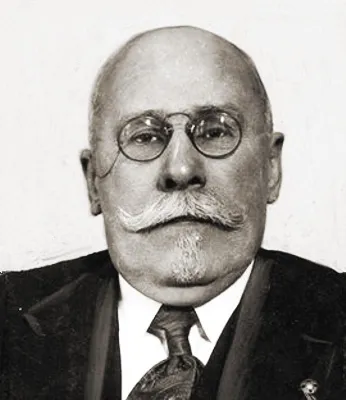
Waclaw Sieroszewski
Human Design Chart
Biography
He died 20 April 1945.
What does Manifesting Generator 1/3 mean for Waclaw Sieroszewski?
Manifesting Generator 1/3 — Design at a Glance
Waclaw Sieroszewski revealed himself as someone who possessed hybrid energy: the constant power of a Generator paired with the lightning-fast execution power of a Manifestor. His design inclined towards great speed, allowing him to skip steps and quickly pull things into his life. This ability, however, came with two specific risks. First, he tended to overlook important intermediate steps, forcing him to backtrack later and fill in gaps—a process that led to frustration if not accepted. Second, he often reacted to multiple impulses simultaneously and began working on several projects at once. Without inner consent, this multiplicity threatened to erode his creative drive.
The mechanics of his design as a Manifesting Generator therefore required a precise strategy: he had to react to life impulses rather than initiate himself. Only when his Sacral Center gave a clear "yes" could he act. Additionally, it was essential to regularly check whether ongoing paths still aligned with his inner authority. When this strategy was followed, Waclaw Sieroszewski found deep satisfaction in his work. The demand to focus on only one thing went against his nature; instead, his creative power flourished in the "play mode" with variety. His energy was most effective when he maintained the balance between quick implementation and reacting to inner confirmation, thereby avoiding frustration and achieving sustainable fulfillment from parallel working.
Emotional Authority
Waclaw Sieroszewski revealed himself as someone who never made decisions immediately but consciously let them rest until his feelings had clarified. His design featured emotional authority, meaning his defined Emotional Center had the inner power to make decisions – regardless of which other centers were also defined. This authority was subject to a natural emotional wave, a constant up and down of mood swings. The world always appeared to him colored by his current emotional snapshot; what was exciting in one moment could appear negative in the next. Since this initial impression did not necessarily reflect the truth, spontaneous, impulsive decisions often led to negative consequences. Instead, his system required patience and the repeated "sleeping on" of choices. Only over time, when intense feelings subsided and emotional distance was gained, did the necessary clarity and calmness set in. This process was especially crucial for long-term, life-defining decisions, as only then was a comprehensive and deep understanding possible. Waclaw Sieroszewski therefore lived in a rhythm that saw time as a necessary factor for true inner security, rather than relying on immediate reactions.
The 1/3 Profile — Investigator / Martyr
Waclaw Sieroszewski revealed himself as someone who did not merely collect knowledge theoretically, but validated it through active experimentation and learning from mistakes. His design as a researcher and experimenter (Profile 1/3) established a fundamental attitude where self-tested knowledge was the highest good. When he made a decision or deemed something worthwhile, he had previously examined it both intellectually and practically. This judgment was trustworthy because it was based on the synthesis of studied theory and lived experience.
This process was often marked by inner tension. The energy of the first line brought with it the uncertainty of whether one knew enough to act, which could trigger the fear of transitioning from planning to implementation. At the same time, the third line urgently pushed for experiments. Waclaw Sieroszewski had to balance these two forces: the necessity to remove obstacles and bring about unions (Gate 59), paired with constant self-analysis and the awareness of the third line (Gate 20). This self-reflection could lead to surprises, as the present moment sometimes got lost from sight, but it ultimately served adaptation and development. His strength lay in breaking down walls and crossing boundaries, as long as he remained aware of his own uncertainty and did not fall into excessive self-absorption, which would have hindered development.
Single Definition — Defined & Open Centers
Waclaw Sieroszewski revealed himself as someone who possessed a consistent, reliable voice emanating from a deep well of willpower and vital energy. His defined Throat Center, connected to the Heart and Sacral Centers, shaped a mode of expression that was not just conceptual but carried a strong sense of 'I want' and generative power. He could articulate his truth with ease and honesty as long as he listened to his inner authority. This authority lay in his defined Solar Plexus Center, which taught him not to make decisions impulsively but to wait for the emotional wave to gain clarity. His emotions were not a disturbance but an intelligence that needed time to reveal the deeper truth of a situation.
At the same time, Waclaw Sieroszewski was vulnerable to specific conditioning through his open centers. His open Head and Ajna Centers meant he did not have a constant mental focus but was open to inspirations and ideas from the environment. He tended to identify with others' questions and doubts if he did not trust his emotional clarity. His open G Center led him to not have a fixed, unchanging identity but to find his direction and self-image through interaction with others and choosing the right places. He relied on being initiated by the environment to discover who he was in a particular context.
Additionally, his open Root Center absorbed the stress and pressure of his environment, which could lead him to overextend himself to escape this pressure. His open Spleen Center made him sensitive to the well-being of others but also vulnerable to fears and clinging to unhealthy situations that gave a false sense of security. Waclaw Sieroszewski's design challenged him to use his strong, will-driven communication and emotional depth while learning to observe the mental, identity-related, and stress-induced influences of his environment without identifying with them.
Channels for intimacy, community and powerful manifestation.
Waclaw Sieroszewski revealed himself as someone whose life force was shaped by the connection of sacral energy and emotional depth. The Channel of Union 59-6 connected the Sacral Center with the Solar Plexus, making intimacy a powerful but time-intensive resource. This configuration required patience, as emotional clarity emerged only in the wave of feelings; spontaneous connections without this maturation often led to confusion. Simultaneously, he possessed the ability to create trust through pure presence and availability, making relationships fruitful on many levels.
His capacity for action was determined by the Channel of Charisma 34-20, which linked sacral reaction with direct expression in the Throat Center. This energy propelled him to act as soon as he was internally addressed. It was a drive for self-confirmation that often immersed him in activities that satisfied him. Without this inner guidance, this energy could be chaotic; it needed the confirmation of the Sacral to avoid falling into obsession or misguided activism. His charisma thus emerged not through targeted promotion but as a natural emanation of his vital, reaction-based activity.
Social dynamics and belonging played a further central role. The Channel of Community 37-40 connected the Solar Plexus with the Heart Center, leading him to seek recognition and a place in the whole. He waited for personal invitations to integrate into groups and understood the necessity of clear, fair agreements. This energy promoted the building of bridges between individuals, with loyalty and mutual benefit being paramount.
Additionally, individual Gates influenced his experiential world: Gate 55 brought emotional mood swings and genetic mutations, while Gate 30 steered the longing for positive feelings and the recognition of illusions. Gate 9 enabled detail-oriented perfection, provided he had the necessary energy, and Gate 45 expressed a tribal hierarchy and willpower. Gate 31 promoted the transfer of powers, Gate 12 creative mutation through restraint, and Gate 8 the individual contribution to the group. Gate 62 ensured logical pattern recognition, Gate 36 the experience of crises as a developmental step, and Gate 27 endowed a caring, altruistic quality that extended beyond the individual to the tribe.
Tribal Circuitry — Circuit Signature
Waclaw Sieroszewski revealed himself through a clear, coherent energetic structure, as he had a Simple Definition. This meant that his defined centers – Solar Plexus, Sacral, Throat, and Heart – did not operate in isolation but worked together as an integrated whole. This unity gave him a consistent inner direction.
The Ego Circuit connected his Heart and Solar Plexus Centers through the Channel of Community. This promoted a sense of mutual support and balance between giving and taking within a group, without relying on the constant endurance of the Sacral Center. Parallel to this, the Archer Circuit linked his Sacral with the Solar Plexus Center through the Channel of Union. Here, life force flowed directly into emotional, instinctive impulses, emphasizing themes like protection, care, and the preservation of his genetics or family.
Additionally, the Integration Circuit shaped his radiance by connecting his Throat with the Sacral Center through the Channel of Charisma. This allowed him to draw power from reacting to life and carry this energy outward through words or actions in the moment. The combination of these circuits created a profile that set the stage for interpersonal cooperation and emotional connection as well as direct, charismatic mediation of life energy, always embedded in protection and the care of the near.
Right Angle Cross of the Sleeping Phoenix 3
Waclaw Sieroszewski carried the design of the right cross of the sleeping phoenix. This configuration shaped a deep, often unconscious connection to collective fates and historical upheavals. His inner nature was oriented towards sensing major societal or cultural trends without always wanting to actively steer them. Instead, he acted as a sensitive receptor of energies that went beyond the individual.
The right cross of the sleeping phoenix describes a specific orientation in Human Design. It combines themes of death and rebirth with the ability to remain calm while great changes occur around one. The term 'sleeping' indicates that this power was effective not through aggressive action, but through inner calmness and trust in the natural flow. Waclaw Sieroszewski thus appeared as someone who, in times of change, radiated a stabilizing, almost mystical presence. He did not react through external control but through a deep resonance with what was happening in the collective consciousness. This mechanism allowed him to serve as a bridge between old structures and new possibilities without having to be in the forefront himself. His strength lay in his ability to use the silence to recognize deeper truths and then, when the time was ripe, bring these into the world. It was a path of subtle influence based on inner authenticity and not on external pressure.
Saturn Return · Uranus Opposition · Chiron Return · 2nd Saturn Return — Life Cycles
Waclaw Sieroszewski showed himself in his mid-thirties as someone who was challenged by external forces to assert his inner position. This phase of the Uranus opposition marked a turning point where long-term developments met sudden, often unexpected changes. For his design, this meant that he did not simply react but used the energy of this confrontation to affirm his own direction.
In 1896, at the age of 38, he received a prize from the St. Petersburg Geographical Society. This success was no coincidence but the result of a period in which his previous path was sharpened by the pressure of new circumstances. The opposition of Uranus acts like a catalyst: it forces a clarification of what is truly important. Waclaw Sieroszewski used this moment to strengthen his work and identity in a way that went beyond mere adaptation. Instead of bending to external demands, he shaped them into his own structure. This process helped him to strengthen his authority and define his goals more clearly. The recognition by the Geographical Society confirmed that he had taken the right path – not despite but because of the challenges that this life phase brought.
Manifesting Generator · Emotional Authority — Synthesis
Waclaw Sieroszewski was a Manifesting Generator whose life was marked by a profound dynamic between the urge for rapid implementation and the necessity of emotional maturation. The connection of the Sacral Center with the Throat Center (and thus the ability to directly transform energy into action) led to an impulsive energy that was further intensified by the profile of the researcher and experimenter. He constantly sought new experiences and insights, with the defined channel of pairing suggesting an intense connection to others and a deep engagement with relationships. However, this tendency to plunge into new ventures was tempered by the emotional authority that required time and reflection to gain clarity.
This tension between rapid, sacral-driven initiative and the need for emotional clarity formed the central paradox of his design. Sieroszewski lived in the tension between the desire to move things quickly and the use of insights from experimenting, and the inner necessity to let decisions mature through the emotional wave. A documented event, the receipt of a prize, could be a result of this dynamic – an acknowledgment for an initiative that was underpinned by thorough examination and emotional clarity.
3 Defined Channels
Incarnation Cross - Right Angle Cross of the Sleeping Phoenix 3
Solar Return
The Solar Return shows the moment when the sun returns to its exact birth position - your personal solar year.
Life Cycles
Discover the life cycles with a detailed triple view (birth chart, cycle chart, composite).
Human Design Profile
- Strategy
- To respond - wait for something to respond to
- Authority
- Emotional Authority
- Profile
- 1/3 - Investigator / Martyr
- Definition
- Single Definition
- Incarnation Cross
- Right Angle Cross of the Sleeping Phoenix 3
- Date of Birth
- 24.08.1858 08:00
- Place of Birth
- Wolczyn, POL
Frequently Asked Questions
What was Waclaw Sieroszewski's Human Design type?
What Profile did Waclaw Sieroszewski have in Human Design?
Which Authority guided Waclaw Sieroszewski in his decisions?
What incarnation cross was Waclaw Sieroszewski assigned?
When was Waclaw Sieroszewski born?
Discover your own Human Design
Are you also a Manifesting Generator? Find out in a personal reading how to unfold your multi-talents and direct your energy wisely.
More Personalities
Back to overviewAldair
Alizée

Angeli
Arletty
Artus

Balthus