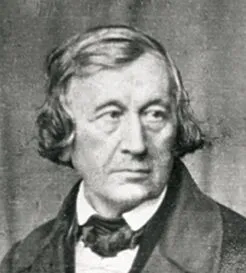
Wilhelm Grimm
Human Design Chart
Biography
Human Design Analysis: Wilhelm Grimm as Manifestor 1/3
Manifestor 1/3 — Design at a Glance
Wilhelm Grimm was a man of initiative and visions. His Human Design marked him as a Manifestor – a pioneer destined to lead the world in a new direction. One could compare him to an emperor in ancient Rome: He had the grand picture of the empire but did not fight battles himself; instead, he sent others out to realize his plans.
This superior mindset brought with it a central conflict. Wilhelm Grimm was often misunderstood and polarized his environment. His visions went far ahead for many people; some loved him for this and followed him, while others rejected or even hated him precisely because of these visionary goals.
The key to his effectiveness lay in the strategy of informing. By enlightening his surroundings timely and accurately about his intentions, he could find the right followers. If Wilhelm Grimm followed this path, he was rewarded with inner peace. However, if he lived against his design without informing others, it resulted in deep, lasting anger. His life thus clearly showed that his success and internal balance depended on whether he communicated his visions clearly to minimize resistance and gain the right supporters.
Emotional Authority
Wilhelm Grimm displayed an inner decision-making structure that required time and distance. His inner authority lay in the defined Solar Plexus Center, the emotional authority. This configuration entailed a constant up-and-down of feelings; his perception was always colored by the current mood. What appeared inspiring at one moment could turn negative in the next. Since these immediate impulses were only snapshots, not his deeper truth, spontaneous reactions were risky.
The mechanics of his emotional authority demanded patience. Wilhelm Grimm had to let decisions mature, often through 'sleeping on questions,' to gain emotional distance. Only when intense feelings subsided did clarity and calmness emerge. This process of multiple checks was essential, especially for long-term decisions with significant influence on his life course. Through this conscious delay, he filtered out temporary moods and made decisions based on a stabilized inner truth. The emotional wave determined his experience, yet the strategy lay in not immediately following it but waiting until the waters calmed to gain clear insight into the situation.
The 1/3 Profile — Investigator / Martyr
Wilhelm Grimm was someone whose judgments were based on double verification: theoretical foundation and practical validation. His design inclined him towards studying knowledge but securing it through direct experience. This attitude stemmed from his Profile 1/3, the Researcher and Experimenter. Here, the Line 1's need for developmental lines, harmony, and delicate guideline formation combined with the pressing necessity of Line 3 to make mistakes and learn from them.
The tension in this design lay between wanting to know everything beforehand – which often led to hesitation – and the inner urge to simply try things out. Wilhelm Grimm learned through trial and error. The Line 3 highlighted the 'drop that makes the bucket overflow,' small details that could lead to process failure. Through analyzing these errors, he gained security for the future. His authenticity emerged only when he integrated both poles: theory was validated by practice. When he made a decision or formed an opinion, he had previously examined it intellectually and empirically with his heart and soul. This gave his assessments high credibility as they were not merely speculative but arose from a living engagement with reality.
Single Definition — Defined & Open Centers
Wilhelm Grimm was characterized by a stable foundation of willpower and intuitive presence, while his identity and energy levels were situational, influenced by the environment. His defined Heart Center provided him with constant inner strength; he had the ability to keep promises and actively assert his own worth. This consistent ego-energy allowed him to make decisions with clarity and take responsibility for his surroundings without lingering in doubt.
Parallel to this, his defined Solar Plexus acted as an emotional authority. Wilhelm Grimm relied on waiting out the waves of his emotions before acting. This mechanism fostered deep emotional intelligence and sensitivity, as he only reached true clarity after experiencing the full cycle of emotions. His defined Spleen supported this through spontaneous intuitive signals in the present moment, helping him to recognize health-promoting situations immediately and protect himself from harmful influences. The also defined Root Center provided necessary pressure for stress management and ensured a steady forward movement in the material world.
In contrast, his Head, Ajna, G-Center, and Sacral remained open. This openness did not indicate deficiencies but rather receptivity to external impulses. Wilhelm Grimm tended to absorb mental inspirations and concepts from his environment rather than generating them independently. He could easily immerse himself in foreign ideas, making him flexible yet vulnerable to mental confusion or the pressure of finding answers that were not his own. His open G-Center led to his self-image and life direction crystallizing only through interaction with the right environment; he did not actively seek a fixed identity but was initiated by his surroundings. The open Sacral Center required pauses and protection from overstimulation, as he amplified foreign vital energy rather than producing it independently. This configuration marked him as someone who combined inner stability with situational adaptability.
Channels for community feeling, synthesis, intuition and devotion.
Wilhelm Grimm exhibited a basic attitude that oscillated between the deep need for tribal loyalty and the necessity of individual intuitive truth. This tension was characterized by Channel of Synthesis 19-49, which combined the pressure for emotional belonging with rejection of what did not align with the highest ideals. Loyalty and protection of shared resources formed the foundation of his social bonds.
At the same time, he possessed Channel of Flash of Genius 57-20, granting him the ability to articulate intuitive insights spontaneously in the present moment. This led to profound self-awareness and enabled him to encourage others to awaken their own inner survival intelligence. His instinctive business sense came from Channel of Devotion 44-26, allowing him to convincingly promote products or ideas through vigilance and ego-strength before they were even recognized as a need.
This instinct-intelligence served to connect the poles of community and individuality. Channel of Community 37-40 reinforced this by driving fair agreements and mutual recognition. Here, it was not about spontaneous deals but carefully coordinated arrangements based on emotional clarity and willpower. Wilhelm Grimm thus always sought balance: He used his business intuition to find a position within the tribe where he was both needed and could speak his own truth without endangering the collective bond.
Tribal Circuitry — Circuit Signature
Wilhelm Grimm showed tension between individual transformation and cooperative resource building. His design connected Throat Center with Spleen through Channel of Flash of Genius (20-57). This gave him pulsating, innovative creativity for his unique path. This energy contrasted with the Ego Circuit connecting Heart, Solar Plexus, Root, and Spleen Centers. Here, Channels Devotion (26-44), Community (37-40), and Synthesis (19-49) promoted mutual support and material well-being in the tribe through balanced give-and-take. Since this circuit lacked a connection to Sacral Center, constant life force was missing. Thus, rest pauses were necessary to sustainably generate resources. The emotional authenticity of transformation met the traditional structure of cooperation. Wilhelm Grimm had to balance these separate forces – innovative individuality and social fabric – without experiencing them as one flow. His identity formation occurred through acoustic creativity while his social engagement relied on rhythm and smell. This configuration required conscious navigation between the drive for change and the need for communal stability.
Right Angle Cross of Planning 1
Wilhelm Grimm exhibited a fundamental attitude characterized by strategic orientation and long-term alignment. His Human Design indicated that he did not act impulsively but carefully planned and structured his path. This stance arose from the configuration of the right cross of Planning 1 in his chart.
This specific structure emphasized the importance of clear life planning, fostering an inner discipline where Wilhelm Grimm meticulously aligned himself with his path rather than being carried away by external circumstances. The mechanics of this cross suggest a natural ability to keep goals in sight and consistently align steps towards them. It was not about rigid control but conscious alignment of energy towards what made long-term sense.
For Wilhelm Grimm, this meant that he often made decisions from the perspective of sustainability. He sought ways that were stable and allowed him to move confidently within his role. This strategic depth helped him minimize uncertainties and focus clearly on his tasks. The alignment of his design supported him in penetrating complex situations and creating order that endured beyond the moment. His life was thus marked by a deep connection with his own plan, which served as his compass.
Saturn Return · Uranus Opposition · Chiron Return · 2nd Saturn Return — Life Cycles
Wilhelm Grimm experienced his life as a sequence of structural turning points marked by recurring astrological cycles. These phases appeared to him either as profound crises or as clear success periods that shaped his life path.
In 1826, at the age of 40, he was hit by the Uranus opposition. This cycle often represents sudden breaks and unexpected changes. For Wilhelm Grimm, this manifested in a deep crisis around the birth and early death of his son Jacob. The event violently interrupted his life rhythm and marked a painful cut that challenged his inner stability.
In contrast, 1835 with the Chiron return opened up a phase of fulfillment. At the age of 49, he received an extraordinary professorship in Göttingen. This cycle signals the bloom of one's purpose if one follows their strategy. For Wilhelm Grimm, his life meaning became tangible: The recognition of his work and the opportunity for teaching confirmed his path and brought him visible success.
The second Saturn return in 1841 further solidified this structure. At 55 years old, he and his brother were admitted to the Prussian Academy of Sciences and moved to Berlin. Saturn stands for long-term anchoring and societal positioning. This move and academic acceptance condensed years of groundwork into a sturdy foundation that provided him security and a firm place in the scientific community.
Manifestor · Emotional Authority — Synthesis
Wilhelm Grimm lived a life driven by a deep urge to explore and question the existing. As a Manifestor (Design) with emotional authority (Authority), he needed time for feelings to mature before acting – a process amplified by his Profile role as Researcher/Experimentator (Profile Role). He sought solid insights and validated them through personal experiences, making him an advocate of knowledge that was both theoretically and practically tested. This drive towards self-experience and understanding the world reflected in his ability to recognize and express principles and patterns (Channel Synthesis).
Simultaneously, his design revealed a central paradox: the tension between the need for recognition and the tendency toward polarization. As a Manifestor, he was destined to tread new paths (Knowledge Circuit), often conflicting with existing norms. The emotional wave (Authority) intensified this ambivalence as his perception and judgments changed. Although he found validation through successes like membership in the Academy (Cycles), an inner conflict between the desire for belonging and the drive towards individuality persisted.
4 Defined Channels
Incarnation Cross - Right Angle Cross of Planning 1
Solar Return
The Solar Return shows the moment when the sun returns to its exact birth position - your personal solar year.
Life Cycles
Discover the life cycles with a detailed triple view (birth chart, cycle chart, composite).
Human Design Profile
- Type
- Manifestor
- Strategy
- To inform others before acting
- Authority
- Emotional Authority
- Profile
- 1/3 - Investigator / Martyr
- Definition
- Single Definition
- Incarnation Cross
- Right Angle Cross of Planning 1
- Date of Birth
- 24.02.1786 21:30
- Place of Birth
- Hanau, Germany
Frequently Asked Questions
What was Wilhelm Grimm's Human Design type?
What Profile did Wilhelm Grimm have in Human Design?
What Authority did Wilhelm Grimm have?
What incarnation cross did Wilhelm Grimm have?
When was Wilhelm Grimm born?
Discover your own Human Design
Are you also a Manifestor? Find out in a personal reading how to use your initiation power peacefully and dissolve resistance.
More Personalities
Back to overviewChristian-Jaque
Kesha

Lucebert

Masaccio
Nadar
Papus