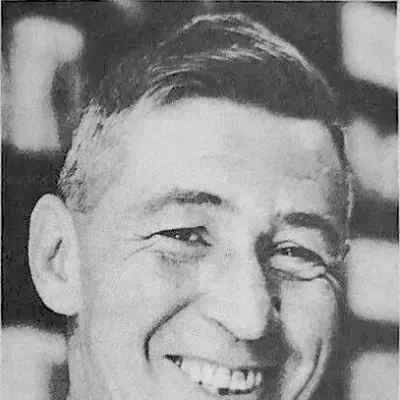
Wilhelm Molterer
Human Design Chart
Biography
He grew up in the Upper Austrian town of Sierning, and was raised by his aunt and her husband, Josef Molterer, who adopted him at the age of 14 years. He attended the College of Agriculture in Sankt Florian, graduated in 1974. He received a master's degree in Social Economics from the Johannes Kepler University Linz in 1981.
From 1981 to 1984, Molterer was active in the Austrian Farmers' Association and active in the ÖVP (Austrian people's party). He was Austrian minister of agriculture from 1994 until 2003.
On 9 January 2007, Molterer was chosen to become managing chairman of ÖVP. He was formally elected chairman of the party at the federal party convention on 21 April 2007. Wilhelm Molterer stepped down as chairman of the party on 29 September 2008 and was succeeded by Josef Pröll.
He was finance minister in 2007/2008 and at the same time vice chancellor. He is now vice president and member of the Management Committee of the European Investment Bank (EIB).
Molterer is married and father of two sons.
Wilhelm Molterer as a Projector 5/1 in Human Design
Projector 5/1 — Design at a Glance
Wilhelm Molterer appeared as someone who interacted with his environment through a dense, focused aura. His Human-Design type was Projektor, meaning he did not have an intrinsic life energy source but rather functioned like a bright flashlight: He could immediately identify where errors lay in other systems or what remained hidden in the dark. However, this ability to shed light on darkness was only effective and attractive when he didn't directly and insistently point out problems, which often led to friction. Instead, his presence was strongest when he embodied harmony himself; others then came to him of their own accord for advice. His strategy involved waiting for a respectful and sincerely meant invitation before sharing his knowledge. Since Projectors lack a constant energy source, Wilhelm Molterer naturally went through phases: periods of high productivity alternated with necessary rest phases to avoid burnout. If he lived according to the principle of recognition and waiting for invitations, his path was rewarded with success. Ignoring this principle and trying to push against the resistance of his environment led sooner or later to feelings of bitterness – his specific non-self theme. Thus, his influence was not marked by constant action but by targeted, invited leadership.
No Inner Authority
Wilhelm Molterer did not show inner authority, a rare trait indicating a specific energetic structure. As a mental Projektor, he had no activation in centers below the Throat Center. This configuration means that decisions do not stem from an internal, bodily compass but arise through exchanges with others. In dialogue, dormant potentials were activated by the energetic interactions in his open centers and provided him with information. Thus, he could view issues from many perspectives and express them differently. His high resonance helped him find the right environment and people for this exchange.
Evaluating these diverse impressions was a complex process requiring time and solitude. Only in peace could Wilhelm Molterer discern the thread of truth, distinguish what made sense and belonged to him. Thus, he developed his specific intelligence: filtering out the essential from a mass of information, organizing it meaningfully, and structuring it. This formed his capital for success as a Projektor. A key element in his life was being in an environment where he felt comfortable. There he met trustworthy people with whom he could exchange on decision-making processes. Over time, this trusting dialogue deepened his sense of what was right for him and which paths to take.
The 5/1 Profile — Heretic / Investigator
Wilhelm Molterer revealed himself as someone who gathered profound knowledge to offer others for problem-solving. His design inclined him to act as a Hero (Line 5), carrying the security and calmness of his inner research work (Line 1) outward. This configuration gave him almost magnetic appeal: Others actively sought his advice, seeing him as an authoritative source.
The mechanics of Profile 5/1 describe this dynamic precisely. Line 5 acts as a projection into the collective; it must be able to explain itself to be accepted and bears the burden of others' expectations. At the same time, Line 1 provides fundamental calmness and inner peace regardless of external circumstances. Thus, Wilhelm Molterer faced the specific challenge of balancing these two poles: On one hand, the need for clear, secure knowledge for himself; on the other, the pressure to be available as an expert for the questions of his environment.
Without clear boundaries, there was a risk that he would be drained by constant requests from others – similar to a scientist moderating conferences day after day and being exhausted at night. His path involved learning to say no sometimes. Only in this way could he maintain the beneficial balance: conducting research for himself without losing his energy through unchecked projections of the collective. This allowed him to use his gifts optimally and sustainably.
Single Definition — Defined & Open Centers
Wilhelm Molterer revealed himself as someone whose inner compass was not driven by a fixed will impulse or static identity but rather by a continuous, specific thought process. His defined Ajna Center ensured reliable mental function: he always thought, conceptualized, and processed data in his own way, independent of external influences. These thoughts flowed directly into his defined Throat Center, allowing him to clearly and consistently articulate what he had conceptually created. Thus, his voice was not an impulse but the articulation of his concepts – a manifestation of the mind, not emotion or will.
At the same time, his design revealed high sensitivity to the environment due to seven open centers. His open Head Center received inspirations from the surroundings but tended to suffer under mental pressure when trying to find answers for others' questions. His open G Center meant that he did not carry a fixed identity; instead, he mirrored the energy of his environment and found direction only in the right context – at the wrong place, he felt lost or trapped.
His open Heart Center made him vulnerable to attempting to prove his worth through promises, often ending in cycles of self-doubt if these were not kept. His open Sacral Center allowed him to absorb and amplify others' vital energy, which could lead to exhaustion as he lacked a stable source of personal power to set boundaries. Additionally, his open Solar Plexus absorbed foreign emotions, making him appear emotionally unstable when identifying with these waves. His open Spleen Center was prone to fears and clinging to unhealthy situations from a false sense of security, while his open Root Center amplified external stress that he did not generate himself. Wilhelm Molterer's path lay in using his mental clarity without being drawn into the conditioning of his open centers.
Channels for intuitive insight and assimilated expression.
Wilhelm Molterer showed a fundamental approach aimed at expressing complex connections so clearly and efficiently that they could change others' thinking. This ability was rooted in Channel Structuring 43-23, which connected spontaneous insights (Gate 43) with a process of assimilation and clear articulation (Gate 23). His mind often worked metaphorically and mutatively; he did not seek planning but rather aimed to simply explain his innovative knowledge so that it could be accepted by the collective. Success depended on strategy and inner authority – without proper timing, his unique perspectives often remained misunderstood or rejected.
In addition to this structural clarity, he carried an internal tension between longing and reality within himself. Gate 30 brought the experience of the fate goddess with it, where great expectations could meet illusions and freedom was recognized as limited. This contrasted with Gate 29, the Gate of Saying Yes, which demanded persistence and showed that reward only came through correct action and life affirmation.
His mind analyzed visual memories and collective ideas before acting (Gate 11) while he simultaneously leaned towards individual mutation. Gate 12 promoted creativity and poetic expression influenced by emotional mood, often giving his communication a deep, contemplative quality. At the same time, he sought change through interaction (Gate 35), learned from experiences, and only found true satisfaction when the meaning of an experience became clear.
To secure his future, he developed logical formulas (Gate 4) to clarify suspicious patterns and protect himself from punishment. This analytical side was complemented by Gate 62, which emphasized patience, attention to detail, and pattern recognition. Here, he worked on fact-finding and framework-building to logically present facts and convince others. Wilhelm Molterer thus combined intuitive structuring with rigorous logical analysis to create both individual insights and collective security.
Individual Circuitry — Circuit Signature
Wilhelm Molterer's design laid a tendency towards clear structuring. His energetic configuration connected the Ajna and Throat Centers directly, creating a line that translated mental order into verbal expression. This is part of the Knowledge Circuit, which generally addresses one's unique path and transformation through new knowledge. However, in Wilhelm Molterer's case, only a specific channel was active: Structuring (Gates 43-23). While the circuit as a whole can also encompass creativity or emotional waves, these other channels were absent from his chart. Thus, his energy did not manifest as pulsating innovation or melodic melancholy but focused on ordering and formulating. As a simply defined person, he possessed a continuous flow between thinking and speaking. This connection allowed him to carry internal concepts outward in structured form without other energetic poles like inspiration or emotional impulses directly interfering with this process. The mechanics here describe thus a precise ability to articulate thought structures, separate from other aspects of the Knowledge Circuit that were not active in him.
Left Angle Cross of Dedication 1
Wilhelm Molterer's design indicated a tendency towards deep, almost fateful dedication to specific tasks or relationships. This configuration, known as the left cross of devotion, describes not superficial enthusiasm but a foundation of unwavering loyalty and endurance. It is about the ability to devote oneself completely to a goal or person, crossing boundaries not out of impulsiveness but from an inner necessity.
This energy often acts as a reliable pillar in uncertain times. Wilhelm Molterer was characterized by this mechanism with a stance that prioritizes steadfastness and loyalty. It is a force that does not loudly demand attention but convinces through consistent presence and perseverance. The challenge often lies in not letting this intense bond become a burden or losing oneself in the devotion to others. Instead, it becomes a source of stability when lived consciously. Wilhelm Molterer used this energy to nurture connections and projects with depth beyond everyday engagement. It is the quality of staying put even when the path gets steep, which makes this design characteristic so defining.
Saturn Return · Uranus Opposition · Chiron Return · 2nd Saturn Return — Life Cycles
Wilhelm Molterer's design shows a clear orientation towards structural responsibility and establishing durability. This was evident in his career steps that aligned with Saturn returns. In 1980 at age 25, he received his Master of Social Sciences degree. The first Saturn return often marks the transition from education to solid positioning within a professional field; here, the academic foundation condensed into a robust basis for his later work.
Another peak occurred in 2007 when he was appointed by the ÖVP Federal Party Board as executive chairman and Finance Minister and Vice Chancellor. At age 52, Wilhelm Molterer was in his Chiron Return cycle. In Human Design, this is not a phase of wound healing but one of bloom and fulfillment of incarnation purpose: if strategy and authority have been lived, here the true life mission unfolds with full force. His appointment to the highest political level reflects this fulfillment.
In 2011 at age 56, he became Vice President of the European Investment Bank (EIB). This fell into his second Saturn return, a phase where earlier achievements often manifest internationally or on an even broader scale – here through assuming a high-ranking position in a European institution. The sequence of these events underscores a life that gradually developed from professional grounding to political and institutional leadership, with each Saturn return solidifying a new level of responsibility.
Projector · No Inner Authority — Synthesis
Wilhelm Molterer seems to have been marked throughout his life by the need to recognize patterns and make knowledge accessible to others. As a projector with defined mental center (Ajna) and the channel of structuring (43/23), there lies a natural talent for grasping complex issues and presenting them in understandable forms – a process further strengthened by the line 5\/1 in his profile. This constellation points to a deep drive to collect, organize, and offer information as solutions for others, where the need for knowledge deepening and problem-solving is central. The repeated professional stations tied to knowledge transfer and solving complex tasks (sponsion, party function, EIB position) confirm this red thread.
Simultaneously, the design reveals a paradox between this ability to analyze and structure and the lack of inner authority. As a mental projector, Molterer relies on external stimuli for clarity – an openness that allows resonance but can also lead to overburdening. The left cross of devotion 1 intensifies this tendency to serve others while the missing inner guidance means decisions must be made through exchange with others rather than gut feeling. This tension between the need for insight and dependence on external sources shapes his approach to problems and relationships.
1 Defined Channel
Incarnation Cross - Left Angle Cross of Dedication 1
Solar Return
The Solar Return shows the moment when the sun returns to its exact birth position - your personal solar year.
Life Cycles
Discover the life cycles with a detailed triple view (birth chart, cycle chart, composite).
Human Design Profile
- Type
- Projector
- Strategy
- Wait for the respectful invitation
- Authority
- No inner authority - learn more
- Profile
- 5/1 - Heretic / Investigator
- Definition
- Single Definition
- Incarnation Cross
- Left Angle Cross of Dedication 1
- Date of Birth
- 14.05.1955 21:03
- Place of Birth
- Steyr, Australia
Frequently Asked Questions
What is Wilhelm Molterer's Human Design type?
Which Profile does Wilhelm Molterer have?
What authority does Wilhelm Molterer have?
Which incarnation cross is assigned to Wilhelm Molterer?
When was Wilhelm Molterer born?
Discover your own Human Design
Are you also a Projector? Find out in a personal reading how to unfold your leadership qualities and recognize the right invitations.
More Personalities
Back to overviewSissy Spacek

Alain-Fournier

Anémone

Ann-Margret

Bourvil
Hergé