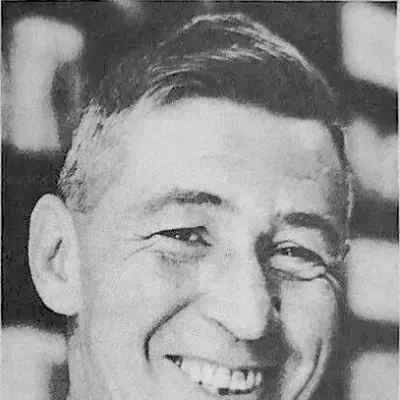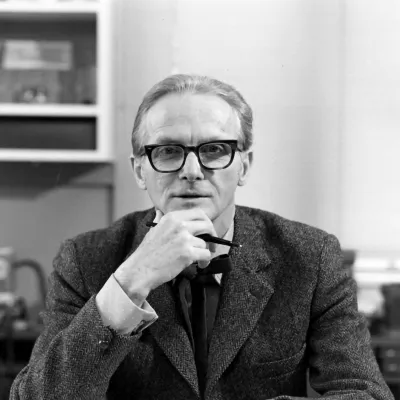
William Nunn Lipscomb
Human Design Chart
Biography
Lipscomb graduated from the University of Kentucky in 1941 and earned his Ph.D. in 1946 from the California Institute of Technology. He worked as a physical chemist in the Office of Science Research and Development from 1942 to 1946 and then joined the University of Minnesota as assistant professor. By 1959, when he left the university, he was professor and chief of the physical chemistry division. He then became professor of chemistry at Harvard University, where he served as chairman of the department of chemistry from 1962 to 1965. By developing X-ray techniques that later proved useful in many chemical applications, Lipscomb and his associates were able to map the molecular structures of numerous boranes and their derivatives. Boranes are compounds of boron and hydrogen. The stability of boranes could not be explained by traditional concepts of electron bonding, in which each pair of atoms is linked by a pair of electrons, because boranes lacked sufficient electrons. Lipscomb showed how a pair of electrons could be shared by three atoms. His theory successfully served to describe boranes and many other analogous structures.
He died 14 April 2011 from pneumonia.
What does Projector 6/2 mean for William Nunn Lipscomb?
Projector 6/2 — Design at a Glance
William Nunn Lipscomb appeared as someone with a dense, focused aura. As a Projector, he did not have an intrinsic energy source like the defined Sacral Center of other types. Instead, he projected his attention deliberately into his environment, similar to a bright flashlight illuminating specific spots in darkness. This mechanism allowed him to immediately recognize where errors lay or processes were failing within systems or in others.
His challenge was to address these insights directly. Such direct 'light in the face' of his counterparts would often provoke resistance and quickly deplete his own energy. Instead, he was most effective through an elegant distance: by living harmoniously and following his path himself, he became attractive to others. People came to him voluntarily for advice rather than him having to seek them out.
This dynamic required patience. Lipscomb had to wait for appreciative and honest invitations before sharing his knowledge or taking on leadership roles. Only through this strategy of recognition could he balance phases of high productivity with necessary rest periods, thus preventing burnout. If he did not live according to this pattern of waiting for the invitation, it led him to his non-self theme: bitterness. His success therefore depended directly on whether he followed this specific Projector strategy or tried to go against the flow of his natural energy dynamics.
No Inner Authority
William Nunn Lipscombs design pointed towards a rare constellation: the absence of an inner authority. These people did not have a physical decision-making center. As a mental projector, a group comprising about 1.7% of humanity, he lacked any Center activation below the Throat Center. His strategy was to make decisions through exchanges with many different people. In dialogue, dormant potentials were activated in his open Centers through energetic interactions and provided specific information. This allowed him to view issues from numerous perspectives and express them in various ways. His high resonance capacity in openness was his great potential to find the right environment and suitable individuals for this exchange. The evaluation of these data was a complex process that required time. He should withdraw alone to recognize over time the red thread, distinguishing what made sense and belonged to him. Through this, he developed his specific intelligence: filtering out the essential from a mass of information, meaningfully organizing and structuring it. This formed his capital for success as a Projector. A key element in his life was being in an environment where he felt comfortable. There he was with the right people with whom he could confidently exchange on decision-making processes. Over time, this exchange deepened his sense of what was right for him.
The 6/2 Profile — Role Model / Hermit
William Nunn Lipscombs design presented itself as that of a role model and natural talent, characterized by a two-phase development. In his youth, before the return of Saturn, the 3-line of his profile (6/2) dominated. This led to a lifestyle of trial and error: he experimented intensively with various paths but withdrew after failures to collect new experiences. This phase was marked by flexibility and acceptance of unforeseen events; although there was no pressure, uncertainty required patience.
After the age of 30, the sixth line fully activated. Lipscomb metaphorically retreated into a 'cave' to look back at his earlier experiments with great distance. This period served for intense reflection, healing, and deep self-knowledge. The former projection of his abilities outward – a characteristic of the second line that promoted ambition and understanding but offered little inner clarity – now transformed into inner wisdom.
When he finally emerged from this introspective phase, he had matured into a wise figure. Others sought him out to partake in his life wisdoms. His ability for deep self-reflection became an example for others who wanted to learn how to reach inner satisfaction and maturity through the universal flow and unexpected turns.
Single Definition — Defined & Open Centers
William Nunn Lipscomb was someone who operated under constant mental pressure to ask questions and understand connections. His defined Head and Ajna Centers created a trustworthy, specific mental function: he always thought, processed data and concepts in a set way. However, this definition between Head and Ajna meant that there was no direct energy available to immediately act on these thoughts; inspiration for him took the form of forming questions rather than solving them.
This internal mechanism shaped his entire existence. While his mind was constantly active creating concepts, he lacked consistent internal resources in other areas. His open G Center meant that he did not have a fixed identity or direction; he tended to blend with his environment and sought correct places and relationships to be initiated. The open Heart Center made him undesignable for being willful or keeping promises, making him vulnerable to the pressure of having to prove his worth.
Additionally, his open Solar Plexus absorbed the emotions of the surroundings, leading him to handle emotional confrontations cautiously so as not to be overwhelmed by foreign moods. His undefined Sacral Center lacked a constant energy flow; he worked in spurts and had to learn to rest rather than run on borrowed energy from others. The open Root Center caused him to take on the stress of the world, leading him to find ways to avoid misinterpreting this adrenalized pressure as his own drive. Finally, his open Spleen Center was prone to fears and spontaneous impulses; he learned to distinguish intuition from conditioned fear so as not to make impulsive decisions that could endanger his health or safety. His strength lay in enduring mental pressure without hastily turning it into actions, waiting for the right environment and timing for his answers.
Channels for mental imagery and grasping the abstract.
William Nunn Lipscomb was someone whose mind constantly sought patterns to organize the complexity of experience. His design inclined him to filter every occurrence through a kaleidoscope of mental images, even if initially confusing. This attitude was significantly shaped by Channel Abstraction 64-47. This channel connects the Head Center with the Ajna Center and drives the mind to engage with all possible perspectives until a mysterious sense emerges. Lipscomb's mind was never static; he continually played with possibilities, making him unsuitable for solving his own problems through pure logic but excellent at revealing inspiring stories or new angles for others. The reward for his patience was that a clear picture eventually emerged from the initial confusion, one he could share.
Alongside this intense mental activity, other energies influenced his life. Gate 5 emphasized the fundamental rhythm of all life processes and underscored the necessity to follow fixed habits to build energy and perfect patterns. This created a stable foundation in his own essence. Simultaneously, Gate 35 introduced change through interaction; here it was about deriving advice from new experiences and understanding their significance later on. Additionally, Gate 22 promoted openness and mutation in social environments. It allowed Lipscomb to wait with grace and composure for individual processes by listening until the end of a conversation. This combination of rhythmic stability, interactive change, and social openness formed the backdrop against which his mental search for abstraction took place.
Collective Circuitry — Circuit Signature
William Nunn Lipscomb was someone who drew meaning from past experiences. His design was marked by a simple definition where Head and Ajna Centers were directly connected. This connection formed the backbone of the Perceiver Circuit. While other circuits often emphasize cool logic or future-oriented planning, this configuration focused on emotions and feelings from the past. The energy flowed in wave-like patterns: each emotional cycle had a clear beginning, middle, and end. This did not mean constant clarity but rather a process of reflection to find meaning behind events.
The specific activation occurred through the Abstraction Channel between Head and Ajna Centers. This channel connected the spontaneous inspiration of the Head with the mental structuring in Ajna. For Lipscomb, this connection served to bring inner, often inexplicable emotional waves into understandable forms. The insights were visually and abstractly marked. The goal of this energetic constellation was to share the insights gained from past experiences with the collective. Through sharing, lessons could be learned collectively from past events. Thus, Lipscomb's design promoted a cyclical form of learning where emotional experiences did not remain isolated but were transformed into collective knowledge through abstraction and communication. This structure allowed him to order and make accessible complex inner states without losing the emotional depth of the original experience.
Left Angle Cross of Separation 2
William Nunn Lipscomb carried the design of the 'left cross of separation'. This configuration highlighted a fundamental tension between the desire for clear, objective perception and the necessity to disentangle from emotional entanglements. His chart indicated a tendency to view situations through a detached, analytical lens in order to discern the pure structure of a problem without being distracted by subjective evaluations. This was not out of coldness but as a strategy to preserve inner clarity. The mechanics of this cross challenged him to draw sharp boundaries between self and other to avoid confusion or overwhelm from foreign emotions. He learned that true connection often only arises after first establishing clear separation and reinforcing one's own perspective. This attitude allowed him to maintain composure in complex environments and make decisions based on facts rather than feelings. The separation was not an act of rejecting others but a necessary prerequisite for his own authenticity and effectiveness. Through this discipline, he could protect himself from energetic chaos and thus focus the energy required for deep work. His path involved constantly finding this balance between distance and engagement without sacrificing his own integrity.
Saturn Return · Uranus Opposition · Chiron Return · 2nd Saturn Return — Life Cycles
William Nunn Lipscombs design shaped a life journey characterized by structural consolidation and achieving clearly defined milestones. His development followed a rhythmic logic where personal maturity corresponded with external recognition. In 1946, at the age of 27, he received his PhD from the California Institute of Technology. This marked his first Saturn return, often in Human Design seen as a time when years of groundwork condenses into a solid foundation and professional identity is established.
Three decades later, in 1976 at 57 years old, he was awarded the Nobel Prize for Chemistry. This fell during his second Saturn return. While the first return often marks the building of structure, the second frequently confirms the effectiveness of this build through societal or professional validation. Lipscombs design showed a clear line: The inner discipline and persistent work on complex connections not only led to academic qualifications but culminated in the highest form of recognition for his scientific achievements. Both events illustrate how his chart was aligned with cyclic affirmation and anchoring accomplishments.
Projector · No Inner Authority — Synthesis
He was a Projector, whose life was marked by a profound ability to recognize patterns and shed light into darkness (Projector type, Channel 64-47). This focus on uncovering hidden mechanisms manifested in a constant mental pressure to analyze and understand experiences (defined Head and Ajna Centers), driving him to explore the stories behind events. Through exchange with others, he could activate dormant potentials and gain diverse perspectives (mental authority) before sharing his insights – an ability that enabled him to act as a wise advisor (6/2 Profile).
A central paradox lay in the combination of his Projector strategy of waiting for invitation and the defined Channel 7-4. While he was oriented towards bringing 'light into darkness' for others, his mental center required constant engagement with complex questions. This inner dynamic led him to initially immerse himself in experiments and life experiences (early 6/2 phase), before later – after a period of intense reflection – serving as an example and source of wisdom (late 6/2 phase).
1 Defined Channel
Incarnation Cross - Left Angle Cross of Separation 2
Solar Return
The Solar Return shows the moment when the sun returns to its exact birth position - your personal solar year.
Life Cycles
Discover the life cycles with a detailed triple view (birth chart, cycle chart, composite).
Human Design Profile
- Type
- Projector
- Strategy
- Wait for the respectful invitation
- Authority
- No inner authority - learn more
- Profile
- 6/2 - Role Model / Hermit
- Definition
- Single Definition
- Incarnation Cross
- Left Angle Cross of Separation 2
- Date of Birth
- 09.12.1919 10:32
- Place of Birth
- Cleveland, OH, United States
Frequently Asked Questions
What was William Nunn Lipscomb's Human Design type?
Which Profile did William N Nun Lipscomb have?
What Authority did William Nunn Lipscomb have?
Which incarnation cross was active for William Nunn Lipscomb?
When was William Nunn Lipscomb born?
Discover your own Human Design
Are you also a Projector? Find out in a personal reading how to unfold your leadership qualities and recognize the right invitations.
More Personalities
Back to overviewSissy Spacek

Alain-Fournier

Anémone

Ann-Margret

Bourvil
Hergé