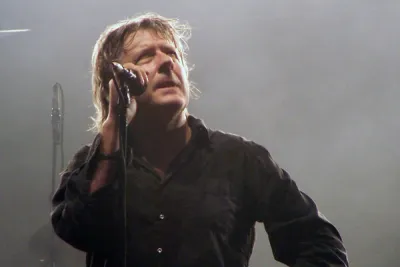
Photo: Wikimedia Commons
Wladyslaw Tatarkiewicz
Human Design Chart
Biography
He died 4 April 1980.
Wladyslaw Tatarkiewicz — Generator with Profile 5/1
Generator 5/1 — Design at a Glance
Wladyslaw Tatarkiewicz revealed himself as someone who did not ignite his power through constant initiating but rather through consistently responding to inner signals. As a Generator, he possessed considerable sacral energy, which gave him endurance and resilience – comparable to a workhorse that only runs optimally when used for the right task. His design suggested that he generated energy by responding to impulses from his environment rather than taking the first step himself. This strategy of 'reacting' instead of 'initiating' was the key to his effectiveness.
When Wladyslaw Tatarkiewicz responded to a signal and his inner self clearly signaled a 'yes', he could act with full power. If, however, he lived against this principle, for example by doing things that did not bring him joy, or if he was prevented from pursuing his heart's project despite still having energy, frustration or energy loss was imminent. His path to deep satisfaction lay in trusting this inner resonance. Anyone who disturbed him on this path or forced him to act without inner confirmation would push him to his limits. His strength lay in the ability to make gut decisions and then follow through as long as the energy flowed.
Sacral Authority
Wladyslaw Tatarkiewicz revealed himself as someone whose decision-making was based on an immediate physical resonance. His design indicated a tendency to react to external stimuli with a clear inner response that came not from the head but from the gut. As a Generator, his strategy and his inner authority were identical: sacral authority. This simplified his process, as he did not need to distinguish between strategic action and inner confirmation.
Sacral authority worked through a so-called gut feeling or a sudden surge of energy. Wladyslaw Tatarkiewicz responded to what spoke to him with vital energy and enthusiasm. His body signaled interest through sounds like grunts or a nodding 'mm-hmm'. When his sacral motor kicked in, he had inexhaustible power and immersed himself in his tasks without the need for an external goal. Joy and satisfaction characterized his work style.
A crucial factor for this authority was that his emotional center was open. This prevented emotional fluctuations from overshadowing his sacral clarity. Additionally, his activated spleen center supported the sacral authority, giving him the ability to make particularly quick and spontaneous decisions. He had direct access to his instinctive perception and physical well-being, which he relied on reliably. This configuration allowed him to intuitively and efficiently react to his environment, supported by a deep physical intelligence.
The 5/1 Profile — Heretic / Investigator
Wladyslaw Tatarkiewicz revealed himself as someone who possessed deep, inward knowledge that he offered others to solve their problems. His design as a 5/1, the Hero and the Researcher, indicated a tendency to magnetically attract others through his expertise. Others sought his advice because they found his inner treasures useful. This aligned with Line 5, which requires objectivity and impartial crisis management. Wladyslaw Tatarkiewicz learned to make decisions without emotional influence to secure material success. At the same time, Line 1 with the theme of hidden alliances described an ascent through discreet support and secret relationships, similar to Pluto's elevation of influence. Revealing these structures would have weakened his power. For Wladyslaw Tatarkiewicz, it was crucial to set clear boundaries to avoid being drained by constant requests from others. Only by learning to say 'no' could he maintain the balance between his own research and service to the community. His path was to optimally use his gifts without sacrificing himself. The combination of the public role of helper and the private depth of the researcher defined his way of interacting with the world. He used his knowledge base to act as a leader in crisis times, yet remained protected by his allied networks.
Split Definition — Defined & Open Centers
Wladyslaw Tatarkiewicz was someone who lived under a constant, internal mental pressure to ask questions and understand connections. His defined Head and Ajna Centers created a specific, trustworthy thought structure. He was not easily influenced by external opinions, as his mind was constantly active in processing concepts and theories. However, this mental energy did not serve for direct action but for inspiration; he could encourage others to think deeply, but lacked the energy to physically implement these thoughts himself. The attempt to reduce this mental pressure through immediate action typically led to frustration, as the ideas often stood ahead of the world's readiness. Instead, he learned to accept this pressure as a natural process of confusion and clarity, waiting for the right moment to share his insights.
His life energy came from his defined Sacral Center. As a Generator, he had an enormous, vital energy source that felt like a constant hum. This energy was fully available to him only when he responded to an external invitation and gave a sacral, affirming answer. Initiated actions that came from the mind rather than this reaction led to resistance and exhaustion. His defined Root Center also provided a steady, adrenalized push that propelled him forward and helped him deal with existential stress, as long as he followed his strategy.
At the same time, Wladyslaw Tatarkiewicz was open in several areas and thus vulnerable to conditioning. His open G Center meant he did not have a fixed identity or direction but formed himself through the right places and relationships. He tended to question who he was if he did not trust his inner authority. His open Heart Center made him not willful; he was not designed to give promises or prove his worth, which made him vulnerable to self-doubt. The open Solar Plexus Center absorbed the emotions of his surroundings, so he experienced foreign moods as his own if he did not withdraw. His open Throat Center attracted attention without him actively seeking it; the attempt to take the word to be heard often led to unpredictable or inappropriate statements. Finally, his open Spleen Center was marked by a fundamental survival fear that led him to hold onto things that were not healthy for him to create a sense of security.
Channels for inner maturation and mental abstraction.
Wladyslaw Tatarkiewicz understood life as an infinite journey of experience that only gains depth through reflection. His design tended to consciously begin new cycles, complete them fully, and then look back to share the wisdom gained. This attitude was shaped by the Maturity Channel 53-42, connecting the Root Center with the Sacral Center. This channel required that every experience, whether short or long, be brought to a satisfying conclusion before a new beginning was possible. Without this completion, frustration loomed; with it, collective history was created, enriching future generations. Wladyslaw Tatarkiewicz learned to embrace entering the unknown without rigid expectations to not hinder natural maturation.
Parallel to this, he underwent constant mental processing, trying to understand the mysteriousness of existence. The Abstraction Channel 64-47 connected his Head Center with the Ajna Center, creating a mind that never stopped exploring possibilities. This channel filtered every experience through a kaleidoscope of mental images, often accompanied by confusion, until suddenly clarity broke through. Wladyslaw Tatarkiewicz did not use this energy to solve his own problems but to develop unique perspectives and stories that he shared with others. The patience to wait for the image to condense was his key to drawing inspiring insights from mental noise.
Additionally, individual Gates affected his material life and inner attitude. Gate 21 drove him to seek control in the material realm and find respect in the community. Gate 48 allowed him to recognize deep patterns but also led to frustration when these insights could not be implemented. Gate 54 linked his drive for worldly success with mystical insight, while Gate 63 used doubt as a motor for understanding. Gate 61 sought inner truth through silence, and Gate 52 demanded focused pauses for pattern correction. Together, they formed a Profile that understood experience, reflection, and mental exploration as the core of being human.
Collective Circuitry — Circuit Signature
Wladyslaw Tatarkiewicz was marked by two separate, parallel acting energetic poles. Since his definition was split, these areas did not exist as a continuous flow but as independent energy fields.
The Meaning-Making Circuit connected two isolated segments in him. One linked the Head with the Ajna Center. Here, the energy of Abstraction (Gate 64–47) formed abstract concepts but did not directly connect with the other centers. The second segment linked the Sacral with the Root Center. Through the Maturity Channel (Gate 42–53), a cyclical, emotional energy flowed here. This power referred to past experiences and followed wave-like patterns with a clear beginning, middle, and end.
This configuration suggested that Wladyslaw Tatarkiewicz navigated between the cool, abstract processing of ideas and the deep, emotional processing of past events. The energy of the Meaning-Making Circuit served to organize felt insights and emotions to share them eventually with the collective. Thus, individual past could become shared learning. However, the separation of centers meant that the abstract thinking and emotional maturation did not automatically transition into each other but were experienced as separate, parallel processes. This required a conscious integration of these different but not directly connected aspects of his nature.
Left Angle Cross of Endeavour 1
Wladyslaw Tatarkiewicz revealed himself as someone whose life path was marked by a profound, often overlooked pride. His design bore the signature of the left cross of effort, a configuration that does not aim for external fame or general recognition, but for the inner conviction of having accomplished something of lasting value. For him, the goal was not the applause of the crowd, but the quiet certainty that his work stood the test of time and benefited others.
This mechanism describes a stance of humble persistence. Those who carry this cross tend to underestimate or even hide their achievements, as the focus lies on the quality of their efforts, not on public accolades. It is an energy that works in the background, defined by endurance and integrity without seeking attention. Wladyslaw Tatarkiewicz lived this dynamic by concentrating on the substance of his work, far from theatrical self-presentation. His drive was the inner confirmation that he had contributed correctly and conscientiously, which gave him a deep, though unobtrusive, satisfaction. This structure fostered a kind of dignity that arose from his own reliability, independent of whether it was seen or recognized from the outside.
Saturn Return · Uranus Opposition · Chiron Return · 2nd Saturn Return — Life Cycles
Wladyslaw Tatarkiewicz’s design was characterized by a clear structuring of his life phases, marked by recurring astronomical cycles. His first Saturn return marked the transition from youth to serious responsibility, a phase in which inner values and outer duties first met sustainably. This was not a sudden break, but a condensation of long-term development.
Later came the Uranus opposition, a period often experienced as a crisis or necessary liberation. Here, the tendency was to question established structures and seek new paths when old patterns no longer served. This dynamic created space for innovation, but also required the ability to cope with uncertainty.
The Chiron return, that cycle of fulfillment, appeared as the peak of his personal development. In this phase, if he had lived according to his strategy and authority, his incarnation purpose became increasingly experiential. It was not healing in the medical sense, but the bloom of his essence, in which the meaning and purpose of his existence became clear.
The second Saturn return rounded off this development. It brought a final phase of reflection and integration, in which the achievements were evaluated and secured for the future. Wladyslaw Tatarkiewicz’s life thus followed a rhythmic pattern of building, questioning, fulfillment, and completion.
Generator · Sacral Authority — Synthesis
Wladyslaw Tatarkiewicz was a Generator, whose life was marked by a deeply rooted drive for activity and an inexhaustible energy flow (sacral energy). This energy found expression in a continuous process of learning and problem-solving (5/1 Profile), where he constantly sought new challenges and made his knowledge available to others. The sacral authority guided him to pay attention to inner impulses and physical reactions to identify the right activities in which he could fully unleash his strength. Through the defined Head Center, he was also able to generate inspiration and understand complex connections to then convey them (Maturation Channel).
A central paradox in his design lay in the tension between the cyclical nature of his experiences (Sense of Purpose Circuit) and the pressure to continuously provide knowledge and solve problems. The desire to fully experience and gain wisdom from experiences clashed with the expectation of others to provide quick answers. This field of tension between the need for maturation and the external demand for performance shaped his path and led to a deep understanding of the human experience.
2 Defined Channels
Incarnation Cross - Left Angle Cross of Endeavour 1
Solar Return
The Solar Return shows the moment when the sun returns to its exact birth position - your personal solar year.
Life Cycles
Discover the life cycles with a detailed triple view (birth chart, cycle chart, composite).
Human Design Profile
- Type
- Generator
- Strategy
- To respond - wait for something to respond to
- Authority
- Sacral Authority
- Profile
- 5/1 - Heretic / Investigator
- Definition
- Split Definition
- Incarnation Cross
- Left Angle Cross of Endeavour 1
- Date of Birth
- 03.04.1886 12:00
- Place of Birth
- Warszawa, POL
Frequently Asked Questions
What was Wladyslaw Tatarkiewicz's Human Design type?
What Profile did Wladyslaw Tatarkiewicz have?
What Authority did Wladyslaw Tatarkiewicz have?
What incarnation cross did Wladyslaw Tatarkiewicz have?
When was Wladyslaw Tatarkiewicz born?
Discover your own Human Design
Are you also a Generator? Find out in a personal reading how to use your sacral energy correctly and discover deep satisfaction.
More Personalities
Back to overviewAaliyah

Alexia
Angèle

Anne-Marie

Arcángel

Arno