
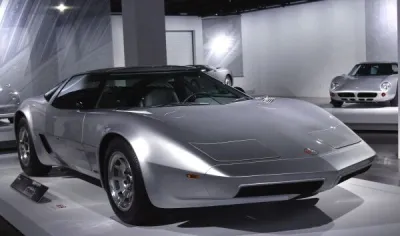
Zora Arkus-Duntov
Human Design Chart
Biography
His father was a Russian-born Jewish mining engineer, and his mother, also Russian Jewish, was a medical student in Brussels.
After the family returned to their hometown of Leningrad, Zora's parents divorced. His mother's new partner, Josef Duntov, another mining engineer, had moved into the household. Even after the divorce, Zora's father continued to live with the family, and out of respect for both men, Zora and brother Yura took on the last name of Arkus-Duntov.
Shortly after going to work for Chevrolet, Zora set the tone for what he was about to accomplish in a memo to his bosses. The document, entitled, "Thoughts Pertaining to Youth, Hot Rodders and Chevrolet", laid the foundation for the strategy that Chevrolet has used ever since to create one of the most successful performance parts programs in the industry. Chevrolet quickly became one of the most successful manufacturers ever in the history of motor racing. Soon, Zora became director of high performance at Chevrolet and helped to transform GM's largest division from a conservative company into a youthful, exciting one. In the process, he would change the Corvette from a docile roadster into a formidable sports car that challenged Porsche, Ferrari, Maserati, and Mercedes-Benz.
What does Generator 6/3 mean for Zora Arkus-Duntov?
Generator 6/3 — Design at a Glance
Zora Arkus-Duntov's design established a fundamental disposition of reacting rather than initiating. His nature was not geared towards setting impulses but responding to signals from the environment. This mechanism stemmed from his type as a Generator, an energy carrier with high endurance and much sacral power. Like a workhorse, he possessed immense resources that only became effective when released by external stimuli.
The central strategy involved waiting for a life signal and then acting once the inner center confirmed it positively. This gut reaction led Zora Arkus-Duntov to deep satisfaction and a sense of true fulfillment. Conversely, two specific risks loomed: first, wasting energy on tasks without intrinsic interest, leading to long-term exhaustion. Second, holding back from his heart project despite having the strength to continue working.
His success depended on not starting things himself but listening to the 'yes' of his design. If he followed this logic, nothing could stop him. Ignoring it and trying instead to initiate things led sooner or later to persistent frustration and a lack of energy. His strength thus lay not in leading processes but in powerfully and enduringly responding to what came his way.
Sacral Authority
Zora Arkus-Duntov's design tended towards making decisions not through intellectual analysis, but by trusting immediate physical signals. His inner authority was the sacral authority carried by the defined Sacral Center. This is specific to the Generator type where strategy and authority are identical: waiting for stimuli and reacting.
The mechanism requires that the emotional center remain open so this physical intuition can work clearly. Zora Arkus-Duntov showed himself through a 'gut feeling' or an energetic surge as a reaction to external stimuli. Instead of thinking, he listened to his body sounds – grunts, hums, or a confirming hmm. These signals marked resonance. When his sacral motor kicked in, a state of inexhaustible vitality and enthusiasm ensued. He accomplished his work with joy without needing an external purpose; the activity itself sufficed as reward.
If the Spleen Center was activated or directly connected to the Sacral Center, this would sharpen his responsiveness further. Then he could make especially spontaneous decisions supported by direct access to instinctive perception and physical well-being. This configuration allowed him to reliably be guided by this deep, physical intuition rather than falling into cognitive deliberation. The distinction lay always in separating true resonance from mere reflection and only acting when the inner motor truly kicked in.
The 6/3 Profile — Role Model / Martyr
Zora Arkus-Duntov's design tended towards correction driven by a profound inner restlessness of old souls. In the first three decades, she lived as an experimenter: numerous self-experiments served the search for extraordinary solutions far from common standards. This 'fanatical zeal' (Gate 18) often manifested in thorough cleaning of material structures to create order.
Around age thirty, chaotic experimenting slowed down with Saturn's return, yet the impulse towards structural order remained. Line 6 integrated these early experiences into authentic wisdom only after the fiftieth year of life. Earlier phases that could appear as 'perfect behavior' or even hypocrisy were now understood as necessary developmental stages.
Zora Arkus-Duntov thus developed into a humorous, far-sighted authority. She used her unusual experiences not just for personal correction but became an example to guide others through lived authenticity. Experimenting remained a permanent background process embedded in growing responsibility and oversight over the entire life circuit.
Triple Split Definition — Defined & Open Centers
Zora Arkus-Duntov revealed herself as a person with immense, constant inner strength and clear, authentic presence. Her design indicated a tendency towards self-determination, supported by a fully defined energy center system: Sacral, Heart, G Center, Throat, Spleen, and Root were set in stone. This endowed her with inexhaustible vitality (Sacral), firm willpower (Heart) as well as reliable identity and direction (G Center). The defined throat enabled her to directly translate this inner truth into communication and action, while the spleen and root centers stabilized her existential intuition and stress management.
However, this structure does not imply invincibility. Zora Arkus-Duntov's Head, Ajna, and Solar Plexus centers were open. This made her receptive to external inspirations, mental concepts, and emotional currents from the environment. The mechanics of open mental centers tend to internalize foreign questions or confusion as their own, which can lead to mental pressure if not trusted in one's inner authority. Similarly, the open solar plexus center absorbed emotions from others; it was important not to identify these as personal moods but rather observe and let go of them as transient waves to maintain emotional clarity.
The synthesis of her strong, defined foundation and openness in mental-emotional areas required vigilance: Her strength lay in living her own truth from the sacral and G Center without being overwhelmed by external thoughts or feelings. She could act as a mirror for others by perceiving their mental and emotional states without identifying with them. Thus, she used the openness of her centers to receive information while her defined centers provided compass-like stability to stay centered and not be conditioned by the environment.
Channels for pioneering spirit, inner truth and natural maturation.
Zora Arkus-Duntov's design indicated a tendency towards intuitive mastery paired with the ability to carry experiences through to completion and draw wisdom from them. This configuration shows someone who is not only talented but perfects this talent through systematic repetition, thereby inspiring others toward individuation.
The channel of wavelength 48-16 connects the inner intelligence of the spleen center with expression in the throat. Here Gate 48 seeks vital information while Gate 16 refines skill into talent through constant experimentation. It is a process of step-by-step precision, where mastery of a pattern leads to freedom to express one's unique wavelength.
Simultaneously, the initiation channel 51-25 acts. It connects the competing ego energy of Gate 51, which always wants to be first, with universal love and higher self in Gate 25. This creates natural competitiveness aimed at recognizing potential for individuation and initiating others through necessary 'shock' when invited. It is the art of leading from collective 'we' to individual 'I'.
Finally, the maturation channel 53-42 shapes her design. It connects the root center with the sacral center and requires that experiences be fully run through and reflected upon to gain wisdom. Gate 53 starts new cycles while Gate 42 ensures growth and completion. Only then can one build on accumulated experience.
This is reinforced by strategic intelligence for complex integration in Gate 10, logical organization for the future in Gate 17, and the collective rhythm of Gate 15. Correction and human rights (Gate 18) round out her profile by ensuring processes are not taken personally but optimized for the benefit of the collective.
Collective Circuitry — Circuit Signature
Zora Arkus-Duntov revealed herself as someone with deep inner firmness and strong self-worth, whose convictions were often not verbally articulated. This stance resulted from the Centering Circuit, which in her case connected Identity and Heart Centers. This created a pulsating, individualistic energy: 'I am who I am', also affirming others in their uniqueness. However, this inner strength remained largely unspoken due to the missing throat center.
Zora Arkus-Duntov's design also featured separate energetic streams. On one hand, the Understanding Circuit connected the throat center with the spleen center via channel 16-48. This enabled clear communication of logical strategies and visual future visions – a focused, rational articulation.
Parallel to this, the Meaning-Finding Circuit acted through channel 42-53 between sacral and root centers. Here it was about cyclic processing of past experiences. Emotional waves from the solar plexus were reflected upon to gain collective learning insights. This emotional depth did not directly flow into rational communication or inner centering.
Overall, these three independent defined areas shaped her essence: a quiet, inner unshakeability (Identity/Heart), the ability to express rational future plans (Throat/Spleen) and the need to penetrate and share past emotional patterns (Sacral/Root). These separate forces worked alongside each other without directly mixing.
Left Angle Cross of Prevention 2
Zora Arkus-Duntov's design includes a tendency towards structured action aimed at nipping problems in the bud. This orientation stems from the influence of the left cross of Prevention 2, a configuration that defines foresight as a central life task.
In Human-Design, this cross describes a specific energy that does not rely on spontaneous reactions but rather on preparatory measures. It is about recognizing potential dangers or disruptions early and mitigating them through targeted interventions. The underlying mechanics thus favor proactive behavior: instead of waiting for crises to occur and then dealing with them, energy is invested in creating security and stability. This does not necessarily mean fear of misfortune but a deep conviction that control can be achieved through preparation.
For Zora Arkus-Duntov, this manifested as an inner compass guiding actions towards long-term safety or risk minimization. Attention was focused on details and structures preventing system failures. It is a discipline of anticipation where the goal is to replace chaos with clear, preventive steps. This attitude shapes how challenges are approached: they are not accepted as fate but seen as tasks that can be resolved through careful planning. The energy of this cross thus supports a lifestyle based on reliability and averting negative outcomes.
Generator · Sacral Authority — Synthesis
Zora Arkus-Duntov's life seems marked by a deeply rooted dynamic arising from the interplay of sacral energy (Generator type) and a pronounced need for perfection (Channel of Wavelength). The ability to respond to impulses and release energy through action is enhanced by an inner strength manifesting in continuous improvement and the drive to refine skills to mastery. This combination of reactive energy and striving for completeness points towards a life path characterized by engaged work and deep immersion into specific areas – a process amplified by the cyclic nature of the sense circuit, utilizing past experiences to gain new insights.
A central paradox lies in the connection between the defined G-Center (Self-Identity) and open centers for mental awareness as well as emotional awareness. While there is clear inner direction and strong self-awareness, there also exists the capacity to take in information from the environment and be influenced by others' emotions. This creates a tension between the need for individuality and connection with the collective, manifesting in constant engagement with external influences and the search for authentic expression.
3 Defined Channels
Incarnation Cross - Left Angle Cross of Prevention 2
Solar Return
The Solar Return shows the moment when the sun returns to its exact birth position - your personal solar year.
Life Cycles
Discover the life cycles with a detailed triple view (birth chart, cycle chart, composite).
Human Design Profile
- Type
- Generator
- Strategy
- To respond - wait for something to respond to
- Authority
- Sacral Authority
- Profile
- 6/3 - Role Model / Martyr
- Definition
- Triple Split
- Incarnation Cross
- Left Angle Cross of Prevention 2
- Date of Birth
- 26.12.1909 05:00
- Place of Birth
- Brussels, Belgium
Frequently Asked Questions
What is Zora Arkus-Duntov's Human Design type?
Which Profile does Zora Arkus-Duntov have?
What Authority does Zora Arkus-Duntov possess?
What incarnation cross does Zora Arkus-Duntov have?
When was Zora Arkus-Duntov born?
Discover your own Human Design
Are you also a Generator? Find out in a personal reading how to use your sacral energy correctly and discover deep satisfaction.
More Personalities
Back to overviewAaliyah

Alexia

Angèle

Anne-Marie

Arcángel

Arno
