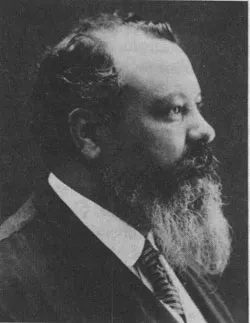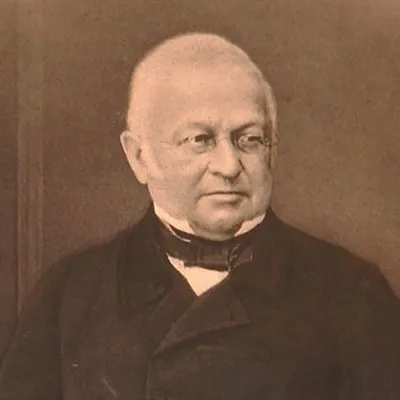
Adolphe Thiers
Human Design Chart
Biography
Thiers died of a stroke at 6pm on 3 September 1877 at St. Germain en Laye, France.
What does Manifestor 6/2 mean for Adolphe Thiers?
Manifestor 6/2 — Design at a Glance
Adolphe Thiers acted as a pioneer and visionary whose design was destined to lead the world into a new future. His nature resembled that of an emperor in ancient Rome: He possessed the grand vision of a great empire but did not wage the necessary wars and battles himself, instead sending others to conquer foreign lands for him. This superior mindset inevitably led to misunderstandings and polarization. Since he often thought further ahead than his surroundings, Thiers was loved and followed by some because of his big dreams while others disliked or even hated him due to these vast visions.
To minimize resistance and find the right following, it was essential for him to inform others about his plans in a timely and precise manner. This strategy of informing served to avoid friction losses. If he adhered to this strategy, he was rewarded with an inner sense of peace. However, if he lived against his design and failed to inform others, he instead felt a persistent, deep-seated anger within him. His life thus revolved around the dynamics between visionary leadership and necessary communication to manage division into love and hate.
Ego Authority
Adolphe Thiers revealed himself as someone whose truth lay in willpower, which was expressed through spontaneous, uncensored speech. His design required a critical distinction between mind and ego-will: The mind served open centers and others' interests, while his defined ego-center carried the true inner truth; only what spontaneously burst forth from his throat matched this inner correctness; thought content was often distraction due to suggestibility.
When he championed something that truly mattered to him, he possessed the willpower to achieve goals and keep promises. This consequence could appear selfish to others, yet it was essential for him to stand by himself. For him, every action had to offer a personal reward – whether material success or the will to be first and exceed limits. This enabled him to guide others into new directions. However, after each goal achievement, an obligatory pause was necessary. Continuous work did not lead to the desired result but rather to unhealthy exhaustion and illness. His authority in ego thus required a rhythm of focused willpower and necessary regeneration to maintain his own energy.
The 6/2 Profile — Role Model / Hermit
Adolphe Thiers revealed himself through a design that prescribed a clear two-phase life path. In his youth, before the age of 30, the experimental line of Profile 6/2 dominated. This phase was characterized by trial and error; he gathered numerous personal experiences, with retreats after failures being the driving principle.
Around the age of 30, the reflective line 6 came into effect. Adolphe Thiers metaphorically retreated to a 'cave on the mountain' to look back at his earlier experiments from great distance. This period served intense introspection, healing, and deep self-awareness. He abstracted general patterns from past events and wondered who could complete processes.
Once this maturation phase was completed, he re-emerged as a wise teacher in public life. Others sought him out to learn from his wisdom and acquire the ability for deep self-reflection. Here, the tension between the necessity of withdrawal and the later impulse to share this abstracted wisdom became apparent. If he denied others participation in the growth process, self-alienation or aggression threatened. His line 2 also radiated limitations; he adapted to constraints but sometimes maintained habits even when original conditions no longer existed – similar to someone who keeps old routines despite changed circumstances. This shaped his way of dealing with change and personal limits.
Single Definition — Defined & Open Centers
Adolphe Thiers revealed himself as someone whose personality was marked by a constant, unchanging presence. His design indicated a tendency towards clear mental conceptualization (defined Ajna Center), direct communicative manifestation (defined Throat Center), firm self-identity and inner direction (defined G Center) as well as pronounced willpower and ego strength (defined Heart Center). These defined centers formed the stable pillars of his existence: He always thought in his own specific way, spoke from a reliable source, knew his direction, and had the energy to fulfill promises.
At the same time, Adolphe Thiers was receptive to environmental energies through open centers. His open Head Center made him vulnerable to mental pressure and the temptation to adopt questions or inspirations of others as his own. The open Sacral Center meant no constant flow of energy; he tended to absorb foreign vitality and overextend himself rather than relying on an inner source. Emotional waves were absorbed and amplified through the open Solar Plexus Center, making him vulnerable to the moods of his surroundings. Furthermore, his open Spleen Center acted as a mirror for intuitive fears or well-being of others, while the open Root Center took in external stress and adrenalized pressure without possessing it as a constant source. This configuration required distance from absorbed mental pressure, emotional wave movement, foreign vitality, intuitive fears, and external stress to not cloud the clarity of his defined centers.
Channels for curiosity, pioneering spirit, principles and success.
Adolphe Thiers revealed himself through a constant, authentic presence based on self-love and acceptance in the now. This inner clarity acted as quiet leadership that inspired others without actively directing them. The Awakening Channel 10-20 connected the G Center with the Throat Center via the Presence Gate (10) and the Now Gate (20). He expressed the wisdom that one must fulfill their potential as a living expression of awakened self-love to survive. By simply being himself, he influenced people to be themselves, often without them knowing.
Additionally, the Channel of Curiosity 11-56 drove storytelling to convey ideas emotionally and imaginatively. This channel connected the Ajna Center with the Throat Center via the Ideas Gate (11) and the Inspiration Gate (56). His curiosity served not primarily for fact transmission but for social exchange. He used stories as life parables to entertain listeners and stimulate their imagination, less for his own guidance than for retelling by current and future generations.
The Line of Money Channel 21-45 manifested his will to control material resources and work with the aim of securing independence and safety for himself and the “tribe.” This channel connected the Heart Center with the Throat Center via the Hunter Gate (21) and the Gatherer Gate (45). Here, the tension between service and authority was prominent; he worked best when following his own natural rhythm.
Finally, the Initiation Channel 51-25 acted through competitive energy and the shock of individuation. This channel connected the Heart Center via the Shock Gate (51) and the Self Spirit Gate (25). It triggered deep transformations that only occurred by invitation to strengthen the Higher Self in oneself and others.
Individual Circuitry — Circuit Signature
Adolphe Thiers revealed himself as a person with deeply rooted individual conviction. His design connected the Identity and Heart Center through the Centering Circuit (Channel of Initiation). This connection created a fortified, courageous personality that strongly expressed its own individuality and encouraged others to do the same. However, since this circuit did not have a direct link to the Throat Center, these firm inner positions often remained difficult to verbalize; they appeared more as a quiet inner strength than as a loud declaration.
Parallel to this, Adolphe Thiers connected the Heart with the Throat Center through the Ego Circuit (Money Line). This channel focused on cooperation and resource management within the tribe. It was about balancing giving and taking as well as material security. Since there was no connection to the Sacral Center here, a constant life force was missing; this required strategic rest periods for regeneration before new resources could be created or shared.
Additionally, the Meaning Circuit (Channel of Curiosity) linking the Ajna with the Throat Center came into play. This directed attention to the past: emotions and experiences were reflected upon to find their meaning and share these insights emotionally with others.
Finally, the Integration Circuit (Channel of Awakening) connected the Identity with the Throat Center. This allowed drawing strength from reactions to life through proper behavior and intuitive knowledge to make it effective in the here and now. Together, these separate but defined streams painted a picture of inner centering, cooperative resource use with a need for pauses, and the ability to transform past experiences into present action.
Left Angle Cross of Limitation 1
Adolphe Thiers' Human Design configuration established a structural dynamics of self-limitation. For him, boundaries did not appear as obstacles but rather formed the central principle of his life approach. This configuration, known as the left Limiting Cross 1, shaped his attitude: integrity and focus emerged only through the clear definition of what was excluded.
The mechanics of this pattern require a conscious recognition of internal and external limits. Adolphe Thiers demonstrated the necessity to accept these boundaries in order to preserve his own substance. His life took shape through an understanding of 'cannot' or 'will not'. Instead of striving for everything, he defined his sphere of influence by exclusion. This limitation was not a lack of energy but a strategic decision to maintain inner order.
Through this structural dynamics, he learned that true strength lies in the ability to say no. The acceptance of these limits created space for clear decisions. Adolphe Thiers lived according to the principle that only through setting boundaries can a stable identity emerge. This pattern imparted him with the insight that self-limitation is key to authenticity. He used this limitation as a tool to filter distractions and focus on what was essential. The structure of his design challenged him to realistically assess his capacities and not grow beyond his capabilities.
Saturn Return · Uranus Opposition · Chiron Return · 2nd Saturn Return — Life Cycles
Adolphe Thiers' career development followed a pattern in which external political impulses and internal creative maturation alternately took the lead. In 1836, at age 39, he became Prime Minister for several months. This shift corresponded with the Uranus Opposition cycle, often triggering unexpected external changes or sudden assumption of responsibilities. For his design, this meant a phase where his position changed through a rapid push from outside rather than solely through slow internal planning.
Following this was an intensively sustained creative period. In 1845, at age 48, he published the 'History of the Consulate and Empire'. This fell within the Chiron Return period (around ages 49-51), considered a fulfillment cycle in Human Design. During this life phase, his incarnation cross increasingly unfolds; meaning and purpose become experiential if one follows their strategy. For Adolphe Thiers, this 'bloom' did not manifest as healing old wounds but rather as the concrete realization of his purpose through an extensive work. The publication marked the point where years of effort condensed into a substantial result and his lifelong mission became tangible. The transition from short-term political power to long-term content legacy illustrates the interaction between spontaneous external turning points and deep, cyclical unfolding of personal design.
Manifestor · Ego Authority — Synthesis
He was a pioneer who, through his visions and ability to turn principles into action (Channel Awakening), took a leading role. This tendency towards immediate action, combined with a constant mental process (defined Ajna Center), shaped his path. Intensive engagement with the self and resulting wisdom were reinforced by withdrawal and reflection – a natural development for someone who initially gathered many experiences (6/2 Profile).
A central tension lay in his rare authority within the ego. The openness of his design made him susceptible to influence, yet the ability to speak spontaneously and unfiltered revealed his inner truth. This led to an interplay between the need for distance for reflection (Centering Circuit) and the necessity to position oneself publicly – a life marked equally by professional peaks and setbacks (Uranus Opposition, Chiron Return).
4 Defined Channels
Incarnation Cross - Left Angle Cross of Limitation 1
Solar Return
The Solar Return shows the moment when the sun returns to its exact birth position - your personal solar year.
Life Cycles
Discover the life cycles with a detailed triple view (birth chart, cycle chart, composite).
Human Design Profile
- Type
- Manifestor
- Strategy
- To inform others before acting
- Authority
- Ego Authority
- Profile
- 6/2 - Role Model / Hermit
- Definition
- Single Definition
- Incarnation Cross
- Left Angle Cross of Limitation 1
- Date of Birth
- 15.04.1797 05:00
- Place of Birth
- Marseille, France
Frequently Asked Questions
What is Adolphe Thiers' Human Design type?
What profile did Adolphe Thiers have?
What authority guided Adolphe Thiers?
What incarnation cross did Adolphe Thiers have?
When was Adolphe Thiers born?
Discover your own Human Design
Are you also a Manifestor? Find out in a personal reading how to use your initiation power peacefully and dissolve resistance.
More Personalities
Back to overviewChristian-Jaque
Kesha

Lucebert
Marilyn

Masaccio
Papus