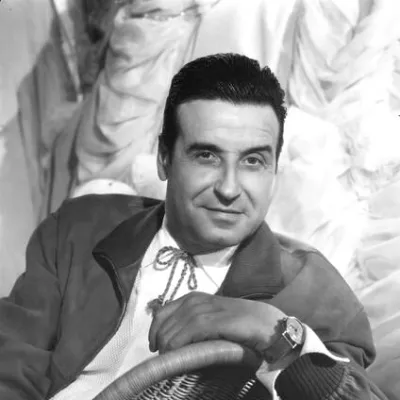
Alan Arkin
Human Design Chart
Biography
He was also Oscar-nominated for his role in The Heart is a Lonely Hunter (1969). Arkin appeared in well over 50 movie and television films. Some of his more recent roles included Edward Scissorhands (1990), Glengarry Glen Ross (1992) and Magicians (1999). He directed, wrote and acted in Arigo (2000). A dramatic new series for Arkin, 100 Center Street made it's TV debut on 15 January 2001 at 9:00 PM.
Arkin was the son of a draftsman, the eldest of three kids, and said that he decided to be an actor at age five. After public high school, he dropped out of three colleges and wound up in Chicago’s Second City improvisational troupe before landing the role in Enter Laughing for which he won a Tony Award in 1963.
He gained national recognition in 1966’s The Russians are Coming! The Russians are Coming! for which he received an Oscar nomination and a 1967 Golden Globe award. In 1972 he authored the first of six children's books, Tony's Hard Work Day, and in 1975, a book about his involvement with Agni Yoga, Halfway Through the Door.
Arkin was married to Jeremy Yaffe from 1955-1960, and had two sons. He met his second wife, Barbara (a descendant of Longfellow and author Richard Henry Dana) in 1963 when he had just been cast for the lead role on Broadway for Enter Laughing and she was trying out for a part in the play. They were married from 1964 to 1994 and had a son in 1967. Though they appeared together in five films and three plays, she focused on writing. In 1996, Arkin married psychotherapist Suzanne Newlander.
Human Design Analysis: Alan Arkin as Projector 2/4
Projector 2/4 — Design at a Glance
Alan Arkin revealed himself through a dense, focusing aura, comparable to a bright flashlight that targeted system errors in the environment with precision. As a Projector, he immediately recognized where something was amiss or 'in darkness' for others. Directly addressing these weak points often generated resistance; instead, his magnetism was strongest when he shone through his own harmony. This attracted others who then sought his insights. His strategy involved waiting for respectful and honest invitations before sharing his knowledge or exerting influence. Without a defined Sacral Center, Alan Arkin lacked a constant intrinsic energy source. Instead, he cycled through periods of high activity and necessary rest phases to prevent burnout. Living according to this design rewarded him with success; deviating from it led to the theme of bitterness. His nature was designed to illuminate others' paths not through pressure but through the attractive power of his clear perspective and patience until the right invitation came.
Emotional Authority
Alan Arkin demonstrated decision-making that did not follow immediate impulsiveness, but rather as a necessary process of emotional cooling down. His design determined that he possessed an emotional authority carried by the defined Emotional Center. This meant that his inner truth never lay in a first reaction, but only became visible after traversing a natural wave pattern of emotions.
The mechanics of this configuration described a permanent rhythm of ups and downs in his mood. Alan Arkin saw the world always colored through his current emotional state; what appeared inspiring at one moment could seem negative in the next. These fleeting impressions were not fundamental truth, but mere snapshots. Spontaneous decisions arising from this immediate feeling often proved misleading and could lead to negative consequences.
Therefore, his design strategy demanded strict temporal distance. Alan Arkin had to exercise patience and sleep on important questions multiple times to let initial intense feelings subside. Only when this emotional distance was created did clarity emerge. Emotional authority took precedence over all other defined centers; regardless of logical or strategic considerations, he had to trust this emotional maturation process to make decisions that aligned with his deepest truth rather than a passing mood.
The 2/4 Profile — Hermit / Opportunist
Alan Arkin revealed himself through the Profile 2/4 (Natural Talent / Networker) as someone oscillating between two poles: the deep need for withdrawal into inner clarity and the urge to connect with his familiar community. This tension shaped his behavior cyclically; he withdrew to process impressions and develop ideas before re-entering his social circle.
The mechanics of this design required clear communication of one's needs. Alan Arkin could only function effectively if he made transparent when he sought company or needed solitude. In his 'cave', he used Line 2 to sharpen discernment and find peace. Only after satisfying this inner need did he emerge to spend time with his favorite people (Line 4).
This shift served to reflect the knowledge of his network during alone-time, from which brilliant ideas emerged. Line 4 demanded focus to stay healthy while Line 2 polarized between serving and ruling. Alan Arkin thus created a safe environment where this pendulum movement stabilized through clear communication: 'I would like your company now' or 'Please do not disturb'. This enabled him to utilize his specialized energy and balance sensitivity with social integration.
Triple Split Definition — Defined & Open Centers
Alan Arkin revealed himself as a person with an extremely dense inner architecture. Seven of his nine centers were defined, creating a constant autonomous presence in almost all areas of life: He thought, spoke, acted, and felt from an unchanging source. His defined Ajna Center ensured continuous mental creation; he was always in the process of thinking and processed data independently of external influence. This mental clarity led to his defined Throat Center, which served as a pivot point for reliably translating inner information into communication and action.
His identity and direction were set by his defined G Center, giving him a deep sense of self-love and a clear purpose in life. This was complemented by his defined Heart Center, which gave him strong willpower and the ability to keep promises and use resources autonomously. Emotional depth came from his defined Solar Plexus; he had an emotional authority that required waiting out waves of highs and lows to gain clarity. His defined Spleen Center provided spontaneous intuitive warnings in the present moment, while his defined Root Center supplied a constant pressure for forward movement and survival.
In contrast to this immense inner activity were two open centers: Head and Sacral. The open Head Center meant that he did not have permanent inspiration but was situationally receptive. He tended to be influenced by doubts or questions from others when he did not trust his inner authority. Particularly defining was the open Sacral Center: Alan Arkin lacked a permanent generative motor. His energy was unstable; it came in impulses or through the activation of his many defined centers. This required careful management, as he was prone to overloading himself with borrowed energy from others and becoming exhausted if he did not respect when enough was enough.
Channels for community, reflection, acceptance and critical judgment.
Alan Arkin showed himself to be someone who translated complex visual patterns into understandable language through logic and shared these insights after thorough reflection as wisdom. His design inclined him towards patiently ordering information before articulating it.
The Accepting Channel 17-62 connected his Ajna Center with the Throat Center. Gate 17 visualized patterns, while Gate 62 organized and named them through words. This created an inner pressure to logically structure details and clearly express opinions when the timing was right. Alan Arkin used this ability to communicate his understanding of connections precisely without relying on unclear assumptions.
Parallel to this, the Lost Son Channel 13-33 between G Center and Throat Center worked. Gate 13 gathered information and secrets as a listener, while Gate 33 created space for withdrawal and reflection. Alan Arkin exercised patience with the maturation process of knowledge; he waited until deeper truths revealed themselves under the surface before sharing them. This process allowed him to sort experiences and pass them on as lessons rather than jumping to conclusions.
Additionally, Gates like 52 contributed to self-imposed pauses for concentration, while Gate 7 projected a need for leadership and hierarchy. Gate 57 promoted intuitive clarity in the here and now. This combination shaped a personality that navigated between the urge for logical perfectionism and the necessity of silent observation. Alan Arkin avoided speaking too early; instead, he sought the right moment to introduce his well-thought-out insights, thereby reducing resistance and creating clarity. His mechanics emphasized the importance of timing: it was not knowledge itself but the time of its communication after inner order had been established.
Collective Circuitry — Circuit Signature
Alan Arkins design inclined towards situational adaptation. As a Triple Defined individual, he did not have an ongoing internal compass but reflected the logic, emotions, and social dynamics of his environment. This structure created three separate energetic islands that worked independently.
In the Understanding Circuit, the Accepting Channel (17-62) connected Ajna Center with Throat Center. This allowed him to articulate visual ideas and strategic concepts into words when the situation required it. Parallel to this, the Judgment Channel (18-58), connecting Spleen and Root, provided an intuitive ability for risk assessment and protection from danger independent of his intellectual processing.
The Meaning Circuit in Alan Arkin consisted of the Lost Son Channel (33-13). This connected Throat Center with Identity Center. He used this connection to articulate past experiences and emotional waves into specific contexts and derive meaning from them. However, this energy was wave-like and not consistently available.
In the Ego Circuit, the Community Channel (40-37) linked Heart Center with Solar Plexus. This promoted cooperation, mutual support, and resource exchange within a tribe or group. Since there was no connection to Sacral Center, this social energy was not self-generated. Alan Arkin therefore needed regular pauses for regeneration to restore his capacity for collaboration and emotional resonance. The three circuits remained energetically separate.
Right Angle Cross of Service 1
Alan Arkin was marked by an existential orientation that found its deepest satisfaction in serving others. His design suggested that his life's purpose lay less in individual self-expression and more in supporting and helping others. This inner driving force stemmed from the configuration of the right service cross 1.
This specific Human Design mechanics describes a fundamental life attitude where serving is not seen as an external duty but rather as a central expression of one's own value and personal destiny. Alan Arkin thus revealed himself to be someone whose identity was closely tied to the desire to make a meaningful contribution to society. His sense of responsibility towards others significantly shaped his actions; he sought fulfillment in recognizing and addressing needs.
It wasn't just everyday actions but rather a deep structural orientation. The right service cross 1 endows the character with the quality of realizing its essence through giving and supporting. Alan Arkin lived this dynamic by directing his energy toward helping others, which gave him a sense of purpose and belonging. His contribution lay in making himself available as a resource for others, thereby defining his own place in the world.
Saturn Return · Uranus Opposition · Chiron Return · 2nd Saturn Return — Life Cycles
Alan Arkins design marked three decisive phases of structuring and maturation driven by Saturn return cycles. The first cycle, around age 29, established his professional identity. This was concretely evident in 1963 when he received his first Tony Award for "Enter Laughing" – a moment where years of groundwork condensed into a solid success and the first major confirmation arrived.
The second Saturn return cycle, around ages 59 to 60, demanded a profound inner restructuring. This process was often triggered by personal crises that forced a new life perspective. For Alan Arkin, this turning point manifested in 1994 with his divorce from Barbara at age 60. This event underscored the mechanical necessity of dissolving old structures to make room for a more mature self-awareness. Between these phases stood the Uranus opposition in 1975: At 41, he published a book on Agni Yoga, reflecting the urge for individual freedom and spiritual expression beyond established paths. The Saturn cycles thus framed how his identity developed from early confirmation through crisis-driven transition to later maturity.
Projector · Emotional Authority — Synthesis
Alan Arkin lived a life marked by an acute ability to observe and recognize patterns (Gate 17/62). This manifested in an inner logic and a need to understand and order the world around him. The connection between G Center, Throat Center, and Ajna Center points to a strong inner direction that was always filtered through the emotional wave (emotional authority) – a process of maturation and waiting for clarity to emerge. This combination allowed him to gain deep insights and express them precisely when invited. The ability to grasp both details and the big picture was central to his work approach and understanding of human nature.
A fundamental tension in Alan Arkin's design lay between his need for community (Gate 37/40) and his inner tendency toward withdrawal and reflection (Gate 33). He needed both connection with others to share energy and exchange, as well as phases of isolation to process experiences and find his own truth. This interplay between social interaction and internal retreat shaped his life path and created a dynamic in which he was part of the whole while preserving his individuality.
4 Defined Channels
Incarnation Cross - Right Angle Cross of Service 1
Solar Return
The Solar Return shows the moment when the sun returns to its exact birth position - your personal solar year.
Life Cycles
Discover the life cycles with a detailed triple view (birth chart, cycle chart, composite).
Human Design Profile
- Type
- Projector
- Strategy
- Wait for the respectful invitation
- Authority
- Emotional Authority
- Profile
- 2/4 - Hermit / Opportunist
- Definition
- Triple Split
- Incarnation Cross
- Right Angle Cross of Service 1
- Date of Birth
- 26.03.1934 04:17
- Place of Birth
- New York, NY, United States
Frequently Asked Questions
What was Alan Arkin's Human Design type?
Which Profile did Alan Arkin have?
What Authority did Alan Arkin have?
What incarnation cross was Alan Arkin assigned?
When was Alan Arkin born?
Discover your own Human Design
Are you also a Projector? Find out in a personal reading how to unfold your leadership qualities and recognize the right invitations.
More Personalities
Back to overviewSissy Spacek
Alain-Fournier
Anémone
Ann-Margret

Bourvil
Christian-Jaque