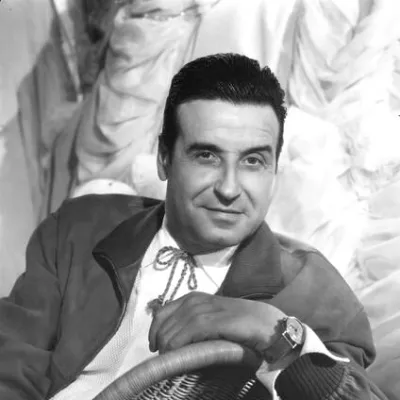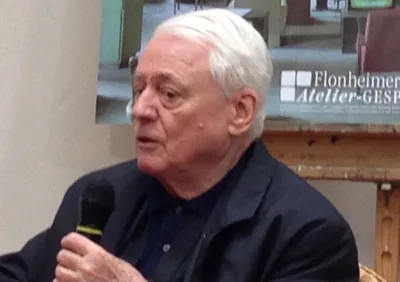
Alexander Kluge
Human Design Chart
Biography
Kluge was one of twenty-six signatories to the Oberhausen Manifesto of 1962, which marked the launch of the New German Cinema. That same year, with filmmakers Edgar Reitz and Detlev Schleiermacher, Kluge established the Ulm Institut für Filmgestaltung, to promote the critical and aesthetic practices of Young German Film and the New German Cinema. In 1965 he was a member of the jury at the 15th Berlin International Film Festival.
He has gone on to direct a number of films which have an inherent critique of commercial cinema and television through the creation of a counter-public sphere and their deployment of experimental forms, including montage. They include Abschied von Gestern (Yesterday Girl) (1966), an adaptation of Kluge's story "Anita G."; Die Artisten in der Zirkuskuppel: Ratlos (Artists under the Big Top: Perplexed) (1968); and The Assault of the Present on the Rest of Time (1985).
For the TV, Kluge produced many documentaries, often characterized by the lack of spoken narration and a heavy reliance upon text as well as graphical montages and image editing, as well as many interviews with various international personalities from the fields of arts, entertainment, science, philosophy, and politics.
Human Design Analysis: Alexander Kluge as Projector 1/3
Projector 1/3 — Design at a Glance
Alexander Kluge revealed himself as someone with a sharp eye for systemic flaws in his environment. His Human Design type is Projektor, meaning he does not have a constant intrinsic energy source but builds up his strength cyclically through phases of intense activity and necessary rest. His aura functions like a focusing flashlight: it projects light directly onto those areas in others or structures that are still in the dark or do not function optimally.
This ability to immediately recognize flaws in a system was powerful, yet also risky. When he addressed these deficits directly and abruptly, it often felt like blinding light to the other person, causing rejection. The more elegant expression of his design lay in living a harmonious, functional reality himself. Through this 'pleasant glow', he attracted others who wanted to learn from him and seek his advice. His strategy was therefore to wait for honest invitations from his environment rather than taking initiative.
If he lived by this principle, he was rewarded with success. However, if he ignored the need for pauses or pushed himself forward without invitation, it would eventually lead to his non-self theme: bitterness. His undefined Sacral Center required respect for his energy limits; only then could he bring his unique ability for system analysis sustainably and without exhaustion.
Ego Authority
Alexander Kluge's design showed a tendency towards great influenceability, which was evident through defined openness in the Emotional, Sacral, and Spleen Centers. This configuration demanded a specific inner authority: ego authority. Since his Ego Center was defined, his truth did not lie in reflective analysis or physical sensation but directly in his will. His will manifested primarily through speech; Kluge had to learn to listen to himself when speaking to distinguish between when the mind – influenced by open centers and foreign interests – spoke and when his authentic Ego Center acted. Spontaneous, uncensored statements aligned with his truth, while thought-out formulations often served as distractions.
His drive was to follow what truly mattered to him. This gave him the willpower to achieve goals and keep promises, but could appear selfish from an external perspective. For Kluge, it was essential that his actions benefited himself – whether through material success or the desire to cross boundaries and explore new paths. This attitude allowed him to lead others in new directions. However, a central mechanism of this design required strict pauses after goal achievement; continuous work without rest did not yield desired results but threatened his health with exhaustion. His strategy was to consistently follow his will while maintaining balance between demand and necessary regeneration.
The 1/3 Profile — Investigator / Martyr
Alexander Kluge's design showed a tendency towards a dual approach: he was both a theoretical researcher and a practical experimenter. This Profile 1/3, the 'Researcher/Experimenter', thrives on the interplay of deep learning and active experimentation. Line 1 drove him to understand foundations and seek security, while Line 3 promoted gaining insights through trial and error.
Especially influential was Gate 30 on the first line, which emphasized calmness and inner peace – regardless of external circumstances. This helped him gain clarity before experiences. Simultaneously, Gate 14 on the third line addressed material power and handling authority. Here it was not about egoistic striving but preserving individuality through selfless service to others.
Kluge thus showed himself as someone who only made judgments after intensive theoretical and practical examination. If he deemed something good, he had already tested it thoroughly. His path was marked by transforming energy into material goods or concrete results while learning from mistakes. The combination of the calm distance of the researcher and the active engagement of the experimenter created a unique ability to not only understand but also practically apply complex connections.
Split Definition — Defined & Open Centers
Alexander Kluge's Human Design suggests a tendency towards consequent and conceptual work: his defined Ajna Center ensures constant mental processes that generate concepts and theories in a trustworthy manner. This inner stability of thought connects with his also defined Throat Center, which serves as a pivot to translate these mental contents into communication and action. Kluge thus did not speak impulsively but articulated what his mind had conceptualized – a direct connection from thinking to speaking.
Additionally, his defined G Center and defined Heart Center shaped his approach. The G Center gave him a firm sense of self-identity and direction or mission, while the Heart Center provided willpower and the ability to keep promises and control resources. Kluge appeared as someone who acted from a clear "I", defended his values based on inner authority rather than external pressure.
These defined structures contrast sharply with his open centers. His open Head Center made him vulnerable to mental pressure and the temptation to answer others' questions or get entangled in problems that were not his own. He tended to wonder if he was inspiring enough or finding answers that actually did not come from him. Similarly, his open Solar Plexus made him sensitive to foreign emotions; he absorbed the emotional climate of his surroundings and amplified it, making him vulnerable to conditioning by others' moods. His open Sacral Center also meant that he lacked a constant generative energy and easily became exhausted when taking on the life force of others or trying to imitate their work rhythms instead of trusting his own inner guidance.
Channels for mental order, pioneering spirit and spiritual beauty.
Alexander Kluge's Human Design suggests a tendency towards analytical precision: He mentally organized information into substantial details before formulating it linguistically. This approach stemmed from the Accepting Channel 17-62, which connected Ajna Center with Throat Center. Gate 17 visualized patterns while Gate 62 translated and named them through words. Kluge understood only what he could logically integrate into his inner image; everything else remained incomprehensible to him. This created a constant pressure to speak in order to communicate his organized opinions or precisely explain what he comprehended – provided that he waited for an invitation to speak, ensuring clarity and openness.
Parallel to this was a competitive energy aimed at awakening the potential for individualization in others. The Initiation Channel 51-25 connected Heart Center through shock (Gate 51) with Self Spirit (Gate 25). Here initiation became an art: Kluge recognized the ability to initiate people through a targeted impulse and encourage them to transcend their creative limits. However, this process was mystical and uncontrollable; initiation had to find him rather than him seeking it out. If he lived according to his strategy, he endured these shocks and served as a courageous example for others.
Additionally, Gates like Gate 30 (Recognition of Feelings, Longing) and Gate 29 (Persistence in Sacral Center) fostered an affirmative attitude despite challenges. Gate 14 facilitated graceful power accumulation, while Gate 8 emphasized contribution to the group. In the personality domain, Gate 13 reflected collective memory, and Gate 7 projected future leadership patterns. Gate 4 formulated logical formulas for future security, and Gate 40 sought liberation through recognized achievement and recovery.
Individual Circuitry — Circuit Signature
Alexander Kluge's Human Design profile points towards a tendency toward solidified individuality, paired with the ability to articulate rational structures clearly. This configuration consisted of two separate energetic islands that did not flow directly into one another.
His Defined Centering Circuit connected the Identity and Heart Centers through Channel "Initiation." This created inner stability: The power of the heart (self-worth) fueled his divine identity directly. As a result, he had strong, courageous convictions and pulsating self-confidence ("I am who I am"). However, since there was no connection to the Throat Center, these deep inner certainties often remained linguistically elusive or were not explicitly communicated.
Parallel to this, the Understanding Circuit, which linked the Ajna (thought) and Throat Centers, came into play. Here, energy resided in logical thought: Strategies and rational insights were structured and directly articulated in words. This allowed Alexander Kluge to clearly convey complex connections – free from emotional coloring of the Solar Plexus.
As a person with split definition, he lived these two poles side by side: on one hand, the quiet inner strength of his identity, and on the other, the outer clarity of logical argumentation. The connection between these areas was missing; his rational communication did not flow directly from his emotional core conviction but formed an independent, focused system for shaping future-oriented structures.
Right Angle Cross of Contagion 1
Alexander Kluge's Human Design profile was characterized by a specific tension known as the 'right infection cross.' This configuration created an internal dynamic between the desire for deep personal connection and the necessity of maintaining clear boundaries. Rather than simply adapting or merging, he often found himself in a stance that sought closeness while simultaneously asserting his own space. This did not stem from a lack of openness but rather from a profound sensitivity to his own essence and that of others. The mechanics of this cross described a life task: learning how to engage authentic relationships without dissolving one's identity or being overshadowed by foreign energies. It was about the ability to be infected – in the positive sense of inspiration and empathy – without losing oneself. Alexander Kluge navigated this field through a constant balancing act between surrender and self-assertion. This balance was not a static state but an ongoing process of differentiation. He learned which influences were enriching and which drained his substance. The right infection cross thus fostered a stance of conscious selection in interpersonal contacts. It was less a conflict than a fine-tuning that helped him recognize and nurture genuine connections while remaining protected from superficial or harmful infections. This structure promoted deep empathy, yet it was always framed by a clear inner line.
Saturn Return · Uranus Opposition · Chiron Return · 2nd Saturn Return — Life Cycles
Alexander Kluge's Human Design profile showed a tendency towards structural condensation, manifesting in distinct life phases. The first Saturn return often marked the transition from preparatory work to tangible results. In 1962, at age 30, he signed the Oberhausener Manifesto and launched the New German Cinema – a moment when years of creative impulses condensed into a concrete public action.
With the Uranus opposition around his 40th year, a phase of transformation began that questioned traditional structures and required new perspectives. This is reflected in the publication of 'Public Sphere and Experience' with Oskar Negt in 1972. Here, his design demonstrated the ability to reorder complex societal connections and make them visible.
The Chiron return around age 50 marks a fulfillment cycle where personal meaning increasingly unfolds if one has followed their strategy. For Alexander Kluge, this flowering was experienced in 1982: he received the Golden Film Ribbon for the signatories of the Oberhausener Manifesto. This was not just an award but confirmation of his long-term alignment.
In the second Saturn return after age 56, this structural work deepened further. Between June 1988 and November 1995, he conducted interviews with Heiner Müller. This phase showed how his design could sustain and shape intensive intellectual exchange processes over years, underscoring the enduring relevance of his intellectual stances.
Projector · Ego Authority — Synthesis
Alexander Kluge was a projector whose life was marked by a profound drive for knowledge. The combination of defined mental center (Ajna) and the channel of Acceptance (17-62) points to someone who intensively processed information and recognized patterns – always striving to filter out the essential and articulate it in words. This thinking drew from a natural ability to identify weaknesses, coupled with the Profile of Researcher/Experimentor (1/3), which tested theories through practical application. The repeated documented career events – signing manifestos, publications, and awards – show someone who did not merely keep their insights for themselves but actively brought them into the world, thereby instigating change.
A central paradox lay in how Kluge shared his observations. As a projector with authority in the ego, he was dependent on being asked for his knowledge to avoid resistance. At the same time, the defined Ajna Center and energy of channel 17-62 point towards a tendency to express concepts and opinions unfiltered. This tension between the need for recognition of his judgment and the inner urgency to share his perspective shaped his approach and created a dynamic field between observation and intervention.
2 Defined Channels
Incarnation Cross - Right Angle Cross of Contagion 1
Solar Return
The Solar Return shows the moment when the sun returns to its exact birth position - your personal solar year.
Life Cycles
Discover the life cycles with a detailed triple view (birth chart, cycle chart, composite).
Human Design Profile
- Type
- Projector
- Strategy
- Wait for the respectful invitation
- Authority
- Ego Authority
- Profile
- 1/3 - Investigator / Martyr
- Definition
- Split Definition
- Incarnation Cross
- Right Angle Cross of Contagion 1
- Date of Birth
- 14.02.1932 23:55
- Place of Birth
- Halberstadt, Germany
Frequently Asked Questions
What was Alexander Kluge's Human Design type?
What Profiles did Alexander Kluge have in Human Design?
Which Authority guided Alexander Kluge?
What incarnation cross did Alexander Kluge carry?
When was Alexander Kluge born?
Discover your own Human Design
Are you also a Projector? Find out in a personal reading how to unfold your leadership qualities and recognize the right invitations.
More Personalities
Back to overviewSissy Spacek

Alain-Fournier

Anémone

Ann-Margret

Bourvil
Christian-Jaque