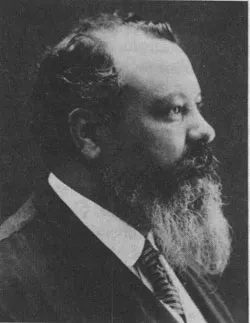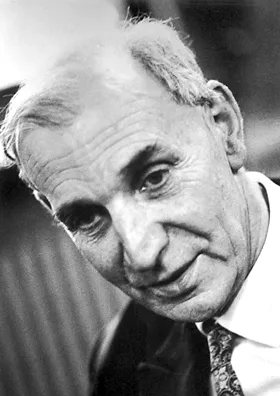
Alfred Kastler
Human Design Chart
Biography
Alfred Kastler — Manifestor with Profile 5/1
Manifestor 5/1 — Design at a Glance
Alfred Kastlers design points to a tendency towards proactive leadership and the initiation of new directions. As a Manifestor, he had the energetic capacity to initiate processes without waiting for external approval or invitation. However, this configuration was polarizing: while his visions were seen as inspiring by some, others rejected them due to their radical nature or the lack of a consensus process. This divisive effect was not a personal failure but a structural characteristic of his type, which could be mitigated by informing about his intentions before acting.
The mechanics of this design rewarded the consistent application of this strategy with an inner sense of peace. If he acted against this logic—such as through unannounced intrusiveness or ignoring resistance—he instead experienced persistent, deep anger. This emotional feedback served as a corrective to adjust his interaction with the environment. Thus, Alfred Kastler showed himself to be someone whose effectiveness depended strongly on whether he communicated his intentions clearly before implementing them. Only through this transparency could he find the right resonance and avoid having his forward momentum misinterpreted as an attack. The resulting dynamics shaped his approach to others: either peaceful acceptance after clear communication or friction due to insufficient preparation of the environment.
Emotional Authority
Alfred Kastler's design inclines towards emotional depth and wave motion. His inner authority is Emotional Authority, carried by the defined Emotional Center. In Human Design mechanics: Whenever the Emotional Center is activated, it takes over as the inner authority – regardless of which other centers are also defined. This rule sets an absolute priority; it overrides other potential decision-making centers.
Kastler was subject to emotional waves that manifested in a constant up and down of his feelings. The world appeared colored by his current mood. A moment of enthusiasm could quickly be replaced by a negative view of the same topic. However, his feeling at any given moment was only a snapshot, an initial impression that did not necessarily represent the truth yet. Therefore, quick, spontaneous decisions based on such emotions often had negative consequences.
Instead, his design required patience. The more time he took to let a decision ripen, the deeper and more comprehensive his understanding became. This meant letting decisions "sleep" multiple times and taking proper care in making them. Over time, intense feelings subsided, he gained emotional distance, clarity emerged, and calmness set in. Only then had he gone through the process. This mechanism primarily shaped long-term decisions that could have a significant impact on his life course.
The 5/1 Profile — Heretic / Investigator
Alfred Kastler revealed himself through his 5/1 profile as someone who gathered deep knowledge to offer it to others for problem-solving. As a "Hero/Researcher," he possessed the characteristic that other people sought out his expertise, which presented him with the challenge of setting clear boundaries so as not to be exhausted by requests. His Line 1 conveyed empathy and listening; it formed the foundation for exchange, enabling him to receive secrets and treat others without discrimination. This could have been a burden but also required motivation to use this openness productively. Line 5, on the other hand, demanded the courage to confess past mistakes or lack of knowledge. This process of justification was crucial for his effectiveness, especially during crises when dealing with strangers. Alfred Kastler had to learn to balance between the private research process (Line 1) and public problem-solving (Line 5). Only through saying "no" could he maintain a beneficial balance and use his gifts optimally without being drained. His design thus shaped the ability to empathize and the willingness to learn from past mistakes, positioning him as an authority figure for others in difficult situations.
Triple Split Definition — Defined & Open Centers
Alfred Kastler's design placed a constant internal mental pressure on him to question and understand connections. This tendency stemmed from his defined connection between the Head Center and Ajna Center: He was constantly confronted with inspiration, but it lacked direct energy for implementation. His challenge lay in not transforming this urge for answers into hasty actions but rather waiting patiently until others were ready to receive his impulses.
His willpower and ego were shaped by his defined Heart Center. Kastler possessed a reliable strength to fulfill promises and determine resources on his own. This was combined with a defined Throat Center, allowing him to communicate his conceptual thoughts from Ajna directly into the world. He did not speak impulsively but articulated structured ideas that his mind had processed.
At the same time, Kastler's defined Solar Plexus Center showed emotional depth and wave-like patterns. His inner authority lay in this emotional wave; he needed time to gain clarity before making decisions. This contrasted with his open G Center: He did not have a fixed or unchanging identity or direction. Instead, he adapted to environments and allowed others to initiate him into the right life path. The search for a firm 'I' definition was a trap for him; his strength lay in reflecting various roles and directions without solidifying them as his own essence.
His open Sacral Center made him vulnerable to overload from foreign energy. Without his own constant generative power, he tended to overextend himself on borrowed vitality rather than trusting his own rhythm of recovery and spurts of work. Similarly, the open Root Center absorbed external stress, making him susceptible to environmental pressure instead of using it as personal drive. Kastler's path involved connecting his mental inspiration and emotional depth with patience to find the right places and people who provided necessary identity and energy without overburdening himself.
Channels for clarity, instinctive devotion and emotional transformation.
Alfred Kastler was marked by a design that combined spontaneous insight with instinctive assertiveness. His mind was not geared towards logical analysis but rather the reception of inspiration and its quick transformation into clear answers. This ability came from Channel 61-24. He received inner impulses – the 'white noise' of Gate 61 – and transformed these in Ajna Center through rational structuring (Gate 24) into knowledge. Kastler did not actively control this process; he waited for the mutation to occur, a sudden Satori that showed him what was worth knowing. His thinking served not prediction but recognition of what could be known at the moment.
Alongside this mental clarity, Kastler possessed strong entrepreneurial intuition. Channel 44-26 connected his instinctive sense (Spleen Center, Gate 44) with his willpower (Heart Center, Gate 26). This gave him the ability to intuitively recognize the needs of his 'tribe' – whether colleagues or society – and offer convincing solutions. He acted like a promoter who mobilized resources by knowing exactly what the collective needed often before it recognized this itself. His energy served to implement improvements and keep the tribe viable.
Emotionally, Kastler was driven by a restless search for experience. Channel 36-35 connected his emotional wave (Solar Plexus Center) with expression in the throat. He sought new, profound experiences that would grant him wisdom. Accepting that feelings and situations were transient, his authority lay in allowing these emotional oscillations to mature before he acted or spoke. Through his personal gates – such as Gate 7 (Leadership) and Gate 13 (Continuity) – he projected patterns for the future while reflecting collective memory. Kastler lived this mechanism by surrendering to the happy coincidence of his inner truth and sharing his insights with others once they were ripe.
Individual Circuitry — Circuit Signature
Alfred Kastler's design set a tendency towards separate, parallel energetic streams. As a Triple Defined individual, he had three independent power centers that did not connect but rather worked as distinct blocks. This shaped his experience through clearly defined functional areas instead of one continuous flow.
The Knowledge Circuit connected his Head and Ajna Centers via Channel 24-61. This connection promoted innovative flashes of insight and the ability to transform new knowledge. It was about expressing a unique identity through creative insights that sprang from the mind.
Parallel to this, the Meaning Circuit worked by connecting Throat and Solar Plexus Centers (Channel 35-36). Here sharing emotional experiences took precedence. Alfred Kastler used this current to reflect on past events and share the resulting insights with others. The energy followed a cyclical pattern of build-up and decline driven by emotional waves.
A third, isolated block formed the Ego Circuit connecting Heart and Spleen Centers (Channel 26-44). This stream concerned cooperation and the joint creation of resources. Without connection to the Sacral Center, this configuration required regular rest periods for regenerating power for mutual support. These three separate systems – mental innovation, emotional communication, and resource-oriented collaboration – existed side by side without mixing energetically.
Left Angle Cross of Incarnation 1
Alfred Kastler's design indicated a tendency towards a deep, often unspoken connection to the material world. This configuration, known as the left cross of incarnation, did not describe an active search for spiritual heights or abstract ideals but anchored attention firmly in the here and now. It was an energy that recognized the value of the everyday, the physical, and the tangible without considering it inferior.
For Alfred Kastler, this meant his life force was directed towards finding meaning in the visible world. The mechanics of this cross were not shown through loud declarations or missions to improve the world but rather through a quiet, steady presence in concrete reality. It was about feeling and acknowledging the hidden spirituality in the simple things of life. This attitude created inner stability because it did not rely on external validations or major events but was based on immediate experience. Alfred Kastler lived this orientation by engaging with what lay directly before him and finding deep significance beyond mere surface value.
Saturn Return · Uranus Opposition · Chiron Return · 2nd Saturn Return — Life Cycles
Alfred Kastler's design showed a clear focus on professional responsibility and structural development. His first Saturn return around the age of 29 marked the transition from a learning phase to a solid career identity. This became effective in 1931 when he became an assistant to Pierre Daure at the Faculté de Science in Bordeaux – a step that confirmed his long-term anchoring in his field.
The Uranus opposition around age 39 often brought unexpected upheavals or new authoritative positions. For Kastler, this occurred in 1941: invited by Georges Bruhat, he went to Paris to temporarily lead the Physics Department at ENS. This event underscored his ability to take on leadership roles and establish new structures in dynamic situations.
The Chiron return around age 50 is a fulfillment cycle where inner destiny increasingly reflects in outer life. Kastler reached this point in 1952 when he received a professorship at the Faculté de Science in Paris. This appointment was not just a career leap but the visible realization of his lifelong work and expertise. The sequence of these milestones illustrated how his design led him through targeted steps from assistant to leadership, culminating in a professorship, with each cycle bringing a new level of professional recognition and responsibility.
Manifestor · Emotional Authority — Synthesis
Alfred Kastler was a Manifestor whose life was characterized by a constant interplay between internal pressure and emotional maturity. The defined Head Center (Channel Awareness) generated an unceasing drive for understanding and innovation that led him to new insights – inspiration he rationalized through the Ajna Center. This process, combined with the Profile of Hero/Researcher, propelled him to deepen knowledge and make it accessible to others, giving him a magnetic attraction.
At the same time, he was subject to an emotional authority that prevented quick decisions and required patience. The tension between the impulsive forward drive of the Manifestor and the necessity to let emotions mature formed a central paradox in his design. Cycles showed how professional steps (1931, 1941, 1952) culminated in phases of deeper engagement with knowledge and its dissemination – an expression of the Knowledge Circuit that enabled him to effect transformation through his individuality.
3 Defined Channels
Incarnation Cross - Left Angle Cross of Incarnation 1
Solar Return
The Solar Return shows the moment when the sun returns to its exact birth position - your personal solar year.
Life Cycles
Discover the life cycles with a detailed triple view (birth chart, cycle chart, composite).
Human Design Profile
- Type
- Manifestor
- Strategy
- To inform others before acting
- Authority
- Emotional Authority
- Profile
- 5/1 - Heretic / Investigator
- Definition
- Triple Split
- Incarnation Cross
- Left Angle Cross of Incarnation 1
- Date of Birth
- 03.05.1902 13:45
- Place of Birth
- Gebweiler, France
Frequently Asked Questions
What was Alfred Kastler's Human Design type?
What Profile did Alfred Kastler have in Human Design?
What Authority did Alfred Kastler have?
What incarnation cross did Alfred Kastler have?
When was Alfred Kastler born?
Discover your own Human Design
Are you also a Manifestor? Find out in a personal reading how to use your initiation power peacefully and dissolve resistance.
More Personalities
Back to overviewChristian-Jaque
Kesha

Lucebert
Masaccio

Nadar
Papus