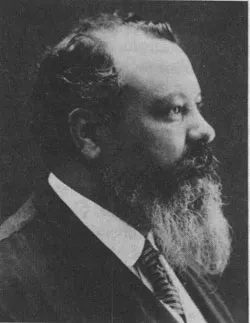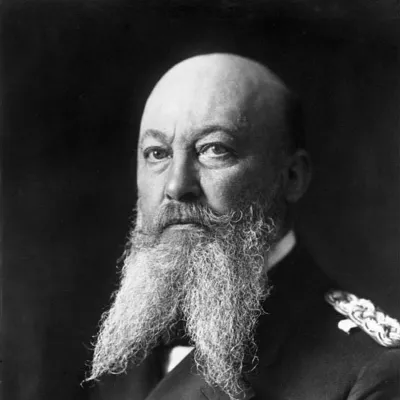
Alfred von Tirpitz
Human Design Chart
Biography
In 1900, the government of Germany made plans to strengthen their Navy, building it into the German High Seas Fleet, a task force with global capabilities. Tirpitz was put in charge of the necessary improvements, and the effort soon became known as the "Tirpitz Plan." The British reacted violently to what they saw as a threat, strengthening their own fleet and entering alliances against Germany. While Tirpitz’s plan succeeded in many ways, it did not entirely live up to its goal.
Tirpitz died on 6 March 1930, Edelshausen, Germany.
What does Manifestor 1/3 mean for Alfred von Tirpitz?
Manifestor 1/3 — Design at a Glance
Alfred von Tirpitz's design predisposed him to proactive action and the role of a pioneer. As a Manifestor, he was destined to lead the world into a new future, similar to an emperor in ancient Rome who had visions but did not personally wage all wars, instead sending others into battle. This structure often placed him in situations where his great dreams and broad vision were misunderstood by others. He polarized: some followed him enthusiastically while others rejected or even hated him because of his grand visions. His greatest pain point was therefore feeling misunderstood. To find the right followership and minimize resistance, it was crucial for his design to inform others about his plans in a timely and precise manner. This strategy of informing before acting was key to his inner balance. When he followed this strategy, he was rewarded with a sense of internal peace. However, if he lived against his design and acted without prior information, he likely felt persistent, deep anger within himself. His path was thus marked by the necessity of clearly communicating his visions to mobilize necessary support and avoid conflicts through misunderstandings.
Ego Authority
Alfred von Tirpitz's design predisposed him towards authority in the ego. This rare configuration required open Emotional, Sacral, and Spleen centers with a defined Ego center. His truth lay in his will, primarily expressed through spontaneous speech. He had to learn to listen to himself while speaking to distinguish when it was his mind versus his Ego that was acting. The unfiltered sound from his throat aligned with his inner truth; the mind served instead the open centers and interests of others. When he did something that truly mattered to him, he possessed the willpower to achieve goals and keep promises. This consistent following of his own will could appear selfish to others. It was important for him that his actions also materialized or were rewarded through being first, which included overcoming boundaries and leaving conventional paths, thereby leading others into new directions. After achieving a goal, however, it was necessary to pause. Continuous work did not lead to desired results but rather to unhealthy exhaustion and illness. The great openness of his graphic allowed for influence and distractions, making the distinction between mind and ego crucial.
The 1/3 Profile — Investigator / Martyr
Alfred von Tirpitz revealed through his Profile 1/3 as someone who connected theoretical knowledge with practical application. As a researcher and experimenter, he learned not only passively but by testing his beliefs in real life. This configuration demanded of him to grasp insights intellectually while also validating them through trial and error. His judgment was trustworthy because it was based on this double verification: he knew not just how something should work but had experienced it himself.
The first line of his design drove him to understand fundamentals, while the third line encouraged experimentation. This could lead to internal tensions; sometimes a desire for more knowledge kept him from implementation. Yet only through mistakes did he truly learn. Gate 25 promoted spontaneous, selfless action without hidden motives, emphasizing his authenticity. At the same time, the third line brought aspects of adaptability and the pursuit of attention with it. Alfred von Tirpitz had to learn that his essence remained intact even after setbacks. His strength lay in not only analyzing complex relationships but proving them in practice. Thus, he became an authority whose recommendations were based on real experience, not just theory.
Split Definition — Defined & Open Centers
Alfred von Tirpitz was someone who constantly felt mental pressure to ask questions and understand connections. His defined Head Center and Ajna Center created a constant inspiration but lacked the direct energy for implementation; he had to wait until others were ready to accept his concepts. His defined Throat Center allowed him to clearly express these thoughts, while his defined G Center gave him a firm identity and direction. Additionally, he possessed a defined Heart Center that gave him the willpower to keep promises and control resources.
At the same time, Alfred von Tirpitz was vulnerable due to his open centers to external conditioning. His open Sacral Center made him absorb the vital energy of others, which could lead to overloading since he did not have a constant internal drive for energy. He tended to question whether he was doing enough or when he should stop, lacking inner boundaries. The open Solar Plexus Center made him sensitive to emotions in his environment; he amplified these moods and could falsely experience them as his own, favoring emotional decisions. His open Spleen Center led him to cling to people or situations that gave a sense of security, even if they were not healthy for him. Finally, his open Root Center absorbed stress from the environment, which could lead to cycles of pressure and exhaustion since he could not independently regulate this adrenalized impulse.
Channels for reflection, logical scrutiny and spiritual breakthrough.
Alfred von Tirpitz was characterized by sharp, probing intelligence and the ability for deeper reflection. His design combined an active mind with the need to process experiences patiently before bringing them into the world.
This analytical trait resulted from Channel of Logic 63-4. It connected the Head Center with the Ajna Center and fostered healthy skepticism: patterns were continuously checked for their consistency. Only when an approach proved consistent and practically verifiable was it considered logically sound; unfounded belief space here was minimal. Parallel to this, the Channel of the Lost Son 13-33 worked, connecting his G Center with his Throat Center. Through Gate of Listeners (13), he gathered information and secrets while Gate of Retreat (33) drove him into isolation to reflect on these data. This created a process of maturation: He patiently waited for deeper truths to reveal themselves beneath the surface before communicating them.
Another aspect was his inner drive towards individuation and competitiveness, carried by Channel of Initiation 51-25. This channel connected his Heart Center through Gate of Shock (51) with Gate of Spirit of Self (25). It was about the art of initiation: Through competition and the courage to break free from collective patterns, he was strengthened in developing his own uniqueness. This process was mystical and could not be controlled; it required dedication to authentic life paths to survive transformative encounters.
Additionally, prioritized gates like Gate 46 (Devotion in the Here and Now) and Gate 10 (complex integration of genetic behavioral rules) shaped his determination and adaptability. In his design, Gates 61 (inner truth through silence) and 2 (receptivity to new directions) supported his ability to embrace evolutionary changes.
Collective Circuitry — Circuit Signature
Alfred von Tirpitz was a person with a firm sense of self-worth and strong inner convictions that were often hard to put into words. The Centering Circuit in him connected the Identity Center with the Heart Center via Channel of Initiation. This configuration promoted individual strength and courage but created difficulties in expressing these firm stances due to a lack of connection to the Throat Center. Parallel to this, there was a separate energetic area: The Understanding Circuit linked his Head Center with his Ajna Center through Channel of Logic. Here an energy worked that aimed at structure and strategic thinking without emotional influence. A third, also isolated area was the Meaning-Finding Circuit. Through Channel 'The Lost Son', it connected his Throat Center with his Identity Center. This focused on processing past experiences and emotions to gain collectively learning insights and share them. Since Alfred von Tirpitz had a Shared Definition, these three circuits existed as separate, non-directly interconnected energy fields next to each other. The rational future outlook in the Head-Ajna area thus did not have any direct energetic flow to emotional past processing or individual self-affirmation of Heart and Identity. Each of these spheres – strategic planning, emotional reflection, and inner affirmation – worked as a separate, parallel running experiential world without an ongoing connection between all centers.
Right Angle Cross of the Vessel of Love 1
Alfred von Tirpitz's design featured the configuration of the right cross of the Love Vessel. This structure shaped a profound, often unconscious orientation towards intense emotional bonds and the need for a specific kind of belonging. In Human Design, this cross marks a turning point in life energy: it is not about superficial sympathy but rather transforming pain or loss into powerful, sustaining love. Alfred von Tirpitz was characterized by this mechanism as someone whose actions and decisions were strongly influenced by the quality of his interpersonal connections. The energy of this cross acts like a filter: it demands authenticity from the heart and can lead to inner conflict if resisted, while at acceptance it unfolds an immense stabilizing force. For Alfred von Tirpitz, this meant that his success or failure often depended on whether he could find this deep emotional resonance in his environment. It was not a rational strategy but an energetic law of his character: only through engaging with this specific love dynamic could he fully realize his potential and have lasting impact.
Saturn Return · Uranus Opposition · Chiron Return · 2nd Saturn Return — Life Cycles
Alfred von Tirpitz's design inclined towards strategic long-term planning, which solidified into institutional structures. This orientation characterized him as someone who did not react to short-term impulses but built sustainable systems to exert influence. The underlying mechanism describes a process where inner visions must be translated through disciplined implementation into outer reality.
This path led to a peak during the Chiron Return cycle, between the ages of 49 and 51. During this phase, one's Incarnation Cross increasingly unfolds in life; if the person has lived according to their strategy and authority up until then, meaning and purpose become experiential. It is a time of fulfillment when long-term work bears fruit.
In 1900, at age 51, Alfred von Tirpitz experienced precisely this moment: he was elevated into the Prussian nobility. This career event marked not only a social ascent but also confirmed the effectiveness of his design. Recognition by the establishment proved to be a logical consequence of a life focused on structural anchoring and long-term goals. The Chiron Return served here as a catalyst, transforming previous work into visible, socially acknowledged positions. This underscores how Alfred von Tirpitz's design was geared towards gaining significance through patience and strategic action until inner alignment reflected in outer status.
Manifestor · Ego Authority — Synthesis
He was a Manifestor who, through the defined Ego Center and its associated authority, possessed a strong internal directive. This authority challenged him to listen to himself when speaking, distinguishing his authentic truth from influences of open centers (Authority). His profile as an Investigator and Experimenter (1/3) indicated an unceasing drive to gain knowledge through testing and experience. The Channel of Logic (63/4) reinforced this process by demanding constant questioning and the search for consistency in patterns – an internal pressure that drove him to analyze things until proven. This combination of initiating energy, inner directive, and investigative mind shaped a character always striving to find new paths and gain personal insights.
A central paradox lay in the tension between his manifesting impulse towards leadership (Manifestor) and the need for thorough testing through the 1/3 profile. He was destined to lead and develop visions, yet simultaneously required constant proof and practical experience before accepting these ideas as viable. This may have led to an inner conflict between the quick action of a Manifestor and the cautious analysis of an Investigator, with his elevation into nobility (Chiron Return) serving as a documented event for this dynamic's expression.
3 Defined Channels
Incarnation Cross - Right Angle Cross of the Vessel of Love 1
Solar Return
The Solar Return shows the moment when the sun returns to its exact birth position - your personal solar year.
Life Cycles
Discover the life cycles with a detailed triple view (birth chart, cycle chart, composite).
Human Design Profile
- Type
- Manifestor
- Strategy
- To inform others before acting
- Authority
- Ego Authority
- Profile
- 1/3 - Investigator / Martyr
- Definition
- Split Definition
- Incarnation Cross
- Right Angle Cross of the Vessel of Love 1
- Date of Birth
- 19.03.1849 04:30
- Place of Birth
- Küstrin, GER
Frequently Asked Questions
What Human Design type was Alfred von Tirpitz?
What Profile did Alfred von Tirpitz have?
What Authority did Alfred von Tirpitz have?
What incarnation cross did Alfred von Tirpitz carry?
When was Alfred von Tirpitz born?
Discover your own Human Design
Are you also a Manifestor? Find out in a personal reading how to use your initiation power peacefully and dissolve resistance.
More Personalities
Back to overviewChristian-Jaque

Kesha

Laurent-Eynac
Lucebert
Masaccio

Papus