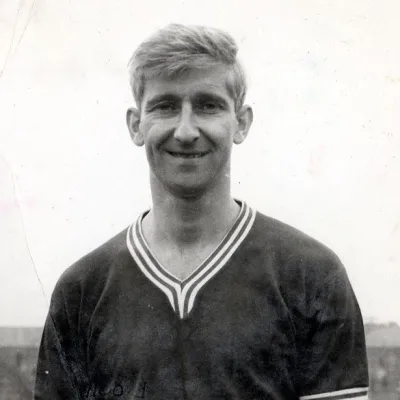
Ally MacLeod
Human Design Chart
Biography
Reality set in after the first match in Argentina when Scotland were beaten by Peru, and followed up with a draw against unfancied Iran. Despite a notable victory against the Netherlands in their final match, Scotland were elininated, whereas the Netherlands reached the final. To compound their disastrous performance, one of the Scottish players (Willie Johnston) was sent home in disgrace after taking a cold remedy that contained a banned substance.
MacLeod survived an immediate inquest by the sport's authorities but resigned after one more game in charge, only 17 matches and about 500 days after his appointment. The Scottish Football Association's annual report, issued in May 1979, stated that, "regardless of the depressing aspects of Mr MacLeod's latter days in the Association's employ, it would be quite unfair not to comment that he was largely responsible for kindling an enthusiasm for the Scottish team that far exceeded anything which had gone before. The Association benefited considerably from that enthusiasm and should not forget it".
MacLeod went back to club management. He died in 2004 after a long fight against Alzheimer's Disease.
See also http://qosfc.com/new_newsview.aspx?newsid=357
Ally MacLeod as a Manifesting Generator 2/4 in Human Design
Manifesting Generator 2/4 — Design at a Glance
Ally MacLeod was characterized by a hybrid energy configuration: As a Manifesting Generator, he possessed the constant power of a Generator combined with the lightning-fast impact of a Manifestor. His design inclined him to skip steps and quickly draw things into his life, allowing him to move forward rapidly. However, this speed brought specific challenges. Often, he tended to overlook important processes, leading him to return later and make up for missed steps. Such setbacks could cause frustration as they contradicted his natural dynamism.
Furthermore, Ally MacLeod often reacted to multiple impulses simultaneously and started several projects at once. Without clear confirmation of his inner authority and strategy, this complexity could quickly lead to overextension. His design required him to wait for a clear impulse rather than initiate himself, and only act when his Sacral Center gave a clear “yes.” Only through this response to life and regular review of his projects could he utilize his creative power without falling into frustration. By following this strategy, he found deep satisfaction in his work and enjoyed the playful aspect of pursuing multiple tasks simultaneously, rather than focusing on just one thing.
Emotional Authority
Ally MacLeod never made decisions based on the first impulse. His design carried Emotional Authority, meaning his defined Emotional Center served as the inner compass – independent of other defined centers. This authority was subject to a constant emotional wave, a permanent up and down of feelings. The world appeared to him colored by the current mood: one moment totally excited, the next moment the same thing completely negative.
This up and down was not an ultimate truth but merely a snapshot. Quick, spontaneous decisions made directly from such an emotion often had negative consequences. The mechanism required patience and conscious hesitation. Ally MacLeod had to take time to let decisions mature, often over several nights. Only when the intense feelings subsided and emotional distance was gained, did the necessary clarity and calmness set in. This process of thinking through and sleeping on decisions was essential, especially for long-term decisions that significantly influenced his life course. Only through this waiting for emotional calm could he utilize his deep, comprehensive insight rather than being guided by transient moods.
The 2/4 Profile — Hermit / Opportunist
Ally MacLeod was someone who oscillated between a deep need for withdrawal and a drive for community. His design created a tension: On one hand, he sought solitude to find inner clarity; on the other hand, he was drawn to his trusted companions to exchange ideas. This dynamic stemmed from his 2/4 Profile, which requires a balance between Line 2 (Hermit) and Line 4 (Community).
For Ally MacLeod, it was crucial to create a safe environment where he could clearly communicate when he sought company and when he wanted to be left alone. During his “Me-Time,” he immersed himself in internal processes to recharge and develop ideas. Once this need for peace was satisfied, he returned from his “cave” to spend time with his favorite people.
Line 2 emphasized his individual responsibility within an organic community and his need to work undisturbed, often in spiritual or familial contexts. Simultaneously, Line 4 acted as a transpersonal force for externalization and influence. Under stress, he tended to focus disciplined on details, while in his normal state, he tended to bring things out without all the details. Through this interaction, he could reflect on the knowledge of his network during his alone time and develop brilliant ideas that he then brought back into the community.
Split Definition — Defined & Open Centers
Ally MacLeod was known as someone whose expression and actions were driven by a deep inner strength, but not impulsively, but rather guided by emotional maturity. His design indicated a tendency towards consistent, clear communication that flowed directly from his willpower and vital energy source. With a defined Throat Center connected to the Heart and Sacral Centers, he spoke from an 'I' that knew what it wanted and had the energy to achieve it. This configuration allowed him to articulate his truth with ease and honesty, as long as he followed his strategy.
The source of his actions was his defined Sacral Center, which acted as a motor generating enormous vital energy. Ally MacLeod was designed to react to what life offered him, rather than initiating actions himself. His sacral response - an inner yes or no - determined whether he had the energy for a task. This was complemented by his defined Heart Center, which gave him willpower and the need to work self-determinedly and keep promises. He preferred to follow his own rhythm, which helped him channel his ego strength healthily.
Especially defining was his defined Solar Plexus Center, which formed his inner authority. Ally MacLeod had to learn to wait for the emotional wave before making decisions. Clarity came to him over time, not in the moment. This emotional depth connected with his defined Spleen Center, which gave him a spontaneous, intuitive perception of health and well-being in the 'now'. His defined Root Center provided the necessary pressure to move forward in the world and manage stress.
In contrast, his Head, Ajna, and G Centers were open. This meant that he did not have a fixed mental strategy or a constant identity. He tended to be infected by the mental confusion of others or to seek a direction that he could not define himself. His identity crystallized only in correct relationships and places where he could reflect the energy of his environment. Instead of getting stuck in intellectual questions, he was designed to be open to new inspirations and to use his emotional and intuitive clarity to find the right path.
Channels for ambition, community, maturation and intuitive perception.
Ally MacLeod was someone who combined intuitive depth with technical precision. His design indicated a tendency towards perfecting skills, driven by the need to correct and refine patterns. This attitude came from the wavelength 48-16, which linked the Gate of Depth (48) with the Gate of Skill (16). Here, the Spleen Intelligence sought vital information, while the Throat Center translated this into excellent execution through repeated experimentation. Talent did not arise spontaneously in Ally MacLeod, but through years of engagement and the gradual mastery of a logical or creative pattern.
Parallel to this, the transformation 54-32, which linked ambition with consistent effort, was at work. This channel, connecting the Root Center with the Spleen, drove him to improve his position through competence and be recognized by the tribe. The fear of failure or the inability to keep up with the best was transformed into a desire to move up and support the tribe. Success was not an isolated event for him, but the result of loyalty and hard work, guided by the awareness of the Spleen.
In interpersonal relationships, the community 37-40 shaped his way of finding allies. This channel connected the Solar Plexus with the Heart and emphasized the need for clear, fair agreements. Ally MacLeod sought his place in the whole, where friendship and mutual support were paramount. He understood that true connection requires emotional clarity over time and that a good deal must be based on mutual benefit, not on spontaneous impulses.
Additionally, he went through the process of maturation 42-53, which forced him to complete experiences and gain wisdom from them. This channel between the Root and Sacral Center challenged him to end cycles before starting new ones and to reflect on the insights gained. His energy was channeled through Gate 9 in the Sacral Center, which enabled detailed work and the taming of details. Without this focus on the concrete, the existing power would not have been effectively usable. Other gates like 35, 49, 56, 39, and 59 emphasized his ability to change, to emotional synthesis, and to genetic binding, while gates like 51, 26, 14, 38, and 21 represented aspects of willpower, power, and resistance in his design.
Collective Circuitry — Circuit Signature
Ally MacLeod was shown through a split definition, which meant two parallel existing but energetically separate power fields in his design. This separation shaped his experience world as distinct impulses side by side, which did not directly transition into one another.
The Understanding Circuit connected his Throat Center with the Spleen. Through the channel 'The Wavelength' (16-48), an energy was at work here that aimed to share logical and rational insights free from conditioning. This promoted a focused, future-oriented perspective that aimed at structure and improvement, yet consciously remained emotionless.
Parallel to this, the Meaning Circuit, which connected his Sacral with the Root Center, was at work. The channel 'Maturation' (42-53) directed attention to emotions and experiences from the past. These energies followed a cyclical pattern with a beginning, middle, and end to reflect on past events and learn collectively with the community.
The Ego Circuit consisted of two separate parts. First, it connected his Heart with the Solar Plexus Center through the channel 'Community' (40-37). This promoted a give-and-take relationship and mutual support within a group. Second, it connected his Spleen with the Root Center through the channel 'Transformation' (32-54). Since this circuit did not have a direct connection to the Sacral Center, the creation of shared resources required necessary pauses to replenish energy.
Right Angle Cross of Planning 1
Ally MacLeod's Human Design chart indicated a tendency towards structured, planned action. His chart contained the right cross of planning, a configuration that pointed towards methodical approach and clear goal-setting. This structure characterized his way of tackling tasks: not impulsively or chaotically, but thoughtfully and step-by-step. The right cross of planning describes an inner order that allows complex undertakings to be broken down into manageable parts. For Ally MacLeod, this meant focusing on long-term goals while always maintaining an overview. His energy was directed towards developing plans and consistently implementing them. This was not a spontaneous reaction to external circumstances, but a conscious, planned process. The mechanics of this cross promoted a stance of responsibility and reliability. Ally MacLeod was someone who valued precision and perseverance. His design supported him in maintaining a clear head in uncertain situations and making decisions based on facts. This trait was central to his life approach and shaped his interactions with the world around him. He did not act from the gut, but from a well-thought-out strategy. The right cross of planning provided him with a stable foundation on which he could achieve his goals. His strength lay in his ability to create order out of chaos and to carry projects through to completion. This was a key part of his identity and his work.
Saturn Return · Uranus Opposition · Chiron Return · 2nd Saturn Return — Life Cycles
Ally MacLeod's Human Design chart indicated a tendency towards cyclical turning points where inner maturity met outer reality. His first Saturn Return marked a phase of condensation: in 1960, at the age of 29, he reached the English Cup Final with Blackburn Rovers. This success corresponded to the mechanics of the Saturn Return, where years of groundwork often condense into a tangible, visible result and strengthen one's structure.
Later, the dynamics of the Chiron Return, a fulfillment cycle where one's incarnation cross unfolds – assuming the person lives according to their strategy and authority – became apparent. For Ally MacLeod, this period fell around 1979, when he was 48 years old and was fired as the Scottish national team coach. This crisis was no accident, but part of the process where meaning and purpose become experiential. The Chiron Return is not a moment of healing old wounds, but a bloom where the essence seeks its deepest alignment. The dismissal here signaled a necessary break to recognize and live the true life task.
Manifesting Generator · Emotional Authority — Synthesis
Ally MacLeod was a Manifesting Generator whose life was marked by an inner dynamic between quick action and the need for emotional maturity. The connection between the Sacral Center and the Throat Center (Channel of the Wavelength) gave him the ability to seize opportunities quickly and express his visions, yet always under the influence of an emotional wave that required thorough reflection. This interplay of sacral reaction and emotional authority determined his approach, as he initially acted instinctively but then needed time to assess the consequences and the correctness of his decisions.
A central paradox in his design lay in the tension between the need for social interaction and the desire for withdrawal. The profile as a natural talent and networker pointed to a deep connection with the community, yet Line 2 demanded phases of isolation to gain inner clarity. This led to a constant oscillation between the desire to engage and the need to withdraw and deepen one's own processes – a rhythm that reflected in the highs and lows of his career, such as reaching a Cup Final and a later crisis.
4 Defined Channels
Incarnation Cross - Right Angle Cross of Planning 1
Solar Return
The Solar Return shows the moment when the sun returns to its exact birth position - your personal solar year.
Life Cycles
Discover the life cycles with a detailed triple view (birth chart, cycle chart, composite).
Human Design Profile
- Strategy
- To respond - wait for something to respond to
- Authority
- Emotional Authority
- Profile
- 2/4 - Hermit / Opportunist
- Definition
- Split Definition
- Incarnation Cross
- Right Angle Cross of Planning 1
- Date of Birth
- 26.02.1931 07:50
- Place of Birth
- Glasgow, United Kingdom
Frequently Asked Questions
What was Ally MacLeod's Human Design type?
What profile did Ally MacLeod have?
What authority did Ally MacLeod have?
What incarnation cross did Ally MacLeod have?
When was Ally MacLeod born?
Discover your own Human Design
Are you also a Manifesting Generator? Find out in a personal reading how to unfold your multi-talents and direct your energy wisely.
More Personalities
Back to overviewAldair

Alizée

Angeli

Arletty

Artus

Balthus