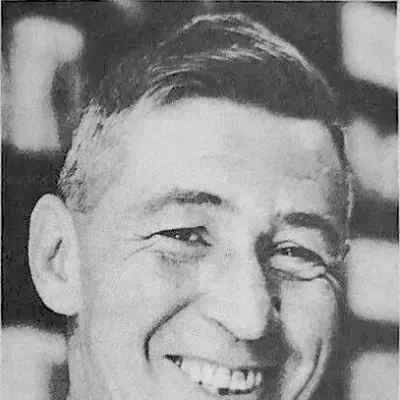
Amiri Baraka
Human Design Chart
Biography
He attended Rutgers University but left without graduation. He changed his name to LeRoi Jones in 1952. Two years later, in 1954 he enlisted in the Army but was dishonorably discharged after getting into an altercation with a superior officer. He moved to Greenwich Village where he became involved with jazz musicians and writers; in 1958 he founded Totem Press which published some of the Beat Generation writers like Jack Kerouac. That year he married Hettie Cohen. The couple jointly edited Yugen literary magazine until 1963. A trip to Cuba evoked the activist in him and he began writing controversial political and social commentary and plays. In 1967 he adopted the African name Imamu Ameer Baraka, which he later changed to Amiri Baraka. At around this time he divorced Hetty and left her and their two children. In 1966 he remarried, this time to a woman who took the name of Amina Baraka. A year later he began teaching. With his controversial anti-Semitic views which he later denounced, he was active in the Black Muslim movement, embracing Islam and calling for an end to the oppression of Black people. He continued writing and in 1989 won an American Book Award and a Langston Hughes Award. He has also appeared in several films.
His 31-year-old daughter was murdered in 2003 in New Jersey.
Baraka died at Beth Israel Medical Center in Newark, New Jersey on 9 January 2014.
Amiri Baraka — Projector with Profile 5/1
Projector 5/1 — Design at a Glance
Amiri Baraka revealed himself as someone with a dense, focused aura that immediately identified systemic errors. His design acted like a bright flashlight, its beam directed precisely at the areas in others still shrouded in darkness or not functioning properly. This ability to instantly identify faults in systems characterized his interaction with the environment.
The Human Design mechanics of a Projector explain this dynamic: Since Projectors do not have a constant intrinsic energy source but must balance phases of high activity with enforced rest periods to prevent burnout, their way of operating is crucial. Direct criticism would provoke resistance, similar to shining light directly into someone's face. Instead, the effective strategy was to attract through one's own harmonious glow and wait for a respectful invitation. Only then did his attractive effect be perceived as helpful rather than unpleasant.
Living by this design, Amiri Baraka was rewarded with success. Deviating from it led to the non-self theme of bitterness. His chart thus set a tendency towards a specific kind of leadership: not through constant pushing but through focused clarity and patience until others were ready to embrace the path his light illuminated. This structure determined how he deployed his energy and when he had to withdraw to avoid burning out.
Emotional Authority
Amiri Baraka's decision-making required mandatory time delay and conscious 'sleeping on options'. Spontaneous reactions were for him deceptive snapshots; true clarity emerged only after emotional distancing. This resulted from his Emotional Authority, carried by the defined Solar Plexus Center. This center was subject to a permanent wave motion of feelings, constant ups and downs. The world appeared to him always colored by the current mood: A moment of enthusiasm could turn into deep skepticism in the next. Since this immediate emotional reaction was only a first impression, not his deeper truth, quick, impulsive decisions could have negative consequences.
The mechanics of his inner authority dictated patience. The more time he took, the more comprehensively he could perceive situations. This meant that he had to hesitate and question decisions multiple times until intense feelings subsided. Only then did he gain the necessary emotional distance that allowed calmness and clarity. This process was essential for long-term realignments in his life. Emotional Authority always took precedence over other defined centers, regardless of further configurations in the design. It functioned as a central filter: Not the first impulse served as a guide but rather the result remaining after running through the emotional cycle. This need for delay protected him from misjudgments arising from temporary mood swings.
The 5/1 Profile — Heretic / Investigator
Amiri Baraka revealed himself as someone who, with almost magnetic attraction, drew others to him seeking solutions. His Human Design Profile 5/1, that of the 'Hero' and 'Explorer', set this dynamic: Line 5 endowed him with the ability to offer collective answers in crisis times and attract necessary resources. Yet, this public role stood in tension with the private Line 1, demanding deep individual learning and experience accumulation as a foundation.
This configuration carried the risk of exhaustion. Like a scientist answering questions for hours only to end up drained, Amiri Baraka could easily be overwhelmed if he did not set clear boundaries. The uncertainty regarding his own depth – a characteristic of the fifth line – could hinder action and limit experiments. Simultaneously, Line 1 urged development through experience and new beginnings, often triggered by criticism of the status quo or pressure to start something new.
The challenge lay in maintaining balance between serving others (Line 5) and his own research work (Line 1). Without conscious 'saying no', energy risked being depleted before deep processes could mature. His design thus described a constant balancing act: The outer attractiveness and problem-solving competence had to be stabilized through inner maturation and protection of his knowledge accumulation, to sustainably impact.
Split Definition — Defined & Open Centers
Amiri Baraka revealed himself as someone whose expression was constant but heavily dependent on emotional waves and momentary instincts. His defined Throat Center served as a channel for messages from other sources: It translated the passion of his defined Solar Plexus Center, the intuitive health instinct of his defined Spleen, and the existential pressure of his defined Root Center into speech and action. This configuration shaped a communication style that was reliable in tone but needed time to find clarity due to being filtered through emotional ups and downs.
At the same time, Amiri Baraka relied on several open centers for his environment. His open Head Center made him receptive to mental inspirations from the surroundings, tended to engage with questions of others rather than generate consistent inner inspiration, and sought situational focus instead of constant internal guidance. The open Ajna Center allowed him to flexibly take in concepts without holding them as personal truth, making him prone to reflecting other people's ideas or feeling unsure about the validity of his own thoughts.
His open G Center meant that identity and life direction did not come from within but were reflected through the right place and fitting relationship; he sought love and orientation in the environment rather than defining it himself. The open Heart Center led to willpower often being conditioned from outside or felt as a deficit, making him tend to prove himself through promises he could not keep. Finally, his open Sacral Center took vital energy from the surroundings instead of generating it independently, making him vulnerable to exhaustion when taking on others' energy rather than trusting in his own authority and resting.
Channels for intuitive search and mystical synthesis.
Amiri Baraka's design was characterized by a deep, instinctive search for truth that he transformed through disciplined repetition and technical mastery into communicated talent. This configuration drove him not only to acquire skills but to refine them to excellence, turning pure technique into a unique form of expression.
The Channel of Wave 48-16 formed the heart of this process. It connected the intuitive depth of Gate 48, which seeks life-critical information and accesses inner intelligence, with Gate 16 in the Throat, which perfects dexterity and enables new experiments. Through this connection, Amiri Baraka translated his internal instincts into precise external actions. Success depended on a deep identification with the activity as well as external recognition and resources supporting the long-term perfection process. The design required engagement over years to achieve mastery of the pattern and express an individual wavelength.
Parallel to this, Channel 19-49 of Synthesis linked the Root Center with the Solar Plexus. This channel emphasized the emotional frequency of belonging and tribal connection. Gate 19 pressed for closeness and cohesion, while Gate 49 set principles rejecting anything not in line with the highest ideals of the collective. This created a delicate balance between the need to be needed and the necessity of drawing clear boundaries for the belief system and resources of the tribe.
Additional Gates like Gate 21 (Control of material things) and Gate 53 (Freedom for new cycles) underscored the drive for respect in the community as well as readiness to leave old paths behind. Gate 54 linked worldly success with spiritual development, while Gates such as 44 and 50 fostered vigilance and traditional values. The combination of these elements formed a profile that united technical precision with emotional loyalty to the community.
Collective Circuitry — Circuit Signature
Amiri Baraka navigated between rational future planning and traditional group cooperation. His design presented two parallel, unconnected energetic streams. The Mind Circuit connected his Throat Center with the Spleen through Channel 'The Wave'. This promoted a tendency towards logical, emotion-free insight and vision of a better future through structure. It was about sharing rational insights free from conditioning, focused on visual clarity and format energy for the future.
Simultaneously, the Ego Circuit connected his Solar Plexus Center with the Root Center via Channel 'Synthesis'. This stream served tribal cooperation and resource building through exchange of giving and taking. Since there was no connection to the Sacral Center, constant life force was lacking; this required necessary rest periods for energy regeneration for communal creation. The dynamics lay in the tension between this clear, future-oriented ratio and the conservative, tradition-influenced support within the group. Both systems existed side by side as separate forces: on one hand, intellectual strategy to improve society, on the other, emotional wave movement serving collective welfare, each with its specific demands for focus and recovery.
Left Angle Cross of Endeavour 2
Amiri Baraka's design established a structural framework in which effort and active striving became the central dynamic. This aligned with the configuration of the left cross of effort 2, defining the process of working not as mere necessity but as a fundamental aspect of life. In this pattern, there was a tendency to invest energy purposefully into directed efforts, where the result often only gained its full significance through the intensity and endurance of the effort itself. The underlying mechanics emphasized less about quick success than about the quality of work done and the inner discipline associated with continuous striving. For Amiri Baraka, this structure shaped an attitude in which action itself – the struggle, the shaping, the perseverance – was at the forefront. It was a design characteristic that tended to embrace challenges not as something to avoid but as a necessary part of personal and creative processes. Energy flowed through action, through engaging with tasks and projects. This created inner stability based on the experience that values and insights had to be gained through one's own efforts. The left cross of effort 2 thus described a way of life where the path of effort was an integral part of the goal rather than merely a means to an end.
Saturn Return · Uranus Opposition · Chiron Return · 2nd Saturn Return — Life Cycles
Amiri Baraka's development proceeded in marked phases of consolidation and public recognition. In 1971, at age 37, he published 'Raise Race Rays Raize: Essays Since 1965'. This period coincided with a Uranus opposition, an astrological turning point often associated with sudden changes or breakthroughs of new ideas. It was a moment when years of groundwork condensed into visible results and his voice became publicly effective.
Later, in 1989 at age 55, he received the American Book Award as well as the Langston Hughes Award. This occurred during his second Saturn return. The second Saturn return is a cycle of maturation where one's life purpose and inner compass often crystallize more clearly. It was a phase of affirmation in which his previous paths and achievements showed their full validity. These two events – an early breakthrough through new impulses and later recognition as a sign of maturity – structured his life path. They illustrate how internal developments can condense into concrete milestones when one follows their own rhythms.
Projector · Emotional Authority — Synthesis
Amiri Baraka lived a life marked by the profound connection between perception and expression. His ability to recognize flaws in systems (as indicated in his design as a projector) manifested in viewing things from a unique perspective and communicating these insights through his work – often coupled with the need to convey a clear message (defined Throat Center). This drive for problem-solving was strengthened by a deep understanding of patterns and principles (Channel 48-16), enabling him to translate complex ideas into tangible forms. The emotional wave (emotional authority) required time to gain clarity, yet it nourished his ability to grasp the nuances of human experience and reflect them in his works.
Central to his life was the tension between the need for recognition and the inner search for authenticity. His open Heart Center points to a deep longing for validation, while the overall pattern of open centers reveals a tendency towards adaptation and absorption of external influences. This dynamic led to constant struggles with identity (undefined G Center) and the desire to find a firm place in the world. The pursuit of principles and the necessity to adapt to changing circumstances (Channel 19-49) created a life full of transformation and continuous search for an authentic expression of himself.
2 Defined Channels
Incarnation Cross - Left Angle Cross of Endeavour 2
Solar Return
The Solar Return shows the moment when the sun returns to its exact birth position - your personal solar year.
Life Cycles
Discover the life cycles with a detailed triple view (birth chart, cycle chart, composite).
Human Design Profile
- Type
- Projector
- Strategy
- Wait for the respectful invitation
- Authority
- Emotional Authority
- Profile
- 5/1 - Heretic / Investigator
- Definition
- Split Definition
- Incarnation Cross
- Left Angle Cross of Endeavour 2
- Date of Birth
- 07.10.1934 05:15
- Place of Birth
- Newark, NJ, United States
Frequently Asked Questions
What was Amiri Baraka's Human Design type?
Which Profile did Amiri Baraka have?
What kind of Authority did Amiri Baraka possess?
What incarnation cross was assigned to Amiri Baraka?
When was Amiri Baraka born?
Discover your own Human Design
Are you also a Projector? Find out in a personal reading how to unfold your leadership qualities and recognize the right invitations.
More Personalities
Back to overviewSissy Spacek

Alain-Fournier

Anémone

Ann-Margret

Bourvil
Hergé