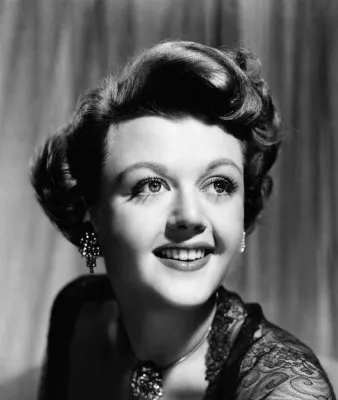
Angela Lansbury
Human Design Chart
Biography
She was the recipient of numerous accolades, including six Tony Awards (including a Lifetime Achievement Award), six Golden Globe Awards, a Laurence Olivier Award, and the Academy Honorary Award, in addition to nominations for three Academy Awards, eighteen Primetime Emmy Awards, and a Grammy Award.
Lansbury was said to be as gracious personally as she was on camera. She achieved stardom in the '60s, first as a Broadway musical star in Mame then, from 1984 to 1996, as Jessica Fletcher in the popular hit TV series, Murder She Wrote.
Lansbury was the daughter of a lumber merchant and a noted stage actress, Irish beauty Moyna MacGill, Lansbury's dad passed away when she was nine. It was her grandfather who was a noted public figure, a Labour Party leader. Her sister Isolde married Peter Ustinov. Her mother took her and her twin brothers to the U.S. during wartime, in 1940. The family was always close and mutually supportive.
Lansbury's film debut as a cockney maid in Gaslight in 1944 brought in her first of three Oscar nominations, along with The Picture of Dorian Gray (1945) and The Manchurian Candidate (1962). Her starring role in the Broadway musical Mame (1966) won four Tony Awards and established her as a gay icon. She did voice-over work for the Disney studio in a main screen production and the ensuing video series releases.
Lansbury made an early marriage at 20 for nine months to Richard Cromwell, who was gay and trying to convince himself that it was not so.
Angela Lansbury — Manifestor with Profile 2/4
Manifestor 2/4 — Design at a Glance
Angela Lansbury revealed herself as a person who radiated a clear, forward-thinking energy and was destined to pioneer new directions. Her design as a Manifestor placed her in the role of a trailblazer, similar to an Emperor who carries the vision of an empire but delegates its implementation. This configuration often led to polarization from her environment: Some followed her enthusiastically, while others rejected her big dreams or even outright rejected them. The central pain point of this type lies in misunderstanding, as the Manifestor's thinking is often faster than the environment's ability to keep up.
To minimize this resistance and find the right followers, the strategy of informing was crucial. By clearly communicating her intentions and visions before acting, she could avoid friction. Living this strategy faithfully rewarded her system with a sense of inner peace. Missing this path often resulted in deep, lasting anger. This dynamic shaped her interaction with the world: She was dependent on making her intentions transparent to effectively and without unnecessary conflict exercise her leading role.
Emotional Authority
Angela Lansbury revealed herself as someone who did not make decisions on impulse but consciously let them rest until the emotional wave had subsided. Her design carried Emotional Authority, meaning her Solar Plexus Center was defined, thus determining her inner decision-making ability. This center was subject to constant ups and downs of emotions; the world appeared to her always colored by her current mood. What was perceived as inspiring in one moment could be seen as negative in the next. Since this first impression was only a snapshot and not necessarily the truth, spontaneous decisions made out of emotion often turned out to be detrimental.
The mechanics of her authority required patience and time. By allowing herself to properly deliberate and rethink decisions multiple times, she gained emotional distance. Only as the intense feelings subsided did clarity and calm set in. This process of 'sleeping on it' was crucial to gain deeper insights and make long-term life decisions safely. Emotional Authority always took precedence over other defined centers, regardless of what else was active in her chart. She had to learn to wait for her inner truth rather than reacting to the first emotional impulse.
The 2/4 Profile — Hermit / Opportunist
Angela Lansbury was marked by the Profile 2/4, known as 'Natural Talent and Networker', characterized by a constant oscillation between the need for withdrawal and the desire for community. This design suggested an inner tension: On one hand, the deep longing of Line 2 to retreat into the 'cave' to run internal processes undisturbed and gain clarity. On the other hand, the need of Line 4 to spend time with chosen favorite people and share the collected network knowledge.
For Angela Lansbury, it was essential to create a safe environment where she could clearly communicate these needs. She had to learn to signal clearly when she wanted company and when she needed silence. In her phases of isolation, she could reflect on the impressions from her social environment, evaluate them, and develop brilliant ideas. Line 4 patiently waited for the right moment to express details only when they were internally organized. Being pulled out of this ascetic phase too early could lead to frustration. Only when the need for solitude was satisfied did she emerge again to share her insights with her community. This rhythm of withdrawal and connection shaped her way of processing knowledge and acting in relationships.
Split Definition — Defined & Open Centers
Angela Lansbury revealed herself as a person with a deeply rooted inner identity and a clear sense of direction. Her defined G Center endowed her with a consistent self-love and the ability to guide others onto new paths without becoming dependent on them. This inner security contrasted with her emotional depth: Her defined Solar Plexus Center served as her inner authority. She was designed to wait out the waves of her feelings before making decisions. This emotional clarity required patience, as impulsive action at the highs or lows of the wave would have led to chaos.
Her communication was marked by her defined Throat Center, which served as a focal point for her expression. She did not speak only from the mind but transmuted information from various sources into a reliable voice. This was supported by her defined Spleen Center, which gave her a spontaneous, intuitive intelligence in the moment. She could use immediate, non-rational knowledge to stay healthy and protected. Her defined Root Center provided the necessary pressure to move forward and nourish existential awareness.
At the same time, Angela Lansbury was open to external influences in other areas. Her open Head Center meant that she did not have a consistent mental inspiration but tended to engage with others' questions or be overwhelmed by doubting thoughts when she did not trust her inner authority. Her open Ajna Center allowed a flexible mind that was open to new concepts but susceptible to interpreting others' opinions as her own truth. Her open Heart Center made her sensitive to the pressure to prove her worth, although she did not have a consistent willpower for it. Finally, her open Sacral Center made her vulnerable to absorbing the energy of others; she had to learn to set boundaries and not run on 'borrowed' energy to avoid exhaustion.
Channels for leadership, ambition and emotional change.
Angela Lansbury exhibited a foundational stance based on collective leadership and logical guidance. The Alpha Animal Channel 7-31 connected her G Center with her Throat Center. This gave her the ability to recognize trustworthy patterns and make them effective through her voice. She did not act as a lone ruler but as someone who needed to be invited by the community to lead. Her authority arose from the ability to understand trends and guide society safely into the future, always dependent on the approval of her environment.
Parallel to this, she was driven by the Transformation Channel 32-54, connecting her Root Center with her Spleen Center and creating an ambition based on consistent effort. Driven by the fear of failing her 'tribe' or social group, she sought ways to lift herself and others up. Her instinct recognized when support was available to secure well-being and success. This channel demanded loyalty and hard work to prove value to the community and thus gain recognition.
Emotionally marked by the Channel of Transience 35-36, connecting her Solar Plexus Center with her Throat Center, this channel sought new experiences and resisted restrictive patterns. She learned through experiencing crises and emotional fluctuations to gain wisdom. Her expressive power served to share these deep, often transient feelings and inspire others to seize the moment. While this restless search for new experiences could lead to instability, she matured through accepting her emotional wave and the willingness to fully immerse herself in every correct experience.
Collective Circuitry — Circuit Signature
Angela Lansbury revealed herself through her design as someone who combined logical clarity with emotional depth, with these two forces operating separately. Her Understanding Circuit connected her Throat Center with her Identity Center. This allowed her to communicate rational insights and strategic visions for the future clearly and structurally, free from emotional distortion. Parallel to this, her Meaning Circuit, connecting her Throat Center with her Solar Plexus Center, was not about cold logic but about sharing emotional waves and experiences from the past. She reflected on events to grasp their meaning and shared these felt insights with others to learn together. A third, independent aspect was her Ego Circuit, connecting her Spleen and Root Centers. This Transformation Channel ensured an intuitive adaptability and the ability to mobilize energy in stressful situations to protect or create resources. As Angela Lansbury had a split definition, these three circuits existed as separate, not directly connected energy blocks. She did not have to choose between rational strategy and emotional reflection but could use both, depending on the context, while the intuitive transformation in the background secured her resilience. This configuration shaped a personality that kept an eye on the future while emotionally processing the past, always supported by an instinctive ability to transform.
Right Angle Cross of Maya 3
Angela Lansbury revealed herself as someone capable of developing a clear, actionable order out of seemingly contradictory or chaotic situations. Her design featured the right cross of the Maya 3, a configuration often associated with the ability to structure complex information into a form that others can easily understand and implement. This was not a spontaneous insight but a process of mental and practical integration. She understood how to grasp the unstructured and place it within a framework that made sense. This trait allowed her to be a stabilizing force in moments of uncertainty or change, showing paths that emerged from confusion. Her approach was less confrontational and more organizing; she created connections between ideas and people that were not immediately apparent. Through this ability to clarify and structure, she could influence without needing to dominate. She helped others recognize and effectively use their own resources by creating the necessary conditions for them. This was a central aspect of how she interacted with the world and the people around her.
Saturn Return · Uranus Opposition · Chiron Return · 2nd Saturn Return — Life Cycles
Angela Lansbury revealed herself as someone whose creative power was marked by cyclical renewal and long-term structuring. Her design showed a tendency to set new impulses in certain life phases that later solidified into stable forms.
In 1966, at the age of 41, she won the award for Best Actress in a Musical for “Mame”. This fell during a phase of Uranus opposition, a time when unexpected changes or public recognition often occur, affirming or redirecting the previous path. The success here was no accident but an expression of an inner dynamic pushing for change and visibility.
Later, in 1974 at the age of 49, she played the role of Rose in the Broadway production of “Gypsy”. This marked her Chiron return, a fulfillment cycle in which one’s potential unfolds and becomes experiential. It was not a healing phase but a blooming time when her artistic identity increasingly came to the fore.
Her second Saturn return began in 1984 when she started the long-running television series “Murder, She Wrote” at the age of 59. This cycle represents the anchoring of responsibility and structure. The series became a permanent part of her body of work, showing how she brought her experiences into a sustainable form during this phase.
These three events illustrate how Angela Lansbury used her life energy: by adapting to external changes, unfolding her personal power, and creating stability.
Manifestor · Emotional Authority — Synthesis
Angela Lansbury was a Manifestor who, through her defined Throat and Identity Centers (Channel “The Alpha Animal”), naturally exercised authority. This ability to recognize logical patterns and project them into the future shaped her path as a pioneer and shaping force. Her profile as a natural talent and networker points to an interaction between the need for inner reflection and the desire for connection, which showed in her ability to act independently as well as cultivate relationships that supported her visions. Emotional authority required time to let decisions mature, which was evident in a deep and authentic expression.
A central paradox in her design lay in the tension between the ability to act as a logical leader (Understanding Circuit) and the need for inner clarity and withdrawal (Line 2 in the Profile). This led to a dynamic in which she took initiative and inspired others, but also needed phases of self-reflection and withdrawal to regenerate her energy. A documented event (1984) shows how she established a long-lasting career that bore witness to her ability to realize visions while also considering her inner needs.
3 Defined Channels
Incarnation Cross - Right Angle Cross of Maya 3
Solar Return
The Solar Return shows the moment when the sun returns to its exact birth position - your personal solar year.
Life Cycles
Discover the life cycles with a detailed triple view (birth chart, cycle chart, composite).
Human Design Profile
- Type
- Manifestor
- Strategy
- To inform others before acting
- Authority
- Emotional Authority
- Profile
- 2/4 - Hermit / Opportunist
- Definition
- Split Definition
- Incarnation Cross
- Right Angle Cross of Maya 3
- Date of Birth
- 16.10.1925 00:45
- Place of Birth
- London, United Kingdom
Frequently Asked Questions
What was Angela Lansbury's Human Design type?
What Profile did Angela Lansbury have in Human Design?
What Authority guided Angela Lansbury's decisions?
What incarnation cross did Angela Lansbury have?
When was Angela Lansbury born?
Discover your own Human Design
Are you also a Manifestor? Find out in a personal reading how to use your initiation power peacefully and dissolve resistance.
More Personalities
Back to overviewSissy Spacek
Anémone
Ann-Margret
Arletty

Arno

Artus