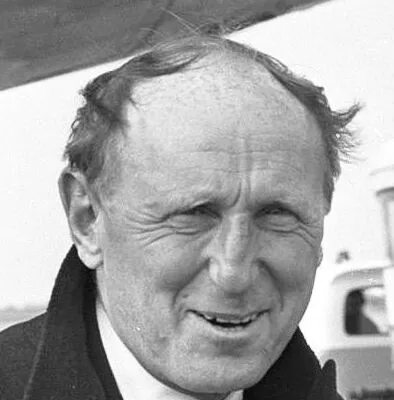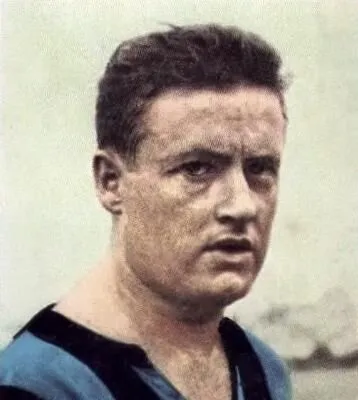
Antoine Bonifaci
Human Design Chart
Biography
In 1952, he was transferred from Nice to Inter Milan for a fee of around 30 million francs.
Antoine Bonifaci died on 29 December 2021 at age 90 in Villefranche-sur-mer. The football stadium of Villefranche-sur-Mer bears his name.
Antoine Bonifaci as a Projector 6/2 in Human Design
Projector 6/2 — Design at a Glance
Antoine Bonifaci's design was characterized by a focusing aura that acted like a bright flashlight, revealing system errors immediately. This ability allowed him to precisely identify weaknesses in his environment. However, a direct attack on this perception often provoked resistance, so his most effective strategy was not to criticize but to attract others through his own harmony. By being a shining example himself, he unconsciously invited others to seek his insights. This required patience: Antoine Bonifaci had to wait for a respectful and honest invitation to exercise leadership without friction.
His undefined Sacral Center also meant that he did not have constant life energy at his disposal. Instead, he experienced cyclical phases of high efficiency that needed essential rest periods to prevent burnout. This rhythmic energy management was crucial for his well-being. If Antoine Bonifaci lived according to the principle of invitation and rhythm, he was rewarded with success. Neglecting this structure and trying to fight against the flow of his nature or push without invitations led sooner or later to bitterness as an expression of his non-self. His path involved respectfully using the attractive power of his aura and carefully preserving his energy.
Emotional Authority
Antoine Bonifaci showed an inner decision-making structure that required patience and temporal distance. His inner authority lay in the defined Emotional Center, meaning that his feelings were not just accompanying phenomena but the actual source of clarity. This center was subject to a permanent emotional wave with constant mood swings. In one moment he could be enthusiastic about something, in the next view it negatively. However, his immediate feeling was only a snapshot, no final judgment. Quick, spontaneous decisions based on this initial emotional reaction carried the risk of proving false as they reflected the transient coloring of the world through current moods rather than deeper truth.
The mechanics of his emotional authority required time. The longer a decision could mature, the more comprehensive his insight became. Antoine Bonifaci had to allow himself to hesitate and reconsider decisions multiple times. This process served to even out intense initial feelings. Only with emotional distance did true clarity and calm set in. This was particularly crucial for long-term life decisions. Emotional authority took precedence over all other defined centers in his design; it was the primary instance he needed to follow to act in harmony with his energy. Through this conscious delay, he separated himself from impulsive reactions and gained access to a stable inner guidance.
The 6/2 Profile — Role Model / Hermit
Antoine Bonifaci's design featured a clear developmental line: From an early phase of active experimentation to a later stage of reflective distance. As a role model and natural talent (Profile 6/2), he lived before his thirtieth year primarily by the principle of trial and error. During this time, he sought intense personal experiences but withdrew after mistakes to learn from them. This period was marked by the energy of Line 2 in Gate 35, showing a strong desire for change and new stimuli as well as blocked creative power.
After his thirtieth year, Line 6 of Gate 40 became active. Antoine Bonifaci turned away from external activity and retreated into an inner 'cave' to reflect deeply on his past experiments with great distance. This time served for intensive reflection, healing, and deep self-knowledge. Line 6 allowed him to identify inferior forces within his community and reject unfair demands through strong willpower.
Emerging from this retreat, Antoine Bonifaci eventually emerged as a wise role model in public life. Others recognized his wisdom and sought his advice to learn from his ability for deep introspection. His path illustrated the transition from chaotic learning through mistakes to clarifying authority that arises from community connection but is based on healthy distance.
Triple Split Definition — Defined & Open Centers
Antoine Bonifaci revealed himself as someone with a strong inner resilience and willpower, paired with a constant mental process. His defined Heart Center provided consistent energy for the ego and control over resources; he enjoyed working independently and keeping promises. This assertiveness was complemented by his defined Ajna Center, which allowed for a specific, independent form of thinking and concept formation. He processed data continuously and was mentally hard to influence, which could lead him to make decisions based purely on intellect or cling to unfinished thoughts.
His inner authority lay in the defined Solar Plexus Center. This meant that he did not have immediate emotional clarity but needed patience to wait out the waves of his feelings before acting. Impulsive reactions to emotional highs and lows were a typical trap; only after going through the cycle would true insight emerge. His defined Throat Center enabled him to reliably communicate and put into action these internal processes, whether they originated from heart, mind, or emotion. Additionally, his defined Spleen Center offered spontaneous intuitive protective mechanisms in the present moment, while his defined Root Center provided a constant pressure to deal with stress and move forward.
In contrast, his G Center was open. Antoine Bonifaci did not have a fixed internal identity or life direction; these were initiated by the environment and relationships. He tended to find himself in others or seek direction rather than determine it for himself. His open Sacral Center warned of overload: since he lacked constant generative life force, he risked exhaustion from "borrowed" energy from others. He needed to learn to set boundaries and rest instead of getting drawn into the work dynamics of his environment. His open Head Center made him vulnerable to mental confusion or the pressure to answer other people's questions rather than trust in his own emotional clarity.
Channels for ambition, community and logical acceptance.
Antoine Bonifacis Design was characterized by a structural duality that combined intellectual order with social ambition. The Channel of Accepting 17-62 shaped a permanent internal process: His mind organized details logically to integrate them into his mental pattern. Understanding only arose through this integration; what did not fit remained incomprehensible. This created pressure in the Throat Center to verbally explain and justify his opinions.
At the same time, the Channel of Transformation 54-32 drove a deep ambition motivated by the fear of failure for the "tribe." This energy demanded hard work – a tendency towards workaholism – to prove worth and gain social status. Success depended on recognition from others, which intensified his drive to rise.
The Channel of Community 37-40 rounded out this Profile with a need for fair, emotionally grounded agreements. Antoine Bonifaci sought a respected place in a group but waited for the right invitation to contribute. This combination created tension between the compulsion for logical classification and the desire for social security through achievement.
Additional Gates like 35 (Change), 5 (Rhythm), and 18 (Correction) underscored the need to make new experiences and perfect patterns, while Gate 8 fostered a desire for an individual contribution to the group. The interaction of Reflection (Gate 33) and Control of Material Things (Gate 21) was evident in the balance between withdrawal and active service to the community.
Tribal Circuitry — Circuit Signature
Antoine Bonifaci revealed himself through a mechanical necessity to formulate logical structures and share them with others. His design connects the Ajna Center (Mind) directly with the Throat Center (Expression). This connection in the Understanding Circuit allowed him to translate rational insights—free from emotional coloring of the Solar Plexus—into clear words or actions. It was about improving society through focus and strategy, with energy visually structured toward the future.
In addition to this clear line, Antoine Bonifaci had two other energetically separate streams due to his Triple Definition. One stream connected the Heart Center (Will) with the Solar Plexus Center (Emotions). Here, a dynamic interplay between emotional wave motion and the ability to enter into or break commitments played out. This flow was not directly linked to his Mind Pressure; it ran parallel as an independent source of power for emotional decisions and acts of will.
The third stream connected the Spleen Center (Intuition/Survival) with the Root Center (Stress/Energy). This created an immediate responsiveness to environmental stimuli, where intuitive perceptions were directly transformed into physical energy or stress responses. Even this channel stood isolated from the other two groups. Thus, Antoine Bonifaci lived with three parallel, non-interpenetrating energetic systems: one for rational communication, one for emotional will formation, and one for intuitive survival reactions. Each system operated according to its own laws without direct interconnection between them.
Left Angle Cross of Migration 2
Antoine Bonifaci's Human Design profile established a fundamental dynamism characterized by letting go and trusting in the natural flow of events. His inner drive was not to hold on or control, but rather to move with the rhythm of moving forward. This configuration described a life task where Antoine Bonifaci had to learn not to cling to people, ideas, or material circumstances. Instead, his chart indicated the necessity of making way for new opportunities by letting go of the old.
This pattern was defined by the left Moving Forward Cross 2. It represented a deeper motivation often working unconsciously, leading Antoine Bonifaci to avoid rigid attachments and excessive control. The mechanics of this cross translated into a character trait: the art lay in not blocking his path through grasping but keeping it open with an inner attitude of trust. Antoine Bonifaci's design challenged him to let go to create space for creativity. It was less about actively pushing forward than allowing and letting go, where the energy lay in not fighting against the current but moving with it. This dynamic shaped how he navigated life – always flowing without unnecessarily clinging.
Saturn Return · Uranus Opposition · Chiron Return · 2nd Saturn Return — Life Cycles
Antoine Bonifaci experienced a pivotal turning point in his life: his first Saturn Return. This cycle marked the end of youth and the transition into the serious responsibility of adult life. It was a moment of initiation, where illusions shattered and he confronted his own reality along with the resulting obligations.
In 1957, at age 26, this mechanism became concrete: FC Turin paid 29 million francs to secure Bonifaci's services. This event was no mere coincidence but a typical expression of Saturn energy. The high sum and change signaled the beginning of a phase where he no longer used his talents as mere play or youthful potential but applied them with heavy weight and professional consequence. His first Saturn Return condensed years of groundwork into a solid result, establishing him in a role that required real responsibility. Turin's payment was material proof that he had moved from the learning phase to the performance phase and serious commitment.
Projector · Emotional Authority — Synthesis
Antoine Bonifaci lived a life marked by a profound ability to recognize patterns and make them accessible to others (Channel 17-62). This gift, combined with a defined Heart and emotional authority, points to someone whose inner truth lay in carefully weighing feelings and pursuing personal values. He was designed to influence through authentic communication, always in harmony with his internal rhythm – a process that required time and reflection (emotional center). The connection between Root Center and Spleen Center (Channel 54-32) gave him steady energy he put at the service of his goals, always mindful of promoting the greater good.
A central paradox in Antoine Bonifaci's design lies in the interplay of deep understanding and the need for distance (open Sacral Center). He possessed the ability to penetrate complex systems and uncover weaknesses but was also dependent on distancing himself from others' energy pressure. This tension between engagement and withdrawal shaped his life, allowing him both profound insights and the necessary clarity for authentic decisions.
3 Defined Channels
Incarnation Cross - Left Angle Cross of Migration 2
Solar Return
The Solar Return shows the moment when the sun returns to its exact birth position - your personal solar year.
Life Cycles
Discover the life cycles with a detailed triple view (birth chart, cycle chart, composite).
Human Design Profile
- Type
- Projector
- Strategy
- Wait for the respectful invitation
- Authority
- Emotional Authority
- Profile
- 6/2 - Role Model / Hermit
- Definition
- Triple Split
- Incarnation Cross
- Left Angle Cross of Migration 2
- Date of Birth
- 04.09.1931 01:00
- Place of Birth
- Bezons, France
Frequently Asked Questions
What is Antoine Bonifaci's Human Design type?
What Profile did Antoine Bonifaci have?
What authority did Antoine Bonifaci have?
What incarnation cross did Antoine Bonifaci have?
When was Antoine Bonifaci born?
Discover your own Human Design
Are you also a Projector? Find out in a personal reading how to unfold your leadership qualities and recognize the right invitations.
More Personalities
Back to overviewSissy Spacek

Alain-Fournier

Aldair

Anémone

Ann-Margret

Bourvil