Photo: Wikimedia Commons
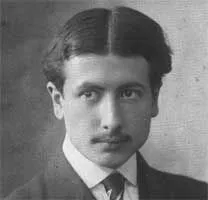
A.P. Sinnett
Human Design Chart
Biography
What does Generator 2/4 mean for A.P. Sinnett?
Generator 2/4 — Design at a Glance
A.P. Sinnett's design inclined towards great endurance, comparable to a workhorse possessing immense strength as long as it had energy for its tasks. As a Generator, he had a lot of sacral energy, which was released not through self-initiated action but by reacting to life impulses. His strategy was to wait for signals from the environment and then act when his inner self gave a clear "yes."
This pattern shaped his life: When he acted in harmony with these inner responses, his design rewarded him with deep satisfaction and a sense of fulfillment. If, however, he tried to initiate things or do work that did not resonate with him, this eventually led to persistent frustration and a lack of energy. Two stumbling blocks were characteristic of him: First, squandering his strength on tasks without inner desire, which tended towards exhaustion. Second, holding back from his heart project, even though he still wanted to keep working with full power. His success depended on not taking the initiative but reacting – from the gut. Only this way could he effectively utilize his enormous energy and nothing could stop him.
Emotional Authority
A.P. Sinnett's inner compass was defined by the Solar Plexus Center, giving him emotional authority. This configuration meant that his decision-making was inseparably linked to his feelings, independent of other defined centers in his design. He was subject to a natural emotional wave that manifested in a constant up and down of his moods. The world appeared to him always colored by his current emotional state; the same thing could inspire him one moment and appear negative the next.
This mechanism required discipline from him: an immediate emotional impulse was merely a snapshot, not yet the deep truth. Quick, spontaneous decisions made directly from such an emotion often risked negative consequences, as they were based on transient states. His strategy was to take his time. By letting decisions sleep and reviewing them multiple times, he gained emotional distance. Over time, the intense feelings subsided, and only then did the necessary clarity and calmness set in. This process was particularly crucial for long-term, life-defining steps, as only then could the true essence of a situation be recognized, free from the distortion of passing moods.
The 2/4 Profile — Hermit / Opportunist
A.P. Sinnett's design established a tendency towards a swinging rhythm between deep withdrawal and close social exchange. He was someone who combined the need for solitude with the desire for community. This tension came from his Profile 2/4, which oscillated between Line 2, the Hermit, and Line 4, the Community Personality. For him, it was crucial to create a safe environment where he could clearly communicate when he sought company and when he needed silence. During his alone time, he immersed himself in internal processes to gain clarity. Once this inner balance was restored, he returned to his familiar people. This structure allowed him to reflect on the knowledge of his network in isolation and to develop new ideas from it. Line 2 brought with it an adaptability to limitations, while Line 4 focused on values and external connections. A.P. Sinnett had to learn to integrate these two poles by transparently conveying his needs, in order to maintain both his inner peace and his social bonds.
Single Definition — Defined & Open Centers
A.P. Sinnett's design established a tendency towards inner stability and clear will formation. His defined Heart Center endowed him with strong self-worth and the ability to keep promises, allowing him to self-determine his own resources and boundaries. This energy acted as a motor for his actions, supported by his also defined Sacral Center, which provided him with a constant source of vitality. A.P. Sinnett showed himself to be someone who waited for stimuli to productively use this energy rather than acting proactively, which helped him avoid frustration and find deep satisfaction in his activities.
Additionally, his defined Solar Plexus shaped his emotional authority. He tended to not make decisions immediately but to wait for the emotional wave to clear up, allowing him to gain deeper insights and channel impulses rather than reacting impulsively. His defined Spleen Center complemented this with an intuitive body intelligence, helping him to distinguish between healthy and unhealthy in the present moment and thus protect himself from danger. The defined Root pressure also gave him the endurance to cope with stress and move forward in the material world.
In contrast, his open Head Center revealed a vulnerability to mental pressure and confusion. A.P. Sinnett tended to engage with questions that were not his own, or to be overwhelmed by doubts when he did not trust his inner authority. His open Ajna Center meant that he did not possess concepts and theories as fixed truths but was open to various ideas, making him flexible yet vulnerable to adopting others' opinions. The open Throat Center led to his inability to communicate consistently, instead waiting for invitations to raise his voice rather than demanding attention. Finally, his open G Center showed that he did not have a fixed identity or direction but found these through interactions with his environment and other people, making him vulnerable to searching for a lost identity when he was not in the right place.
Channels for community, change, logic and principles.
A.P. Sinnett's design laid a tendency towards evolutionary change, paired with a deep concern for the cohesion of the community. The Channel of Mutation 60-3 connected his Root Center with the Sacral Center. This created a pulsating energy based on limitation (Gate 60) and order (Gate 3). A.P. Sinnett had to learn to accept the inner melancholy and pauses in this process rather than rationalizing them. The change did not occur linearly but in sudden, unexpected impulses that required adaptation.
Parallel to this, the Channel of Judgment 58-18 was at work. It connected the Root Center with the Spleen and drove an insatiable urge to question and correct patterns. Gate 58 promoted love for life, while Gate 18 sharpened the sense of what is necessary. A.P. Sinnett was someone who sought logical perfection but only acted when asked to offer solutions. This prevented his critical energy from becoming constant dissatisfaction.
In the social sphere, the Channel of Synthesis 19-49 shaped his approach. It connected Root and Solar Plexus and emphasized tribal loyalty and emotional principles. A.P. Sinnett sought belonging and a clear understanding of who belonged to the "tribe." This drive for belonging was complemented by the Channel of Community 37-40, which connected Solar Plexus and Heart. This channel was about fair agreements and building bridges between individuals. A.P. Sinnett understood that true community rested on mutual support and respected functions, not on hierarchy.
Additionally, Gate 56 contributed to abstract storytelling, and Gate 50 to the protection of traditions. Gate 26 in the Heart Center enabled the integration of innovations into the conservative tribe. A.P. Sinnett's design thus combined the power of sudden change with the necessity of stabilizing social structures through clear principles and fair agreements.
Tribal Circuitry — Circuit Signature
A.P. Sinnett's Design established a tendency towards structured, community-oriented action ability. In his case, the definition was simple, meaning that all defined centers – Sacral, Root, Spleen, Solar Plexus, and Heart – were energetically directly connected. This created a continuous flow of life force from intuition and emotion to willpower, without internal energetic breaks.
The Knowledge Circuit worked through him via the Mutation Channel (3-60), which connected the Sacral with the Root Center. This shaped a pulsating energy aimed at walking one's unique path and transforming new knowledge through deviation from the existing.
Parallel to this, the Understanding Circuit showed through the Judgment Channel (18-58) a connection between Spleen and Root Centers. Here, it was about focused, rational analysis and sharing logical insights, free from emotional coloring, to improve things.
The Ego Circuit connected A.P. Sinnett's Heart, Solar Plexus, and Root Centers. Through the Community Channel (37-40), a rhythm of giving and taking emerged, fostering mutual support. This was complemented by the Synthesis Channel (49-19), which brought together various information into a coherent whole. This configuration emphasized cooperation and the joint creation of resources within a group, while pauses for regeneration were necessary, as there was no direct connection to constant Sacral energy. The combination of these circuits resulted in a Profile based on individual transformation, rational structuring, and strong social connection.
Right Angle Cross of Laws 4
A.P. Sinnett's Human Design profile featured the right cross of Law Four. This configuration indicated an inner disposition marked by a profound connection to spiritual or metaphysical laws. It was not merely intellectual curiosity but an existential orientation that understood life as a process of learning and adapting to higher orders.
In Human Design, the right cross of Law Four describes a specific energetic structure often associated with the ability to recognize hidden truths and integrate them into daily life. People with this orientation tend to be interested in topics that go beyond the visible and seek a meaning that embeds the individual in a larger cosmic context. It is less about dogmatic adherence and more about the practical application of these insights in everyday actions.
For A.P. Sinnett, this meant that his inner compass was always directed towards the search for deeper connections. He was someone who was willing to confront the complex questions of existence and maintained a certain calmness towards the unknown aspects of life. This attitude allowed him to move in areas where faith and experience meet without falling into rigid dogmas. His design fostered an attitude of openness and continuous learning that shaped his entire being.
Saturn Return · Uranus Opposition · Chiron Return · 2nd Saturn Return — Life Cycles
A.P. Sinnett's design laid out a structure where external recognition and inner development were closely intertwined. His life path was marked by clear phases of consolidation and change, oriented towards the great planetary cycles.
In 1868, at the age of 28, he became a journalist for the Evening Standard in London. This marked his first Saturn return, a phase where years of groundwork often condense into a solid professional foundation. Here, he established himself in a position of responsibility and structure.
A decade later, in 1879, he and his wife Patience joined the Theosophical Society. At 39, he was in the Uranus opposition, a period often requiring deep personal transformations and new attitudes. This step signaled a departure from purely material structures towards spiritual questions, driven by a need for renewal and connection.
The second Saturn phase culminated in 1895, when he took over as Vice President of the Theosophical Society Adyar at the age of 55. The second Saturn return confirms and solidifies the values worked out in life. Sinnett took on a leadership role based on the inner orientation previously found. His path thus combined professional discipline with increasing spiritual depth, with each major life turning point shaped by the specific dynamics of these cycles.
Generator · Emotional Authority — Synthesis
A.P. Sinnett lived as a Generator with emotional authority, a life marked by the necessity to follow his own inner wave and find the energy for the right cause. The sacral energy available to him always required careful project selection to avoid burnout and maintain the strength for his heart's desire. This orientation towards his own feelings, combined with the ability to keep promises (defined heart center), created a foundation for trust and self-worth. The profile as a natural talent and networker reinforced this inner rhythm by oscillating between phases of isolation and exchange with others – a dynamic that fostered inner clarity and prepared energy for social interaction.
A central paradox in his design lay in the tension between the need for inner transformation (Channel of Mutation) and emotional authority. While the Channel of Mutation urged unpredictable change and breaking old patterns, emotional authority required time to let decisions mature and recognize the true direction. This led to a constant balancing between the impulse for innovation and the necessity to integrate one's feelings, manifesting in professional changes (1868, 1895) and the development of personal relationships (1879).
4 Defined Channels
Incarnation Cross - Right Angle Cross of Laws 4
Solar Return
The Solar Return shows the moment when the sun returns to its exact birth position - your personal solar year.
Life Cycles
Discover the life cycles with a detailed triple view (birth chart, cycle chart, composite).
Human Design Profile
- Type
- Generator
- Strategy
- To respond - wait for something to respond to
- Authority
- Emotional Authority
- Profile
- 2/4 - Hermit / Opportunist
- Definition
- Single Definition
- Incarnation Cross
- Right Angle Cross of Laws 4
- Date of Birth
- 18.01.1840 23:30
- Place of Birth
- London, UK
Frequently Asked Questions
What was A.P. Sinnett's Human Design type?
What Profiles did A.P. Sinnett have?
What Authority guided A.P. Sinnett?
What incarnation cross did A.P. Sinnett have?
When was A.P. Sinnett born?
Discover your own Human Design
Are you also a Generator? Find out in a personal reading how to use your sacral energy correctly and discover deep satisfaction.
More Personalities
Back to overviewAaliyah

Alain-Fournier
Alexia

Angèle

Angeli
Anne-Marie