
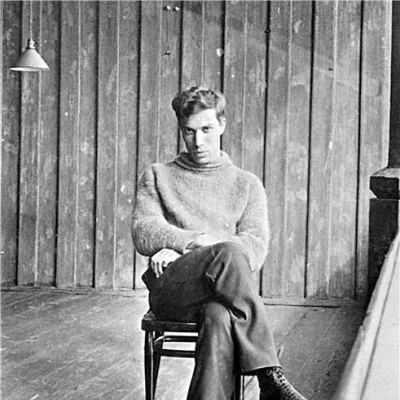
Boris Leonidovich Pasternak
Human Design Chart
Biography
Composed in 1917, Pasternak's first book of poems, My Sister, Life, was published in Berlin in 1922 and soon became an important collection in the Russian language. Pasternak's translations of stage plays by Goethe, Schiller, Calderón de la Barca and Shakespeare remain very popular with Russian audiences.
Pasternak was the author of Doctor Zhivago (1957), a novel that takes place between the Russian Revolution of 1905 and the Second World War. Doctor Zhivago was rejected for publication in the USSR, but the manuscript was smuggled to Italy and was first published there in 1957, as part of a CIA operation to undermine the Soviet Union in the eyes of its citizens.
Pasternak was awarded the Nobel Prize in Literature in 1958, an event that enraged the Communist Party of the Soviet Union, which forced him to decline the prize. In 1989, Pasternak's son Yevgeny finally accepted the award on his father's behalf. Doctor Zhivago has been part of the main Russian school curriculum since 2003.
Boris Leonidovich Pasternak as a Manifesting Generator 4/6 in Human Design
Manifesting Generator 4/6 — Design at a Glance
Boris Leonidovich Pasternak revealed himself as someone with a hybrid energy configuration: He possessed the constant power of a Generator but was also capable of rapid initiation through direct connections to his Throat Center. This design inclined him towards drawing things into his life by skipping steps and pursuing multiple projects simultaneously. His inner dynamics required that he not initiate on his own, but rather respond to impulses from the environment. Only when his Sacral Center gave a clear “yes” could his creative power bear fruit.
The challenge of this configuration lay in the risk of missing important stages through excessive speed or being distracted by multitasking. Without the approval of his inner authority, this burst of creativity quickly turned into frustration – his specific non-self theme. However, when he was aligned with his strategy and responded only to what truly inspired him sustainably, a “play mode” emerged. In this state, he drew deep satisfaction from his work. The necessity of completing one thing before starting another did not suit his nature; rather, his energy flourished in variety and parallel activities as long as each was supported by his inner authority.
Sacral Authority
Boris Leonidovich Pasternak revealed himself as someone who made decisions not through intellectual analysis but by waiting for an immediate physical response. His design established that he was a Generator – the only type whose strategy of “waiting and responding” is identical to their inner authority, simplifying his decision-making process fundamentally: He did not need to think to be right, but merely listen to the impulse from his defined Sacral Center.
This sacral authority expressed itself as gut feelings or bursts of energy triggered by external stimuli. Pasternak learned to pay attention to these bodily signals like grunts, hums, or a nodding “Mhm”. A positive reaction made him feel vital and alive; then he was endowed with seemingly inexhaustible energy to accomplish his work with great enthusiasm and joyfully immerse himself in his tasks without rigid purposefulness.
Additionally, his activated Spleen Center acted as an auxiliary authority for the Sacral Center. This gave him the ability to react quickly and spontaneously. He had direct access to his physical well-being and instinctive perception, which he could rely on reliably. This combination allowed Pasternak to make decisions in a flash, supported by deep intuitive certainty that came directly from the body.
The 4/6 Profile — Opportunist / Role Model
Boris Leonidovich Pasternak's design tended towards a lifelong tension between the need for community belonging and the drive towards intellectual isolation. As someone with Profile 4/6, he experimented frequently and intensely in relationships and friendships during his first three decades of life before Saturn returned, while Line 6 still acted like Line 3. Once Line 6 became active, a conflict emerged between Heart (Line 4) and Head (Line 6): the desire to be part of a network clashed with the longing for wise distance and meaning.
The fourth line from Gate 49 drove him to carry revolutionary principles outward and find support for a program emphasizing human rights. Simultaneously, Line 6 from Gate 43 demanded breakthroughs and mutations through new knowledge. He sought after a new order but engaged only where he sensed his partners supported this transformation. This protected his great heart from opening up to false people. In his later years, the expectation of him as a wise role model emerged, one that manifested through cooperation and the mediation of transformative insights, always accompanied by caution not to lose touch with reality.
Single Definition — Defined & Open Centers
Boris Leonidovich Pasternak's Human Design profile pointed towards a tendency for consequent, conceptual clarity and vital endurance. His defined Ajna Center ensured consistent, trustworthy thinking; he processed data creatively and was mentally resistant to external influence. This mental structure directly flowed into his defined Throat Center: He spoke what he thought with ease and honesty.
At the same time, he possessed an enormous power source in his defined Sacral Center. As a Generator, he had constant vital energy that could only be correctly activated through reaction to external impulses. His strategy was to wait until life asked him something before acting with full sacral support. This gave him persistence for tasks he agreed with.
His defined G Center conveyed a firm self-identity and clear sense of direction. He knew where he belonged without needing others to follow his path. This inner security allowed him to love himself and show others new perspectives, as long as he did not try to impose foreign paths on them.
In contrast, his open Head Center revealed vulnerability to mental pressure and confusion. He tended to engage with other people's questions or seek inspiration to quiet the internal monologue rather than trust his inner authority. His open Heart Center lacked consistent willpower; he was not designed to give promises or prove his worth through competition, making him susceptible to self-doubt when trying to meet expectations.
His open Solar Plexus Center absorbed emotional moods from the environment. He risked personalizing foreign feelings and avoiding confrontation out of fear of rejection. His open Spleen Center carried a fundamental survival anxiety; he tended to cling to things or people that gave him false security instead of making spontaneous decisions. Finally, his open Root Center took on external stress, making him vulnerable to burnout when trying to release pressure through hyperactivity rather than recognizing it as non-self and moving away.
Channels for presence, insight and persistent discovery.
Boris Leonidovich Pasternak's life path was marked by deep inner determination. The Discovery Channel 29-46 connected his Sacral Center with the G Center, giving him the endurance to fully immerse himself in experiences without premature expectations of results. This configuration required a clear commitment through strategy and authority; only then could he muster the persistence to make unique discoveries at the end of a long process and communicate them to the collective.
At the same time, the Awakening Channel 10-20 shaped his way of being in the world. Through the Presence Gate (10) in the G Center and the Now Gate (20) in the Throat Center, he spoke the wisdom that survival and self-reinforcement lie in accepting oneself in every moment and living as an authentic person. This channel enabled him to inspire others simply through his presence and clarity, often without actively striving or consciously steering.
In the realm of communication, the Structuring Channel 43-23 between Ajna and Throat Centers played a role. Here he received spontaneous insights through the Insight Gate (43) and processed them for expression through the Assimilation Gate (23). His challenge was to let go of control and allow his mind to process its innovative knowledge at its own pace. When his unique perspectives were clearly explained and arrived at the right time, they could change others' thinking; lacking timing or inner authority, he risked rejection.
Additionally, individual Gates contributed to the overall configuration: Gate 49 brought a sensitive reaction to principles and emotional waves, while Gate 4 developed logical formulas to clarify suspicious patterns. Gate 16 promoted experimentation up to mastery, and Gate 15 ensured adaptation to natural rhythms in collective structures. Gate 59 pursued a genetic strategy of binding and unification independent of personal preferences.
Individual Circuitry — Circuit Signature
Boris Leonidovich Pasternak's Human Design profile pointed towards a tendency for structured individual expression. As a simply defined person, he had a coherent energetic flow between G Center, Throat, Ajna, and Sacral Centers, giving him clear inner direction.
The Knowledge Circuit connected his Ajna with the Throat Center through the Structuring Channel (Gates 43–23). This promoted the ability to logically organize new insights and express them linguistically precisely, reinforcing his unique identity through mutation energies.
Parallel to this, the Meaning Circuit linked Identity with Sacral Centers (Channel 46–29, Discovery), focusing on emotional processing of past experiences and sharing these felt insights with others to learn collectively from history.
The Integration aspect connected these strands through the Awakening Channel (Gates 20–10) between Throat and Identity Centers. This channel helped guide power intuitively from reactions to life into action in the present moment. Together, these connections shaped a person who went new ways by linking structured knowledge with emotional depth and bringing it authentically into the world.
Right Angle Cross of Explanation 1
Boris Leonidovich Pasternak's Human Design profile carried the signature of the right cross of the Manifestor. This configuration established a specific life dynamics where profound inner clarity was often forced by external conflicts or trials. It was not a destiny of easy confirmation, but rather a process in which one's own truth only became visible through resistance against outer circumstances.
The right cross of the Manifestor describes a mechanism where the individual is destined to define their identity and path through challenges. The 'Manifestation' here does not appear as calm certainty but as the result of confrontation. Boris Leonidovich Pasternak was shown in this pattern as someone whose inner structures only took on their full form when threatened or questioned from outside.
This dynamic means that stability was not achieved through harmony, but through proving oneself in a storm. The energy of this cross demanded a consistent stance: Only by confronting the obstacles and maintaining his own line could he become a clear, clarifying force. It was a path of sharpness and precision, where confusion was burned away by the fire of conflict to leave an unambiguous statement at the end. His life task consisted in not only gaining this clarity for himself but carrying it outward as the result of this hard process.
Saturn Return · Uranus Opposition · Chiron Return · 2nd Saturn Return — Life Cycles
Boris Leonidovich Pasternak's life followed the classical rhythms of planetary cycles, marking structure and change. His first Saturn return around his 28th year served as a phase of consolidation, in which early impulses were condensed into a stable foundation. This period often shaped initial firm commitments and the establishment of a personal base.
The Uranus opposition then brought a phase of necessary release and renewal. Here there was a drive for freedom and change that questioned old structures and forced new perspectives to match inner growth.
The Chiron return, this fulfillment cycle between his 49th and 51st years, marked a blooming period of individual purpose. If Boris Leonidovich Pasternak had lived according to his strategy and authority up until then, the significance of his incarnation cross became clearer; it was a moment of realization, not healing from injuries.
The second Saturn return around his 58th year concluded this arc with further deepening of responsibility and wisdom. It was a time of maturation in which previously gained insights were cast into an even more stable form, shaping the later life phase through clarity and constancy.
Manifesting Generator · Sacral Authority — Synthesis
He lived a life marked by profound sacral energy (defined Sacral Center) and a drive for transformation. As a Manifesting Generator, he possessed the ability to quickly initiate things (active connection to Throat Center), yet his design required a reaction to external impulses rather than pure initiation. This dynamic was reflected in his profile as Networker/Role Model: the desire for community and connectedness (Line 4) clashed with the need to reflect from distance and develop wisdom (Line 6). The defined mental center allowed him consistent conceptual thinking, while the channels of the Knowledge Circuit drove him to gain and express new insights.
A central paradox lay in the tension between his sacral drive for immediate reaction and the mental need for deep reflection (Knowledge Circuit). He was a being of action that was nevertheless slowed by the necessity of understanding and conception. This inner conflict between quick action and thorough deliberation shaped his approach to creative processes and could have led to a constant interplay of spontaneity and conscious design.
3 Defined Channels
Incarnation Cross - Right Angle Cross of Explanation 1
Solar Return
The Solar Return shows the moment when the sun returns to its exact birth position - your personal solar year.
Life Cycles
Discover the life cycles with a detailed triple view (birth chart, cycle chart, composite).
Human Design Profile
- Strategy
- To respond - wait for something to respond to
- Authority
- Sacral Authority
- Profile
- 4/6 - Opportunist / Role Model
- Definition
- Single Definition
- Incarnation Cross
- Right Angle Cross of Explanation 1
- Date of Birth
- 10.02.1890 16:00
- Place of Birth
- Moscow, Russia
Frequently Asked Questions
What was Boris Leonidovich Pasternak's Human Design type?
What profile did Boris Leonidovich Pasternak have in Human Design?
What authority guided Boris Leonidovich Pasternak?
What incarnation cross did Boris Leonidovich Pasternak carry?
When was Boris Leonidovich Pasternak born?
Discover your own Human Design
Are you also a Manifesting Generator? Find out in a personal reading how to unfold your multi-talents and direct your energy wisely.
More Personalities
Back to overviewAlain-Fournier

Aldair

Alizée

Angeli

Arletty

Artus
