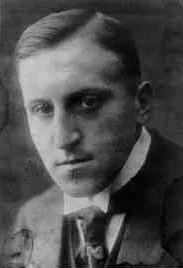
Carl von Ossietzky
Human Design Chart
Biography
In 1912 Ossietzky joined the German Peace Society but was conscripted into the army and served throughout World War I. In 1920 he became the society’s secretary in Berlin. Ossietzky helped to found the Nie Wieder Krieg (No More War) organization in 1922 and became editor of the Weltbühne, a liberal political weekly, in 1927, where in a series of articles he unmasked the Reichswehr (German army) leaders’ secret preparations for rearmament. Accused of treason, Ossietzky was sentenced in November 1931 to 18 months’ imprisonment but was granted amnesty in December 1932.
Ossietzky opposed German militarism and political extremism of both the left and the right. By the time Adolf Hitler became chancellor of Germany in January 1933, Ossietzky had resumed his editorship, in which he uncompromisingly attacked the Nazis. Steadfastly refusing to flee Germany, he was arrested on 28 February 1933, and sent to Esterwegen-Papenburg concentration camp. After enduring three years of incarceration and torture in the camp, Ossietzky was transferred in May 1936 to a prison hospital in Berlin by the German government, which was growing alarmed at the international publicity his case had begun to attract.
On 24 November 1936, Ossietzky was awarded the Nobel Prize for Peace for 1935. The award was interpreted as an expression of worldwide censure of Nazism. Hitler’s reply was a decree forbidding Germans to accept any Nobel Prize. Though not allowed to leave Germany, Ossietzky was permitted to move to a private sanatorium in May 1936 because of his tuberculosis, but under Gestapo surveillance. He died in the Nordend hospital in Berlin-Pankow, still in police custody, on 4 May 1938, aged 48, of tuberculosis and from the after-effects of the abuse he suffered in the concentration camps.
What does Projector 2/4 mean for Carl von Ossietzky?
Projector 2/4 — Design at a Glance
Carl von Ossietzky's Human Design profile indicates a tendency towards precise system analysis. As a Projector, he did not have an intrinsic energy source in the Sacral Center but instead operated through a dense, focused aura. This functioned like a bright flashlight that directed light onto areas of the environment that were "in the dark." His nature was to immediately identify errors in systems and bring light into darkness for others.
However, this mechanism carried a specific risk: when he addressed his observations directly, it often felt uncomfortable or even aggressive to those around him, as if he shone the light directly into their faces. A more elegant expression of his energy would have been to attract others through his own harmony, so that they asked for his insights on their own accord. Therefore, his strategy involved waiting for an honest invitation to lead.
Since Projectors do not possess a consistent life force, they are subject to phases of high activity followed by mandatory rest periods for regeneration. The conventional system often ignored this need. If Carl von Ossietzky lived in alignment with this design, he was rewarded with success. When he deviated from it and tried to fight against the resistance of his environment or lead without invitation, it led sooner or later to the non-self theme of bitterness. His essence was designed to guide through targeted insights, not through sheer force.
Splenic Authority
Carl von Ossietzky demonstrated a fundamental approach based on immediate inner perception: His decisions did not arise from prolonged deliberation but as spontaneous impulses. This reactive manner stemmed from his authority in the Spleen Center, a defined center that functions as a health and alarm system. Since both his Emotional and Sacral Centers were open – a prerequisite for this specific inner guidance – he possessed an acute survival intelligence. His design suggested that the first intuitive impulse was always the right one and directly served his well-being. This allowed him to rigorously define boundaries against harmful influences of all kinds; his physical sensation reliably signaled whether a situation or society was healthy for him. However, this Spleen voice was a very subtle impulse that appeared only once at each moment and could easily be drowned out by external noise. Therefore, his inner authority required high vigilance as well as occasional retreats to follow these delicate signals. Since knowledge of the right course of action became available only in the moment itself, plans often changed frequently; long-term commitments were difficult for his design; instead, he needed a lot of freedom and flexibility to react spontaneously to the current reality without unnecessarily limiting himself.
The 2/4 Profile — Hermit / Opportunist
Carl von Ossietzky showed himself to be someone who oscillated between a deep need for withdrawal and the desire to connect with a close community. His Profile 2/4 created an inner tension: on one hand, he withdrew into his "cave" to gain clarity; on the other hand, he sought exchange with trusted people. This dynamic required clear communication about when he needed company and when he wanted to be undisturbed. Only in this way could he reflect on the knowledge of his network in solitude and develop new insights from it.
This process was shaped by specific energetic configurations. Gate 48 brought a deep, almost deconstructive perspective that questioned reform concepts. Here, the danger lay in decay when deeply rooted values were reduced to harmony – a warning signal against superficial peace. At the same time, Gate 39 with its fourth line acted as a corrective: it called for moderation and careful consideration before any action. Yet the Sun in this position also gave him a firm, almost provocative stability. Carl von Ossietzky did not act impulsively but from a deep conviction that he sharpened in silence and then carried outward with deliberate resolve. His design described a person who gathered strength through withdrawal to bring it forth at the right moment with necessary fortitude.
Single Definition — Defined & Open Centers
Carl von Ossietzkys Design points to a tendency for clear, identity-driven communication based on spontaneous intuition. His defined G Center gave him a reliable sense of self-identity and direction, while his also defined Spleen Center allowed him to perceive intuitive warning signals in the present moment. The connection of these energy sources to his defined Throat Center meant that his voice did not come from impulsive urges or mere conception but as an expression of his inner truth and existential awareness. He spoke from a stable identity, connected with the ability to recognize what is essential in the moment.
At the same time, his chart revealed high sensitivity to external influences in mental and emotional areas. His open Head Center made him vulnerable to mental pressure and the temptation to identify with others' questions or seek inspiration from outside rather than trusting his inner authority. Similarly, his open Ajna Center allowed him to take on various concepts but also led to the danger of holding opinions as truths or compensating for uncertainty through imposed certainty.
His open Heart Center lacked consistent willpower; he tended to make promises to prove his worth, which could lead into a cycle of overextension and self-doubt. Additionally, his open Solar Plexus Center absorbed the emotions of his environment, making him emotionally vulnerable and causing him to avoid confrontation or personalize others' feelings as his own. His open Root Center amplified external stress and adrenaline, leaving him susceptible to an endless cycle of hyperactivity and exhaustion when trying to escape this non-self-driven pressure. His design challenged him to use these open fields as mirrors of the environment rather than getting entangled in them, and to follow his defined centers as a compass for authentic action.
Channels for intuitive clarity, presence and masterful expression.
Carl von Ossietzky showed himself to be someone whose existence was strongly marked by the ability to be awake in the here and now. This quality resulted from Channel 10-20, which connects the G Center with the Throat Center. Through Gate 10 (Presence) and Gate 20 (Now), he transformed individual knowledge into proper action, guided by an underlying code that secured interaction. His survival depended on accepting and loving himself in every moment, making him a voice for individual guidance.
This inner clarity was deepened by Channel of Perfect Form 57-10. It connected the Spleen Center with the G Center via Gate 57 (intuitive insight) and Gate 10. Here, deep intuitive awareness guided his behavior based on self-love. This configuration allowed him to let go of unfounded future fears and act spontaneously appropriately, making him a role model for authentic living.
Additionally, Channel of Wavelength 48-16 shaped his way of perfecting skills. Connecting the Spleen Center (Gate 48, depth) with the Throat Center (Gate 16, dexterity), he sought vital information and experimented continuously. Through repeated practice, he transformed his intuitive depth into a communicated talent that needed recognition to flourish.
Finally, Channel of Flash of Insight 57-20 gave his intuition the clearest voice in the now. Through Gate 57 and Gate 20, his intuitive knowledge reached communication directly. This gave him the ability to express penetrating self-awareness: "I know that I am living now." His spontaneous speaking reached the core of truth faster than others' analytical thinking, encouraging them to awaken their own inner survival intelligence.
Individual Circuitry — Circuit Signature
Carl von Ossietzky's design indicated a tendency towards innovative, sudden insights that were directly translated into action. As someone with a simple definition, he was shown to have clear and coherent energy flows without internal conflict or divided focus.
This unity was marked by three specific circuits. The Knowledge Circuit activated Channel 20-57 ("Flash of Insight"), connecting the Throat Center with the Spleen Center. This produced a pulsating, acoustic energy that immediately translated creative intuition into words or actions – a mechanism of "now" living where intuitive perception was expressed without delay.
Parallel to this, the Understanding Circuit operated through Channel 16-48 ("Wavelength"), also connecting Throat and Spleen Centers. Here focused visual logic took precedence: sharing rational insights free from emotional coloring to improve structures and lead towards a better future.
The Integration Circuit completed this picture with two channels: 20-10 ("Awakening") and 10-57 ("Perfect Form"). These linked Throat, Identity, and Spleen Centers into a cohesive flow. This strengthened individual power by channeling intuitive impulses (Spleen) through appropriate behavior (Identity) and manifesting them in the present moment (Throat).
Since all these channels lay within the same group – Throat, Spleen, and Identity centers were directly connected – creativity, rational analysis, and intuitive self-confirmation did not operate separately but as a single powerful unit in Carl von Ossietzky's design. This promoted the ability to intuitively grasp new ideas, logically structure them, and bring them into the world with personal authenticity.
Right Angle Cross of Tension 3
Carl von Ossietzky showed a basic attitude characterized by internal tensions between the desire for clear orientation and the urge for deep analysis. This dynamic corresponded to the design of the 'Right Cross of Tension 3'. It was a configuration where the need for structural security met the impulse to critically question existing systems. Carl von Ossietzky did not live in harmonious balance with these forces but carried this friction as the driving force of his inner development. The cross described no external action guideline, but rather constant internal work: holding the tension between the stable and the changing without prematurely closing oneself off to either side. For Carl von Ossietzky, this was not a problem to be solved but a character trait that sharpened his perception. He did not seek simple answers but truth in contradictions. This inner structure shaped how he saw the world – less defined by external successes than by the depth of his reflection. The tension remained throughout his life and challenged him to continually re-examine what was truly valid for him. It prompted him not to settle for superficial explanations, but to feel out things to their core.
Saturn Return · Uranus Opposition — Life Cycles
Carl von Ossietzky's design indicated a tendency towards inner stability and long-term structuring, manifesting in phases of consolidation. This attitude became visible in 1919 at the age of 30: The birth of his daughter Rosalinde marked his first Saturn Return. During this phase, years of groundwork condensed into a solid result, here concretized through founding a family as a stabilizing element amidst uncertain times.
Later, another dynamic emerged: Pressure to dissolve old structures and confront established orders. This corresponded to the Uranus Opposition, a cycle often leading to breaks with the status quo. In 1931 at the age of 42, Carl von Ossietzky was convicted for espionage. This event was not an accidental crisis but the direct effect of this planetary configuration on his design: The established order faced challenges, and the consequences were drastic. His conviction reflected the inner compulsion to question existing systems, even if it cost personal security. Thus, his life followed the rhythm of these archetypal cycles – from establishing stable bonds to radical questioning of authoritarian structures.
Projector · Splenic Authority — Synthesis
He was a projector whose energy was geared towards recognizing and bringing out the potential in others (Design Perspective). This natural talent for perceiving imbalances and revealing hidden aspects shaped his interactions. The authority in the Spleen Center gave him pronounced intuition and a fine sense for his own health, enabling him to distance himself from harmful influences. This combination of projection and inner guidance formed a person always seeking authenticity and truth – both in others and within himself (Centers). His natural inclination towards solitude (Line 2) alternated with the need for connection (Line 4), creating a life between individual reflection and exchange with selected reference persons (Profile Role).
A central paradox lay in how he shared his insights. The Awakening Channel (G Center to Throat Center) gave him the ability to recognize and express principles, yet the Knowledge Circuit implied a creative energy that had to be channeled through emotional processes. The tension in the right cross pointed towards a life where inner values clashed with external pressure – he lived an internal conflict between the necessity of self-expression and its potential consequences (Channels/Gates).
4 Defined Channels
Incarnation Cross - Right Angle Cross of Tension 3
Solar Return
The Solar Return shows the moment when the sun returns to its exact birth position - your personal solar year.
Life Cycles
Discover the life cycles with a detailed triple view (birth chart, cycle chart, composite).
Human Design Profile
- Type
- Projector
- Strategy
- Wait for the respectful invitation
- Authority
- Splenic Authority
- Profile
- 2/4 - Hermit / Opportunist
- Definition
- Single Definition
- Incarnation Cross
- Right Angle Cross of Tension 3
- Date of Birth
- 03.10.1889 19:45
- Place of Birth
- Hamburg, GER
Frequently Asked Questions
What is Carl von Ossietzky's Human Design type?
What profile did Carl von Ossietzky have?
What was Carl von Ossietzky's Authority?
What incarnation cross did Carl von Ossietzky have?
When was Carl von Ossietzky born?
Discover your own Human Design
Are you also a Projector? Find out in a personal reading how to unfold your leadership qualities and recognize the right invitations.
More Personalities
Back to overviewSissy Spacek

Alain-Fournier

Anémone

Ann-Margret

Bourvil
Hergé