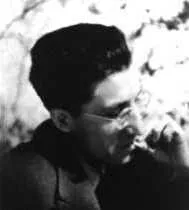
Cesare Pavese
Human Design Chart
Biography
He died a suicide in a Turin hotel 27 August 1950.
Human Design Analysis: Cesare Pavese as Generator 6/2
Generator 6/2 — Design at a Glance
Cesare Pavese showed himself to be someone whose endurance and vitality were closely linked to his ability to react to external impulses. His design indicated a tendency to release energy not through self-initiated actions but rather through the "yes" of the gut. As a Generator, he had a lot of sacral energy that made him strong and enduring – comparable to a workhorse – as long as this power was used for appropriate tasks.
The mechanics of his design called for reaction instead of initiation. His energy became effective when he responded to signals from life and confirmed internally: "Let's get started." In this harmony, he found deep satisfaction and fulfillment. Deviations from this strategy led to two specific pitfalls. Either he wasted his strength on things that did not give him inner pleasure, making him vulnerable to burnout, or he was hindered in his work on the heart project even though his inner self was still full of power.
If Cesare Pavese did not live according to this principle of reactive energy – for example, by constantly initiating actions against his internal resistance – he encountered a feeling of persistent frustration and a lack of energy. His path to deepest contentment therefore lay in waiting for life and then responding with vigor rather than forcing himself to take the first step.
Sacral Authority
Cesare Pavese showed a decision-making process that did not rely on intellectual analysis or emotional fluctuation but rather on direct physical resonance. His design indicated that he waited for external stimuli and then reacted through his inner authority. This sacral authority was his central compass as a Generator. It manifested not in thoughts, but in a tangible "gut feeling." Pavese learned to interpret these internal signals: a grunt, a hum or a soft hmm signalled agreement and energy; a negative sound warned against misinvestment.
This mechanism allowed him to deploy vitality and enthusiasm only where his system was actually engaged. When the sacral motor responded, he had access to what seemed like an inexhaustible supply of energy. He could immerse himself in activities without them needing to serve an external purpose; the joy of doing was enough. This strategy greatly simplified his process since strategy and authority were identical: reacting rather than initiating. By listening to these physical impulses, he found reliability in a world full of uncertain signals. His well-being depended on trusting this instinctive guidance instead of being led by others' logic or feelings. Thus, his life was marked by a rhythmic sequence of stimulus and response, allowing him to approach his tasks with satisfaction.
The 6/2 Profile — Role Model / Hermit
Cesare Pavese revealed himself in his youth as an experimental seeker whose life was marked by trial and error. This early stage matched the dynamics of his 6/2 line: Before the age of thirty, the sixth line acted like a third one, driving him to collect diverse personal experiences to overcome confusion through direct engagement with the world.
After about thirty years, this attitude fundamentally changed. The activation of the sixth line led Cesare Pavese into a phase of intense reflection and inner distance. He metaphorically retreated into the "cave" of introspection to view his earlier experiments from great heights. This withdrawal served not only for healing but also for developing mental security. Through this assessment, he could achieve victory over previous confusions and establish clear methods based on his deep self-knowledge.
From this phase of inner work, Cesare Pavese eventually developed an authoritative wisdom. His presence was now perceived by others as a serving authority. People sought him out to partake in his life wisdoms and learn the ability for deep introspection. Thus, he completed the transition from an unsettled experimenter to a reflective mentor who brought selectively developed methods to serve others in their own development.
Split Definition — Defined & Open Centers
Cesare Pavese revealed himself as someone whose inner structure was marked by a clear identity and conceptual clarity. His design featured a defined triad of the G Center, Ajna, and Throat: He had a firm sense of his own direction and self-love (G), processed this through consistent conceptual thinking (Ajna), and expressed it reliably (Throat). This internal authority was driven by his defined Sacral Center, the motor of his vital energy. Pavese relied on reacting to life rather than initiating; his strength ignited only through external impulses that he could answer with yes or no.
At the same time, his chart revealed a high vulnerability to external conditioning through five open centers. His open Head Center made him susceptible to mental pressure and inspiration from others without generating consistent mental responses himself. He tended to be distracted by doubts or questions from his environment. The missing constant willpower in his open Heart Center meant that Pavese was not suited for keeping promises or competing for recognition, which made him vulnerable to self-doubt. His open Solar Plexus absorbed the emotions of his surroundings, causing him to experience foreign moods as his own and appear emotionally unstable even though these feelings did not belong to him. Furthermore, his open Spleen Center was marked by a fundamental survival anxiety, leading him to cling to uncertain situations in an attempt to simulate a sense of well-being. Finally, his open Root Center absorbed external stress, which could drive him to hyperactivity as he tried to shed this non-self-generated pressure. This constellation described a person with strong inner substance who would have had to learn to use the mirror function of his open centers as information rather than identifying with them.
Channels & Gates
Cesare Pavese showed himself to be someone whose inner process was strongly shaped by the necessity of translating complex impressions into clear, logical structures. This occurred through the Channel of Accepting 17-62, which connected the Ajna Center with the Throat Center. Gate 17 visualized patterns while Gate 62 translated these into language and details. For Cesare Pavese, this meant a constant mental pressure to organize information in order to understand it; only what he could linguistically categorize became comprehensible for him. This created an inner discipline of analysis that, however, required the right timing when speaking to produce clarity rather than resistance.
Parallel to this, the Channel of Discovery 29-46 was at work, connecting his Sacral Center with the G Center. Here, Gate 29, the "Yes-Saying," drove a persistent life force based on learning from experience, while Gate 46 stood for the determination to commit to a process until its maturation. Cesare Pavese had to let go of expectations and lose himself in the depth of his experiences to ultimately gain insights that he could pass on. It was not about mental control but trusting the life cycle and having patience until meaning revealed itself.
Additionally, Gates like 64 and 63 were at play, exerting pressure to interpret past experiences and resolve doubts by improving uncertain patterns. Gate 64 sought clarity over time while Gate 63 aimed for security through mental assertion. Further influences came from Gate 15 (collective behaviour), Gate 10 (integration in the G Center) as well as Gates 56 and 33, which promoted storytelling and reflection. This configuration shaped Cesare Paveses way of finding his inner order through logical structuring and patiently enduring processes.
Circuit Signature
Cesare Pavese was marked by two parallel, energetically separate streams. On one hand, he possessed a cool, emotionless logic for strategy and future planning; on the other hand, he moved in cyclical emotional waves of searching for the past. This duality formed the foundation of his experiential world.
The Understanding Circuit connected his Ajna Center with his Throat Center through Channel "Acceptance." This allowed him to share rational insights free from conditioning and use focus to lead society towards a better future. It was visual energy of the future, utilizing structure and intellect without being influenced by the Solar Plexus.
At the same time, the Meaning Circuit worked, connecting his Identity Center with his Sacral Center (Channel "Discovery"). Here it wasn't about logic but emotions and experiences from the past. This energy flowed in wave-like patterns—with a beginning, middle, and end—and was used to reflect on the meaning behind events. The insights gained should be shared with the collective to learn together from history.
Although both circuits were visual and emphasized sharing, they did not stand in direct connection to each other. Cesare Pavese thus lived side by side: one hand the structured ratio for tomorrow, the other the illogical, felt search for meaning from yesterday. This divided definition created an inner tension between a clear future perspective and a deep, cyclical engagement with the past, without these two worlds forming a common energetic flow.
Left Angle Cross of Dominion 2
Cesare Pavese revealed a deep, strategic orientation within the power structure of his environment. His design placed a clear focus on defining and securing his own sphere of influence. This was not an arbitrary trait but a fundamental life pattern that resulted from the configuration of the "left cross of authority." This specific arrangement in Human Design described an inner mechanism aimed at drawing territorial boundaries and establishing a stable position within existing hierarchical structures. For Cesare Pavese, this meant that understanding authority and delineating his own space were central to his well-being. The mechanics of this cross worked as a constant prompt to clarify his stance and defend against external intruders or unclear demands. It was an energetic necessity to exercise control over his environment not out of a negative desire for power but as a prerequisite for inner order. Without this clear definition of authority, he often felt uncertain or encroached upon. Thus, Cesare Pavese lived in a dynamic balance between the claim to autonomy and adapting to the rules of the systems in which he moved. This territorial demarcation served both as a protective mechanism and as a foundation for any further capacity to act. The constant testing of boundaries was not a one-time event but an ongoing process that significantly shaped and structured his interactions with other people.
Saturn Return · Uranus Opposition · Chiron Return · 2nd Saturn Return — Life Cycles
Cesare Pavese's Human Design mapped a tendency towards recurring phases of maturation and recognition. His journey was marked by stages where inner development became outwardly visible. In 1936, at the age of 28, his poetry collection *Lavorare stanca* appeared. This marked his first Saturn Return, a cycle that often condenses years of groundwork into a solid result and brings initial structural validation.
Another crucial moment came in 1950 when Pavese, aged 42, won the literary prize Premio Strega for *Il bel tempo*. This fell during his Uranus Opposition, a period of profound upheaval and new perspectives. Here it became clear how his design responded to external validation: not as an isolated peak but as part of a process driven by inner transformation. The mechanics of this configuration describe a rhythm of internal condensation followed by external opening. Recognition was no coincidence for Pavese but the result of a specific energetic alignment that organized maturation into phases. These cycles shaped his lifespan as a sequence of milestones where his inner growth manifested concretely – always linked to the need to place his work in the context of larger changes and thereby receive validation for the path he had chosen.
Generator · Sacral Authority — Synthesis
Cesare Pavese lived a profound process of inner condensation and experimentation. Shaped by sacral energy (Generator type) and a defined mental center, he sought patterns and details to understand the world (Channel Accepting). This led him initially to diverse experiences – an experimenting and error phase that was formative until around age 30 (6/2 Profile). Later, he withdrew to reflect on these experiences and gain wisdom which he then shared with others. The ability to create and implement concepts (Ajna Center) seemed closely linked to the need for inner clarity and alignment with his gut feeling (sacral authority).
A central paradox in Pavese’s design lay in the interplay of mental sharpness and sacral drive. On one hand, he was driven to grasp the world through logic and analysis (Understanding Circuit), while on the other hand, he needed an immediate physical reaction to find his energy and act authentically. Successes (such as winning a literary prize at age 42) coincided with phases when these two forces – rational thinking and sacral vitality – came together. Thus, his tendency towards reflection and detachment could be balanced by active experience and action.
2 Defined Channels
Incarnation Cross - Left Angle Cross of Dominion 2
Solar Return
The Solar Return shows the moment when the sun returns to its exact birth position - your personal solar year.
Life Cycles
Discover the life cycles with a detailed triple view (birth chart, cycle chart, composite).
Human Design Profile
- Type
- Generator
- Strategy
- To respond - wait for something to respond to
- Authority
- Sacral Authority
- Profile
- 6/2 - Role Model / Hermit
- Definition
- Split Definition
- Incarnation Cross
- Left Angle Cross of Dominion 2
- Date of Birth
- 09.09.1908 06:00
- Place of Birth
- Santo Stefano Belbo, Italy
Frequently Asked Questions
What is Cesare Pavese's Human Design type?
What Profile did Cesare Pavese have in Human Design?
What Authority guided Cesare Pavese?
What incarnation cross did Cesare Pavese have?
When was Cesare Pavese born?
Discover your own Human Design
Are you also a Generator? Find out in a personal reading how to use your sacral energy correctly and discover deep satisfaction.
More Personalities
Back to overviewAaliyah

Alain-Fournier

Alexia

Angèle

Angeli

Anne-Marie