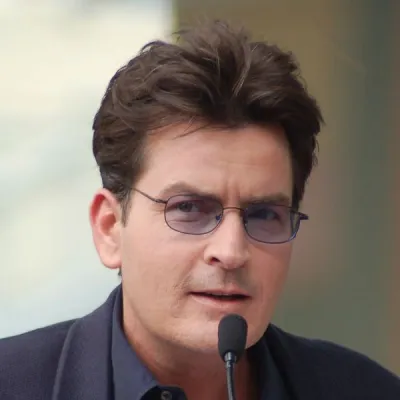
Charlie Sheen
Human Design Chart
Biography
Charlie Sheen followed in the footsteps of his father Martin Sheen in becoming an actor. He starred in many successful films such as Red Dawn (1984), Ferris Bueller's Day Off (1986), Platoon (1986), Wall Street (1987), Eight Men Out (1988), Young Guns (1988), Major League (1989), Hot Shots! (1991), The Three Musketeers (1993), and The Arrival (1996). In the 2000s, when Sheen replaced Michael J. Fox as the star of ABC's Spin City, his portrayal of Charlie Crawford earned him a Golden Globe Award for Best Actor. He then starred as Charlie Harper on the CBS sitcom Two and a Half Men (2003–11), for which he received many Golden Globe and Primetime Emmy nominations. In 2010, Sheen was the highest-paid actor on television, earning US$1.8 million per episode of Two and a Half Men.
In March 2011, Sheen was terminated from his Two and a Half Men contract by CBS and Warner Bros. following public substance-abuse problems, marital difficulties and comments made towards the series' creator, Chuck Lorre.
Charlie Sheen — Projector with Profile 6/3
Projector 6/3 — Design at a Glance
Charlie Sheen's design shows a tendency towards dense, focused projection typical of Projector types. His aura appeared as a bright beam that immediately revealed weaknesses in systems or others. However, this ability to 'shed light into the dark' could be perceived as unpleasant when used directly and uninvited – like shining a flashlight directly into someone's face.
The undefined sacral center in his design means there is no constant intrinsic life energy present. Instead, phases of high activity followed by necessary rest periods for regeneration occur. The conventional system often ignores this need, which can lead to burnout if neglected.
A Projector's strategy involves not taking the initiative but waiting for an honest invitation from the environment. By respecting this principle, their natural attraction works effectively without resistance. When a Projector lives by this rule, it leads to success and recognition. Deviating from it by imposing insights uninvited or working against his energy flow eventually reveals the non-self theme of bitterness as a consequence.
Emotional Authority
Charlie Sheen's design shows a tendency towards emotional wave movements where his inner truth only clarified over time. As a carrier of Emotional Authority, he was subject to constant ups and downs in feelings that strongly colored his perception of the world. He could be enthusiastic about something one moment and negatively evaluate it the next. However, this rapid shift did not mean the first impression was final truth. Spontaneous decisions made directly from acute emotions carried the risk of proving false or harmful.
The mechanics of his inner authority, carried by the defined Emotional Center, had a clear priority rule: It always took precedence over all other defined centers in his chart. This required patience and conscious delay of decision-making. By taking time to 'sleep on decisions', intense feelings could subside. Only when emotional distance was gained did clarity and calmness set in. This process of maturation was crucial for long-term life decisions, as only then the deeper, comprehensive insight became accessible instead of following a fleeting mood.
The 6/3 Profile — Role Model / Martyr
Charlie Sheen's design shows a tendency towards tireless experimentation. As a 6/3 profile, he lived his first three decades like an adventurer driven by the line of the experimenter. This meant not just curiosity but a fundamental life strategy: moving forward through trial and error. The mechanics show Gate 35, which often creates intense chaos and extreme situations in young years. For Charlie Sheen, this process was the only way to achieve progress – not through planning, but through direct experience and mistakes.
At the same time, a deeper restlessness affected him. Profile 6/3 describes very old souls who can feel internally restless as if they are forever searching for something extraordinary beyond standard solutions. This search never truly ends since the experimental line is permanently anchored in his design.
Parallel to this, his chart presented strong willpower against authority. Gate 40 on the 'Sun in Fall' line identifies inferior forces within a community and rejects unfair demands. This configuration leads to the need for unjust power structures to be dethroned. For Charlie Sheen, this was not optional behavior but a mechanical necessity: He had to stand up against what he felt as unjust or unworthy to preserve his own integrity. Only after his first Saturn return around age 30 does this chaos begin to slow down, making room for wisdom and the role of a humorous role model – yet experimentation remains an eternal part of his nature.
Triple Split Definition — Defined & Open Centers
Charlie Sheen's design shows a tendency towards constant mental pressure and a strong, self-determined willpower. The definition between the Head Center and Ajna Center created a permanent inner drive to question and form concepts – often accompanied by confusion or doubt, as inspiration only forms questions, not immediate answers. This mental process was not directly connected to energy sources to independently implement ideas; fighting against this led easily to frustration. Instead, he acted as an inspirational source for others, particularly those with undefined Head Centers.
At the same time, Charlie Sheen had a defined Heart Center, which gave him reliable willpower and the desire to control his life himself. He tended to make promises and keep them, seeking recognition for his contribution. His defined Solar Plexus functioned as an emotional authority: decisions should only be made after the emotional wave subsided. Impulsive reactions to emotional highs or lows often led to chaos and later regret.
On the other hand, his undefined G Center revealed a lack of stable identity. He adapted to his environment, gathered directions from others, and sought love and belonging rather than defining them himself. The typical non-self trap consisted in constantly searching for a fixed role or direction ("Who am I?") which could confuse him if he was not at the right place.
Furthermore, his Sacral Center was open, making him vulnerable to the energy of others. He absorbed foreign vitality without generating it himself, leading to exhaustion when ignoring boundaries and overextending. His open Root Center also absorbed external stress and adrenaline from the environment. Instead of interpreting this pressure as his own and running with it, it would have been healthy for him to recognize the difference between his own and other's pressure and walk away or take deep breaths if necessary to prevent burnout.
Channels for logic, intuition, community and abstract understanding.
Charlie Sheen's design shows a tendency towards analytical skepticism and impulsive self-discovery. His mind operates through the Logic channel 63-4, connecting Head Center with Ajna Center. This mechanism continuously filters patterns for their consistency; doubt here was not an obstacle but the essential basis for logical validity. An answer was only considered true if it proved itself in a verifiable, consistent pattern – ungrounded belief space was minimal. Parallel to this, the channel of Aha! 57-20 led intuitive insight from Spleen Center directly to communication in Throat Center. This allowed spontaneous verbal outbursts that found the core of an issue faster than reflective analysis, supported by ancient instincts and momentary knowledge.
Social dynamics were shaped through the Community channel 37-40, connecting Solar Plexus with Heart. Here it was about finding the right place in the whole and concluding agreements based on mutual benefit and willpower, not spontaneous impulses. Additionally, the Abstraction channel 64-47 provided an active, experience-based mind that filtered every life situation through a kaleidoscope of mental images to reveal stories or perspectives behind the surface – often accompanied by temporary confusion until sudden clarity.
Prioritized gates like Gate 35 (Change through Interaction) and Gate 5 (Rhythm and Habits) emphasized the need to build energy through recurring patterns and experience progress in exchange. Charlie Sheen thus appeared as someone who sought logical proof, spoke intuitive truths in the moment, and understood social bonds as contractual partnerships while his mind constantly searched for hidden connections in his experiential world.
Collective Circuitry — Circuit Signature
Charlie Sheen's design shows a tendency towards impulsive, creative ideas that directly transition into expression. This is evident in the Knowledge Circuit: The Aha! channel connects Throat Center with Spleen. Here energy pulsed and acoustically, allowing innovative ideas to be verbalized immediately without long maturation.
Parallel to this was a separate logical structure. In the Understanding Circuit, the Logic channel connected Head Center with Ajna Center. This created a focused visual mind that developed rational strategies for the future – entirely independent of emotional waves or creative impulses.
A third, also isolated stream lay in the Meaning-Making Circuit. The Abstraction channel similarly connected Head and Ajna Centers but was oriented towards reflecting on past emotions. This cyclical energy sought meaning behind events occurred, separate from the cool logic of the Understanding Circuit.
The fourth force formed the Ego Circuit. The Community channel connected Heart Center with Solar Plexus Center. This promoted traditional give-and-take in cooperation, steered by emotional gears rather than constant life force. As Charlie Sheen had a triple definition, these four systems existed as parallel lying forces: Creativity, logic, emotional reflection, and cooperative resource building were energetically not directly intertwined but acted as independent modules.
Left Angle Cross of Migration 2
Charlie Sheen's design tends towards an internal and often unconscious dynamic that expresses itself through the principle of 'Carrying On'. This is not an active strategy for control or pushing projects forward, but rather a subtle mechanism of adaptation and flowing with circumstances. The left Carrying On 2 cross describes an energy that does not aim to force results but instead integrates into existing streams and gently carries them forward.
For Charlie Sheen, this meant that his greatest effectiveness often occurred when he did not swim against the current but supported the natural development of situations. It is a kind of 'going along with', where one does not take center stage but still influences by keeping or stabilizing the process in motion. This configuration requires patience and trust in the natural flow of things. Instead of dominating, Charlie Sheen acts here as a catalyst for continuity. The challenge lies in not confusing this passive-aggressive component with passivity; it is an active form of non-intervention that nevertheless requires precise timing. By following this inner logic, his ability to lead complex situations towards success through simple presence and support was evident without drawing attention to himself.
Saturn Return · Uranus Opposition · Chiron Return · 2nd Saturn Return — Life Cycles
Charlie Sheen's design tends toward public recognitions often associated with high visibility and emotional intensity. His first Saturn return around 1994 marked a point of condensation: he received a star on the Hollywood Walk of Fame. This cycle stabilized early achievements and structurally anchored him in his industry by condensing years of groundwork into tangible success.
Later, during the Uranus opposition in 2002 at age 37, a phase of change began. He won a Golden Globe for 'Chaos City'. This configuration often brings unexpected breaks or new directions; here it showed as confirmation of his ability to find recognition even in turbulent role strategies, further solidifying his position.
The Chiron return in 2014 at age 49 brought another quality: the Razzie Award for 'Scary Movie 5'. In Human Design mechanics, this cycle is not a place of healing old wounds but a fulfillment cycle where one's Incarnation Cross unfolds. This apparent crisis served to make the meaning and purpose of his existence experiential – not through fame alone, but through the full expression of his design, even in its shadowy or controversial aspects.
Projector · Emotional Authority — Synthesis
A central red thread runs through the design: the ability to recognize patterns and point out imbalances (defined Head and Ajna Centers, Logic Channel). However, this gift is always accompanied by an inner pressure to question and challenge – a persistent mental drive that expresses itself in a search for stability. The profile as role model and experimenter intensifies this urge to explore new paths, while emotional authority brings the necessity of not rushing decisions but letting them emotionally mature. This points towards a person who constantly strives for authenticity while also trying to understand their environment's functionality.
The central paradox lies in the interplay between projection and emotional wave. As a projector, the person is designed to bring 'light into darkness' for others and point out errors – a bright, focused perception. At the same time, the design is subject to an emotional authority that brings ups and downs of feelings and prevents quick reactions. This tension between the urge for immediate clarity and the necessity to consider decisions over a longer period creates an inner field of tension between direct address and waiting observation.
4 Defined Channels
Incarnation Cross - Left Angle Cross of Migration 2
Solar Return
The Solar Return shows the moment when the sun returns to its exact birth position - your personal solar year.
Life Cycles
Discover the life cycles with a detailed triple view (birth chart, cycle chart, composite).
Human Design Profile
- Type
- Projector
- Strategy
- Wait for the respectful invitation
- Authority
- Emotional Authority
- Profile
- 6/3 - Role Model / Martyr
- Definition
- Triple Split
- Incarnation Cross
- Left Angle Cross of Migration 2
- Date of Birth
- 03.09.1965 22:48
- Place of Birth
- New York, United States
Frequently Asked Questions
What is Charlie Sheen's Human Design type?
What Profile does Charlie Sheen have?
What authority does Charlie Sheen possess?
Which incarnation cross is assigned to Charlie Sheen?
When was Charlie Sheen born?
Discover your own Human Design
Are you also a Projector? Find out in a personal reading how to unfold your leadership qualities and recognize the right invitations.
More Personalities
Back to overviewSissy Spacek

Alain-Fournier
Anémone

Ann-Margret

Arletty
Arno