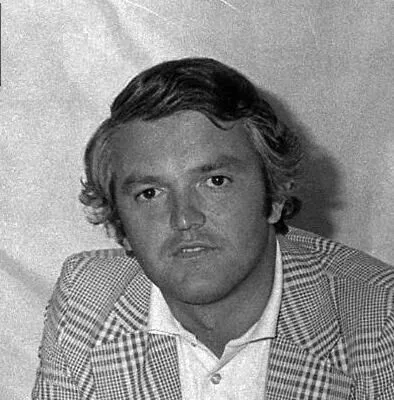
Christian Bîmes
Human Design Chart
Biography
He was the founding president of the Toulouse Sports Hall in 1982 and in 1997 created the Grand Prix de Tennis de Toulouse, which he directed from 1982 to 1992. He was also Vice President of the French National Olympic Sports Committee between 2001 and 2010.
What does Manifesting Generator 3/5 mean for Christian Bîmes?
Manifesting Generator 3/5 — Design at a Glance
Christian Bîmes revealed himself as someone with a hybrid energy configuration that combined constant power with the ability to skip steps and act swiftly. His design tended to draw things rapidly into his life, but without careful filtering this could lead to haste. The challenge was not to miss important phases; missing steps often had to be retraced, causing frustration – the non-self theme of his type. Additionally, he tended to pursue multiple projects simultaneously by reacting to various impulses. Without a clear strategy and inner consent, this creativity quickly turned into exhaustion.
As an Manifesting Generator, Christian Bîmes possessed an active connection between Motor Centers and Throat Center, which endowed him with Manifestor qualities. Despite his speed, the Generators' strategy applied to him: not initiating but reacting to impulses. Crucial was validation through the Sacral Center. Only when this center gave a clear "Yes!" should he act or continue projects. Regularly checking inner consent ensured that his speed remained beneficial. When correctly applied – in other words, in the playful mode with variety and fun – Christian Bîmes drew deep satisfaction from his work. Parallelism was then no obstacle but rather a source of energy as long as he wasn't forced to limit himself to one thing before inner consent waned.
Sacral Authority
Christian Bîmes exhibited a decision-making structure rooted not in the Head Center, but deeply within the body. His inner authority lies in Sacral Authority, an instance exclusive to Generators whose strategy is inseparably linked with this internal guidance. This simplifies his process: he doesn't need to think to know if something is right for him; instead, he waits for an immediate physical response.
This authority manifests through a palpable "gut feeling" or sudden surge of energy in reaction to external stimuli. Christian Bîmes learned to pay attention to body signals like grunts, hums, or simple "Hmmms." When his sacral motor kicks in, vital aliveness and seemingly inexhaustible energy ensue. He then tackles tasks with great enthusiasm, driven by joy and satisfaction without the need for an external purpose.
Additionally, the active Spleen Center acts as a supportive instance to Sacral Authority. This endows Christian Bîmes with particularly swift and spontaneous reactions. He has immediate access to his physical well-being and instinctive perception, allowing him to reliably be guided by these deep impulses rather than cognitive deliberations.
The 3/5 Profile — Martyr / Heretic
Christian Bîmes revealed himself through a profile that defines direct experimentation as the central learning path. His design tended towards initially rejecting anything given without experiencing it firsthand and generating practical knowledge from resulting failures. This Line 3 of the Experimenter requires sensitivity to the present moment; success is not the primary goal but rather a byproduct of authentic action.
This experiential knowledge later served to solve others' problems – the function of Line 5, the Hero or Saviour. Christian Bîmes was attractive in his environment as he presented a rich trove of lived experiences from which others could learn. This role naturally flattered him but also harbored a specific tension: public failure during experiments could be painful if the social expectation of being a hero wasn't met.
The mechanics of this profile describe the Heretic, who questions established traditions to bring about necessary behavioral changes in crisis times. Christian Bîmes' design carried the tension between the need for individual, unbiased experimentation and societal demands for reliable leadership. His path involved integrating failures as essential parts of the learning process rather than viewing them as mistakes, thus ultimately offering solutions to collective challenges.
Single Definition — Defined & Open Centers
Christian Bîmes revealed through his design as someone with a stable, powerful identity and a clear inner voice. His defined triad of Sacral, G, and Throat Center formed the foundation of this endurance. The defined Sacral Center provided a constant energy source but required a reactive strategy: waiting for an impulse rather than initiating to avoid frustration. Only then was full power available. The defined G Center gave a clear self-image and sense of direction; it attracted others, yet only upon invitation. The defined Throat translated this inner truth into clear communication and action, making sacral energy and G-direction effective.
This harmony between inner strength, identity, and expression shaped his essence. The challenge lay in not initiating or forcing others to follow one's direction but waiting for the correct stimuli and then acting with full clarity. At the same time, Christian Bîmes was vulnerable to external influences through several open centers. His open Head Center tended to get caught up in mental pressure and doubts of others rather than recognizing inspiration as a distraction. The open Ajna Center could take on concepts without identifying them as personal truth, offering flexibility but also causing confusion when trying to force answers.
The open Heart Center lacked consistent willpower; it tended to want to prove worth through performance instead of making promises and keeping them. The open Solar Plexus Center absorbed emotions from the environment, leading to identification with others' moods rather than using these as a barometer for emotional climate. Finally, the open Root Center took on external stress, which could lead to cycles of flight or overactivity if not recognized as pressure not stemming from one's own life impulse. These opennesses challenged him to trust his authority and break free from conditioning patterns.
Channels for powerful action, rhythm, presence and self-expression.
Christian Bîmes revealed through a design based on natural timing and authentic self-love. The Rhythm Channel 5-15 connected his Sacral Center with the G Center, giving him a steady inner pulse. Gate 5 held onto habits while Gate 15 integrated the diversity of society into this life flow. This gave him a magnetic presence that drew others subconsciously into his rhythm if he listened to his own reactions and did not swim against the current.
This connection to the life flow was complemented by the Awakening Channel 10-20 between G Center and Throat Center. Here, the principle of 'I am' took precedence. Gate 10 ensured authentic presence while Gate 20 conveyed the ability to act in the present moment. His survival depended on loving himself and radiating this clarity through his actions, inspiring others to be themselves without him actively steering them.
Additionally, the Research Channel 34-10 reinforced his individual conviction. Gate 34 provided inner strength to hold onto personal principles while Gate 10 initiated this behavior. This configuration promoted deep self-acceptance and independence, which were effective only when guided by sacral reaction from the design.
Furthermore, his personality featured the Charisma Channel 34-20. This connected the powerful energy of Gate 34 directly with the expression of Gate 20 in the Throat Center. As this channel was defined through personality rather than design, its manifesting energy could appear as projection or conscious effort. Without the guiding sacral reaction from the design, there was a risk that this energy would break out chaotically or drag him like a misfired rocket instead of serving as focused inspiration.
Individual Circuitry — Circuit Signature
Christian Bîmes revealed through a design characterized by solid individuality and inner strength. His Centering Circuit connected his Sacral with Identity Center (Channel 10-34), generating deep, inward-focused power. This configuration fostered firm convictions and self-worth ('I am who I am'). However, without connection to the Throat Center, external communication of these intense internal stances often remained reserved or hard to express.
This individual foundation was complemented by the Understanding Circuit (Channel 15-5), which also linked Identity with Sacral Center. This added rational structure and future-oriented logic driven by a desire to share insights strategically – free from emotional conditioning.
The Integration Circuit Channels (20-10 and 20-34) finally connected Throat, Sacral, and Identity Centers in a group. This allowed Christian Bîmes to gain power through reacting to life 'in the moment' and expressing this acoustically as well as creatively. The energy was pulsing and anchored the highest individuality in immediate presence.
As a simply defined design, these centers worked as an interconnected flow: Sacral Center propelled forward, Identity Center set direction, and Throat Center enabled expression. It was a unity of inner affirmation, logical structuring, and reactive manifestation here and now, without separate unconnected energy blocks on the chart.
Right Angle Cross of the Vessel of Love 1
Christian Bîmes revealed himself through a deeply rooted need to not only feel love but also to understand it as a central life motive and sustaining vessel. His design suggested that his understanding of love was less about fleeting emotions and more about the structural foundation of his existence. This aligns with the mechanics of the cross, 'The Right Cross of the Vessel of Love 1'. Here, the experience and intellectual and emotional penetration of love are at the center. It is about using this power as a container that shapes and stabilizes life. For Christian Bîmes, this meant that his identity and actions were strongly influenced by how he defined and integrated love into his world. The configuration indicates that he distinguished himself through the ability to see love as a connecting element beyond superficial relationships. It was an attitude of dedication to this principle that structured his inner self. Without this central orientation, his internal order would have been unstable. Instead, he used his understanding of love as a compass to navigate complex situations and build connections rooted in this deep foundation.
Saturn Return · Uranus Opposition · Chiron Return · 2nd Saturn Return — Life Cycles
Christian Bîmes showed himself around 1997 as someone who transferred long-term experience into a concrete, structured project. The creation of the Grand Prix de Tennis de Toulouse at age 50 marks the peak of this transition. This corresponds to the Chiron Return cycle, a period of testing and maturation. During this phase of life, internal patterns and past experiences are not seen as wounds but as material for higher forms of service or wisdom. The cycle demands the integration of earlier learning processes into a sustainable structure. For Christian Bîmes, this meant that his previous path condensed into a tangible achievement. It is a moment when an individual learns to use their accumulation of knowledge and action to create something lasting. The founding of the tournament was thus not an isolated event but the logical consequence of a maturation process where inner clarity manifested outwardly. This transition shows how personal development can be translated into socially impactful forms once the time for internal condensation is reached.
Manifesting Generator · Sacral Authority — Synthesis
The red thread in this design is a dynamic balance between inner reaction and outer expression. The defined sacral energy, coupled with the Throat Center, grants a natural ability to react quickly to impulses and manifest them immediately. However, this process is modulated by open definitions in central areas such as Head, Ajna, Heart, Spleen, and Root—constantly absorbing, filtering, and processing external influences. The profile as an experimenter/hero reinforces this cycle of action, experience, and sharing, with Line 3 emphasizing the need for direct experience and Line 5 conveying knowledge to others.
A central paradox lies in the tension between the drive for immediate manifestation and the necessity to trust inner authority. While sacral reaction provides an immediate energy source, open centers make one vulnerable to conditioning and external influences. This requires constant navigation between the impulse of the moment and authentic self-confirmation to avoid sinking into frustration or aimless action. The ability to learn from experiences and use them as a foundation for further growth stands in contrast to potential vulnerability to fears and uncertainties through the open centers.
4 Defined Channels
Incarnation Cross - Right Angle Cross of the Vessel of Love 1
Solar Return
The Solar Return shows the moment when the sun returns to its exact birth position - your personal solar year.
Life Cycles
Discover the life cycles with a detailed triple view (birth chart, cycle chart, composite).
Human Design Profile
- Strategy
- To respond - wait for something to respond to
- Authority
- Sacral Authority
- Profile
- 3/5 - Martyr / Heretic
- Definition
- Single Definition
- Incarnation Cross
- Right Angle Cross of the Vessel of Love 1
- Date of Birth
- 21.03.1947 22:15
- Place of Birth
- Toulouse, France
Frequently Asked Questions
What is Christian Bîmes' Human Design type?
What Profile does Christian Bîmes have in Human Design?
What authority does Christian Bîmes possess?
What incarnation cross does Christian Bîmes have?
When was Christian Bîmes born?
Discover your own Human Design
Are you also a Manifesting Generator? Find out in a personal reading how to unfold your multi-talents and direct your energy wisely.
More Personalities
Back to overviewAldair

Alizée

Angeli

Arletty
Artus

Balthus