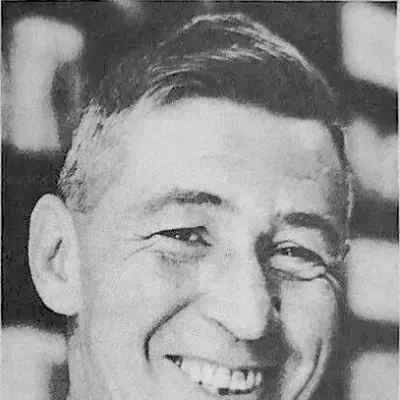
Christian Tybring-Gjedde
Human Design Chart
Biography
Tybring-Gjedde has a bachelor's degree in political science from the Catholic Loyola University in Chicago and a master's degree in international politics from the University of Denver in Colorado.
In the 1980s and 1990s, Tybring-Gjedde was an active water polo player (goalkeeper) for Frogner Water Polo Club and helped take the club to NM gold in 1992. He was also selected for the national team.
The Human Design of Christian Tybring-Gjedde: Projector 2/4
Projector 2/4 — Design at a Glance
Christian Tybring-Gjedde's design showed a tendency towards precise system analysis. As a projector, he had a dense, focused aura that directed like a bright light beam directly onto weaknesses in his environment. This configuration allowed him to immediately recognize errors in the system and bring 'light into darkness' for others.
However, this type requires restraint: A direct attack on these flaws would often be perceived by the surroundings as unpleasant or aggressive. Instead, Christian Tybring-Gjedde was most effective when he radiated harmony and competence himself. This authentic presence automatically drew others who then sought his insights. His strategy involved waiting for a respectful invitation before taking on a leadership role.
Since projectors do not have a defined sacral center, they lack a constant intrinsic energy source. Christian Tybring-Gjedde therefore experienced phases of high productivity that were inevitably followed by necessary rest periods to avoid burnout. The traditional model of continuous availability often stood in opposition to this biological rhythm. If he lived according to the strategy of invitation and pausing, he was rewarded with success. Ignoring this structure led to the non-self theme 'bitterness,' a sign that his unique abilities were not valued.
Self-Projected Authority
Christian Tybring-Gjedde's design is characterized by a rare configuration: authority in self, which only occurs in projectors. This structure set an extreme openness, coupled with the risk of being distracted by external motoric energies. The central challenge was to avoid getting lost in this vastness and constantly chasing after external energy.
His inner truth lay in his identity. Decisions could be made in two ways: through self-dialogue or stimulated conversations with others. Crucial was listening to one's own speaking and distinguishing between intellect and true essence. Spontaneous, unreflected statements revealed his actual self and made his uniqueness recognizable to others.
Alternatively, a physical feeling acted as a compass that drew him geographically or thematically in certain directions - towards or away from things. By following this inner direction faithfully, he could become a guide for others. There lay his specific potential for success. This mechanism does not describe biographical facts but the energetic logic of his design: perception through identity and physical attraction rather than intellectual analysis or emotional impulses. The risk of distraction was always the counterpart to the great openness that characterized his system.
The 2/4 Profile — Hermit / Opportunist
Christian Tybring-Gjedde's design showed a tendency towards pendulum dynamics between deep withdrawal and close community life. He appeared as someone who needed the constant rhythm of isolated reflection and social integration, not as a contradiction but as a necessity. This configuration of Profile 2/4 describes the tension between the hermit (Line 2) and the community orientation (Line 4). For Christian Tybring-Gjedde, it was essential to create a safe environment where he could communicate clearly: when he sought company and when he wanted to be left alone. During his solitary time, he immersed himself in internal processes to gain clarity. Only after this need for peace had been satisfied did he return from 'his cave' to spend time with his favorite people. This cycle allowed him to reflect on the knowledge of his network in solitude and develop brilliant ideas from it. Line 2 demanded leadership skills that were often only developed through the election process or societal invitation, while Line 4 emphasized discretion and precise timing. Higher goals stood above the urge for recognition; a 'loose mouth' was avoided as a source of conflict. Rather than permanently engaging in political processes, he strategically withdrew to avoid corruption through constant presence and gain spiritual insight through silence. His strength lay in not mixing these two poles but living them sequentially: first creating inner order, then activating the network.
Single Definition — Defined & Open Centers
Christian Tybring-Gjedde's design points towards a tendency for consequent mental structure and clear self-determination. His defined Ajna Center ensured constant independent thinking; concepts were reliably processed by him without being easily distracted by external opinions. This mental clarity flowed into his defined Throat Center, making his communication directly arise from his thoughts – he spoke what he had understood. Simultaneously, his defined G Center gave him a firm inner direction and self-love; he knew where he stood and could offer orientation to others without needing their approval.
These stable internal pillars contrasted with his high receptivity to external fields through his open centers. His open Head Center made him vulnerable to mental pressure and the temptation to seek answers for other people's questions, which could distract him from his own focus. The open Heart Center led to a lack of consistent willpower; he tended to want to prove his worth through performance or make promises that he couldn't keep due to a lack of constant energy, potentially leading into a cycle of self-doubt.
Additionally, his open Sacral Center absorbed the vital energy from his environment, making it easy for him to overextend himself and not know when to stop. His open Solar Plexus mirrored other people's emotions, causing him to fluctuate between moods and often avoid confrontation out of fear of rejection. The open Spleen Center generated a deep survival anxiety and the tendency to cling to unhealthy situations just to maintain a sense of security. Finally, his open Root Center took on the stress from his environment, pushing him towards hyperactivity as a way to escape this pressure. His path involved using his defined mental and identity clarity as an anchor while learning not to identify conditioning influences from his open centers as his own reality.
Channels for reflection, logical order and accepting clarity.
Christian Tybring-Gjedde's design points towards a tendency for patient observation and precise logical structuring. He presented himself as someone who collects information, processes it internally, and only communicates when the timing is right – not out of reticence but to ensure clarity.
This attitude stems from the interplay of two central channels. The Lost Son channel 13-33 connects the G Center with the Throat Center. This involves reflection: Gate 13 listens and stores secrets or experiences, while Gate 33 withdraws to organize these data. This process requires patience as the truth often only becomes visible later on. Christian Tybring-Gjedde used this mechanism to form a coherent story or analysis from collected impressions before expressing it. It is a cycle of learning through experience and subsequently passing it on as wisdom.
Parallel to this, the Accepting channel 17-62 between Ajna and Throat Centers was at work. This connects visual pattern recognition (Gate 17) with linguistic precision (Gate 62). The channel organizes information mentally into details before communicating them. What does not logically fit into one's worldview is rejected; what fits is clearly named. This gave his expressions a structural sharpness and the ability to formulate complex matters understandably – provided he was invited to speak or found the right moment.
Additionally, prioritized gates shaped this orientation: Gate 2 (Receptivity) allowed him to take in external impulses and transform them into new directions, while Gate 1 (Uniqueness) promoted creative mutations here-and-now. Gate 7 projected leadership patterns for the future, and Gate 20 anchored action in authentic presence. Together these elements created a profile that set on observation, logical order, and timely communication rather than impulsive acting.
Collective Circuitry — Circuit Signature
Christian Tybring-Gjedde's design points towards clear, structured communication. He presented himself as someone who articulated logical insights and strategic visions to share with others. This ability stemmed from the Understanding Circuit, which was active in him through the Accepting channel between Ajna and Throat Centers. This channel connected the center of mental formulation directly with the expression center, enabling precise, rational transmission of ideas – free from emotional coloring as the Solar Plexus Center is not involved.
Parallel to this, the Meaning Circuit worked in Christian Tybring-Gjedde. Here, the Lost Son channel linked Throat and Identity Centers. This created a second, separate energy path: The ability to reflect on emotional waves and experiences from the past and express these profound insights over one's essence. While the first channel looked into the future and provided structure, the second channel processed past feelings and transformed them into shared life wisdom.
As Christian Tybring-Gjedde had a simple definition, these two circuits were not connected as a single continuous flow through the common Throat Center but existed as two parallel, independent expression forms. Rational strategy and emotional meaning shaped his work side by side without energetically mixing. This allowed him to communicate both cool logic and deep empathy clearly separated yet simultaneously present.
Right Angle Cross of the Sphinx 3
Christian Tybring-Gjedde's Human Design profile suggests a tendency towards a deep, often unsaid connection to the darker or hidden aspects of life. Instead of focusing solely on obvious solutions or superficial success, his chart indicates the ability to work in areas that are ignored or feared by others—whether it be dealing with complex conflicts, repressed truths, or the shadowy sides of human nature.
This approach stems from the mechanics of the "Sphinx Right Cross". This is not a passive weakness but rather a specific kind of authority: the power to draw strength from the hidden and bring these insights into the world without being swallowed by darkness. People with this configuration often have an intuitive understanding of how systems work silently or where the true, unspoken tensions lie. They are called upon to build bridges between the visible and invisible worlds by accepting that light and shadow go hand in hand.
This is not about mysteries in a mystical sense but rather the pragmatic recognition of reality in its full depth. Christian Tybring-Gjedde can be seen as someone who does not shy away from uncomfortable questions, integrating them as necessary parts of a larger whole. This energy often works quietly and steadily because it is based on an inner certainty that goes beyond what is obvious. It allows for drawing clear lines in chaotic or unclear situations by recognizing underlying structures that remain hidden to others.
Saturn Return · Uranus Opposition · Chiron Return · 2nd Saturn Return — Life Cycles
Christian Tybring-Gjedde's Human Design shows a structure marked by clear milestones and external validation. His first Saturn Return in 1990 signalled the completion of his Master’s degree in international studies at the University of Denver. This cycle condensed years of academic groundwork into a solid foundation for his later career.
The Uranus Opposition around age forty brought him into the Oslo City Council in 2003. During this phase, he shifted towards public responsibility and political engagement, with new structures emerging in his life. The Chiron Return as a fulfillment cycle peaked in 2014 with the publication of his book "Menneskeorkesteret fortsetter å spille." Here, his incarnation purpose became visible: clear articulation of his perspectives and sharing insights, which provided him tangible confirmation of his life’s mission.
However, his second Saturn Return in 2021 also brought challenges. A warning for a statement at a campaign event showed how this cycle tests existing structures and defines boundaries in the public sphere. Christian Tybring-Gjedde's path thus illustrates the interplay of academic grounding, political ascent, and the necessity to confront the consequences of his actions in later phases.
Projector · Self-Projected Authority — Synthesis
A central red thread in this design is the ability to recognize patterns and bring light into darkness—both in one's own thinking (defined Ajna Center) as well as in other systems. This quality is amplified by the Projector Design, which is designed to uncover inefficiencies and identify potentials. The Channel of the Lost Son (Gate 13-33) underscores this process by implying a deep capacity for reflection and gathering experiences that can then be shared as insights. The Profile as Natural Talent/Networker indicates that these observations and insights are most effective when offered within the context of existing relationships and communities.
At the same time, the design reveals a central paradox between the need for inner clarity and openness to external influences. Authority in Self requires introspective self-conversations to find one's own truth, while the Profile 2/4 fluctuates between solitude (Line 2) and social engagement (Line 4). This internal conflict is further intensified by the configuration of the Sphinx Right Cross, hinting at a constant struggle with one’s path and its delineation from expectations. The cycles show moments of both career success and crisis confrontation—a sign that balancing self-assertion and adaptability is a lifelong task.
2 Defined Channels
Incarnation Cross - Right Angle Cross of the Sphinx 3
Solar Return
The Solar Return shows the moment when the sun returns to its exact birth position - your personal solar year.
Life Cycles
Discover the life cycles with a detailed triple view (birth chart, cycle chart, composite).
Human Design Profile
- Type
- Projector
- Strategy
- Wait for the respectful invitation
- Authority
- Self-Projected Authority
- Profile
- 2/4 - Hermit / Opportunist
- Definition
- Single Definition
- Incarnation Cross
- Right Angle Cross of the Sphinx 3
- Date of Birth
- 08.08.1963 07:50
- Place of Birth
- Oslo, NOR
Frequently Asked Questions
What is the Human Design type of Christian Tybring-Gjedde?
Which Profile does Christian Tybring-Gjedde have?
What authority governs decision-making for Christian Tybring-Gjedde?
What is Christian Tybring-Gjedde's incarnation cross?
When was Christian Tybring-Gjedde born?
Discover your own Human Design
Are you also a Projector? Find out in a personal reading how to unfold your leadership qualities and recognize the right invitations.
More Personalities
Back to overviewSissy Spacek
Alain-Fournier
Anémone
Ann-Margret

Bourvil
Hergé