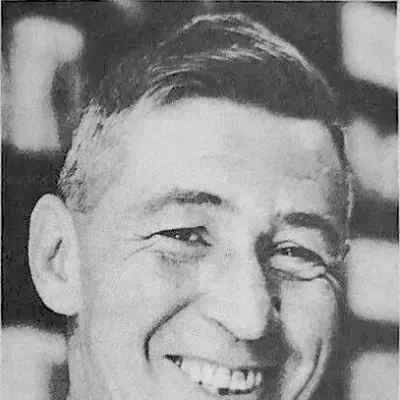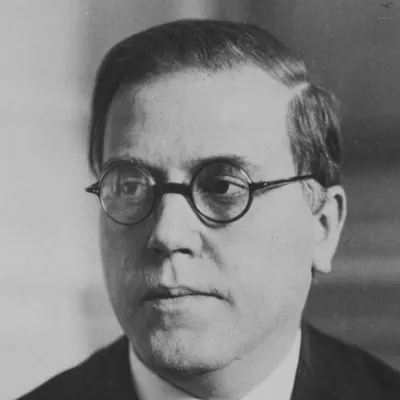
Dietrich von Hildebrand
Human Design Chart
Biography
Hildebrand was called "the twentieth-century Doctor of the Church" by Pope Pius XII. He was a leading philosopher in the realist phenomenological and personalist movements, producing works in every major field of philosophy, including ethics, metaphysics, epistemology, philosophical anthropology, social philosophy, and aesthetics. Pope John Paul II greatly admired the philosophical work of Hildebrand, remarking once to his widow, Alice von Hildebrand, "Your husband is one of the great ethicists of the twentieth century." Benedict XVI also had a particular admiration and regard for Hildebrand, who knew Ratzinger as a young priest in Munich: "When the intellectual history of the Catholic Church in the twentieth century is written, the name of Dietrich von Hildebrand will be most prominent among the figures of our time."
Hildebrand is known for his consistent, public opposition to Nazism before and during World War II.
Dietrich von Hildebrand as a Projector 5/1 in Human Design
Projector 5/1 — Design at a Glance
Dietrich von Hildebrand operated with a dense, focused aura that acted like a bright flashlight, immediately recognizing system errors in others. This ability to shed light on darkness could be unpleasant when applied directly; direct criticism provoked resistance. Instead, his most effective strategy was to attract through a harmonious personal example and wait for a respectful invitation from others. As a projector, he lacked a defined Sacral Center, meaning that constant life energy was not available to him. Instead, phases of high activity alternated with necessary rest periods to avoid burnout. If he did not live according to this design, the theme of bitterness would arise. By waiting for invitations, he protected himself from unnecessary confrontation and spared himself the energy drain caused by resistance. His success depended on respecting the cyclical nature of his energy rather than fighting societal pressure for constant availability. Recognition came only when others sought his leadership instead of forcing it upon him. This allowed him to fulfill his potential without exhaustion and bring in unique insights where they were truly welcome.
Splenic Authority
Dietrich von Hildebrand exhibited a basic attitude based on high vigilance for subtle inner signals. His design inclined towards spontaneous, intuitive decisions in the moment, guided by physical well-being and survival intelligence. This mechanism originated from his authority in the Spleen Center. For the Spleen Center to carry internal authority, both the Emotional and Sacral Centers were open – a configuration only projectors or manifestors possess.
The defined Spleen Center functioned as his health and alarm system. It provided spontaneous inner knowledge about whether a situation, environment, or society was right for him. His instinct and intuition served as reliable indicators; the first, spontaneous impulse was always correct and directly served his well-being. This allowed him to rigorously distance himself from harmful influences and take good care of himself.
However, since this Spleen voice was a very fine impulse that only appeared once in the moment, there was a risk it could be easily ignored or drowned out by other influences. This required constant vigilance for Dietrich von Hildebrand; withdrawing to make decisions could be helpful. Since he could only know what was right in the moment, plans could change at short notice. Long-term decisions were therefore difficult. His design spoke to the necessity of being as little committed as possible and instead maintaining a lot of freedom and flexibility in life.
The 5/1 Profile — Heretic / Investigator
Dietrich von Hildebrand appeared as someone carrying a dynamic tension between inner research and outer problem-solving. His design inclined towards acting as a Hero, providing his deep insights to the collective. This corresponded to Profile 5/1: Line 5 gave him a magnetic presence during crises, while Line 1 pulled him back into the protective space of detailed, cautious work.
Others often sought solutions from Dietrich von Hildebrand due to recognizing his knowledge treasures. However, this constant demand posed a challenge. Without clear boundaries, exhaustion was threatened, comparable to an expert drained after long conferences and still facing inquiries. Line 1 required routine and transcendence of logic through fantasy to protect his own energy.
Dietrich von Hildebrand had to learn to say no to maintain the balance between private research and public availability. Only then could he optimally utilize his gifts without being overwhelmed by the unbridled radiation of Line 5. Establishing new forms served the further development of life sustainability, while detailed work formed the foundation for his lifelong ritual.
Split Definition — Defined & Open Centers
Dietrich von Hildebrand was someone whose thinking and identity formed constant, reliable pillars. His design indicated a tendency towards permanent mental activity: The defined Head and Ajna centers created a continuous pressure for inspiration and concept formation. This internal process was not only private but also had an outward effect; the defined Throat allowed him to express these thoughts reliably. Parallel to this, the defined G Center provided a stable self-identity and direction, while the defined Spleen Center ensured spontaneous, intuitive health.
This architecture of thought stood in contrast to his open energy and emotion centers. The open Heart Center meant that willpower did not consistently belong to him; instead, he tended to seek validation for his own worth from the environment or give promises out of conditioned necessity rather than holding them with inner strength. The open Sacral Center led to vital energy being absorbed situationally from outside; he could rely on borrowed energy and overextend himself rather than respecting his own, fluctuating rhythm.
Furthermore, the Solar Plexus Center was open, making him susceptible to absorbing and amplifying emotions of the environment instead of experiencing them as his own. This could lead to personalizing emotional waves or avoiding confrontation to maintain stability. Finally, the open Root Center absorbed stress from the environment; rather than following his own adrenaline, he often reacted to external pressure, which could result in a cycle of overcompensation and exhaustion if this foreign drive was not recognized. The challenge lay in utilizing constant mental presence without overwhelming the open centers through a need for external validation or overwork.
Channels for abstract thinking, spontaneous intuition and authentic action.
Dietrich von Hildebrand showed himself as someone whose actions and speech were marked by a deep, intuitive presence in the now. His design indicated a tendency towards spontaneous self-love and authentic expression, free from mental filters or future anxieties. This attitude resulted from the connection of several channels that translated intuitive wisdom directly into expression.
The channel Perfect Form 57-10 connected the Spleen Center with the G Center. Through Gate 57 (intuitive insight) and Gate 10 (self behavior), a quality of conduct emerged, guided by intuitive awareness. This allowed Dietrich von Hildebrand to act spontaneously appropriately and secure his survival in the moment through acceptance of his own existence.
The channel Awakening 10-20 linked the G Center with the Throat Center. It expressed the wisdom that self-acceptance and trust form the foundation for flourishing life. Dietrich von Hildebrand lived in a constant state of awakening; by simply being himself, he unconsciously inspired others towards their own authenticity without generating resistance.
The channel Flash of Insight 57-20 channeled intuitive insight directly from the Spleen Center to the Throat Center. This gave him the ability to speak clear, penetrating truths in the now faster than reflective thought could, thereby encouraging others to awaken their inner survival intelligence.
Additionally, gates like Gate 51 (willpower) and Gate 62 (logic/details), which stood in the background of the dominant intuitive mechanics, were at play. Dietrich von Hildebrand lived this configuration by fulfilling his potential as a living expression of awakened self-love, helping him move through the world existentially unburdened.
Individual Circuitry — Circuit Signature
Dietrich von Hildebrand was someone who impulsively and verbally formulated new insights in the now. His design connected the Throat with the Spleen Center via Channel 20-57 (Flash of Insight). This knowledge circuit drove the manifestation of unique identity through innovative flashes of insight. The energy was pulsating, acoustically grounded, and present in the moment. It served to transform new knowledge and bring change into the world.
Additionally, he integrated power from reacting to life (Gate 34) as well as proper behavior (Gate 10) and intuitive wisdom (Gate 57). Through Channel 20-10 (Awakening) and 10-57 (Perfect Form), his Throat Center connected with the Identity and Spleen Centers. This allowed him to express these powers in the moment and live highest individuality.
Parallel to this, there existed a separate energetic group: Head and Ajna Centers were linked via Channel 64-47 (Abstraction). This part of the meaning-making circuit focused on emotions, feelings, and experiences from the past. The energy here was cyclical and visual, helping reflect on past events and find their meaning to learn collectively with the collective.
As Dietrich von Hildebrand had a split definition, these two systems – the active, now-oriented knowledge integration in the Throat-Spleen area and the reflective, past-focused abstraction in the Head-Ajna region – were not directly energetically connected. They worked as two coexisting independent forces in his life.
Left Angle Cross of the Clarion 2
Dietrich von Hildebrand had the design of the left cross of Fanfare 2. However, this configuration remains without detailed mechanical elaboration in the present material. There are no specific information about the involved Gates, Channels or Centers that would allow a deeper analysis of the resulting character traits or life patterns. Without these underlying data, the exact effect of this Cross on Dietrich von Hildebrand's personality remains undetermined. While the general designation of the Cross points to a certain energetic structure, without concrete descriptions of the individual components it cannot be derived how it specifically impacted his life or which internal dynamics it shaped. Therefore, the characterization is limited to naming these design elements only. There are no indications for specific behaviors or events that could directly be attributed to this Cross due to the missing technical context. The analysis must therefore limit itself to noting that this configuration was part of his Human Design Chart without drawing further conclusions not supported by the raw content provided. Any further interpretation would rely on assumptions and thus violate the requirement to adhere strictly to the given facts.
Saturn Return · Uranus Opposition · Chiron Return · 2nd Saturn Return — Life Cycles
Dietrich von Hildebrand's life path was marked by clear phases of structural consolidation and profound testing. His design indicated a tendency towards cyclical maturation processes, in which internal developments became visible.
In 1918, at the age of 29, he became Professor for Philosophy at the University of Munich. This coincided with his first Saturn Return. In Human Design mechanics, this cycle often marks the moment when years of groundwork and inner structuring condense into a solid, public result. The appointment was no coincidence but rather the logical consequence of a phase in which his intellectual substance stabilized and gained recognition.
Another crucial chapter began in 1938, when he had to flee Austria via Switzerland to France at the age of 49 due to the Anschluss. This coincided with his Chiron Return. This cycle is not a place of injury but an fulfillment cycle where one's incarnation cross unfolds and meaning becomes tangible – provided that one lives according to strategy and authority. The flight was here not only a reaction to external circumstances, but part of a process in which his life task reoriented and deepened in a new, challenging reality. Both events underscore how Dietrich von Hildebrand went through the mechanical cycles of his design: first consolidation of position, then testing in change.
Projector · Splenic Authority — Synthesis
Dietrich von Hildebrand lived deeply immersed in observation and analysis of his surroundings. His design as a Projector, paired with a defined Head Center (with constant mental pressure) and the Awakening Channel, indicated a natural ability to recognize patterns and shed light on darkness – always seeking understanding and truth. The Profile as Hero/Researcher (5/1) reinforced this impulse by placing him in the role of one who others come to for solutions. He was destined to gain deep insights and make them accessible to others, which manifested in his academic work.
At the same time, the chart revealed a fundamental paradox: The Spleen Authority demanded spontaneous decisions aligned with personal well-being, while the Knowledge Circuit drove him to delve into complex systems and find solutions – an activity that often required long reflection and analysis. This tension between instinctive detachment and intellectual commitment shaped his life, especially in crises such as the flight (1938), where quick action was needed but also deep considerations played a role.
4 Defined Channels
Incarnation Cross - Left Angle Cross of the Clarion 2
Solar Return
The Solar Return shows the moment when the sun returns to its exact birth position - your personal solar year.
Life Cycles
Discover the life cycles with a detailed triple view (birth chart, cycle chart, composite).
Human Design Profile
- Type
- Projector
- Strategy
- Wait for the respectful invitation
- Authority
- Splenic Authority
- Profile
- 5/1 - Heretic / Investigator
- Definition
- Split Definition
- Incarnation Cross
- Left Angle Cross of the Clarion 2
- Date of Birth
- 12.10.1889 09:00
- Place of Birth
- Florence, Italy
Frequently Asked Questions
What is the Human Design type of Dietrich von Hildebrand?
Which Profile did Dietrich von Hildebrand have in Human Design?
Which authority determined Dietrich von Hildebrand's decision-making process?
When was Dietrich von Hildebrand born?
Discover your own Human Design
Are you also a Projector? Find out in a personal reading how to unfold your leadership qualities and recognize the right invitations.
More Personalities
Back to overviewSissy Spacek

Alain-Fournier

Anémone

Ann-Margret

Bourvil

Hergé